BUYING GUIDE · BMW 125i E82 / E88
The six-cylinder BMW 125i is one of the quieter routes into an engaging rear-wheel-drive BMW. Its appeal is a naturally aspirated 3.0-litre engine in a compact coupé or fabric-roof convertible, without the turbocharging of the 135i. Buy carefully, though: a modest asking price does not make an ageing cooling system, an oil-soaked auxiliary belt or a reluctant convertible roof inexpensive to repair.
Our buying verdict
Choose a documented, mechanically standard car with a clean cold start, a healthy cooling system and an independent inspection. The E82 coupé is our default for year-round use; the E88 makes sense if you actively want open-air driving and its roof passes a proper test. Prefer evidence of maintenance to a low odometer reading or a long list of cosmetic modifications.
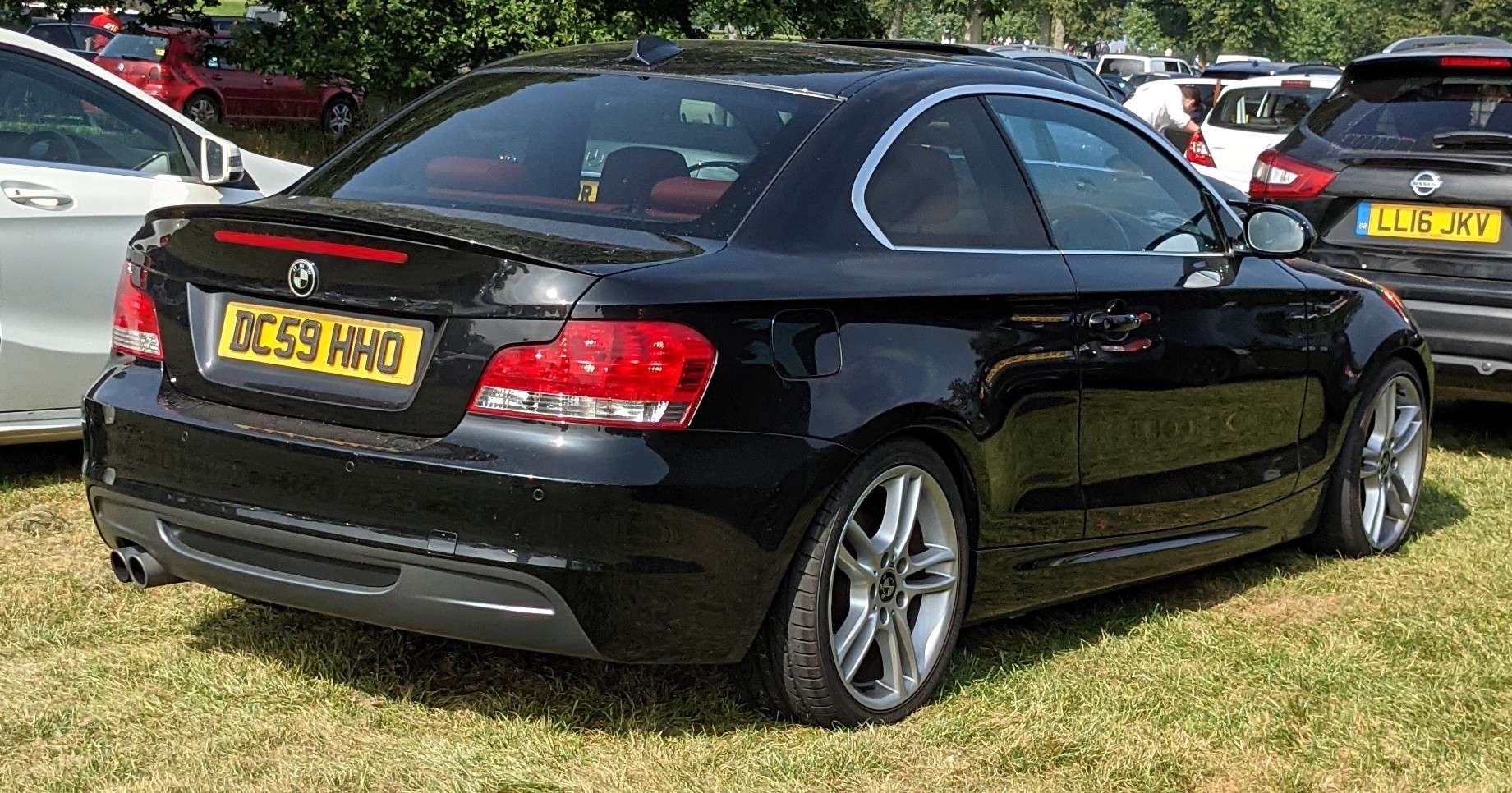
Featured photograph: Calreyn88 / Wikimedia Commons, CC BY-SA 4.0; resized for display.
Which BMW 125i does this guide cover?
This guide concerns the first-generation E82 coupé and E88 convertible with the naturally aspirated N52-family 3.0-litre straight-six. The badge is misleading if you expect 2.5 litres. The familiar UK output is 160 kW/218 PS, approximately 215 bhp, with 270 Nm. Check the vehicle’s build specification and identification rather than relying on an advert’s engine description.
It does not cover the later F20/F21 125i hatchback, whose four-cylinder turbocharged engines bring different maintenance questions. Nor is it a substitute for a 135i guide: N54/N55 turbocharging, high-pressure fuel-system concerns and the associated tuning advice should not simply be pasted into an N52 buying checklist. A US-market 128i can provide useful background about the body and related engine family, but is not automatically identical to a UK 125i.
| Version | Reason to choose it | Buying focus |
|---|---|---|
| E82 coupé | Fixed roof, compact proportions and a more straightforward year-round proposition | Frameless windows, seals, accident repairs, underside condition and suspension |
| E88 convertible | Six-cylinder response with open-air driving | Fabric roof, hydraulic/electrical operation, drains, water ingress and weather sealing |
| Manual | Direct involvement and control | Clutch, dual-mass flywheel, selection and driveline play |
| Automatic | Relaxed daily and touring use | Actual transmission identification, fluid history, cold and hot shift quality |
SE and M Sport specification should be established from the build record. Bumpers, wheels and steering wheels are easy to change, and an M badge does not establish factory suspension or brake equipment. Identify the original options before pricing dampers, lamps or interior repairs. A tidy SE on suitable tyres can be a better road car than a worn M Sport with oversized wheels.
The most important distinction is the individual car’s condition. A later registration does not automatically prove revised components, a particular gearbox or a better service record. Use the VIN and actual component numbers when ordering parts. Where a seller claims an engine conversion, power upgrade or special specification, ask for invoices and a clear explanation of what changed.

N52 engine: what to check before buying
The attraction is the way the engine delivers power: smooth, progressive and eager to rev once warm. It should not need a rough idle, repeated warning lights or an unexplained loss of coolant to be enjoyable. Arrange a genuinely cold viewing, check the engine is not already warm and listen before the seller turns up the stereo. Then repeat your assessment after a fully warm drive.
Record the oil level through the car’s intended checking procedure and inspect the service evidence for the correct BMW oil approval. Viscosity alone is not a specification. Ask how much oil is added between services and whether there are invoices for leaks or consumption investigations. A vague claim that ‘they all use oil’ should not replace measurement, inspection and diagnosis.
Cold ticking needs context. A brief noise after storage or repeated short trips is not the same finding as persistent noise when fully warm, poor oil pressure or metal in the filter. Do not diagnose a cylinder-head problem from a phone recording, and do not assume that a noisier engine is harmless because someone online calls it an N52 characteristic. Have the specialist identify the source and explain the next diagnostic step.
Misfires, ignition and air leaks
Rough running can arise from ignition coils, plugs, intake leaks, crankcase ventilation, fuel supply or mechanical problems. Read fault memory and live data before buying parts. A cylinder-specific misfire may justify controlled component testing; several cylinders and abnormal mixture adaptation need a broader investigation. Ask for the diagnostic findings behind any recent invoice listing six new coils.
Inspect intake hoses and connections for splits and makeshift repairs. A whistle, excessive crankcase vacuum, an unstable idle or oil leakage may point towards ventilation issues, but each requires confirmation. Establish the fitted valve-cover and ventilation arrangement by VIN; N52 revisions and market differences make a single universal shopping list unreliable.
Intake-manifold flap mechanisms should be assessed where fitted. If the seller claims that a different manifold and software have transformed the car into a higher-output model, ask exactly which components were installed and how the calibration was validated. An advertised horsepower claim is not evidence of correct assembly, healthy actuators or acceptable emissions behaviour. A standard, coherent installation is easier to inspect and insure.
VANOS and Valvetronic: diagnose rather than guess
Camshaft-control faults can be more involved than a sensor. FCP Euro’s technical explanation describes how internal oil leakage at camshaft bearing ledges can prevent commanded VANOS movement. It is a diagnostic possibility, not proof that every N52 with a VANOS code needs a cylinder head. Check oil supply, the fault pattern and the prescribed test sequence before authorising expensive work.
The distinction matters when a seller says a warning ‘only needs a solenoid’. Ask why that conclusion was reached and whether the fault returns after a proper road test. A cheap component estimate should not be used to value an undiagnosed car. If internal wear is suspected, obtain a specialist’s findings and a written repair scope before considering purchase.
Valvetronic-related faults also need competent diagnosis. Inspect for oil contamination at relevant connectors and distinguish a sensor, motor, wiring or mechanical issue. Avoid buying on the assumption that clearing adaptations or disconnecting the battery constitutes a repair. A full scan, live-data assessment and repeatable test are more useful than a dashboard photograph showing no lamps.
Cooling system and oil leaks: the important age-related costs
The electric water pump and electronically controlled thermostat deserve deliberate attention. Ask for invoices showing what was replaced, the brand and part reference, new fasteners where specified, coolant and the correct filling/bleeding procedure. ‘Water pump done’ on a handwritten list may mean less than you think. Check that the invoice belongs to this vehicle and is consistent with its mileage.
Inspect the radiator, expansion tank, hose connections and underside for staining or fresh leaks. A pump fault is not the only cause of overheating, and replacing the pump does not prove that an engine previously overheated has escaped damage. Ask directly about temperature warnings, recovery incidents and coolant loss. Persistent pressure, contamination, rough running or unexplained consumption requires further tests.
FCP Euro discusses preventative water-pump replacement for related N52 applications, but a retailer’s mileage preference is not a BMW fixed replacement interval for every 125i. Use the actual history and condition to decide what should be renewed. An unknown old pump warrants budgeting and investigation; it does not justify inventing a guaranteed remaining life.
C3 BMW lists a Pierburg N52/N53 pump, reference 11517586925, at £352 and includes the 125i among its applications. This is a useful parts-only reference, subject to VIN confirmation. It is not a £352 fitted cooling-system overhaul: thermostat, bolts, coolant, labour and any damaged hoses are separate considerations. The listing’s tax treatment should be confirmed at checkout or when obtaining a quote.
Oil leaks should be traced with the undertrays removed. Inspect the valve-cover area, oil-filter housing and sump, and check whether oil has reached the auxiliary belt. An apparently small leak above the belt deserves prompt attention because belt contamination can have serious consequences. Do not accept a cleaned engine bay as proof that the seals have stopped leaking.
A proper quote should explain whether the job involves a gasket alone, a complete cover, associated ventilation components or another damaged part. Ask whether cleaning and a subsequent leak check are included. The same visible oil can have more than one source, and sump access can make a low-cost gasket into a substantial labour job. Price the diagnosed work rather than comparing gasket prices alone.
Manual, automatic and rear-wheel-drive running gear
For a manual car, assess clutch engagement, pedal feel and selection both cold and hot. Look for slip under sensible load, judder when moving off and unusual noise as the clutch is engaged or released. Do not conduct aggressive stall or full-throttle low-speed tests on someone else’s car. A specialist can assess clutch and flywheel condition without a dramatic demonstration.
Price the clutch and dual-mass flywheel as separate components within an itemised fitted quote. A seller’s inexpensive clutch-kit search may omit the flywheel, release mechanism, seals or other work discovered during dismantling. If the gearbox needs removal, discuss the condition of related components and the difference between necessary and optional preventative work.
The period automatic needs its own identification and service procedure; do not import the later eight-speed 1 Series service advice. Ask the workshop to identify the installed transmission from the VIN and unit label. Check engagement from Park into Drive and Reverse, gentle shifts, changes under moderate load and behaviour after the car is fully warm.
Hesitation, flare, shudder or a heavy thump should be diagnosed rather than excused as adaptation. A fluid change is maintenance, not a guarantee that an already worn or faulty transmission will recover. Request the correct fluid, filter/pan arrangement, level-setting procedure and evidence of previous work. An invoice for generic automatic fluid without a specification is weak reassurance.
Inspect differential and gearbox leaks, propshaft couplings, mounts and rear driveshafts. A clunk on taking up drive may involve several components; do not assume the differential is either ruined or innocent without inspection. Listen for speed-related whine on a safe drive and check whether it changes between acceleration and overrun. Ask the workshop to separate tyre, wheel-bearing and final-drive noise.

Suspension, steering, brakes and the underside
An E82 or E88 should track cleanly, steer consistently and settle after a bump. Worn dampers, tired bushes, cracked springs and mismatched tyres can make an otherwise appealing car feel loose or harsh. Test on more than a smooth main road. Ask the inspector to distinguish free play from normal compliance and to examine the inner tyre shoulders with the car raised.
Check the suspension for mixed parts, broken spring ends and evidence of lowering. A replacement damper should suit the actual suspension specification, axle and body. The convertible’s mass and specification mean that a listing saying ‘fits 1 Series’ is not enough. If modified, obtain the geometry report and investigate tyre contact, poor travel or non-standard warning suppression.
Identify the steering equipment fitted to the car and inspect it accordingly. Fluid checks are relevant only to systems that use it; do not infer the arrangement from another engine variant. Assess assistance, self-centring and any warning messages. Wheel alignment can improve a correctly assembled chassis but cannot repair bent components, worn joints or cracked wheels.
Brakes need measurements and an inspection of both disc faces. Note corrosion, a ridge, uneven pad wear, damaged hoses and seized mechanisms. A car that has been parked outside may look clean above the waistline while its brakes have deteriorated. Test the parking brake on an appropriate safe gradient and have poor holding investigated rather than simply tightening the adjustment.
On a lift, examine mounting points, subframes, jacking points, brake pipes, fuel lines, heat shields and exhaust attachments. Surface rust and structural corrosion are different findings; request photographs and an explanation of severity. Plastic covers can conceal damage or leaks, so agree how much dismantling is appropriate for the inspection. A recent MOT is useful history but does not replace this assessment.
Wheels and tyres can distort the economics of a cheap example. Record all four tyre specifications and look for cracks, buckles, repairs and missing locking-wheel-nut equipment. Check any staggered front/rear arrangement against the intended specification. A new budget tyre on one corner does not necessarily match the remaining set well enough for predictable wet-road behaviour.
E88 convertible roof, frameless windows and water ingress
The E88 uses a folding fabric roof. Do not confuse it with the E93 3 Series folding metal roof or copy that car’s mechanism and repair estimates. Inspect the material, seams, rear-window bonding, lining and seals before operating it. Look for abrasion, folds that have worn through, staining and evidence that the roof has been forced or patched.
With the seller’s agreement and the car in the conditions required by its manual, watch a complete opening and closing cycle. The movement should be coordinated and the roof should latch correctly without assistance. Check the roof-storage partition and related interlocks. Do not force a mechanism that stops or keep cycling it in the hope that an intermittent problem will disappear.
Listen for unusual pump strain and examine accessible areas for hydraulic-fluid leakage. A sensor, wiring issue, latch or hydraulic fault can produce similar symptoms, so a generic ‘roof motor’ diagnosis is insufficient. Ask a roof specialist for a fault report and fitted quotation before purchase if the operation is slow, incomplete or inconsistent.
Check carpets, underfloor areas accessible without damage, the boot, rear-seat area and electrical-component locations for moisture. A damp smell, condensation, staining or recently replaced trim deserves an explanation. Cleaning a drain may be part of a repair, but it does not prove that soaked wiring or modules have escaped damage. Establish the leak path and inspect the consequences.
Test frameless-window drop and rise on both body styles. The glass should move as intended when the door opens and close into the seals without catching or leaving a gap. Check switches, one-touch operation, seals, wind noise and evidence of previous adjustment. A window that closes only when the door is slammed is a repair issue, not a charming coupé trait.
Arrange a controlled water test if there is doubt about weather sealing, using a specialist’s method rather than a pressure washer directed at seals. Recheck the cabin afterwards. A dry day and a freshly valeted interior can hide a leak; invoices and a demonstrated repair are better reassurance. For a daily driver, a sound roof and dry electronics matter more than the appeal of seeing it folded in an advertisement.

Bodywork, cabin equipment and ownership history
Inspect the car in daylight and compare the paint across adjacent panels. Look at bonnet and wing fasteners, door shuts, bumper attachments, boot seams and the spare-wheel/tool area where applicable. A repaired scrape is not equivalent to structural damage, but the seller should be able to explain and document significant work. Inconsistent gaps or unexplained welding require closer investigation.
Check the lower edges and hidden areas around seals for corrosion or trapped moisture. Inspect underneath the doors and along the sills, including damage from poor lifting. A car with immaculate polished wheels may still have compromised jacking points. Ask for underside photographs before a long journey, while remembering that photographs cannot establish structural soundness.
Inside, test the air conditioning from a warm cabin and allow enough time for a clear temperature change. A regas price is not a diagnosis of a leaking condenser, compressor or evaporator. Check blower speeds, distribution, heated seats if fitted, mirrors, seat adjustment and the rear-window demister. Record each defect so it can be costed against the actual option equipment.
Test the fitted audio/navigation system, phone functions and all keys. Older interfaces and aftermarket screens vary greatly. Check that a retrofit works with the car’s controls, does not introduce electrical faults and has a coherent installation. Do not assign extra value to a large display until its operation and wiring have been assessed.
Compare the VIN and registration with the service paperwork and an appropriate provenance check. Examine the mileage chronology, ownership changes and any periods off the road. An unusually low reading is not a substitute for time-based servicing. A higher-mileage car with cooling, suspension and oil-leak work already documented may provide a clearer purchase than a low-mileage example requiring all of it.
Maintenance: build an evidence-based catch-up plan
Start with the vehicle’s correct schedule and condition-based service information, then compare it with invoices. The display can be reset without every job being done, so inspect what the paperwork actually includes. Separate engine oil, filters, plugs, brake fluid, transmission maintenance and any cooling repairs. A single invoice for an oil service should not be interpreted as proof that everything else is current.
For an older N52, we favour an annual oil-service discussion with a BMW specialist, especially for low-mileage short-trip use. That is an editorial approach to an ageing car, not a claim that BMW prescribed the same annual mileage interval for every build and market. Use the correct approval and avoid additive promises unsupported by a diagnosis or manufacturer procedure.
The engine uses a timing chain rather than a scheduled cambelt. Chain-related noise or timing faults still need investigation, but an eBay belt-kit listing is not routine N52 timing maintenance. The auxiliary belt and its tensioning components are separate: inspect them for wear, contamination and alignment, particularly when oil has leaked nearby.
Check battery age, condition and charging performance. Replacement should suit the vehicle and be registered/coded where the fitted system requires it. A flat battery can create confusing symptoms, but it should not be used to explain away persistent module faults or water damage. Recheck after repair and retain a diagnostic report.
UK parts, labour and fitted maintenance costs
The Mini & BMW Specialist publishes a 125i menu stating that parts, labour and VAT are included. The menu spans the badge rather than establishing every E82/E88 application, and some generic page text refers to other engines. Confirm your six-cylinder car, brake specification and service contents when booking. Do not apply its diesel comments or later-car equipment to this petrol guide.
| Job | Published price | Scope and qualification |
|---|---|---|
| Oil and filter service | £198 fitted, including VAT | Bronze menu; confirm BMW oil approval and quantity for your N52. |
| Oil/filter, air and cabin filters plus vehicle check | £300 fitted, including VAT | Gold menu; ask what the inspection covers. |
| Above service plus spark plugs | £450 fitted, including VAT | Petrol Platinum menu; confirm six-cylinder application and plug specification. |
| Front discs, pads and wear sensor | £420 fitted, including VAT | Confirm factory brake fitment and parts brand. |
| Rear discs, pads and wear sensor | £380 fitted, including VAT | Parking-brake repairs or seized components may be additional. |
| Brake-fluid replacement | £100 fitted, including VAT | Menu service; confirm fluid specification. |
| Diagnostic check / major inspection | £80 / £145, including VAT | The menu describes the major inspection as including diagnostics. Confirm pre-purchase access and report scope. |
| Pierburg electric water pump, C3 BMW | £352 parts only | Listed N52/N53 reference 11517586925 with 125i application; VIN and tax treatment to be confirmed. Labour and other cooling parts extra. |
The fitted menu provides a useful reality check against the cheapest loose parts. It does not provide a verified universal price for an oil-filter-housing repair, clutch/flywheel replacement, automatic overhaul or E88 roof fault. Those jobs require a diagnosed condition and an itemised quotation. Avoid a guide that turns a gasket or pump price into a fitted total without accounting for access and associated materials.
Ask the garage to separate parts, labour time, hourly rate, VAT, fluids and any post-repair checks. For arithmetic only, three hours at an assumed £90 plus VAT per hour is £324 in labour before parts. This is not a researched 125i job time or a quotation from either source. Use the actual diagnosed job and workshop rate when comparing cars.
A cooling quote should say whether it includes the thermostat, fasteners, coolant and bleeding. A suspension quote should identify paired components and alignment where needed. A roof quotation should distinguish diagnosis, mechanism repair, seals and any water-damaged electronics. Clear scope is more valuable than an apparently precise single price.
eBay parts searches for the six-cylinder 125i
Affiliate disclosure: these links use our eBay affiliate campaign. We may earn a commission on qualifying purchases without an extra charge to you. Search results can contain unsuitable parts: match the VIN, engine code, original reference and seller’s fitment confirmation before ordering.
Service parts and maintenance shopping checklist
Use these BMW 125i E82/E88 searches to compare parts availability. A search result is not a fitment guarantee: confirm the exact vehicle specification and original part numbers before ordering.
| Maintenance item | What to check before buying | eBay parts search |
|---|---|---|
| N52 oil-service kits | verify oil approval and contents. | Compare n52 oil-service kits on eBay |
| Electric water-pump and thermostat kits | compare brands, bolts and coolant provision. | Compare electric water-pump and thermostat kits on eBay |
| Valve-cover seals and components | establish whether a complete cover or ventilation work is required. | Compare valve-cover seals and components on eBay |
| Oil-filter-housing gaskets | inspect the auxiliary belt as part of diagnosis. | Compare oil-filter-housing gaskets on eBay |
| Alternators | match output and connections after charging-system testing. | Compare alternators on eBay |
| Spark plugs and ignition coils | diagnose the misfire first. | Compare spark plugs and ignition coils on eBay |
| Auxiliary-belt and tensioner kits | separate from the engine’s timing chain. | Compare auxiliary-belt and tensioner kits on eBay |
| Clutch and dual-mass flywheel components | match the fitted gearbox and confirm kit contents. | Compare clutch and dual-mass flywheel components on eBay |
| Brake discs and pads | confirm dimensions and factory equipment. | Compare brake discs and pads on eBay |
| E88 roof seals and parts | a search cannot diagnose a hydraulic or electrical roof fault. | Compare e88 roof seals and parts on eBay |
Affiliate disclosure: we may earn a commission from qualifying eBay purchases, at no additional cost to you. Listing prices are for the advertised contents only; fitting, diagnosis, fluids and associated work may cost extra. Check availability, seller reputation and returns terms.
Hidden ownership costs and choosing the right example
Build your first-year budget in three columns: normal running costs, confirmed catch-up work and an untouched contingency. Insurance, fuel, actual vehicle tax and routine servicing belong in the first column. A measured brake deficit or an overdue agreed gearbox service belongs in the second. Money reserved for an unexpected failure should remain separate rather than being spent immediately on work you already know is needed.
For an otherwise sound car we would retain £1,500–£2,500 beyond normal running costs, with additional allowance for a convertible roof of uncertain history. This is an editorial contingency, not a prediction of annual repair spending or a maximum possible bill. If a specialist has identified a substantial fault, use its actual quote in addition to the reserve or choose another car.
Price the unglamorous items before negotiating. Four suitable tyres, a second key, a weak battery, failed air conditioning and worn suspension can collectively outweigh the saving on a cheaper advertisement. A set of shiny aftermarket wheels has little value if the original wheels are missing and the tyres are poor. Ask what is included in the sale, including service records, tools, locking-wheel-nut key and any original parts.
A modification can also change insurance and resale prospects. Obtain a quotation that accurately describes the car, including software, suspension and wheel changes. A claimed ‘125i to 130i’ power upgrade is not simply a cosmetic badge choice. Treat it as a documented modification and assess the quality of the calibration and mechanical work. Do not assume it creates the same car as a factory 130i hatchback.
The best value is usually the car with a coherent explanation for its condition. An invoice for a genuine repair, photographs of the work and a clean reinspection are more persuasive than a seller claiming every wear item is original. Conversely, a long invoice list can signal repeated unsuccessful diagnosis if the same warning persists. Read what was fixed and whether the result was confirmed.
A practical inspection and negotiation checklist
- Before viewing: obtain the VIN, engine identity, gearbox information, mileage chronology and invoices. Confirm that the car will be cold and that independent inspection is permitted.
- Cold start: listen for persistent mechanical noise, assess idle quality and exhaust smoke, and check for warning messages. Record the starting condition rather than accepting a pre-warmed demonstration.
- Engine bay: inspect coolant staining, oil leaks, belt condition, intake repairs and wiring. Ask whether the undertrays can be removed during the professional inspection.
- Body and cabin: compare panels, inspect lifting points and test all electrical equipment. Check for damp carpets, boot moisture and evidence of unexplained trim replacement.
- E88 roof: watch a full controlled cycle, inspect fabric and seals and investigate any hesitation or moisture. Do not agree to a roof repair price before the fault is identified.
- Road test: assess steering, braking, suspension and transmission cold and fully warm. Listen for speed-related noises and driveline clunks without aggressive demonstrations.
- Workshop report: request fault codes with interpretation, brake and tyre measurements, underside photographs and a list of immediate versus later work.
- Decision: combine the purchase price and confirmed repairs, retain the contingency and compare with a better car. Walk away from unresolved overheating, structural uncertainty or a seller preventing meaningful inspection.
BMW 125i E82/E88 buying questions
Is the 125i really a 3.0-litre six-cylinder?
The E82/E88 version covered here is. Do not confuse it with the later four-cylinder turbocharged 125i hatchback or infer engine size from the badge. Verify the VIN and fitted engine before ordering parts or applying maintenance advice.
Is it cheaper to own than a 135i?
It avoids the 135i’s turbocharging hardware, but condition can outweigh the difference in design. A neglected 125i needing cooling, transmission and suspension work can cost more to put right than a carefully maintained alternative. Compare itemised condition reports rather than assuming the badge guarantees a low repair bill.
Should I choose a manual or automatic?
Choose the one that suits your use and passes a proper assessment. A manual needs clutch and flywheel scrutiny; an automatic needs its identity, service history and hot/cold behaviour checked. Neither should be bought on the assumption that a cheap fluid change or clutch kit will cure an undiagnosed fault.
Does it need a timing-belt kit?
No scheduled cambelt applies to the N52 timing drive. The engine has a chain, while the separate auxiliary belt still needs inspection. Investigate timing faults or persistent noise through the correct diagnostic process rather than buying a generic belt kit.
Is the convertible a safe budget choice?
It can be a satisfying purchase if the fabric roof operates correctly, seals well and the cabin is dry. Buy it because you want the convertible, and retain a realistic reserve. A roof that ‘only needs resetting’ should be assessed by a specialist before you agree a price.
What would make us reject one?
Unexplained overheating, persistent undiagnosed timing or running faults, questionable identity or structural repairs, serious water damage and resistance to independent inspection. Ordinary wear can be priced; uncertainty about a major fault is much harder to budget for.
Love cars you don’t see every day?
Get forgotten cars, surprising motoring stories and the most interesting finds from Unusual Cars by email.
Free to join. No spam. Unsubscribe whenever you like. See our privacy policy.
Research and UK cost references
- BMW Group: 1 Series Coupé technical-data archive — manufacturer reference page and downloadable period specifications.
- FCP Euro: N52-family camshaft bearing-ledge and VANOS diagnosis — technical mechanism and diagnostic context; not a failure-rate study.
- FCP Euro: related N52 electric-pump replacement considerations — retailer guidance, not a universal BMW replacement interval.
- C3 BMW: Pierburg N52/N53 water pump — parts-only £352 listing and application information, subject to VIN confirmation.
- The Mini & BMW Specialist: 125i service menu — published fitted prices including parts, labour and VAT; confirm E82/E88 scope.
Workshop menus and parts listings can change and do not diagnose an unseen car. Inspection priorities and contingency figures are editorial judgements. Ask a competent specialist for the schedule and current fitted quotation appropriate to your vehicle.
BMW 125i E82/E88 for sale on eBay UK

See more BMW 125i E82/E88 cars on eBay UK
Love cars you don’t see every day?
Get forgotten cars, surprising motoring stories and the most interesting finds from Unusual Cars by email.
Free to join. No spam. Unsubscribe whenever you like. See our privacy policy.