Buying guide · Honda CR-Z
The Honda CR-Z is an unusual proposition: a compact hybrid coupé with a proper manual gearbox, distinctive styling and an emphasis on enjoyable everyday driving rather than outright speed. It deserves to be bought as a complete car, not judged only by the word ‘hybrid’ or a battery gauge on the dashboard. A sound petrol engine, healthy IMA system, good body and well-maintained chassis are all important.
The quick verdict
Our pick is an unmodified manual with clear maintenance history, a convincing cold and warm road test and a Honda-capable hybrid diagnostic assessment. A later lithium-ion facelift offers worthwhile improvements, but a well-kept early NiMH car with documented battery condition can still be a sensible purchase. Compare the actual condition and cost rather than assuming that one registration year guarantees a better car.
Walk away from an unexplained IMA warning, unsafe high-voltage modifications, serious corrosion or a seller who has cleared faults but cannot explain the original problem. Negotiate ordinary wear with fitted quotes. A weak 12V battery and a worn hybrid pack are different faults and must not be priced as though they are interchangeable.
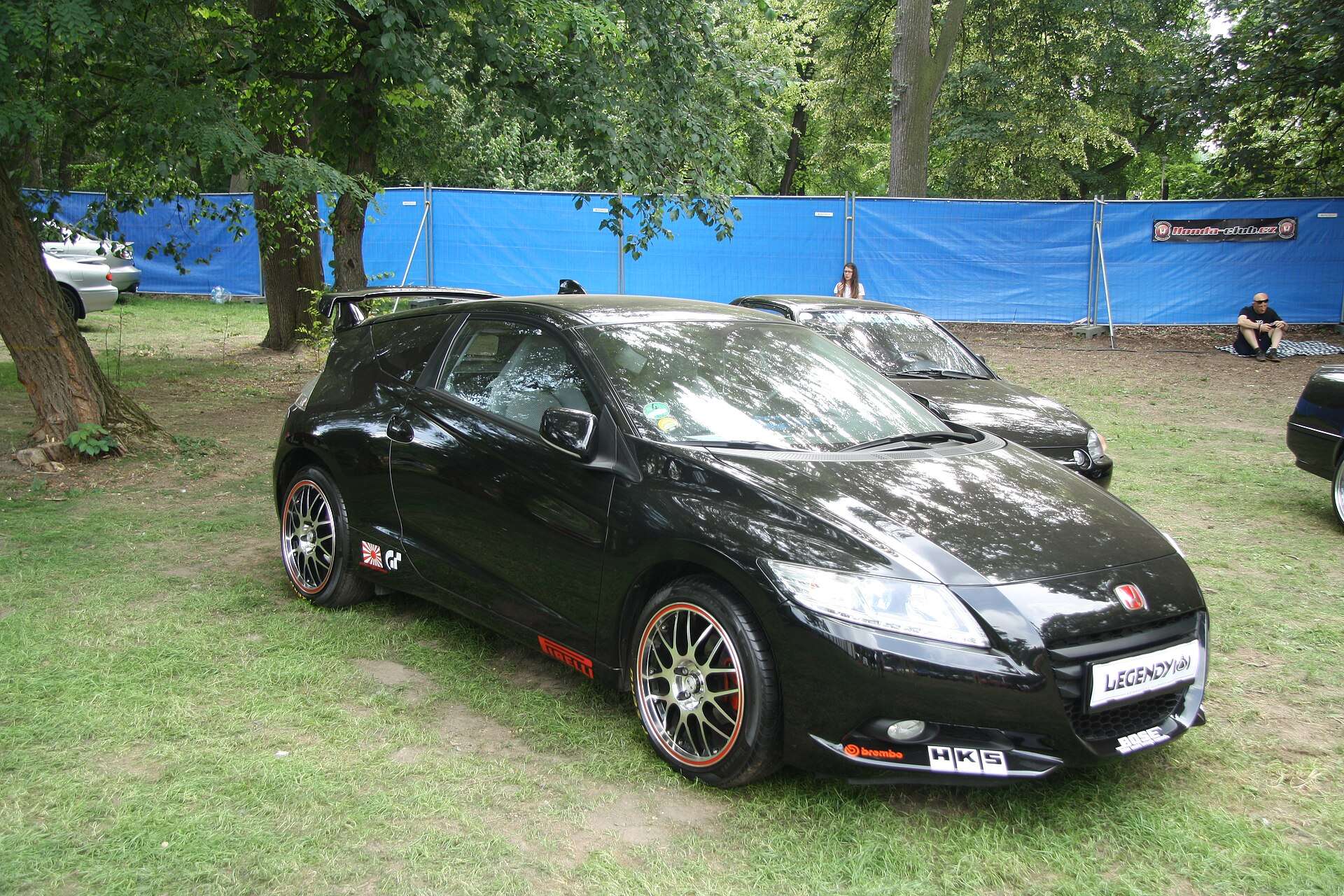
Featured photograph: Jiří Sedláček / Wikimedia Commons, CC BY-SA 4.0; resized for display. Photographed in Prague.
Which Honda CR-Z should you buy?
The CR-Z combines a 1.5-litre petrol engine with Honda’s Integrated Motor Assist system. The electric motor supports the engine and recovers energy; this is not a plug-in hybrid and it should not be evaluated as a car designed for an extended electric-only journey. Its appeal is the combination of light-footed everyday driving, manual involvement and a distinctive compact coupé shape.
Early cars use a nickel-metal-hydride hybrid battery. Honda’s European 2013 facelift announcement confirms the switch to lithium-ion, increased combined output to 137 PS and the S+ boost function. Identify the actual build and battery specification rather than relying solely on first-registration year. A late-registered early car, imported version or replacement pack needs individual confirmation.
| Version | Why it appeals | What to verify |
|---|---|---|
| Early NiMH manual | The accessible route into the original CR-Z concept. | Battery condition and repair history, correct early components and general maintenance. |
| Facelift lithium-ion manual | More combined performance, revised styling and S+. | Actual facelift identity, lithium-specific support and all normal engine/chassis checks. |
| Imported CVT | Automatic convenience for someone who specifically wants it. | Original market, paperwork, transmission-fluid history, specialist support and insurance. |
| Modified example | Potentially individual styling or performance. | Build quality, emissions equipment, insurance and any effect on IMA operation. |
UK buyers will usually encounter the six-speed manual; CVT cars require particular attention to original-market specification and import documentation. Honda’s US specifications demonstrate that manual and CVT versions existed, but their power, equipment, economy and seating details must not be copied into a UK advert or buying decision without checking the local car. Market differences are real, not a minor footnote.
Power figures: use the combined rating correctly
The petrol engine’s peak output and electric motor’s peak output occur under different conditions. They cannot simply be added to invent a higher combined figure. Honda explains this in its original powertrain description. Use the appropriate official combined rating for the market and version. A seller quoting engine power plus motor power as an arithmetic sum has not established the car’s real performance.
The facelift’s 137 PS is approximately 135 bhp, not 137 additional electric horsepower. Its S+ function also depends on operating conditions and available battery charge; failure to activate it once does not diagnose a dead pack. Ask the specialist to interpret the system behaviour with the correct data. Choose the car because its real response suits you, rather than because an advert combines incompatible numbers.
Practicality: try it before you buy it
Check seating position, headroom, rear visibility and access. The low coupé shape and split rear view may feel very different from a conventional hatchback. Inspect the actual seating arrangement and documentation, especially on an import; do not promise useful adult rear accommodation based on a market brochure. Bring the luggage you normally carry if practicality is important.
Try the clutch in traffic and the ride on ordinary roads. A car can be enjoyable without having modern hot-hatch acceleration. If you want effortless overtaking at any speed or a large family hatchback, decide that before purchase. The CR-Z is most rewarding when bought for its own blend of qualities rather than as a cheaper substitute for a fundamentally different car.

IMA battery: distinguish health from the charge display
There are two batteries to think about
The conventional 12V battery supports the car’s electrical systems, while the high-voltage IMA pack provides hybrid energy storage. A weak 12V battery can create starting or electronic symptoms, but replacing it does not prove that the traction battery is healthy. Conversely, an IMA warning does not automatically mean the pack itself must be replaced. Wiring, cooling, controls and charging need appropriate diagnosis.
Have the 12V battery and charging system tested and the correct diagnostic modules read. Ask the technician to distinguish low-voltage effects from a hybrid-system fault before ordering parts. Do not follow a generic service checklist into buying a conventional alternator without establishing the CR-Z’s actual charging architecture and the diagnosed component. A car-specific hybrid specialist is more useful here than a list intended for ordinary petrol cars.
Watch behaviour through a proper drive
Observe assist, regeneration, warning messages and state-of-charge behaviour when the car is cold and after it has warmed. Rapid repeated charge swings, unusually weak assist or a warning justify investigation, but temperature, load and control strategy can also affect the display. A full set of bars shows the system’s estimated charge state, not a certificate of remaining battery capacity.
Do not accept a single dashboard photograph as proof of health. Ask whether the battery has been disconnected, faults cleared or the car left unused recently. A reset may change what you initially see without repairing worn cells. A meaningful assessment should record faults and relevant operating data before clearing anything and interpret them over a suitable test. If the seller refuses this, choose another car.
Greentec Auto UK discusses CR-Z battery diagnosis and replacement options, including the distinction between early and facelift chemistry. Its symptoms are useful reasons to test, not proof that poor fuel economy always means a failed pack. Tyres, brakes, engine condition, journey length and weather can also change consumption.
What should a diagnostic report answer?
Ask which modules were scanned, what faults were stored, whether any were pending, and what the technician observed during the drive. Where the equipment and battery type support it, ask for relevant cell/block behaviour, temperature, cooling and charging assessment. A generic engine-only OBD scan may miss information required to judge the IMA system. A ‘no codes’ screenshot is not a complete battery-health report.
The inspector should explain the limitations of the test as well as the findings. No brief check can guarantee years of future battery life, but a structured assessment is far better than buying from the colour of the dashboard. Keep the report and ask how any proposed repair changes the diagnosis. If a replacement is recommended, require a quote for the correct chemistry and vehicle before negotiating.
New cells, remanufactured packs and partial repair
These descriptions are not interchangeable. A new-cell replacement, a rebuilt pack using tested existing cells and a repair of only the weakest section can have different expected durability and warranty terms. Ask exactly what is renewed, what is reused, how it is tested and what the warranty covers. ‘Refurbished’ without a defined process is not enough information.
Check whether a price includes removal, fitting, diagnostics, transport, VAT, disposal or exchange of the old pack and post-installation testing. A long warranty may have mileage limits, exclusions or a restricted service area. Read the actual terms and confirm who handles a claim if you move or the car is sold. Do not assume that support for an early NiMH car applies to a later lithium-ion version.
High-voltage inspection and repair belong with suitably trained technicians. Do not open the pack, probe orange cables or try an improvised battery repair during a viewing. The sensible buying action is to commission testing and obtain a complete professional quote. A seller offering an undocumented homemade hybrid modification is a reason for caution, not a free upgrade.
Battery cooling and storage history
Check that accessible cooling-air inlets are not obstructed by luggage, covers or heavy debris. Ask a specialist to assess fan operation and relevant temperatures where needed. Do not dismantle the pack or push objects into a duct to see whether it is clear. Correct cooling is part of system health, not proof that the cells are new.
Long periods unused can make a car’s condition less predictable. Ask how it was stored, whether the 12V battery was supported and what checks were performed before it returned to use. A low-mileage car that sat for years is not automatically preferable to one used regularly and serviced well. Judge storage as part of the history rather than paying a premium for mileage alone.
Love cars you don’t see every day?
Get forgotten cars, surprising motoring stories and the most interesting finds from Unusual Cars by email.
Free to join. No spam. Unsubscribe whenever you like. See our privacy policy.
Petrol engine, servicing and cooling
Start the 1.5-litre engine from cold and assess idle, warning lamps, leaks, smoke and unusual noise. Check it again when fully warm. Honda’s powertrain description confirms a chain-driven camshaft, so this is not a routine cambelt replacement proposition. Persistent timing noise still requires diagnosis. The absence of a belt service item does not remove the need for correct oil and regular maintenance.
Ask for invoices covering oil/filter changes, spark plugs, coolant, brake fluid and transmission fluid as applicable. Have the workshop confirm valve-clearance inspection requirements against the correct Honda schedule and actual usage. Do not assume that quiet running proves the clearances are correct, or that every general ‘full service’ includes the necessary inspection and adjustment. Ask what was measured and whether any work was carried out.
Inspect the cooling system safely when cold, look for leakage and dried residue, and test heater performance and normal warm running. A hybrid badge does not make overheating harmless. Repeated coolant loss or an unexplained overheating history needs assessment before purchase. Never open the cooling system while hot.
Misfire or hesitation can involve ignition, fuelling, air leaks or mechanical condition. Do not buy a persistent fault on a promise that it is ‘just plugs’. Record the codes and diagnostic findings before clearing them. If the car has been modified, establish whether its software, intake or exhaust changes affect normal engine and hybrid operation.
Six-speed manual, clutch and imported CVT
On the manual, check clutch take-up and selection of every gear cold and warm. Look for slip, excessive judder, noise or difficulty selecting gears. A hydraulic or linkage issue can feel different from internal wear, but the cause needs establishing. Do not deliberately abuse the clutch to test it. A safe ordinary road test and specialist inspection should guide the decision.
Ask whether a clutch quote includes pressure plate, friction disc, release components, fluids and any related seals. Inspect the hydraulic system if the pedal behaviour is inconsistent. A new clutch is useful evidence only when the invoice identifies the work and the car drives correctly afterwards. A performance conversion can alter refinement and may not suit the next owner.
For a CVT import, establish the original-market service requirements and correct Honda fluid. Test engagement, smooth take-up and response after warming, and investigate shudder, slipping or a warning. Do not apply manual-transmission oil or a generic automatic-fluid assumption. Confirm local specialist support and the parts/insurance position before paying a deposit.
Body, door handles and cabin: the everyday checks
Doors and hatch
Operate both exterior handles several times, then check the interior releases, locks and remote. An intermittent handle or a door that opens only with an unusual technique is a defect, not a charming quirk. Establish whether the problem is the handle, linkage, latch or adjustment before ordering a replacement. Left and right parts, paint finish and market specification matter.
Check the hatch release, gas struts, sealing and rear washer/wiper. Look beneath the boot trim for moisture or previous repair evidence. The unusual glass shape and rear visibility make functioning demisting and mirrors particularly useful, so test them. A missing trim panel or parcel shelf may be more awkward to source than an ordinary service filter.
Rust, accident repairs and underbody condition
Inspect sills, jacking points, arches, subframes, suspension mounts and brake/fuel lines on a lift. A reputation for Honda durability does not make an ageing car immune to corrosion or poor repair. Check for underbody impact damage, especially on lowered examples. Fresh coating should be supported by preparation photographs rather than treated as proof of sound metal.
Look for mismatched paint, disturbed fixings, uneven gaps and repairs around the front structure and boot floor. A history check cannot reveal every privately repaired accident. A specialist should assess structural repairs and any damage near hybrid components. Do not accept unverified claims that a repaired car is safe simply because no dashboard warning remains.
Separate cosmetic deterioration from structural work. A scuffed bumper or small dent can be acceptable on a usable driver if priced fairly. Corrosion around a mounting area, poor welding or damaged high-voltage protection is a different decision. Obtain a complete repair scope rather than calculating bodywork from the cost of an outer panel.
Seats, switches and visibility
Check seat adjustment, bolster wear, seat belts, airbag warning behaviour and the condition of the steering wheel and pedals. Test air conditioning, heating, audio, navigation where fitted, windows, mirrors and every exterior lamp. An old navigation map is different from a unit that fails intermittently. On an import, verify radio and navigation usability rather than assuming UK functions.
Inspect for damp and persistent condensation, including beneath mats and in low luggage areas. A wet cabin can affect electrical connections and may require more than a seal replacement. Ask what caused any previous leak and how the interior was dried. A recently valeted car with a strong fragrance still needs the same checks.
Try rearward visibility during safe parking and reversing. A camera or sensor installation can help, but inspect aftermarket wiring and confirm it works reliably. Do not let accessories obstruct sight lines or interfere with normal controls. The car’s distinctive design is part of its appeal, but your comfort with its practical limitations matters more than a photograph.

Chassis, tyres, brakes and ride
Inspect front suspension joints and bushes, springs, dampers, rear-beam mountings and wheel bearings. Listen for knocks on broken surfaces and a hum that changes with road speed. The CR-Z uses a compact hatchback-style chassis arrangement, not a complex performance-car suspension, but several worn components can still create a substantial fitted bill. Diagnose instability rather than treating alignment as a cure for every symptom.
Check all tyres for age, damage, compatible specification and inner-edge wear. Wheel and tyre size differs with trim and market; confirm what should be fitted rather than copying an overseas photo. Large aftermarket wheels or very low suspension can make the car less pleasant and increase the chance of underbody damage. Price the tyres you would actually choose to drive on.
Inspect both faces of the brake discs, pad thickness, caliper movement, hoses and pipes. A rear brake that binds can affect performance and economy as well as temperature. After a normal drive, a strong hot-brake smell, pulling or abnormal wheel heat needs investigation. Do not touch hot components. Regenerative braking does not remove the need to maintain the friction brakes.
Test the handbrake and ordinary braking response in a safe setting. A change in pedal feel or warning should be assessed by a qualified workshop, not excused as ‘hybrid brakes’. If the car has stood unused, corrosion and sticking components deserve particular attention. A fresh MOT is useful evidence but not a complete prediction of the next year’s maintenance.
Modified CR-Zs: understand the whole build
Suspension, exhaust and appearance changes are common enthusiast choices; some cars have much more extensive engine work. Ask for a complete list, installers, software details and invoices. Establish whether the IMA system is standard, repaired or modified and whether the owner has disclosed everything to the insurer. An unsupported claim that an alteration is ‘plug and play’ does not establish long-term reliability.
Keep original parts if included and assess their condition. Returning a car to standard can involve missing brackets, wiring, coding or discontinued trim, not simply removing an intake. A well-planned build may suit a knowledgeable buyer, but it should be priced and inspected as that specific build. A standard manual is usually the easiest choice for someone seeking straightforward CR-Z ownership.
Maintenance and sourced UK costs
Use the correct Honda service information for the market, transmission and battery type. Oil/filter, air and cabin filters, spark plugs, coolant, brake fluid, gearbox fluid and valve-clearance attention are different jobs. Ask whether a service package includes each required item rather than assuming the word ‘full’ is a universal standard.
The engine uses a timing chain, so there is no routine cambelt kit to budget here. Check the auxiliary drive components and charging system as applicable to the actual hybrid architecture, rather than copying a conventional-petrol shopping list. If a workshop’s generic checklist mentions an alternator, cambelt or power-steering fluid, ask how the checklist is adapted to the CR-Z before authorising parts.
Verified fitted battery example
Hybrid Repair Service lists a new NiMH CR-Z traction battery at £1,550, including VAT, delivery and fitting within its stated service area. The product is for 2010–2012 vehicles, with a stated three-year or 90,000-mile warranty. Confirm VIN eligibility, coverage of your location, old-pack arrangements, diagnosis and the actual warranty terms before booking.
This is not a price for every CR-Z battery. The later lithium-ion car needs a different compatible solution and a current quote. Nor is it the cost of a 12V battery. The distinction matters when negotiating: a seller pricing an unresolved IMA fault as a small conventional battery replacement has not established the correct repair budget.
Verified genuine clutch and fluid examples
Cox Motor Parts lists genuine clutch kit 22105RTW305 at £350.25 for the 2010–2015 range, subject to vehicle verification. That is a parts listing, not fitting. Confirm the complete kit contents, suitability, VAT and delivery with the supplier and repairing workshop. Do not assume a flywheel, hydraulic repair or related seals are included.
Its CR-Z clutch-category page also lists genuine Honda MTF at £18.59 per litre and a clutch slave cylinder at £142.80. These are individual listed components, not a recommendation to replace them together. Establish the fault and required fluid quantity from the actual car. CVT imports must use their correct transmission requirements rather than this manual-fluid assumption.
| Job | Verified source price | Labour / fitted interpretation |
|---|---|---|
| Early NiMH traction battery | £1,550 including VAT, delivery and fitting in the supplier’s stated area | Published fitted example; confirm eligibility and warranty. Not a lithium-ion quote. |
| Genuine clutch kit | £350.25 listed parts price | Fitting and related items extra; confirm tax/delivery and contents. |
| Honda MTF | £18.59 per litre listed | Correct quantity and application required; not a complete fluid-service bill. |
| Clutch slave cylinder | £142.80 listed | Diagnose the hydraulic fault; fitting/bleeding extra. |
| Routine CR-Z service | Model-specific workshop pages quote POA | Ask for the actual schedule and itemised quote rather than using another model’s price. |
Labour and fitted estimates where no fixed price exists
For illustration only, a £350.25 clutch kit plus four to six hours at an assumed VAT-inclusive £100 per hour gives £750.25–£950.25 before extra parts, fluids and delivery. Those hours and rate are planning assumptions, not a measured CR-Z repair time or a workshop quotation. Confirm the parts’ tax treatment before combining figures. A complete quote should replace every assumption.
Ask for separate parts, labour, diagnostics, fluids, VAT and warranty details. A clutch replacement, a hydraulic fault and gearbox repair are different scopes. Likewise, a battery-health diagnosis, new traction pack and 12V replacement must not be bundled under the vague word ‘battery’. The more accurately the fault is described, the more useful the negotiation becomes.
Crowdens Garage and JVS publish CR-Z service scopes but list the relevant packages as price on application. Generic category prices shown nearby are not confirmed CR-Z fitted quotations. Ask them to apply the actual Honda schedule rather than turning a general checklist into a model-specific maintenance claim.
Model-specific eBay maintenance searches
Affiliate disclosure: we may earn a commission from qualifying purchases through these eBay searches at no extra cost to you. Results are not guarantees of fitment or quality. Confirm the VIN, battery type, transmission, OE number, seller and warranty before ordering. High-voltage components require professional selection and installation.
| Item | eBay search | What to verify |
|---|---|---|
| Routine consumables | CR-Z service kits | Correct Honda approval and actual kit contents. |
| Spark plugs | CR-Z spark plugs | Correct plug specification and genuine quality. |
| Manual clutch | CR-Z clutch kits | OE reference, contents and workshop agreement. |
| Manual fluid | CR-Z manual-transmission fluid | Manual only; confirm specification and quantity. |
| 12V battery | CR-Z 12V batteries | Dimensions, terminals and correct specification; not the IMA pack. |
| Door-handle repair | CR-Z right exterior handles | Side, finish, mechanism and diagnosed fault. |
| Rear brakes | CR-Z rear brake parts | Side, disc dimensions and caliper specification. |
| Suspension | CR-Z suspension parts | Correct model, quality and associated alignment. |
| Hybrid repair comparison | CR-Z NiMH battery services | Early chemistry only; full professional quote, fitment and warranty. |

Hidden ownership costs: a realistic first-year plan
A battery bill can coincide with ordinary wear. A £1,550 early-pack fitted example does not cover tyres, brakes, clutch or routine servicing. A car that needs several of those jobs is not automatically poor value, but the asking price must leave enough room for them. Compare a diagnosed repair basket with the price of a better-maintained example before choosing the cheaper advert.
A hybrid pack does not have a guaranteed expiry birthday. Age is a reason to test, not a reason to declare every original pack dead. Some cars remain useful on older components; others need work earlier. Nor should a replacement be assumed to last forever. Define the product, testing and warranty instead of relying on an unsupported average-life claim.
Scarce body and trim pieces can be awkward. A small missing interior item, damaged lamp or incorrect exterior part may take time to source. Check availability and finish, particularly on an import. Buying a cheap used piece from another market can leave wiring, fittings or cosmetic differences to solve. Make a list of the exact parts you would want before paying a premium for a supposedly immaculate car.
Fuel savings depend on your journeys. Short trips, hills, climate, tyre choice and driving style affect consumption. Do not assume a battery replacement will repay itself through fuel savings within a fixed period. It may be justified by restored function and the car’s remaining life, but the financial calculation should use your actual mileage and a realistic comparison.
Insurance and administration still matter. Obtain a quote using the real registration, declare modifications and confirm an import’s documentation. Check tax and any clean-air-zone requirements against the vehicle’s own record. A hybrid label does not automatically mean every exemption applies. A seller’s statement about another CR-Z is not a substitute for your own checks.
Our suggested reserve is at least £1,500–£2,500 beyond known immediate work, with an additional allowance if a traction-battery repair remains unresolved. This is editorial planning advice, not a measured annual average or a guarantee against a major fault. Spend the first money on diagnosis, fluids, tyres and brakes before cosmetic modifications. A healthy standard car is a good foundation for enjoyable ownership.
The viewing and test-drive checklist
- Before travelling: request VIN, registration, original market, transmission, service invoices, battery repair details and modifications. Arrange a cold start and an independent Honda/hybrid inspection.
- Confirm the version: early NiMH or facelift lithium-ion, actual gearbox and market specification. Do not identify the pack solely from a registration year or badge.
- Check the body and cabin: inspect corrosion, repair quality, underbody damage, damp, handles, hatch, locks, glass and all equipment.
- Start cold and drive warm: assess engine behaviour, clutch/gearbox, braking, steering, temperature and assist/regen over a normal varied drive.
- Read the right modules: record faults before clearing and have battery, cooling and charging data interpreted where supported. A charge-gauge photo is not a health report.
- Inspect underneath: use a lift for structure, suspension, pipes, leaks and any damage near protected hybrid components.
- Price actual work: obtain compatible battery and mechanical quotes, separate parts from fitted totals and retain a reserve. Confirm warranty and service-area limitations.
Buy, negotiate or walk away?
Buy when the car is correctly identified, sound underneath, pleasant to drive and supported by clear engine and hybrid-system evidence. Negotiate for diagnosed wear or a battery replacement whose complete scope and price you understand. Walk away from unexplained warnings, serious corrosion, undocumented high-voltage alterations or a seller who will not permit proper testing. A CR-Z is unusual enough to reward patience; there is no need to buy the first uncertain example.
Honda CR-Z buying questions
Is the CR-Z a plug-in hybrid?
No. Its IMA system recovers and manages energy on board. It should not be assessed as a plug-in car designed for long electric-only journeys.
Do all CR-Zs use the same hybrid battery?
No. Early cars use NiMH; the 2013 facelift introduced lithium-ion. Confirm the actual build and pack, especially on imports or cars with replacement components.
Does a full battery gauge mean the pack is healthy?
No. It displays estimated charge state, not a certificate of remaining capacity. Use appropriate diagnostics and a road test interpreted by a qualified specialist.
What does a UK hybrid battery replacement cost?
The verified early NiMH example here is £1,550 fitted including VAT in the supplier’s stated area. That is not a universal price, a later lithium-ion quote or a 12V battery cost. Obtain an exact written quotation.
Does the engine need a cambelt change?
The 1.5-litre engine has a chain-driven camshaft. Investigate unusual noises individually and follow the correct oil and maintenance requirements. Do not order a generic timing-belt kit.
Are CVT cars the same as UK manuals?
No. Establish original market, transmission servicing and equipment for an imported CVT. Parts, fluid, insurance and documentation need individual checking.
Research and further reading
- Honda European facelift announcement — lithium-ion change, combined output and S+.
- Honda CR-Z powertrain description — IMA architecture, combined-output explanation and chain-driven camshaft; US market specifications differ.
- Hybrid Repair Service NiMH battery — published fitted price, VAT, coverage and warranty.
- Greentec Auto UK CR-Z battery guide — diagnostic and replacement options; obtain an actual quote.
- Cox Motor Parts CR-Z clutch and fluid listings — genuine parts examples, not fitted prices.
- Crowdens CR-Z servicing and JVS CR-Z servicing — quoted service scopes requiring vehicle-specific pricing.
- Explore the buying guides hub for more unusual everyday cars.
Honda CR-Z for sale on eBay UK

See more Honda CR-Z cars on eBay UK
Love cars you don’t see every day?
Get forgotten cars, surprising motoring stories and the most interesting finds from Unusual Cars by email.
Free to join. No spam. Unsubscribe whenever you like. See our privacy policy.