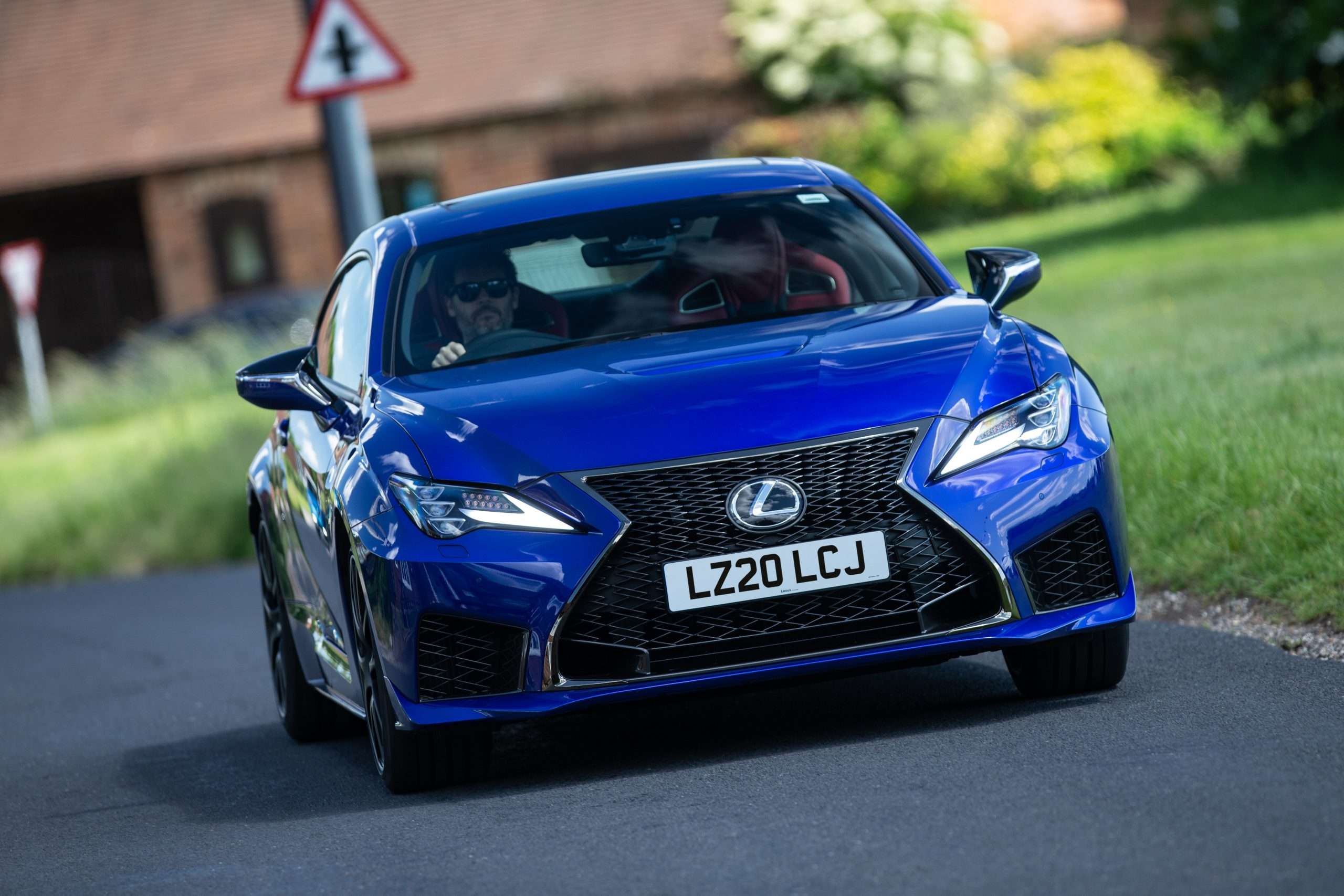
The Lexus RC F is a rear-wheel-drive coupe with a naturally aspirated 5.0-litre V8, an eight-speed automatic and a character that increasingly sets it apart from newer performance cars. Buying one is about choosing the right example and specification, rather than simply chasing the biggest power figure. A reasonably priced car with tired brakes, neglected tyres and uncertain differential history can be substantially dearer to own than a better documented example costing more initially.
This guide covers the genuine V8 RC F, including the original UK cars, Carbon specification, the 2019 update and the specialist Track Edition. An RC 200t, RC 300h or RC 300 wearing F Sport badges is a different car. Check the registration, VIN, engine and factory specification before comparing adverts or ordering parts.
Our choice: a standard, unmodified RC F with a coherent service record, good steel brakes, matching quality tyres and a clean specialist inspection. Buy Carbon or a Track Edition because you specifically want its equipment and can fund its maintenance. Do not stretch the purchase budget so far that the first service or brake replacement becomes a problem.
Affiliate disclosure: some parts links below are eBay affiliate searches. We may earn a commission if you buy through them, at no extra cost to you. Search results are not a fitment guarantee; confirm the VIN, part number and exact brake specification with the supplier.
Which Lexus RC F are you buying?
The RC F arrived in the UK in early 2015. Lexus’s original UK technical material gives the V8 471bhp and 530Nm. It combines port and direct injection through D-4S and drives the rear wheels through an eight-speed torque-converter automatic. There is no turbocharger, dual-clutch gearbox or hybrid battery in this car. Those distinctions matter when assessing service claims copied from other Lexus models.
UK launch specification included substantial Brembo brakes, forged 19-inch wheels and an active rear spoiler. The Carbon version added carbon-fibre roof, bonnet and rear spoiler components, a torque-vectoring differential and additional cabin equipment. The torque-vectoring differential was also an option on the ordinary RC F. Consequently, neither a carbon bonnet nor an advert calling the car “fully loaded” establishes its mechanical specification.
| Version | What distinguishes it | Buying implication |
|---|---|---|
| Original RC F | 471bhp UK launch specification; V8, eight-speed automatic and active rear spoiler | Establish whether it has the standard differential or optional TVD. Condition and records outweigh cosmetic extras. |
| Original Carbon | Factory carbon components and TVD; launch specification also included Mark Levinson audio | Inspect carbon finishes and repairs closely; budget for the fitted differential rather than assuming ordinary RC parts apply. |
| 2019 update | Revised styling, lighter components, shorter final drive and launch control; UK release quotes 457bhp and 520Nm | Lower quoted output does not make it a lesser or faulty early car. Compare the correct model year and specification. |
| Track Edition | Carbon-ceramic brakes, BBS wheels, additional carbon parts and a fixed rear wing | A specialist inspection of the actual brakes is essential. Ordinary steel-disc replacement figures are irrelevant. |
The 2019 UK range also listed a Track Pack alongside RC F, Carbon and Track Edition. Avoid treating every “Track” advert as the limited Track Edition. Ask for the original specification or a Lexus build confirmation and reconcile it with what is physically fitted. Wheels, spoilers, seats and badges can be changed. A seller’s enthusiasm is useful, but invoices and component identification are stronger evidence.
The facelift shortened the final-drive ratio from 2.93 to 3.13 and changed intake and chassis details. Lexus quoted revised output of 457bhp, rather than the launch car’s 471bhp. Online adverts mix bhp, PS and model years freely. A power figure by itself is a poor way to identify the car, and a registration date can lag the build date. Record both before arranging an inspection.

Standard differential or TVD?
The torque-vectoring differential is a meaningful ownership distinction. Lexus describes a system using electronically controlled multi-plate clutches and actuators to distribute drive between the rear wheels. It is not simply a dashboard mode that applies a brake. Its Standard, Slalom and Track settings operate separately from the main driving-mode selector.
Check that a TVD-equipped car displays and selects its modes without warnings, but do not mistake a functioning switch for a mechanical health report. Have a Lexus-capable specialist inspect fault history, leaks and operation. The standard differential is an entirely reasonable choice for a road car. Paying a premium for TVD only makes sense when you value the equipment and accept the extra complexity.
UK asking prices: compare the specification and the bill ahead
The Auto Trader RC F V8 stock page checked for this guide showed eight adverts, with examples around £19,995, £22,400 for a Carbon and £31,995, alongside considerably dearer stock. These are individual asking prices from a small sample, not achieved values, a market average or proof that similarly priced cars are equally good. Mileage, age, history, specification, accident repairs and dealer preparation can explain large differences.
Start with a shortlist of genuinely comparable cars. Separate early steel-brake cars, Carbon specification, facelift cars and Track Editions. Then request the last three service invoices, tyre information and current brake measurements. A lower advertised price is not a saving if four tyres, discs, pads and overdue maintenance are immediately necessary. Travel and inspection costs are part of buying a relatively scarce model.
Ask what the dealer’s preparation actually includes. “Serviced before sale” might mean an oil change, not all work due under the manufacturer’s schedule. A warranty description is not evidence of cover for existing wear, carbon finishes or expensive brake consumables. Get the terms and exclusions before you decide how much protection the offer provides.
A private car with long ownership and detailed invoices can be attractive, but inspect it with the same discipline as dealer stock. Verify the seller’s identity against the documentation, check finance and write-off history through an appropriate vehicle-history service, and compare the recorded mileage with MOTs and invoices. An MOT pass is useful evidence, not a condition warranty for the V8, transmission or differential.
The 5.0 V8: what to inspect
The 2UR-GSE is a major reason to choose an RC F. Its appeal comes from response, delivery and sound, rather than an easily advertised tuning gain. Lexus’s technical release describes extensive changes from the earlier IS F engine, including revised internal components and cylinder heads. Do not assume every service part or repair procedure is shared with the IS F simply because both cars use a 5.0-litre V8.
Start genuinely cold
Arrange to see the engine before it has been started that day. Feel whether it is already warm and ask directly if the seller has driven it. Record fluid levels before the drive when safe and appropriate. Watch how promptly it starts, whether it settles evenly, whether warning lamps extinguish correctly and whether there is persistent smoke, a sustained mechanical rattle or an obvious misfire. Investigate abnormalities rather than accepting “they all do that”.
A brief sound recording rarely diagnoses an engine. Direct injection, accessory drives and exhaust modifications can all change what a buyer hears. The RC F also has an Active Sound Control system, so cabin noise is not an exact guide to the exhaust hardware. An inspection should combine listening with diagnostic data, fluid checks and an examination for leaks. Persistent noises or fault codes need an explanation in writing before purchase.
Oil history and consumption
Look for dated invoices identifying the oil specification, quantity, filter and mileage. An electronic or stamped service record is helpful, but invoices show what happened. Ask about top-ups, the interval between them and any investigations. “Never needs oil” is less useful than a credible record of routine checks. Conversely, a seller admitting modest top-ups is not automatically describing a worn-out engine; the amount and trend matter.
Inspect around the engine and underneath for fresh oil, old deposits and evidence of repeated cleaning. An undertray can hide a leak. A specialist should identify the source rather than quoting for the largest possible repair from a wet patch. If there is a concern about oil burning, uneven running or engine condition, agree the next diagnostic step before committing. Compression or leak-down testing is a targeted investigation, not a substitute for the initial examination.
Fuel system and D-4S
D-4S uses both port and direct injection. Do not automatically add a routine intake walnut-blast bill based on experience with a different direct-injection engine. Investigate actual symptoms and follow model-specific diagnosis. Equally, dual injection does not make every injector, pump or sensor immune to age or contaminated fuel. Misfire codes should not be dismissed as “just a coil” without testing.
The PistonHeads used guide reports fuel-system campaign history and owner concerns about high-pressure pump noise. Treat those as prompts to check the individual car, not proof that every RC F needs pumps. Ask Lexus to check outstanding campaigns against the VIN and confirm completed work. If fuel smell or visible leakage is present, stop the inspection and have it dealt with professionally before a road test.
Cooling, belts and charging
Check the expansion tank and accessible hoses when cold, look for dried coolant residue and examine the radiator area for damage or blockage. During the drive, monitor warnings and temperature behaviour; after it, look for new leaks without opening a hot cooling system. A car that has overheated needs a proper account of the cause and repair, not merely evidence that fresh coolant was added.
Inspect the auxiliary drive, tensioner and charging system as part of a normal age-related examination. There is no basis for replacing an alternator because an internet list says all performance cars need one. Battery condition, connections and charging behaviour should be tested before diagnosis. For replacement shopping use a model-specific RC F V8 alternator search and compare the exact electrical and mounting specification.
The V8 has timing chains, not a routine cambelt service. A timing-chain kit is not a standard scheduled purchase simply because the car has reached a particular used-car mileage. Persistent timing-related noise or faults require specialist diagnosis and a properly scoped estimate. Do not confuse an auxiliary-belt invoice with evidence that the engine’s timing system has been renewed.
Love cars you don’t see every day?
Get forgotten cars, surprising motoring stories and the most interesting finds from Unusual Cars by email.
Free to join. No spam. Unsubscribe whenever you like. See our privacy policy.
Eight-speed automatic and rear driveline
The Sports Direct Shift transmission is an eight-speed torque-converter automatic. It is not a DSG or other dual-clutch unit. Start the test in ordinary road mode and assess engagement of drive and reverse, low-speed manoeuvring and gentle upshifts before asking for stronger acceleration. There should be no prolonged engagement delay, violent bang, repeated flare or warning message. A slightly different shift strategy when cold is not permission to ignore a consistent fault.
Once warm, try a range of sensible loads and manual paddle commands. A car that behaves well at steady speed may still show an issue pulling away or changing down. Repeat any suspicious behaviour safely and note the conditions for the inspector. Do not accept a promise that a software reset will solve a mechanical symptom unless the work is completed and the result demonstrated before sale.
Ask what transmission-fluid or differential work has been performed and obtain the invoices. Fluid type, procedure and the actual unit matter. A universal flush offered without reference to the car’s condition or Lexus procedure is not automatically a good preventative purchase. Have an experienced workshop propose the appropriate maintenance for the history and use, particularly if the car has spent time on circuit.
Listen for rear-end whine, clunks on load changes and vibration, then inspect mounts, shafts, seals and the differential on a lift. Tyre noise can mimic driveline noise; diagnosis should not stop at the first suggestion. On a TVD car, a clean generic engine-code scan does not establish that the differential control system is healthy. Request a scan that reaches the relevant modules and a written interpretation.
Brakes, tyres and suspension: the expensive inspection
Brake specification should be established before you discuss replacement costs. Original steel discs and the Track Edition’s carbon-ceramic system need different assessment methods, parts and budgets. A generic online “Lexus RC front brake” quote can refer to a much less powerful model. Photographs of shiny discs are not measurements of remaining life.
Steel brakes
Ask a workshop to measure discs against the correct minimum thickness, assess pad material remaining and inspect both sides of the discs. Look for heavy lips, corrosion on inner faces, heat damage, uneven wear and seized or sticking hardware. Check flexible hoses and fluid history. Brembo branding alone does not establish that the correct components are fitted or in good condition.
During a normal road test the car should brake straight and progressively without persistent vibration or pulling. A little surface corrosion after standing may clear, but a pedal judder needs investigation. Do not repeatedly perform aggressive stops in an attempt to “clean” an unknown set of brakes. Old fluid, pad compound, damaged discs and suspension movement can all affect the impression at the pedal.
A useful reality check is the genuine RC F front pad listing from Lexus Parts Direct: £525.01 for the listed product when checked. That is a parts listing, not a fitted front-brake overhaul. It does not include a pair of discs or labour, and the supplier must confirm applicability to your car. Shop around sensibly, but a dramatically cheaper listing may be for an RC F Sport, the rear axle or unsuitable hardware.
Carbon-ceramic brakes
For a Track Edition, commission an inspection by someone familiar with its carbon-ceramic system. Check documented damage, wear assessment and the manufacturer’s criteria. Edge chips, unsuitable cleaning, previous track heat exposure and incorrect pads deserve attention. An ordinary steel-disc thickness check does not establish ceramic serviceability. Do not use internet estimates for a different Lexus as the basis of an offer.
If the car has been converted from ceramic to steel or has aftermarket brake hardware, identify every component, the reason for the change and any insurance implications. A conversion may be well engineered, but it changes originality, parts ordering and resale considerations. Obtain a written quotation for the actual system rather than bargaining on the assumption that its next brake bill will match a standard RC F.
Tyres and wheel condition
Read the size, load rating and speed rating on all four tyres and compare them with the car’s approved specification. Front and rear fitments can differ, so a four-tyre price must be based on the actual sizes. Inspect inner shoulders, age codes, repairs and sidewalls; turning the steering and using a lift reveals far more than walking around the car. Check wheel repairs and buckling as well as cosmetic kerbing.
Quality matching tyres are particularly valuable on a powerful rear-drive coupe. Mixed budget tyres can disguise poor preparation, while uneven wear may indicate alignment, worn joints or accident damage. A geometry printout is helpful only if the underlying suspension is sound. Ask for the reason behind repeated alignment work. Replacing tyres without resolving the cause merely resets the bill.
Dampers, bushes and ride
Inspect dampers for leakage, springs and mounts for damage, and bushes and joints for unwanted movement. Establish the exact suspension fitted by build date and specification before pricing parts; aftermarket coilovers change the assessment further. A firm ride is expected, but repeated bouncing, a corner sitting low or knocking on ordinary road surfaces should be investigated.
Use a route that includes urban speeds, a rough surface and a legal faster-road section. Listen with the audio off. Note steering return, straight-line stability and vibration at different speeds. Worn tyres, wheel imbalance and suspension faults can overlap, so resist a diagnosis based on one symptom. An inspection should finish with an itemised report identifying safety work, maintenance and optional improvements separately.
Body, carbon parts and signs of an expensive past
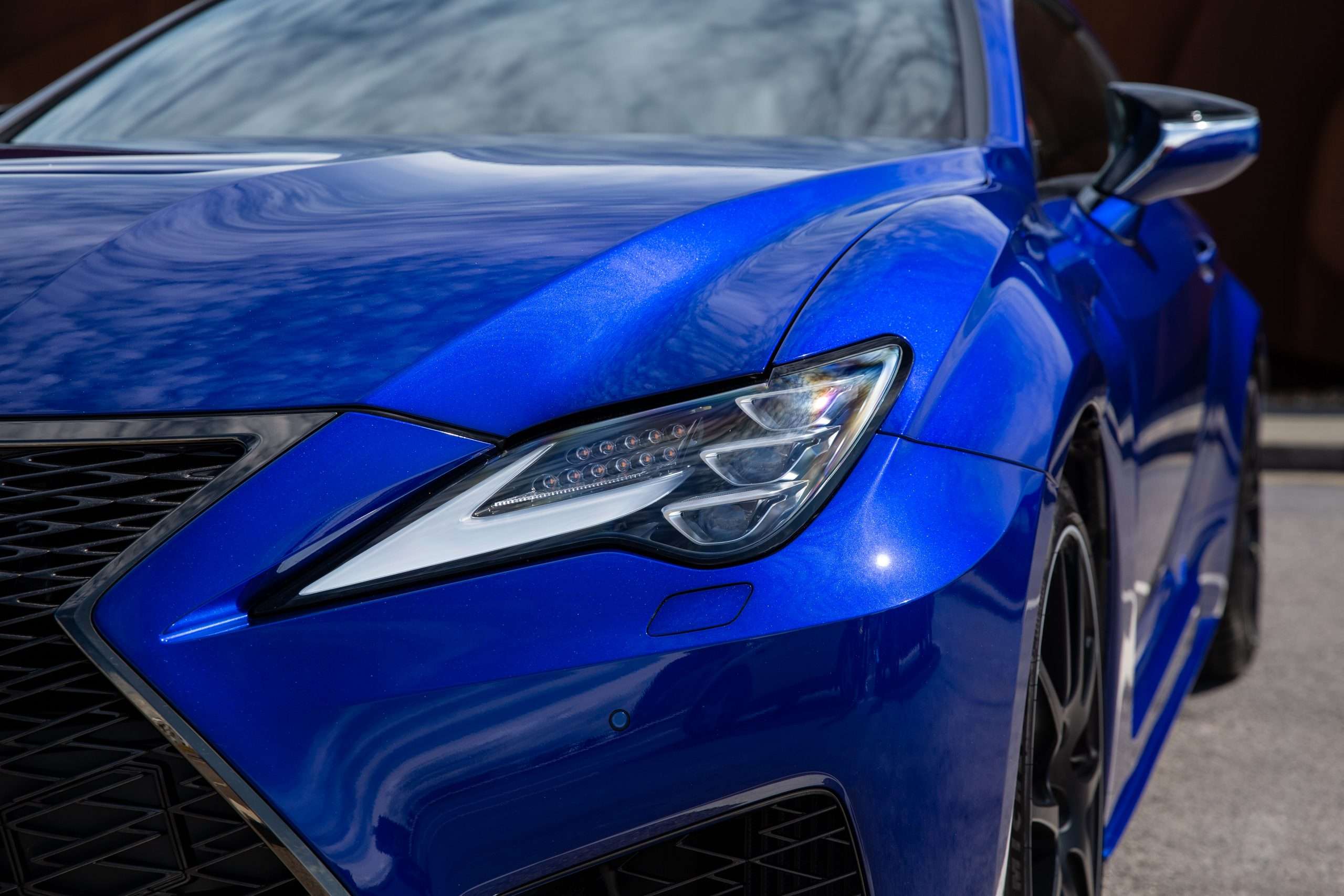
Inspect in daylight with clean, dry bodywork. Compare panel gaps, paint colour, surface finish, fasteners and seals. Look for overspray, disturbed fixings, poorly repaired bumper mounts and misaligned lamps. A recorded repair is not automatically disqualifying, but unexplained evidence should be reconciled with the history. A clear history check does not rule out unrecorded accident repairs.
The PistonHeads guide flags reports of rear-wheelarch sealing and corrosion concerns. Have a specialist examine the actual arch seams, liners and underside rather than assuming Japanese origin guarantees freedom from rust. UK winter use, storage and previous repairs matter. Fresh underseal should prompt questions about photographs and preparation beneath it; it is not proof of either a problem or a cure.
Check the bonnet, roof and spoiler carefully on Carbon cars. Look for lacquer deterioration, cloudy patches, cracks, inconsistent weave appearance and evidence of impact repairs. Distinguish cosmetic finish deterioration from structural damage. A normal paint-shop quote may not cover a proper carbon repair or replacement panel, and an aftermarket bonnet is not necessarily equivalent to the original item.
Operate the rear spoiler where the fitted system allows and check for warnings, water ingress and damaged trim. A Track Edition’s fixed wing is a different arrangement. Examine the boot floor and compartments for moisture, staining and disturbed seals. Check lamps for condensation and physical damage; sophisticated lighting can make what appears a small bumper impact expensive to put right.
For a car advertised as never tracked, ask politely what supports the claim. Track use is not automatically abuse, and road-only use is not automatically sympathetic. Frequent tyre changes, heat-affected brakes, tow-eye marks, harness installations and unusual stone-chipping patterns are reasons to investigate. Maintenance invoices and an honest account are more useful than an unprovable slogan.
Cabin, electrical equipment and everyday practicality
Spend time in the car before the test drive. Adjust the seat and steering column to your normal position, check visibility and try the rear seats and boot with the people or luggage you actually carry. The RC F’s appeal as a usable coupe does not remove its packaging compromises. A purchase that is awkward for your usual parking space can become frustrating quickly.
Test heating and air conditioning on both sides, at several temperature settings and fan speeds. Owner reports collated in the PistonHeads guide include HVAC actuator issues, seat ventilation faults and audio problems. These are inspection prompts, not evidence of a known failure rate. Check the individual car thoroughly and cost an actual fault before accepting that it is merely a setting.
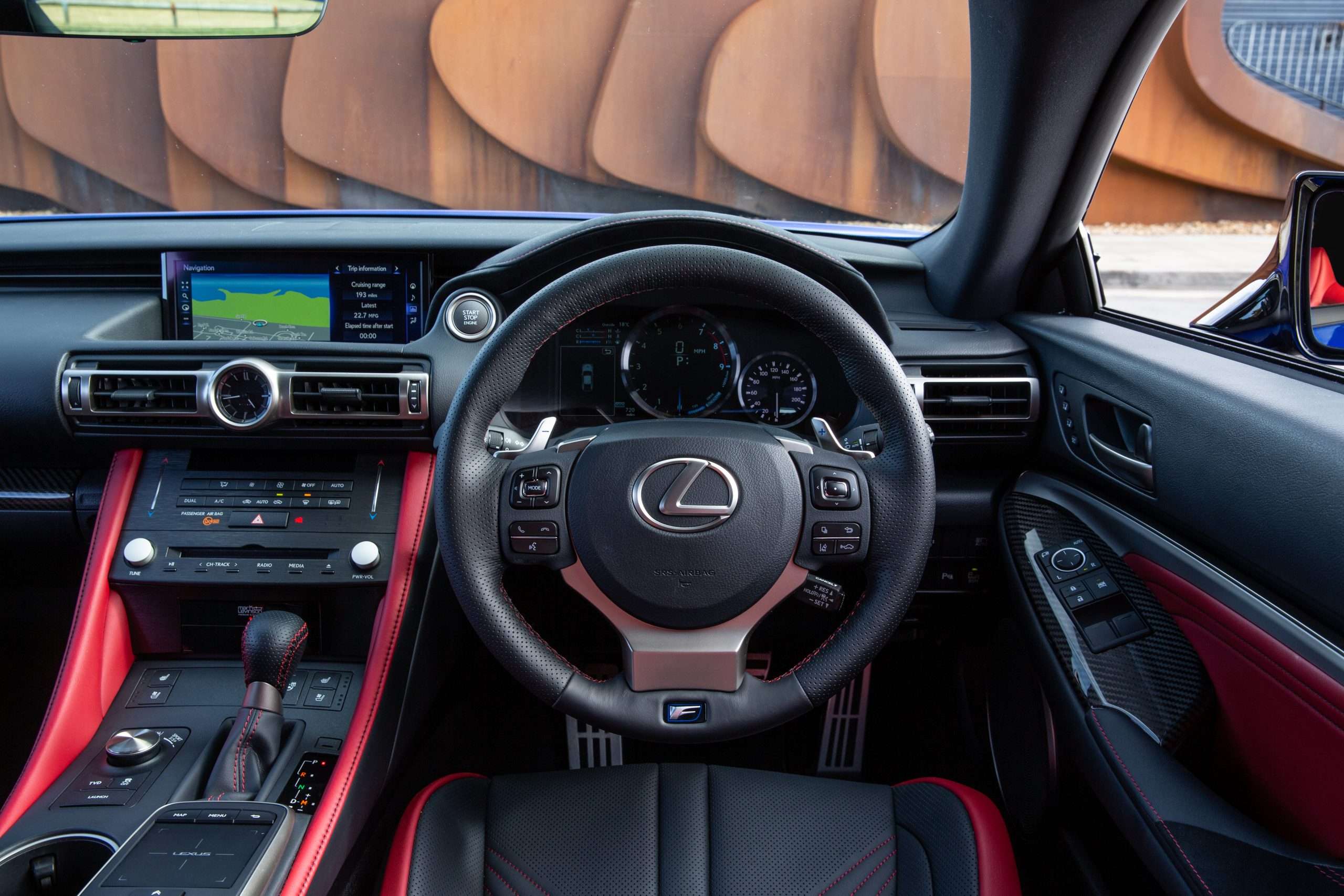
Operate heated and ventilated seats, windows, mirrors, locks, reversing camera, parking sensors, navigation and every fitted driver-assistance feature. Pair a phone if relevant and try the audio at a sensible volume. On a Mark Levinson car, a badge does not establish that every channel works. Listen for missing speakers, distortion and intermittent operation after the car has warmed up.
Water in a boot compartment can affect electrical equipment as well as trim. Ask an inspector to trace the cause of moisture rather than simply dry it out. Check both keys and any emergency blade. A missing second key belongs in the cost discussion, alongside any programming requirement. Do not assume a generic online key shell includes the electronics or immobiliser work.
Maintenance and sourced UK costs
A useful service budget starts with the right model column. Lexus’s published menu groups RC F with GS F, IS F and certain other larger models; it is dearer than the ordinary RC entry. The figures below are published examples checked during preparation, not guaranteed quotations for every registration or a promise about future prices. Confirm current scope, VAT treatment, additional items and eligibility with the workshop.
| Job or item | Published example | What the figure actually covers |
|---|---|---|
| Lexus intermediate service, RC F pricing group | £560 | Official Lexus UK service-menu price. Confirm the registration-specific work and any additional scheduled items. |
| Lexus full service, RC F pricing group | £1,035 | Official menu price; do not substitute the cheaper ordinary RC figure. |
| JVS Lincoln intermediate service | £225 | Independent RC F menu listing. Ask for confirmation of V8-specific scope, materials and VAT. |
| JVS Lincoln full service | £395 | Independent advertised package. Extras and model-dependent work need agreement; not automatically identical to Lexus’s package. |
| Genuine front brake pads, Lexus Parts Direct | £525.01 | Listed parts price, part 04465-0W191. Confirm VIN and brake compatibility; discs and fitting are additional. |
| Disc and pad replacement | Vehicle-specific written quote | Identify steel or ceramic system, both axles, hardware and labour before comparing totals. |
| Alternator, water pump or a diagnosed driveline repair | Vehicle-specific written quote | No reliable RC F-specific fitted menu was established from the sources used here. Avoid generic RC or IS estimates. |
These workshop menus do not publish a usable separate labour breakdown for each RC F job. It would be misleading to subtract a cheap online part from a complete service and call the remainder “labour”. Request parts, consumables, labour hours, hourly rate and VAT separately when commissioning repair work. For an agreed service package, the package’s actual scope matters more than an artificial split.
The independent menu includes generic, model-dependent checklist wording. It should not be read as evidence that an RC F needs diesel-filter work, hybrid maintenance or a timing-belt change. Ask the workshop to identify the Lexus schedule for your VIN and mileage. The V8’s plugs, oil quantity and inspection requirements must be accounted for in the price you accept.
A sensible maintenance plan after purchase
First reconcile the invoices with the manufacturer’s schedule. Identify oil and filter servicing, brake-fluid work, plugs and any coolant or driveline-fluid requirements applicable to the car. Do not blindly reset every fluid because a forum says it is lifetime, or replace everything because a seller has no records. Have a specialist establish what is due and the safest way to deal with uncertain history.
Next address tyres, measured brake wear, leaks and suspension faults. These affect whether the car can be used properly and safely. Deal with a weak battery or charging fault through testing, then rescan the car after repairs if relevant. Once the baseline is sound, cosmetic carbon work, detailing and optional upgrades can be considered without competing with essential expenditure.
Retain detailed invoices, photographs of meaningful repairs and the part numbers used. A documented car is easier to maintain and easier to explain to a future buyer. Record any non-standard pad compound, suspension setting or exhaust component so the next workshop does not order against a specification the car no longer has.
Useful eBay parts searches
Use these to compare availability and suppliers after confirming the correct specification. RC F and RC F Sport are frequently confused in listings. A seller’s compatibility list is a starting point; obtain confirmation using the VIN and original part number, especially for brakes and electrical components.
Service parts and maintenance shopping checklist
Use these Lexus RC F searches to compare parts availability. A search result is not a fitment guarantee: confirm the exact vehicle specification and original part numbers before ordering.
| Maintenance item | What to check before buying | eBay parts search |
|---|---|---|
| RC F V8 oil filters | confirm the exact filter and seals; oil specification still matters. | Compare rc f v8 oil filters on eBay |
| RC F V8 spark plugs | check genuine specification, quantity and provenance. | Compare rc f v8 spark plugs on eBay |
| RC F front brake pads | verify axle, part number and steel-brake applicability. | Compare rc f front brake pads on eBay |
| RC F steel front discs | dimensions and system must match the car. | Compare rc f steel front discs on eBay |
| RC F auxiliary belts and tensioners | not a timing-belt kit. | Compare rc f auxiliary belts and tensioners on eBay |
| RC F V8 water pumps | buy after diagnosis, not because a hybrid RC listing looks similar. | Compare rc f v8 water pumps on eBay |
| RC F cabin filters | a straightforward comparison item once fitment is confirmed. | Compare rc f cabin filters on eBay |
Affiliate disclosure: we may earn a commission from qualifying eBay purchases, at no additional cost to you. Listing prices are for the advertised contents only; fitting, diagnosis, fluids and associated work may cost extra. Check availability, seller reputation and returns terms.
Hidden ownership costs
Fuel: budget around your actual use. A V8 driven mainly on short journeys can cost far more per mile than a relaxed long-distance example. Calculate annual miles divided by realistic miles per gallon, multiplied by 4.546 to convert UK gallons to litres, then by the fuel price you actually pay. Do not build the budget around a manufacturer’s best-case laboratory figure.
Tax and insurance: use the exact registration to check the current tax liability and obtain an insurance quote before leaving a deposit. Registration date and vehicle details matter; cars registered either side of tax-rule changes should not be assumed to cost the same. Declare modifications and ask what cover applies to specialist carbon or aftermarket components.
Wear and age: a low-mileage car can still need old tyres, a battery, corroded brakes, seals and scheduled servicing. Occasional use is not free preservation. Long storage, repeated short starts and winter damp can produce a different set of bills from high motorway mileage. Examine the use pattern rather than ranking cars by the odometer alone.
Our reserve suggestion: retain roughly £2,500–£4,000 beyond the purchase price for an otherwise sound steel-brake example. This is an editorial planning allowance, not a quoted annual running cost or a guarantee that a major repair will fit within it. A car needing extensive brakes, TVD work or carbon-ceramic replacement requires a specific additional budget. If the inspection already identifies those jobs, put the written estimates into the purchase calculation immediately.
Warranty limits: Lexus advertises service-activated cover subject to age, mileage and eligibility conditions, up to ten years or 100,000 miles. Early UK RC Fs are now beyond that age limit. Do not assume a fresh service automatically provides warranty cover to every car, or that consumables and pre-existing faults are covered. Obtain a vehicle-specific confirmation from Lexus.
The RC F viewing and test-drive checklist
- Before travelling: obtain the VIN, registration, service invoices, MOT record, specification, brake type, tyre details, number of keys and modification list. Arrange a cold start and permission for an independent inspection.
- Identity: establish genuine RC F V8 status, build date, Carbon or Track claims and TVD equipment. Match the documentation to the car.
- Cold examination: inspect fluids safely, listen to the start, watch warning lamps and look for smoke, leaks and obvious recent cleaning.
- Body and cabin: examine carbon, arches, paint repairs, boot moisture, lamps and every electrical function. Test both climate zones and the fitted audio properly.
- Road test: assess transmission cold and warm, steering, braking, vibration and rear-end noise. Use normal public-road driving; launch-control demonstrations prove little about future reliability.
- Workshop inspection: request a lift inspection, measured brake report, tyre assessment, Lexus-capable module scan and written explanation of any faults.
- After the drive: look again for leaks and warning messages, discuss any symptoms and obtain costs for identified work before negotiating.
When to walk away
Walk away from unexplained fuel leakage, persistent overheating, unresolved major warning messages, incompatible identity records or a seller refusing a reasonable independent inspection. Be equally cautious when an expensive brake or TVD concern is waved away without diagnosis. A reduced price cannot tell you the size of an unknown repair.
Do not reject every modified car automatically, but treat missing original parts, undocumented mapping, aggressive exhaust alterations and poor-quality brake conversions as additional work to investigate. Confirm insurance acceptance before purchase. For a first RC F, an unmodified car with clear ownership and maintenance evidence is generally easier to assess and keep correctly specified.
Frequently asked questions
Is an RC F the same as an RC F Sport?
No. The RC F is the 5.0-litre V8 performance model. F Sport is a trim designation used on other RC versions. Parts searches, insurance quotes and buying comparisons must identify the genuine V8.
Is Carbon automatically the best one?
It adds desirable equipment, but carbon finishes and TVD condition deserve additional attention. A sound standard RC F is preferable to a neglected Carbon bought only for its badges. Confirm the factory specification because parts and trim can be changed.
Does it need a timing-belt kit?
No routine timing-belt service applies to the V8’s chain-driven timing system. The auxiliary belt is a separate item. Diagnose timing-related symptoms professionally rather than buying a kit solely on mileage.
Are facelift cars less powerful?
The UK launch material quotes 471bhp; the 2019 update release quotes 457bhp. The facelift also changed gearing, weight and other details, so the headline figure does not tell the whole driving story. Compare correct specifications rather than treating the difference as a fault.
Can ordinary RC servicing prices be used?
No. Lexus publishes a different service-price group for the RC F. Independent prices can be competitive, but obtain a written RC F-specific scope including applicable materials and additional scheduled work.
Would we buy one?
Yes, if the V8 character is what you want and the inspection supports the purchase. The strongest buy is a correctly identified, well maintained example with its next bills understood. Spend the money establishing the condition of brakes, driveline and carbon components before spending it on power or appearance upgrades.
Compare the earlier saloon in our Lexus IS F guide, or explore the buying guides hub.
Sources and further reading
Specifications and version distinctions use Lexus UK’s UK launch equipment announcement, V8 technical release, transmission and TVD explanation and 2019 update and Track Edition release. Costs come from Lexus UK’s service menu, JVS Lincoln’s RC F menu and Lexus Parts Direct’s front-pad listing. Asking-price examples use Auto Trader’s RC F V8 stock. Reported ownership inspection prompts are cross-checked against the PistonHeads used guide; reports do not establish failure rates. Photos are Lexus UK editorial media, credited beside each image; featured image from the RC F dynamic gallery.
Lexus RC F for sale on eBay UK

See more Lexus RC F cars on eBay UK
Love cars you don’t see every day?
Get forgotten cars, surprising motoring stories and the most interesting finds from Unusual Cars by email.
Free to join. No spam. Unsubscribe whenever you like. See our privacy policy.