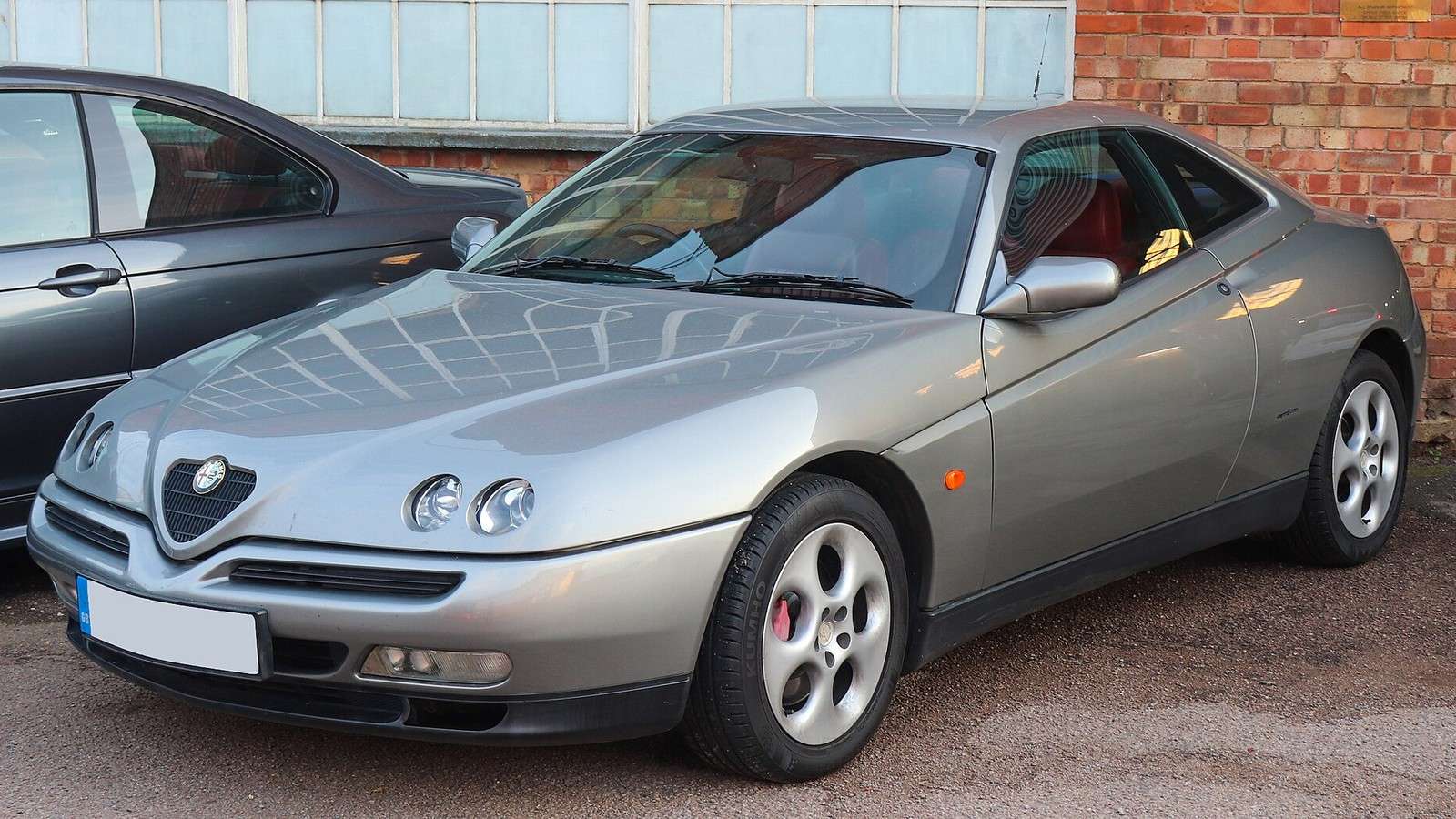
The Type 916 Alfa Romeo GTV wrapped one of Italy’s finest V6 engines in a shape that still looks like a concept car. The 3.0-litre 24-valve version added genuine speed and an unforgettable soundtrack, even though its front-wheel-drive layout broke with the classic GTV formula.
Here are ten things you probably didn’t know about the Alfa Romeo GTV 3.0 V6 24V.
1. The design began at Pininfarina
Enrico Fumia developed the shape at Pininfarina, while Alfa Romeo’s own Centro Stile completed much of the production work. The diagonal line running from the front wing into the rear quarter, tiny quad headlamps and abruptly cut tail created a design that remained recognisable through a decade of production.
2. It shared its basic structure with the Spider
The GTV coupé and Spider roadster were parallel Type 916 projects. They shared the front structure, engines, cabin architecture and much of the suspension, but the GTV’s fixed roof and 2+2 seating gave it a different role. The Spider was not simply a GTV with the roof removed; both were engineered within the same programme.
3. The famous V6 came from Giuseppe Busso’s engine family
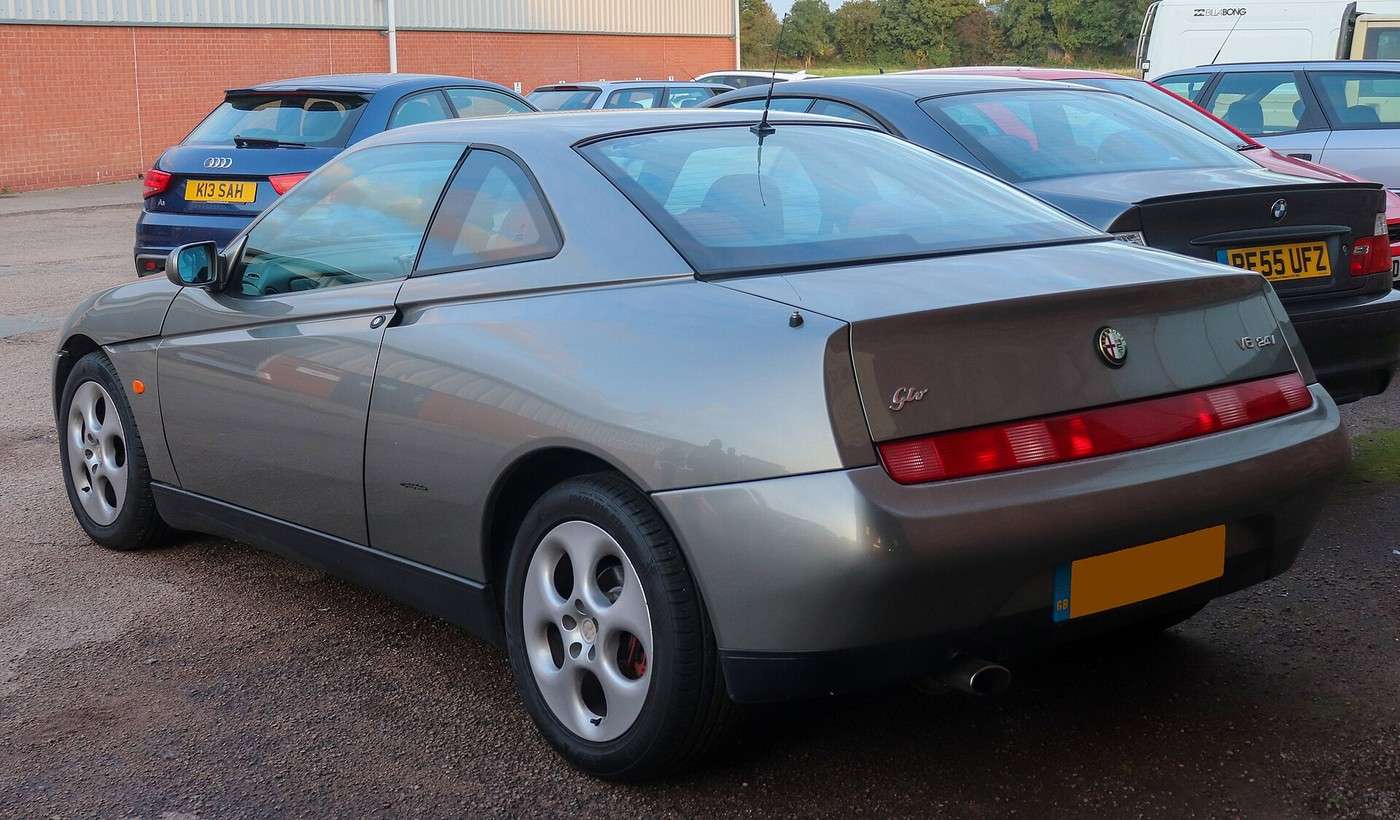
The 2,959cc 24-valve V6 belonged to the long-running Alfa engine family designed under Giuseppe Busso. In the GTV it produced about 220PS and drove the front wheels through a six-speed manual gearbox. Polished intake runners made the engine bay nearly as memorable as the exhaust note.
4. It was front-wheel drive despite the GTV badge
Earlier Alfetta-based GTVs used rear-wheel drive and a rear-mounted transaxle. The 916 adopted the Fiat Group’s front-drive Type Two architecture, shared in broad terms with cars such as the Alfa 155 and Fiat Coupé. Alfa’s engineers used sophisticated suspension and a strong body to give the new layout its own character rather than copying the old formula.
Join the Unusual Cars Club free
Get forgotten cars, surprising motoring stories and the most interesting finds from Unusual Cars by email.
Free to join. No spam. Unsubscribe whenever you like. See our Privacy Policy.
5. The rear suspension helped the car steer
A multi-link rear arrangement was designed to create small geometry changes under cornering load, effectively adding a degree of passive rear steering. Alfa highlighted the layout as a major contributor to stability and agility. It was far more elaborate than the simple trailing-arm systems found beneath many front-driven coupés of the period.
6. The 3.0 V6 was substantially faster than the Twin Spark
With roughly 220PS, the V6 could reach 100km/h in around 6.7 seconds and approach 150mph depending on version. More important was its broad torque and smooth delivery. The smaller Twin Spark often felt lighter at the nose, but the 3.0 gave the GTV the performance and sound its dramatic body seemed to promise.
7. Production moved from Alfa Romeo to Pininfarina
Early cars were assembled at Alfa Romeo’s Arese factory. When vehicle production there ended in 2000, GTV and Spider assembly transferred to Pininfarina’s facilities. Later cars therefore wear Pininfarina production identification as well as the original design connection, while detailed trim and build differences can help date an example.

8. There were three visual phases
Phase 1 cars have the earliest interior and external details; Phase 2 brought a revised dashboard, centre console and chrome grille treatment; Phase 3 received a larger shield grille and further updates in 2003. The 3.0 V6 spans the first two principal phases, while the final cars could use the larger 3.2-litre engine.
9. The GTV Cup was not one universal specification
Cup editions used dramatic aerodynamic trim and numbered plaques, but engine availability differed by market. Many right-hand-drive cars used the 3.0 V6, while Italian-market Cups were commonly Twin Sparks. A Cup body kit or badge therefore does not prove the engine, country allocation or authenticity without supporting chassis records.
10. The timing belt interval deserves respect
Busso V6 ownership depends on evidence of belt, tensioner and water-pump replacement, correct cooling and regular oil servicing. Front suspension bushes, rear spring pans, sills and floor corrosion also deserve inspection. A neglected car can still sound wonderful on a short test drive, making documentation and underside condition especially important.
Why it matters
The 916 GTV 3.0 V6 matters because it unites two emotional peaks: daring Pininfarina-era styling and the mature 24-valve Busso engine. Its engineering compromises are real, but they are part of a character no modern coupé reproduces.
Enjoyed this one?
Join the Unusual Cars Club free for more forgotten performance cars, surprising motoring stories and new 10 Things articles.
Free to join. No spam. Unsubscribe whenever you like. See our Privacy Policy.
Explore every 10 Things article in the Unusual Cars hub →