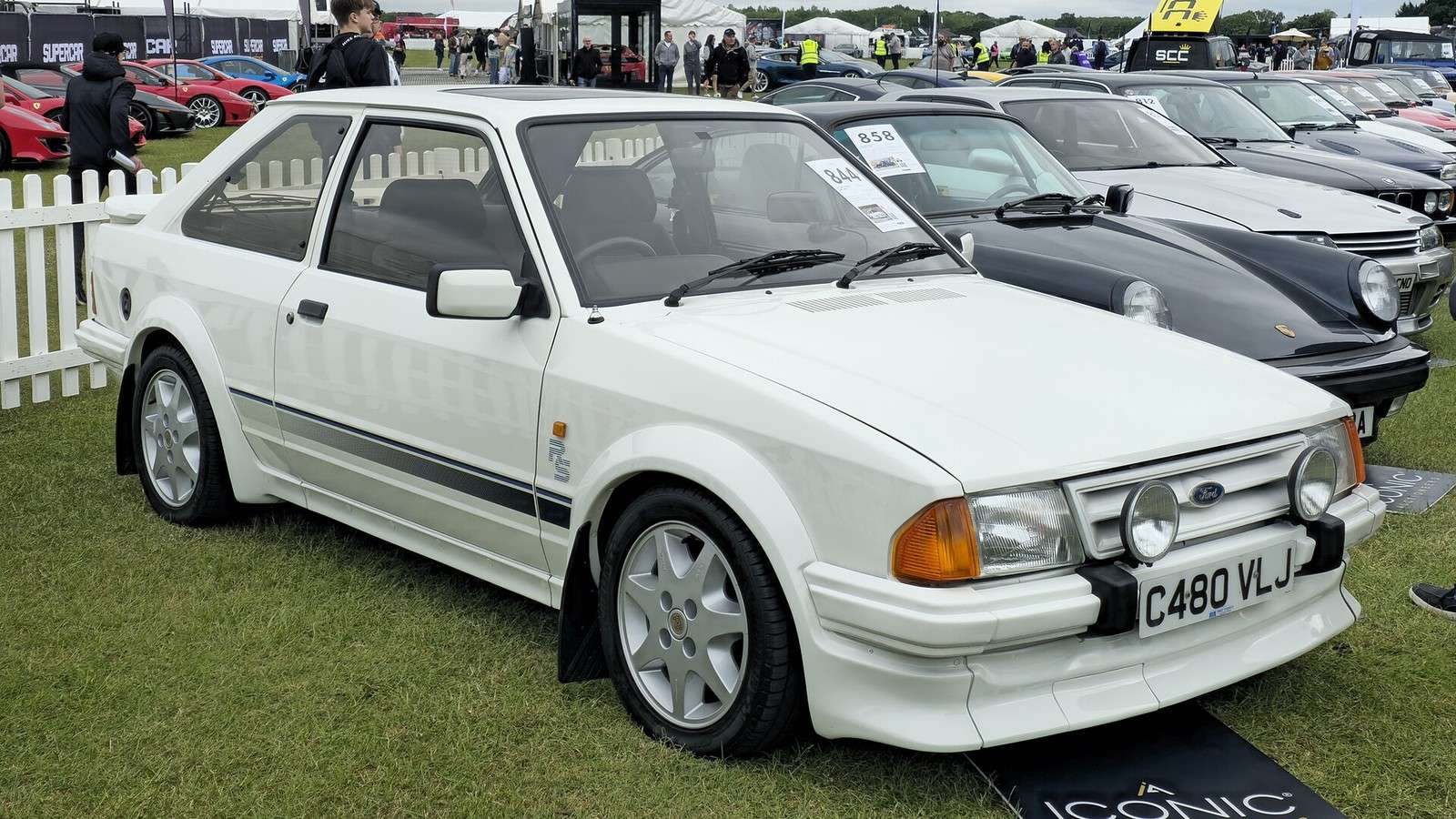
The white Ford Escort RS Turbo Series 1 turned the humble front-wheel-drive Mk3 Escort into a turbocharged homologation hero with a limited-slip differential, Recaro seats and unmistakable 1980s presence.
Here are ten things you probably didn’t know about the Ford Escort RS Turbo Series 1.
1. It was Ford’s first turbocharged European production car
The RS Turbo introduced forced induction to Ford of Europe’s road-car range in 1984. Its 1.6-litre CVH engine used a Garrett T3 turbocharger and Bosch KE-Jetronic injection to produce roughly 132PS.
2. It existed to satisfy Group A rules
Ford needed a production run of road cars before the Escort could compete in international Group A touring-car and rally categories. Around 5,000 Series 1 cars were produced, turning homologation necessity into one of the era’s most recognisable hot hatchbacks.

3. A limited-slip differential was standard
The viscous-coupling differential helped the front tyres manage turbocharged torque at a time when many fast hatchbacks simply spun an inside wheel. It was an unusually serious piece of equipment and a key difference from the visually similar Escort XR3i.
4. Almost every production car was white
Diamond White paint, blue body stripes and white seven-spoke alloy wheels created the definitive Series 1 look. Black cars were produced in tiny numbers for special purposes, making the famous black example associated with Diana, Princess of Wales, a genuine exception rather than a normal colour option.
Join the Unusual Cars Club free
Get forgotten cars, surprising motoring stories and the most interesting finds from Unusual Cars by email.
Free to join. No spam. Unsubscribe whenever you like. See our Privacy Policy.
5. Its engine was hand-finished by Ford’s performance operation
The turbo CVH used strengthened components, a lower compression ratio, an oil cooler and model-specific induction and exhaust hardware. It was not simply an XR3i engine with a turbocharger bolted onto it.
6. The cabin mixed competition cues with everyday Escort parts
Deep Recaro seats, a three-spoke steering wheel and boost-related instrumentation made it special, but much of the dashboard remained familiar Mk3 Escort. That combination of ordinary surroundings and sudden performance was central to the car’s appeal.
7. It was quick without chasing a huge top-speed claim
Period figures put 0–60mph in roughly eight seconds and maximum speed a little above 125mph. The stronger impression came from the abrupt boost delivery, steering reactions and lack of the sound insulation found in modern performance cars.
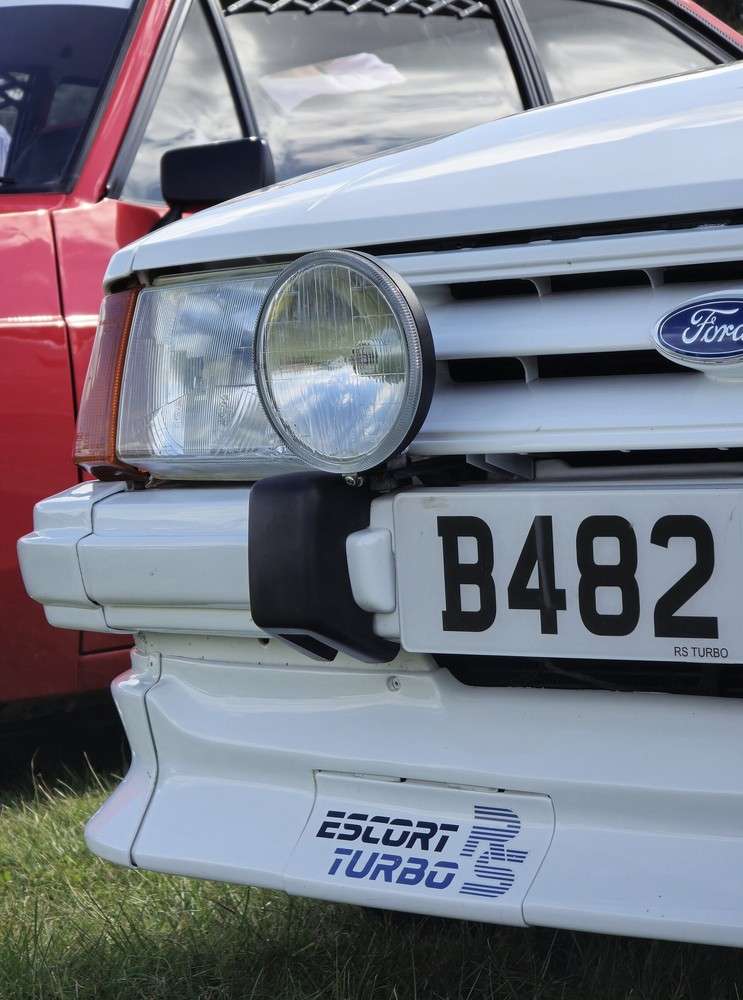
8. The Series 2 was a substantially different proposition
The later Mk4-based RS Turbo adopted revised styling, a different turbo installation and a more civilised character. It sold in far greater numbers, leaving the square-fronted Series 1 as the purer homologation model and the more coveted collector car.
9. Rust can matter more than engine mileage
Battery trays, floors, sills, suspension mounts, arches and areas hidden by the body kit all deserve careful inspection. Many cars have been reshelled or reconstructed, so matching identity, correct panels and documented provenance are essential.
10. Its scarcity is partly the result of its own popularity
The RS Turbo became a target for theft, modification and hard use when values were low. Survivors with the correct turbo, injection system, interior, wheels and graphics therefore represent far more than an ordinary restored Escort.
Why it matters
The Series 1 matters because it captures the moment turbocharging, touring-car homologation and the British hot-hatch boom collided. Its specification was serious, but its image became pure popular culture.
Enjoyed this one?
Join the Unusual Cars Club free for more forgotten performance cars, surprising motoring stories and new 10 Things articles.
Free to join. No spam. Unsubscribe whenever you like.
Explore every 10 Things article in the Unusual Cars hub →