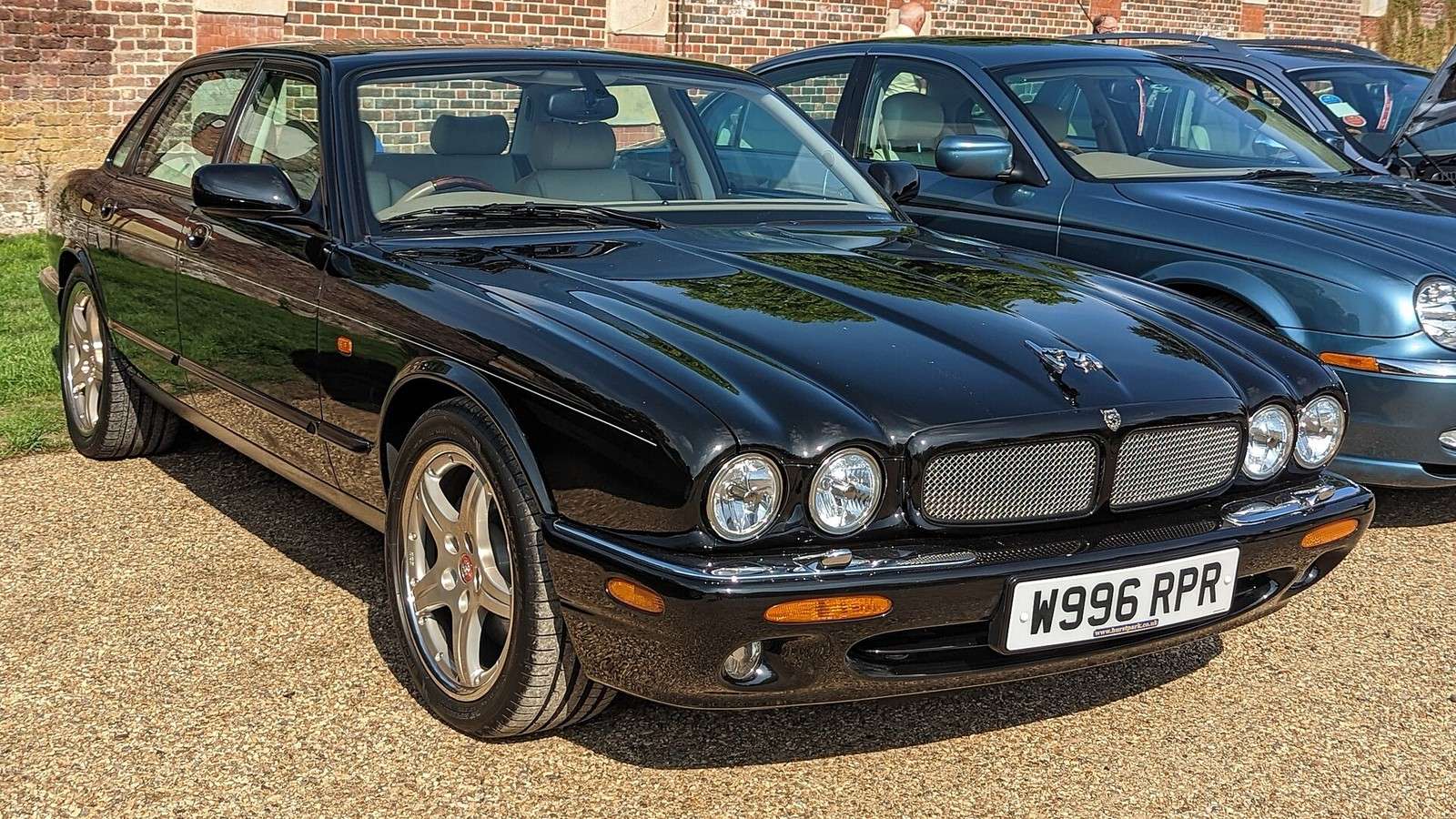
The X308 Jaguar XJR hid supercar acceleration beneath one of Britain’s most traditional saloon shapes. Its supercharged V8 produced 370bhp, yet the polished wood, soft leather and restrained bodywork allowed it to pass as an elderly executive car until the throttle opened.
Here are ten things you probably didn’t know about the Jaguar XJR (X308).
1. It was the first V8-powered XJR
The earlier X300 XJR used a supercharged version of Jaguar’s AJ16 straight-six. When the revised X308 arrived for 1998, the new AJ-V8 replaced it. The XJR therefore kept its familiar appearance and badge while changing engine architecture completely—a distinction easily missed when the two generations are parked together.
2. The supercharged 4.0 produced 370bhp
An Eaton-supercharged 3,996cc AJ-V8 generated 370bhp and 387lb ft. Jaguar noted that the new engine weighed around 20kg less than the old supercharged six while producing 44bhp more. That combination transformed both acceleration and front-end balance without requiring aggressive external styling.
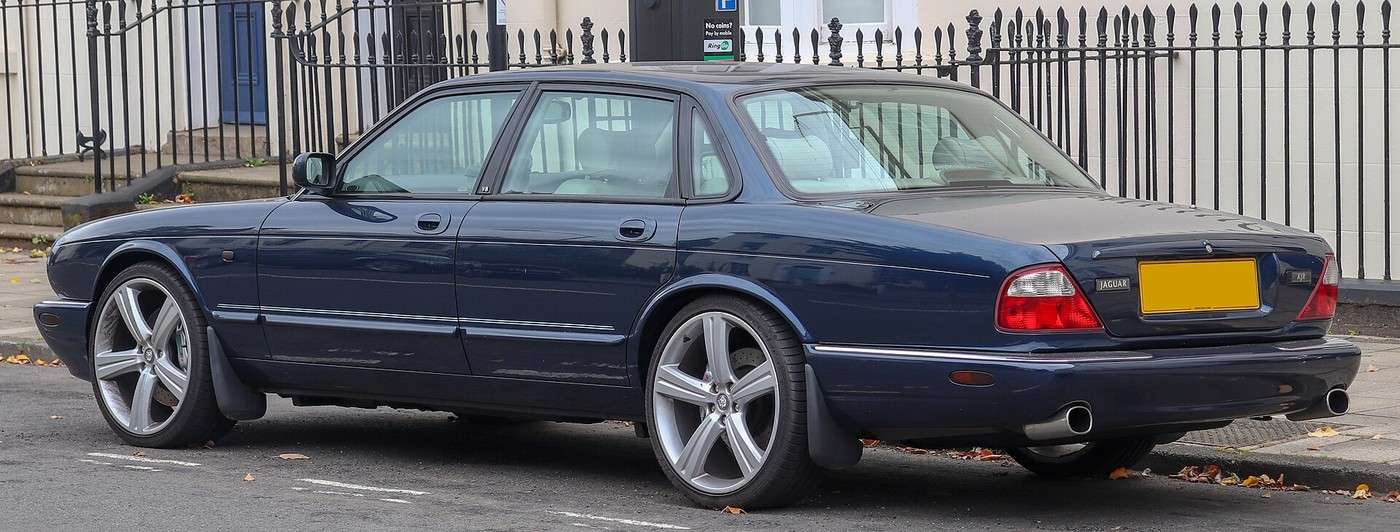
3. Jaguar quoted 0–60mph in 5.3 seconds
The company’s historical account records a 5.3-second sprint to 60mph—remarkable for a large luxury saloon launched in the late 1990s. Maximum speed was electronically limited to 155mph, the first such limiter fitted to a Jaguar, because the car had enough power to continue well beyond ordinary motorway speeds.
4. It used a Mercedes-Benz automatic transmission
The supercharged V8’s torque exceeded the comfort zone of Jaguar’s regular ZF automatic, so the XJR used the robust five-speed W5A580 transmission from Mercedes-Benz. Naturally aspirated X308s retained ZF units. The gearbox difference is an important identification and servicing detail, not an internet myth about parts-bin engineering.
Join the Unusual Cars Club free
Get forgotten cars, surprising motoring stories and the most interesting finds from Unusual Cars by email.
Free to join. No spam. Unsubscribe whenever you like. See our Privacy Policy.
5. Its body was an evolution, not an all-new shell
The X308 developed the X300 structure and traditional XJ proportions, but gained the V8 powertrain, new dashboard, revised bumpers, lamps and numerous structural and electrical changes. That continuity explains both its timeless appearance and relatively compact cabin compared with German luxury rivals of similar external size.
6. CATS adjusted the dampers electronically
Computer Active Technology Suspension monitored vehicle movement and changed damper settings to balance ride and control. It helped the XJR remain supple in normal driving while resisting excessive body movement when driven hard. The system was sophisticated, but it worked alongside conventional springs rather than the later air suspension used by some luxury cars.
7. The Daimler Super V8 was its discreet relative
Jaguar installed the same supercharged powertrain in the Daimler Super V8, pairing XJR performance with more traditional chrome, softer trim and greater luxury. Long-wheelbase versions added rear space. The Daimler is therefore mechanically close to an XJR even though its image and suspension priorities were deliberately more formal.
8. Nikasil became a major ownership story
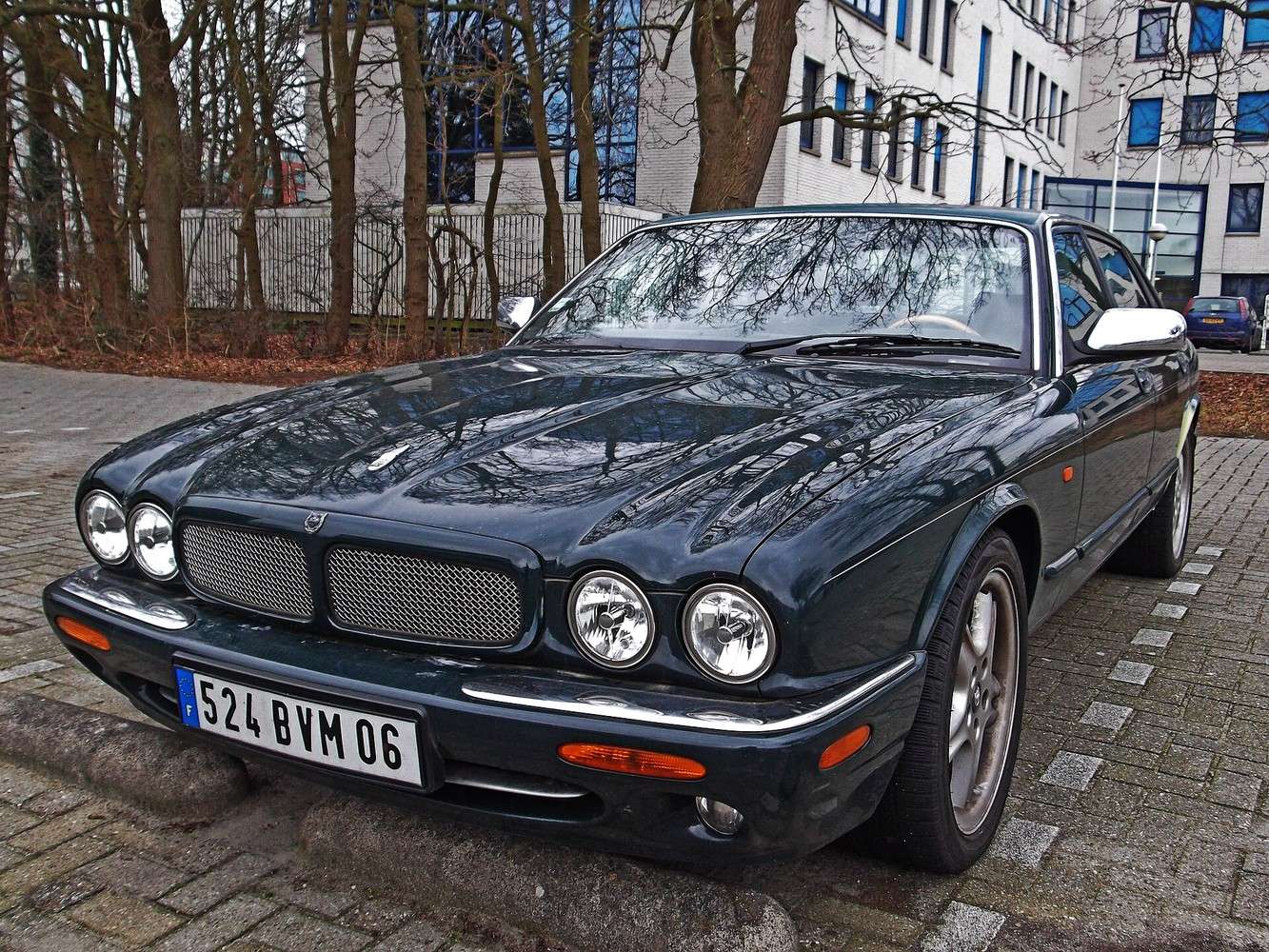
Early AJ-V8 engines used nickel-silicon-carbide-coated cylinder bores. High-sulphur fuel and repeated short cold journeys could damage the coating, causing loss of compression. Jaguar later moved to steel liners. Many surviving engines have already been replaced or proved healthy, so bore material, compression and history matter more than age alone.
9. Later timing-chain tensioners were improved
Early secondary-chain tensioners used plastic-bodied components that could deteriorate, while water pumps and thermostat housings also evolved. Sensible owners replace vulnerable parts before failure. A quiet engine at idle is reassuring but not a substitute for invoices showing which generation of components is actually fitted.
10. The XJR 100 celebrated Jaguar’s founder
The 2001 XJR 100 formed part of a special series marking the centenary of Sir William Lyons’s birth. Black paint, dark trim, distinctive wheels and numbered equipment gave the already rare supercharged saloon extra identity. It did not need more power; exclusivity and presentation were the point.
Why it matters
The X308 XJR matters because it delivered the pace of a modern performance car in a body rooted in decades of Jaguar tradition. It is both an old-fashioned leather-lined XJ and a 370bhp supercharged weapon—and neither side feels like an imitation.
Enjoyed this one?
Join the Unusual Cars Club free for more forgotten performance cars, surprising motoring stories and new 10 Things articles.
Free to join. No spam. Unsubscribe whenever you like. See our Privacy Policy.
Explore every 10 Things article in the Unusual Cars hub →