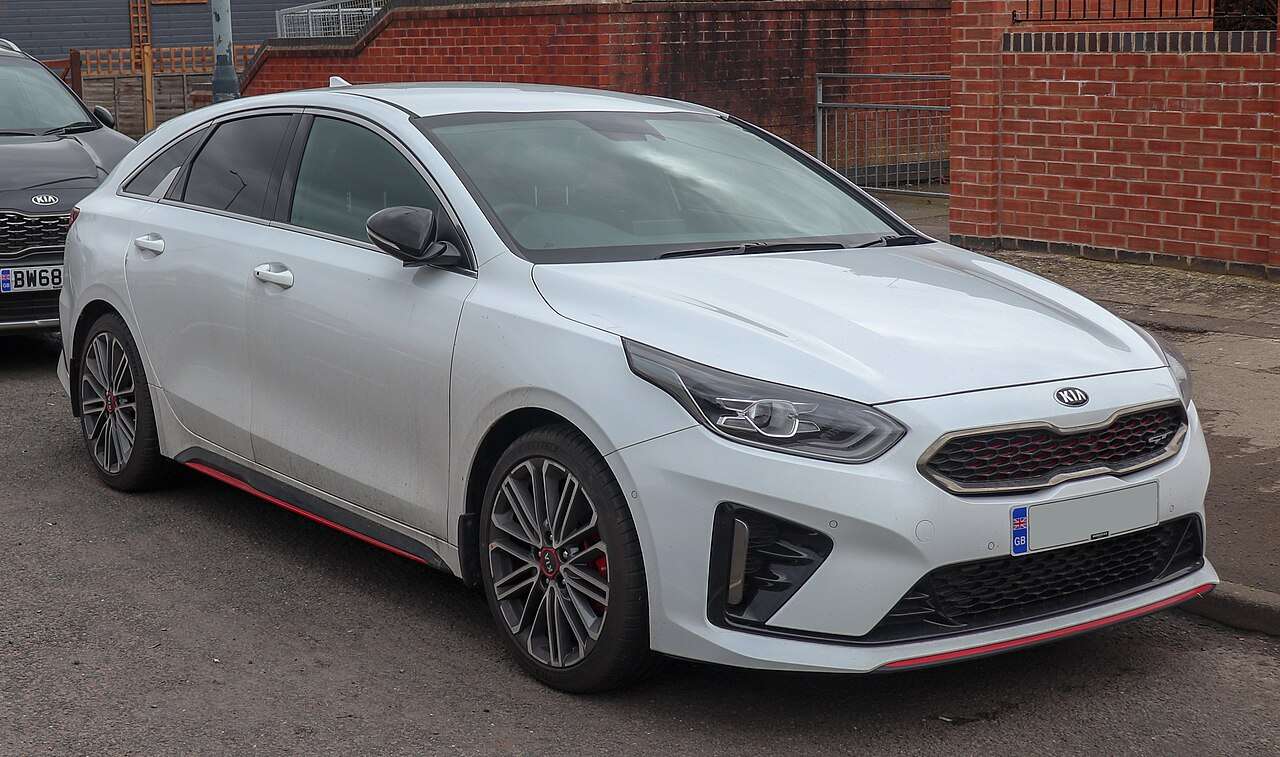
The Kia ProCeed GT is one of the more appealing ways to buy a practical performance car without choosing an obvious hot hatch or SUV. Its five-door shooting-brake body combines a useful load bay with a distinctive roofline, while the 1.6-litre turbo engine delivers enough performance to make everyday driving interesting.
The key is buying it as a complete package: engine, seven-speed dual-clutch gearbox, GT suspension, brakes and family-car equipment. A cheap example with a shuddering transmission or missing maintenance can undo the value argument quickly. A well-kept standard car with detailed invoices is a much stronger proposition.
This guide covers the CD-generation ProCeed GT shooting brake introduced in 2019, with the 1.6 T-GDi petrol engine. It is separate from the older JD-generation three-door pro_cee’d GT. It also excludes the GT-Line and GT-Line S, which can look similar while using different engines and equipment.
Is a used ProCeed GT a good buy?
Yes, particularly if you want a stylish, usable family car with warm-hatch performance and a relatively discreet badge. Its attraction is the balance between pace, equipment, luggage space and everyday usability. Judge it on those terms rather than expecting the sharpest or most powerful car in its class.
Our preferred purchase would be an unmodified UK car with a coherent service record, a clean diagnostic inspection and a gearbox that behaves properly when cold and fully warm. Confirm the actual remaining warranty with Kia, rather than treating a seven-year headline as permanent protection. Early cars may already be outside cover by time or mileage.
The shooting-brake shape brings compromises. Rear headroom, the tailgate opening and visibility will not suit every household. Check your child seats and usual luggage before buying. If maximum square load space matters more than appearance, compare it directly with a conventional estate rather than assuming the ProCeed’s headline boot figure settles the decision.
Identify the right ProCeed: GT, GT-Line and old pro_cee’d
| Model | What it is | What to check |
|---|---|---|
| CD ProCeed GT | Five-door shooting brake; 1.6 T-GDi, 204PS (about 201bhp), 265Nm; UK examples use seven-speed DCT | Confirm VIN, engine and original specification. This is the performance model covered here. |
| CD GT-Line / GT-Line S | Sporting styling and a range of other engines, including later 1.5 petrols | Equipment level does not make one a GT. Parts and insurance descriptions differ. |
| JD pro_cee’d GT | Earlier three-door hatchback | A separate generation with different body, transmission and parts requirements. |
Kia’s original ProCeed launch material identifies the GT’s 1.6-litre turbo engine and seven-speed dual-clutch option within the new family. It also explains the change from the old three-door body to a five-door shooting brake. That distinction should guide both your search terms and the information you trust.
Ask for the registration and VIN before travelling. Match them to the V5C and the physical car, and obtain a build specification if the advert is unclear. A listing described as a 1.5 GT may simply mean GT-Line, while a manual advert may refer to the older car or another market. Do not pay for an apparently rare specification until it has been verified.
The later model archive includes revised GT-Line engines and equipment, so it should not be read as a specification sheet for every earlier GT. Facelift appearance, infotainment and safety equipment vary with build and market. Use the brochure and handbook relevant to the individual car, not the newest ProCeed page you find online.
Factory 18-inch wheels, GT trim and sports seats are useful visual clues, but badges and wheels can be changed. Check the powertrain identity and make sure the insurance quote matches it. This also prevents the wrong brake kit, alternator or service parts being ordered from a broad compatibility list.

UK used prices: where the value lies
The Cazoo GT results checked for this guide mixed old and new generations, so their total stock count or average would not be a clean measure of the CD market. Individual shooting-brake-era examples included a 2019 1.6 automatic at £10,360 with 84,067 miles, another 2019 at £12,494 with 49,500 miles, and a 2020 car at £13,440 with 52,967 miles. A 2022 example with 19,750 miles was advertised at £19,060.
Those are asking-price examples, not completed sales, independent inspections or recommendations to buy those cars. They show how much the comparison changes with age, mileage and selling channel. Confirm generation and body style on any listing before including it in your own shortlist.
The best value is often the car with the strongest evidence and least immediate work. Recent quality tyres, brakes and proper servicing can outweigh a small mileage advantage. Conversely, a low-mileage car with repeated short trips and years between services should not automatically command a premium.
Calculate the purchase total in a simple list: car, inspection, overdue maintenance, consumables, insurance and a reserve. Obtain written estimates for faults before negotiating. If the adjusted price approaches that of a cleaner example, buy the cleaner example rather than inheriting a repair programme for the sake of a nominal discount.
History, warranty and recalls
Read the service record as a timeline. Match dates and mileages to invoices and the government MOT history. Ask a Kia retailer for the required schedule and operations for that VIN, then check whether oil, filters, plugs, brake fluid and any additional work were carried out when due.
Kia’s UK model archive states annual or 10,000-mile servicing for the ProCeed range, whichever comes first. Confirm the exact GT schedule and any severe-use requirements for the individual build rather than relying on a generic online booking package. An “annual service” can have different contents at different mileages.
The seven-year/100,000-mile warranty was an important selling point and is transferable subject to the applicable terms. It does not mean every used car still has cover, nor that every worn component is covered for seven years. Check the first registration, mileage, maintenance history, exclusions and any previous claim decisions with Kia before paying extra for an advertised warranty.
A service stamp establishes less than an invoice with the correct parts, oil approval and work recorded. If the car has been serviced independently, ask for enough evidence to establish that the required schedule and standards were followed. Missing evidence should be reflected in your decision, not replaced with a seller’s reassurance that “Kia will cover it”.
Check safety campaigns using Kia’s official VIN-based recall process and the government recall service. Ask for completion records where applicable. Avoid assuming that a recall affecting another Kia engine, gearbox or overseas market applies to this car. Equally, a clean MOT is not confirmation that manufacturer campaigns are complete.
Obtain a finance, theft and insurance-loss check. Inspect VIN markings and paperwork, and establish the seller’s right to sell. An unresolved finance balance, identity mismatch or unclear import history should be settled before a deposit. A low price is not compensation for legal uncertainty over the vehicle.
1.6 T-GDi engine: cold-start and road-test checks
Arrange a cold start and ask the seller not to warm the car beforehand. Check for residual warmth on arrival. Watch the warning lamps complete their normal checks, then listen as the idle settles. Persistent metallic noise, misfiring, smoke or warning messages require investigation rather than a claim that all direct-injection engines sound that way.
Check oil level according to the handbook and ask about top-ups as a quantity over distance. Look for evidence of leakage around accessible engine joints and below the engine. If the engine bay has just been cleaned, inspect it again after the road test and arrange an underside check; oil can travel before it drips.
Confirm the correct oil approval and maintenance history for the engine. A bottle of broadly suitable viscosity in the boot does not establish that the correct lubricant has always been used. Long gaps, unknown servicing or a tuned engine increase uncertainty. A fresh oil change immediately before sale does not explain earlier maintenance.
The 1.6 T-GDi uses a timing chain, so do not treat an ordinary timing-belt kit as routine scheduled maintenance. Persistent chain-type noise or timing-related faults need specialist diagnosis. If timing work has already been done, ask for a detailed invoice identifying the cause, parts and associated checks rather than only a verbal claim that the “chain was sorted”.
Inspect coolant when safe and cold. Check for a plausible level, staining around connections and evidence of repeated topping up. Ask about overheating, coolant repairs and whether the heater works consistently. A normal dashboard temperature during a short demonstration cannot rule out an intermittent leak or cooling problem.
Once warm, the engine should pull progressively without repeated hesitation, sudden loss of power or persistent smoke. If it misfires under load, diagnosis should distinguish ignition, fuel, intake and boost-control causes. Do not buy a car on the assumption that a warning light is only a cheap sensor unless that has been established independently.
Direct injection is a reason to investigate symptoms carefully, not a reason to prescribe an expensive cleaning procedure to every car. Rough running can have several causes. Ask the technician to establish the fault before recommending intake cleaning, injectors or other costly work. A bottle of fuel additive is not proof that a mechanical problem has been resolved.
Inspect intake and exhaust modifications and ask whether the ECU has been remapped. Request documentation, insurer acceptance and the original parts where relevant. For most buyers, standard specification is the easier proposition. A claimed power figure without maintenance, diagnostics or warranty clarity should not add value to your offer.
Love cars you don’t see every day?
Get forgotten cars, surprising motoring stories and the most interesting finds from Unusual Cars by email.
Free to join. No spam. Unsubscribe whenever you like. See our privacy policy.
Seven-speed DCT: the most important test-drive checks
The GT’s seven-speed dual-clutch transmission should be assessed as a DCT, rather than expected to behave exactly like a torque-converter automatic. Its clutch engagement is most revealing at low speed. Test reverse, drive selection, parking manoeuvres, a safe incline and ordinary traffic, then repeat after the car is fully warm.
A small difference in feel between a DCT and a conventional automatic is not the same as persistent shudder, slipping, delayed engagement or a warning message. If the car vibrates strongly when taking up drive, ask a specialist to determine whether the cause is clutch behaviour, adjustment, mounts or another fault. Do not accept an adaptation reset as proof that worn hardware has been repaired.
Use a route that includes gentle acceleration and normal higher-speed driving where legal. Check shifts in automatic mode and with the paddles, including changes under light and moderate load. There is no need to abuse the transmission to test it. A properly warmed mixed route tells you more than a dramatic acceleration run from the showroom.
Ask about previous clutch, actuator, software and gearbox work. The invoice should identify what failed, what was replaced and which calibration procedures followed. “Gearbox serviced” is too vague to establish whether oil, clutch hardware or an electronic adjustment was involved. The correct procedure and fluids depend on the actual gearbox.
The seven-speed arrangement is different from Hyundai’s later eight-speed wet N DCT. Do not apply the Kona N’s recall, maintenance or repair pricing to the ProCeed simply because the brands share a group. Similarly, a manual-clutch quote for an older pro_cee’d is not a fitted price for this dual-clutch system.
When assessing a car used mainly in traffic, ask about repeated overheating warnings and its normal driving conditions. Follow the handbook’s guidance for gradients and slow manoeuvres: avoid holding the car on an incline with the accelerator. If a warning appears during the test, stop safely and follow the instructions rather than trying to prove the fault will disappear.
Scan the relevant modules before and after the road test. Record the codes, explanation and whether faults return. Recently cleared memory reduces what a clean scan tells you. If a major repair has been completed under warranty, that can be reassuring when documented, but the car should still be tested independently in its current condition.
Suspension, steering, tyres and brakes
The GT’s sporting suspension should give controlled responses, but it should not knock, wander or vibrate. Drive over a rougher surface at normal speed and listen for repeated noises. On a lift, inspect springs, dampers, bushes, links, joints and engine or transmission mountings. A sound suspension is more valuable than cosmetic upgrades.
Look at all four tyres by exact model and condition, not only visible tread depth. Check inner shoulders, sidewalls and age. A mixture of budget tyres can change traction and steering feel substantially. If one edge is heavily worn, diagnose alignment, damage or worn components before paying for replacements.
Inspect the inside of each 18-inch wheel for distortion, cracks and previous repairs. Kerb marks can be cosmetic; structural repairs need a different assessment. A motorway vibration may involve wheel damage, tyre condition or balance, so establish the cause rather than assuming the cheapest solution.
Check front discs and pads against the actual GT hardware. Search results often include smaller discs for other Ceeds or old JD parts incorrectly grouped into CD compatibility. Measure and verify the original part number before ordering. Red calipers are not a fitment specification.
During safe braking, the car should stop progressively without pronounced pull, grinding or repeated pedal pulsation. Surface rust from standing can clear; deep corrosion, uneven contact and heavily worn discs can require replacement. Test the parking brake and confirm that any associated warning messages are absent.
A recent MOT pass does not establish that brakes and tyres have much life left. Ask the inspector for remaining condition and likely timing of replacement, then use that in the first-year budget. If the seller promises to replace parts, agree the specification and retain the invoice at handover.

Bodywork, tailgate and water ingress
Walk around the car in daylight and sight along the doors and rear quarters. Compare paint reflections, shut lines and trim alignment. Inspect the lower front bumper and sill edges, which can suffer from parking and clearance damage. Fresh paint is not automatically a problem, but it should fit a credible repair history.
Open the tailgate and inspect the aperture, hinges, seals and boot floor. Lift mats and storage covers with permission. Look for dampness, disturbed seams, overspray and missing fittings. Water can affect wiring and trim as well as causing a smell, so establish the source rather than assuming a valet will solve it.
Check every fitted tailgate function and its warning messages. If powered equipment is present, test it through normal operation without forcing the mechanism. A hesitant or unreliable tailgate needs a repair estimate. Check the rear wiper, washer, heated rear window and high-level lighting too.
Inspect the windscreen, headlamps, cameras and parking sensors for repairs or damage. Ask whether calibration was required after windscreen or bumper work and request the invoice where relevant. A car may look tidy while an expensive assistance feature is unavailable or incorrectly repaired.
Where a panoramic roof is fitted, inspect the headlining, carpets and roof seals for evidence of leaks. Operate the blind and roof normally and listen for hesitation or grinding. Do not assume every GT has the same equipment as a highly specified GT-Line S; verify the actual build.
Interior, infotainment and practical ownership
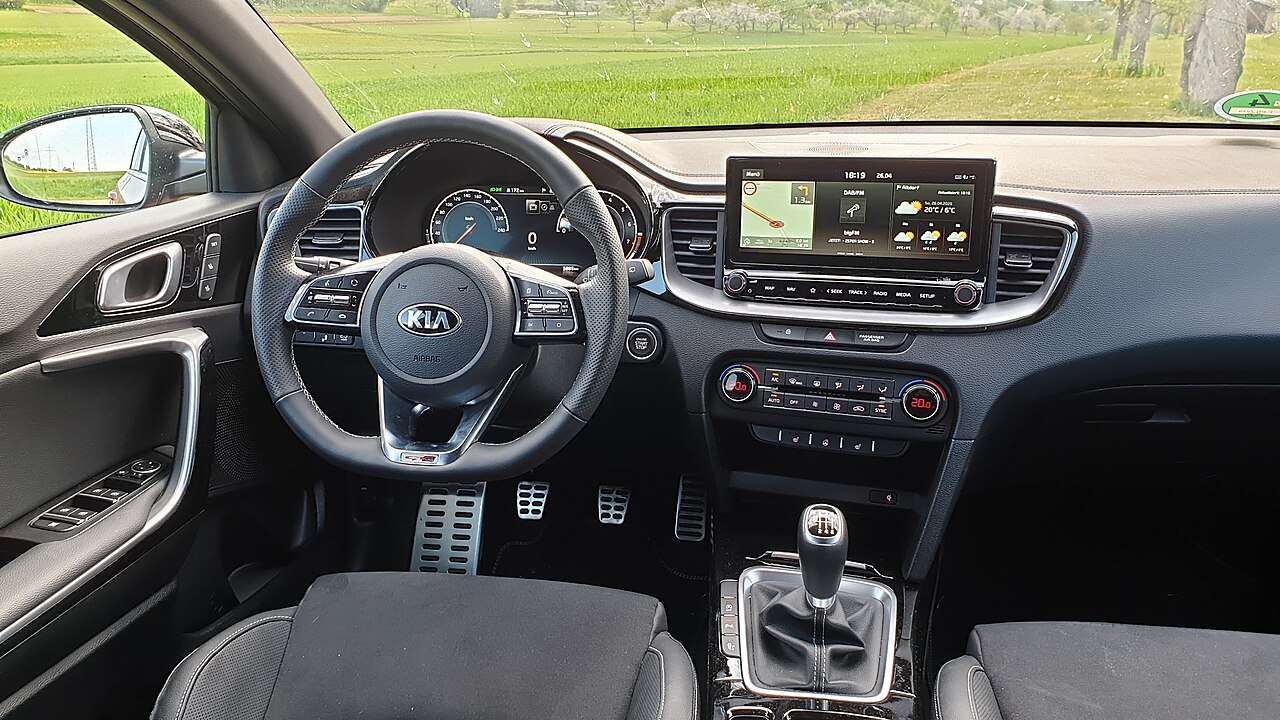
Try the sports seats for more than a minute. Check their adjustment, comfort and bolster condition, and make sure your normal driving position gives a clear view of the instruments. Inspect the steering wheel, pedals and seat wear against the claimed mileage. Family use can leave marks, but unusual wear deserves an explanation.
Test heating, air conditioning, heated seats and steering-wheel heating where fitted. Check windows, mirrors, locks, both keys, cameras, parking sensors and audio. Bring your own phone and cable to verify the connection you intend to use. A seller’s Bluetooth pairing does not prove your preferred phone integration works.
Infotainment screens and connected-service features changed during the model’s life. Confirm what is installed rather than assuming a later brochure applies. Ask about software updates, map availability, account transfer and any subscription. Missing functions should be understood and priced before purchase.
The low roofline deserves a proper rear-seat test. Install your child seats, check access and headroom, and ask taller passengers to sit in the back. Try folding the rear seats and operate any release levers. Inspect belts, latches and storage fittings for damage.
Kia’s original European launch material quotes a 594-litre boot, but shape matters as much as volume. Load your normal buggy, dog crate or luggage and check the tailgate closes safely. A low lift-over is useful; the sloping glass can still restrict tall loads. Check that the parcel shelf and underfloor fittings are present.
If towing, carrying bikes or fitting roof equipment is part of your plans, verify the handbook, approved limits and installation requirements for the specific car. Do not infer a capacity from a different Ceed engine or body. Check a fitted towbar’s wiring, installation record and insurance implications.
Maintenance: parts, labour and fitted-cost budgeting
Separate a parts listing, a labour allowance and a workshop quote. They are different kinds of evidence. The UK parts examples below were visible during research; they are not endorsements or VIN-confirmed fitment. The ProCeed workshop menu we checked at MC Autos publishes servicing as price on application, so it would be misleading to present it as a fixed GT fitted price.
| Job | Parts reference | Labour and fitted-cost position |
|---|---|---|
| Oil, filters and routine service | Compare GT CD service kits; an advertised oil/air/cabin kit with engine oil was £55.63, with another branded oil-kit example at £70.02. | Obtain a registration-specific scheduled-service quote. Confirm oil approval, quantities, plugs, brake fluid and record update rather than buying on package name alone. |
| Front discs and pads | Compare GT front brake kits; an explicitly advertised 320mm Pagid disc/pad set was £147.96. | For planning only, £147.96 parts plus an assumed £135 VAT-inclusive fitting allowance gives about £283. This is arithmetic, not a sourced workshop quote or a promised book time. |
| Alternator | Compare alternator options; a new unit advertised for CD 1.6 T-GDi was £152.92; a used 2019 1.6 unit was £72.50 before any coupon. | Request diagnosis and a fitted quote. Confirm original number, output, connectors, belt and any exchange surcharge; used and new units are not like-for-like. |
| Spark plugs | Find the correct spark plugs by engine and build. | Confirm the replacement interval and whether the scheduled-service quote includes them. A misfire requires diagnosis before parts are ordered. |
| Timing chain | Compare timing-chain components only after exact engine and repair diagnosis. | No routine timing-belt allowance. Any chain repair needs an itemised diagnosis, associated parts and labour quote. |
| DCT clutch or actuator work | Correct gearbox identification and diagnosis are essential. | No verified fixed GT DCT repair price obtained. Do not substitute a manual-clutch estimate. Ask separately about clutch pack, actuator work, associated hardware and calibration. |
| Rear brakes and parking brake | Compare rear brake parts with VIN confirmation. | Obtain a quote covering the correct procedure, condition of the parking-brake equipment and any additional parts. |
Disclosure: eBay links are affiliate searches using campaign 5339238906. We may receive commission from qualifying purchases. Results can include JD, diesel and GT-Line parts; verify VIN, original part numbers, specification, seller, delivery and returns before ordering.
For a repair estimate, ask the workshop to split diagnosis, parts, labour, consumables and VAT. Establish whether the quote includes alignment, software procedures or a road test where needed. A cheaper headline may omit work that another workshop includes. If you supply parts yourself, agree warranty responsibility before purchase.
Kia Care offers service plans based on vehicle age and mileage. Use the official registration-based quote to establish eligibility and exactly which services are covered. A first-three-services plan or a price for a 1.5 GT-Line is not automatically relevant to an older 1.6 GT. Compare the next actual scheduled services, rather than dividing a headline plan price into an assumed annual saving.
Keep invoices even if the service history is also digital. They help the next owner establish what was done and make warranty discussions easier. Budget for maintenance before warning lamps appear; a service reminder is not a condition report on tyres, brakes, mounts or a developing leak.
Hidden ownership costs
Tyres and alignment: get a fitted price for an appropriate complete set in the actual size. Include valves, disposal and any necessary alignment. A car on cheap mixed tyres should be valued with a proper replacement budget, particularly if poor wear patterns need investigation first.
Fuel: use your annual mileage and a realistic assumption. For example, 8,000 miles at 35mpg and £1.50 per litre costs about £1,559, while 30mpg costs roughly £1,818. These are planning assumptions, not a real-world consumption guarantee or a current fuel-price quote.
Insurance and tax: obtain an exact registration-specific quote and check the current government tax record. Declare modifications. Do not rely on a dealer’s copied annual VED figure, and confirm any original list-price treatment independently of the used asking price.
Warranty limitations: the cost of wear, diagnostics or a fault outside policy terms may remain yours. Read labour-rate caps, claim limits and exclusions on an aftermarket warranty. Ask specifically how a DCT complaint would be handled before relying on a sales promise.
Keys, lighting and electronics: missing keys, damaged lamps, faulty cameras and infotainment issues can each be significant. Get actual replacement and coding estimates. A promise that a part is inexpensive is less useful than a supplied, fitted and working replacement before handover.
Cosmetic body parts: the ProCeed’s distinctive rear body and trim should not be assumed interchangeable with an ordinary Ceed. Check availability and repair cost if damage is present. A cheap used part can become costly once paint, fitting and missing clips are included.
First-year catch-up: combine inspection, service, tyres, brakes and any small faults into one total, then retain a further reserve. The right reserve depends on the inspected car. A good-value purchase leaves enough money to keep it in the condition that made it attractive.
Make sure the shooting-brake layout suits you
Test the ProCeed’s advantages with real objects. Measure your dog crate, folded buggy or regular airport luggage and check the usable opening as well as the boot floor. The sloping glass can limit tall items even when the published capacity looks generous. Try the rear seats in the position your passengers need, then check how that affects luggage length.
For rear-seat passengers, assess headroom while sitting naturally and entering through the door. A car that feels spacious with the front seat moved forward may be less convincing with the driver in their normal position. Fit child seats without forcing the front seats into an unsuitable driving position, and check that the buckles remain accessible.
Inspect the load cover, underfloor storage and folding mechanisms for missing or damaged pieces. These may appear trivial during a test drive but matter every week. Check whether your preferred load can be carried securely and whether the tailgate closes without pressing against it. A test fit is more useful than discovering a limitation after purchase.
Finally, compare two plausible examples on total cost. A slightly dearer GT with recent good tyres, documented servicing and a smooth warm gearbox can beat a cheaper car once preparation is included. Keep the comparison specific to those vehicles; neither low mileage nor a long options list is a substitute for condition.
A viewing checklist you can use
- Before travelling: verify CD GT identity, VIN, service history, MOT timeline, finance status, recall record and insurance.
- At arrival: confirm a cold engine, inspect paint and panel gaps, compare tyres and look for wheel damage.
- Under the bonnet: inspect safe fluid levels and leak evidence, then listen to the cold start without accepting unexplained warnings.
- Inside: test keys, climate control, seats, phone connection, cameras and parking equipment.
- Practicality: fit child seats and luggage, fold rear seats and inspect the boot floor and tailgate.
- Road test: assess DCT take-up, reverse, an incline, urban shifts and warm operation; test steering and braking safely.
- Specialist inspection: request a lift check and diagnostic scans before and after the drive.
- Before paying: get itemised work estimates, confirm any promised preparation and retain a maintenance reserve.
Which cars should you buy, investigate or reject?
Buy: a correctly identified GT with coherent paperwork, convincing servicing, clean warm DCT behaviour and a sound inspection. A slightly less fashionable colour is a reasonable compromise for better condition.
Investigate: cosmetic repairs, a missing key or a diagnosed routine maintenance need. These are negotiable when their cost is known and the adjusted total remains competitive. Do not confuse a known repair with an unexplained symptom.
Walk away: unresolved identity or finance issues, refusal of inspection, repeated gearbox warnings, persistent shudder dismissed without diagnosis, unexplained coolant loss or evidence that faults have simply been cleared. The purchase should not depend on hoping a major problem is cheap.
Kia ProCeed GT FAQs
Is this the same car as the three-door pro_cee’d GT?
No. The 2019-on CD ProCeed is a five-door shooting brake. The older JD three-door deserves separate buying advice and different parts searches.
Is a GT-Line S faster than a GT?
GT-Line S is an equipment and styling designation, not proof of the GT’s 1.6 performance engine. Verify the engine, output and build specification rather than ranking cars by trim name.
What should I check most carefully?
The service record, cold and fully warm DCT behaviour, correct tyres and brakes, and any remaining warranty. A specialist inspection should connect symptoms to a diagnosis before you negotiate.
Does it need a timing belt?
The 1.6 T-GDi uses a timing chain. A chain-related symptom needs diagnosis; a generic ProCeed timing-belt listing is not evidence of a scheduled belt job on this engine.
Is the seven-year warranty still valid?
That depends on registration date, mileage, maintenance and the applicable terms. Ask Kia to confirm the individual car’s position and any relevant exclusions. It is not a blanket guarantee against wear.
Sources and photo credits
- Kia: original ProCeed launch release — generation, body, GT powertrain and European launch information.
- Kia UK ProCeed model archive — range evolution and aftercare information; later GT-Line specifications should not be applied to every earlier GT.
- Kia Care service plans — obtain a registration-specific plan and coverage details.
- MC Autos ProCeed servicing — published service scope and price-on-application position.
- Cazoo GT listings — individual asking-price examples; results mix generations.
- Kia UK recall checks — confirm campaigns against the individual VIN.
Inspection recommendations are editorial guidance, not a claim that every car develops each fault. Prices change; part fitment and repair costs need confirmation for the actual vehicle.
Featured photo: Vauxford, Wikimedia Commons, CC BY-SA 4.0; resized. Inline images are credited individually.
Kia ProCeed GT CD for sale on eBay UK

See more Kia ProCeed GT CD cars on eBay UK
Love cars you don’t see every day?
Get forgotten cars, surprising motoring stories and the most interesting finds from Unusual Cars by email.
Free to join. No spam. Unsubscribe whenever you like. See our privacy policy.