Somewhere in the 1980s there was a Ford customer who could look through the back window of his new car and see the engine. He had bought an RS200. The engine was behind him, the gearbox was up ahead of him and the firm better known for building the Reliant Robin had helped put the whole thing together. Imagine the conversation when somebody at work asked whether he had considered the XR3i.
Ford built the RS200 because it wanted to go rallying. The regulations called for a run of road cars, so a machine designed to cross a forest at competition speed acquired number plates and became a highly improbable way of getting to the shops. Even by the standards of Ford’s Rallye Sport department, this was an adventurous interpretation of the words “company car”.
Yet the same two letters belonged on a Capri with a V6 under a very long bonnet, a Fiesta with a turbo under a very short one, and an Escort whose most important relative was a Sierra. To understand how they could all be RS cars, the place to start is Germany. And the first number to remember is 15, rather than 1600.

Before the Escort, there was the 15M
In 1968 Ford offered German customers RS versions of the 15M, 17M and 20M. The cars had the upright glass and generous brightwork of their time. Park one beside the last Focus RS and it takes a fair bit of imagination to see the family resemblance. There is a better clue in where each car was sold. You could buy an RS from the company that supplied the neighbours’ family transport. A specialist sports-car maker would have dearly loved that audience.
British enthusiasts tend to date the beginning from the Escort RS1600 in 1970. You can see why. Ask someone to draw an early RS and you are likely to get two round headlamps, a small two-door saloon and, if the artist has ever stood in a Welsh forest in November, an impressive angle between the direction of the front wheels and the direction of travel. It was the Escort that gave those letters an identity people could recognise from the other side of a field.
The little Escort with the expensive cylinder head
Open the bonnet of an RS1600 and the apparently modest number on the boot begins to make sense. Cosworth’s BDA had twin overhead camshafts, four valves per cylinder and a toothed belt driving the cams. The cylinder head let the engine breathe at the sort of speeds competition demanded. In ordinary conversation you could call it a sixteen-hundred Escort. That description left out practically everything you would want to tell the next person.
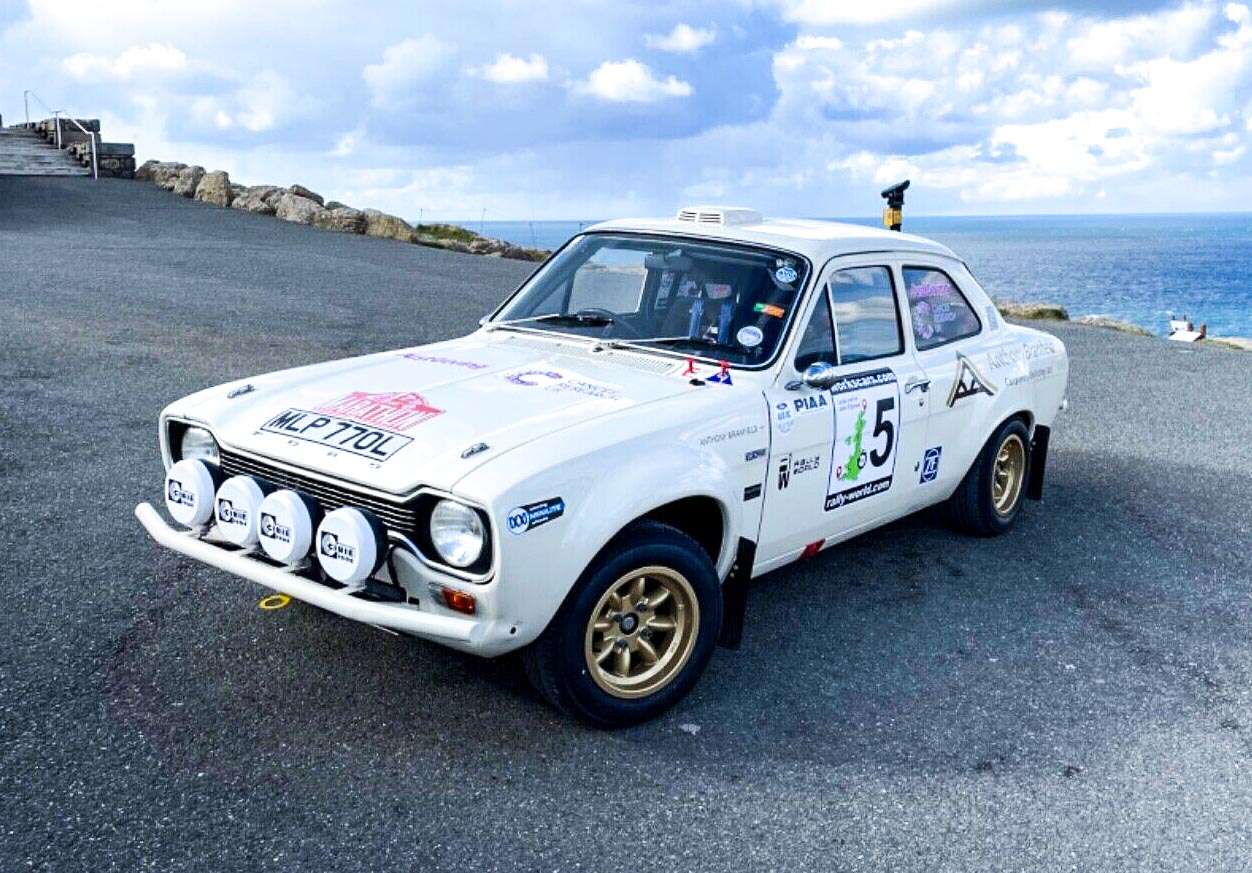
The basic Escort layout was a gift to a rally team. An engine at the front drove the rear wheels, leaving the fronts free to point the car. There was enough room to work on it and enough familiar Ford about it for club competitors to recognise what the works drivers were doing. Watching a purpose-built prototype disappear down a stage is one thing. Watching a car that resembles the one you arrived in do the same thing sideways is a rather more personal experience.
The RS2000 complicated matters for anybody who assumed that a bigger number bought a more exotic car. Its two-litre single-overhead-cam engine made a particularly agreeable fast road Escort. The smaller twin-cam car appealed to somebody with competition in mind. You could quite reasonably want the RS2000 for the journey to the rally and the RS1600 for the timed bits. Later, the sloping nose and four lamps of the Mk2 RS2000 gave even the spectator in the car park something distinctive to look at.
The RS1800 gets its world title
The boxier second-generation Escort acquired the RS1800, and the competition cars continued to develop well beyond the specification suggested by the digits on the boot. In 1979 Ford won the World Rally Championship for manufacturers. Björn Waldegård took the drivers’ title that year, the first season the championship formally awarded one. The photograph from the Acropolis gives some idea of the environment in which the Escort earned its reputation. A Greek gravel road was a fairly thorough examination of what held a small Ford together.

There is a danger in looking backwards from a trophy cabinet. It makes the result seem inevitable. A rear-wheel-drive Escort needed its driver to find traction on constantly changing surfaces. The same willingness to turn that delighted spectators could cost time when the rear tyres were spinning and the car needed to be accelerating. A good driver made all that activity look exuberant. A very good one made it quick as well. That distinction helped give the Escort a second career in club rallying long after the works team had moved on.
Meanwhile, the Capri went looking for BMW
The Escort tells only half the early story. Ford also had a handsome coupé to sell and a European touring-car championship in which to sell it. The Capri RS2600 put a fuel-injected V6 in a shape that already looked quick standing still. On a circuit the opposition included BMW, and here a driver could spend a whole afternoon trying to prise a few yards out of a rival in full view of the grandstand. That demanded a different kind of fast Ford from one built for a blind crest on gravel.
The RS3100 that followed is a lovely example of what a competition rulebook can do to a road car. A relatively small run of British-built Capris helped make the next racing version eligible. The road car had an Essex V6 and a conspicuous lip on its tail. The racing programme went much further, with a Cosworth-developed engine. That distinction matters when someone describes a surviving road RS3100 as a touring car with number plates. The genuine link is more interesting. The modest-looking road cars made the spectacular racing ones possible.
Front-wheel drive and the extra letter on the Escort
By the early eighties the everyday Escort had turned into a front-wheel-drive hatchback. Ford could have retired the RS badge with the old saloon. Instead it produced the RS1600i. That little “i” makes a considerable difference in conversation. An RS1600 carried its competition-bred twin-cam engine lengthways and drove the rear wheels. The later injected car carried its engine across the nose and drove the fronts. Anyone ordering parts over the telephone would do well to pronounce the last syllable clearly.

Then came the Escort RS Turbo. The white Series One, with its vents, arches and stripes, looked particularly good in the sort of bedroom poster whose corners eventually curled away from the wall. The engineering problem was less decorative. A turbocharger could persuade a small engine to produce an impressive amount of torque. The two front tyres then had to put that torque on the road while attending to the steering. Ford used a limited-slip differential to help. Twenty years later its engineers would still be finding ingenious answers to much the same question.
Even the Fiesta got involved. Its RS Turbo put the appeal of a boosted Escort into a smaller hatchback, while the later Fiesta RS1800 took a naturally aspirated route with a sixteen-valve engine. They make an entertaining pair to consider today. Would you take the little turbo car for the moment the boost arrives, or the RS1800 for the pleasure of extending it through the gears? Ford managed to furnish both sides of that argument, complete with matching badges.
The RS200 runs out of championship
Return to the car with the engine in the back and you can see just how far Ford was prepared to go. Group B allowed a manufacturer to design a specialised rally car and qualify it through a relatively small production run. Two hundred was the number that mattered for homologation. For a company accustomed to selling family cars by the thousand, it was an invitation to start with a clean sheet. The engineers appear to have used most of it drawing driveshafts.
The turbocharged engine sat behind the occupants. Power travelled forward to the gearbox, and the four-wheel-drive transmission distributed it to the axles. Putting the gearbox towards the nose helped spread the weight along the car. There were twin dampers at each corner and fibreglass bodywork. Look at the distance between the windscreen and the front axle, then at the bulk behind the cabin. You could never mistake the silhouette for an Escort, however enthusiastically you squinted.
The result that hints at what might have been came in Sweden in 1986, where Kalle Grundel finished third. That same season brought fatal accidents in Group B, including the crash involving an RS200 and spectators in Portugal. The category disappeared from the world championship at the end of the year. Ford had spent years developing a car for a competition that barely survived its arrival. That is the uncomfortable part of the RS200 story, and the reason a podium, rather than a string of world titles, is the result people remember.
The Sierra grows a wing
While the RS200 was making an ordinary Ford showroom look like the wrong address, the Sierra RS Cosworth made a much more familiar shape look extraordinary. The standard Sierra already had the rounded profile that had startled Cortina owners. The three-door Cosworth added bonnet vents and a wing that seemed to occupy a separate floor above the tailgate. A two-litre turbocharged engine sent 204 PS to the rear wheels. Suddenly the people who had laughed at the Sierra’s styling had something else to talk about.
The 1987 RS500 was an evolution special. Five hundred cars were developed from the Sierra RS Cosworth to make further changes eligible for racing. The entertaining detail is the extra row of injectors provided for competition development. A road customer could buy hardware whose real purpose would become apparent much later, on a circuit, with rather more fuel and boost involved. Judging an RS500 by the difference between its showroom power figure and the ordinary Cosworth’s misses much of what those five hundred cars bought Ford.
Love cars you don’t see every day?
Get forgotten cars, surprising motoring stories and the most interesting finds from Unusual Cars by email.
Free to join. No spam. Unsubscribe whenever you like. See our privacy policy.
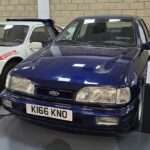
The Sapphire Cosworth took things in an altogether more discreet direction. Four doors and a separate boot made it easier to mistake for somebody’s company saloon. Four-wheel drive arrived in 1990. The earlier rear-drive Sierra had already proved a point in Corsica in 1988, winning outright against four-wheel-drive opposition on the island’s twisting tarmac. Put the three-door and the Sapphire alongside each other and you have two rather different answers to a question every fast Ford buyer understands. How much would you like the neighbours to know?

The Escort Cosworth has a Sierra secret
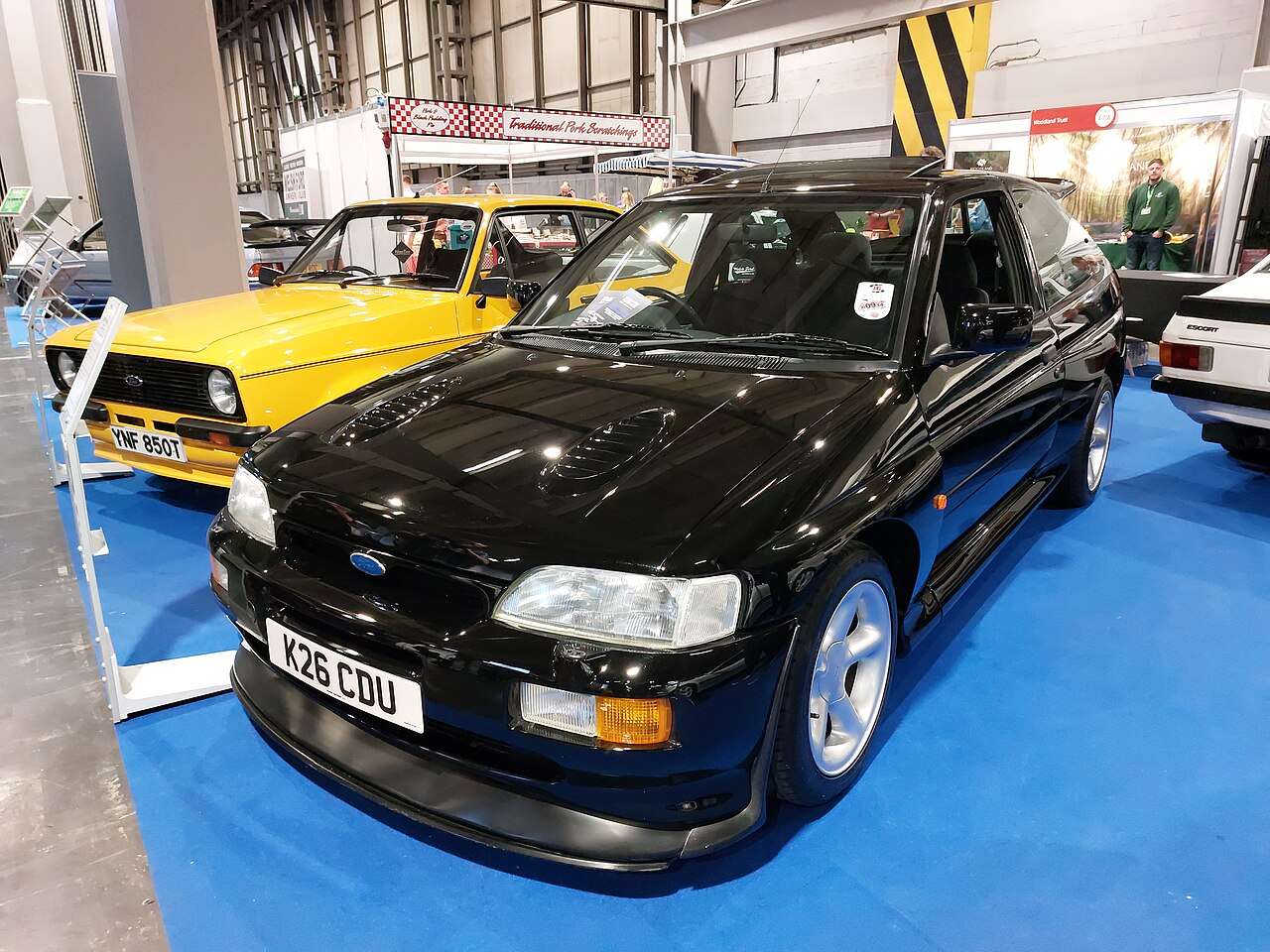
The great joke of the Escort RS Cosworth is that the most obvious thing about it is also the least interesting thing to explain. Yes, the whale-tail wing is magnificent. Yes, you would recognise one from the far end of a motorway services. But walk round to the front, lift the bonnet and look at the direction the engine faces. An ordinary Escort of the period has its engine across the car. The Cosworth has its engine pointing towards the grille. That is a fairly fundamental difference for two cars with the same name.
Ford wanted the shorter, more agile package of an Escort for rallying and already had a powerful four-wheel-drive transmission in the Sierra family. The solution drew on the Sierra Cosworth’s underpinnings beneath Escort-shaped bodywork. Those swollen arches and the stance of the car tell part of the story. The fore-and-aft engine tells the rest. Fitting a whale-tail to a lesser Escort was an achievable weekend ambition. Getting the mechanical parts to face the other way would rather spoil your plans for Sunday.

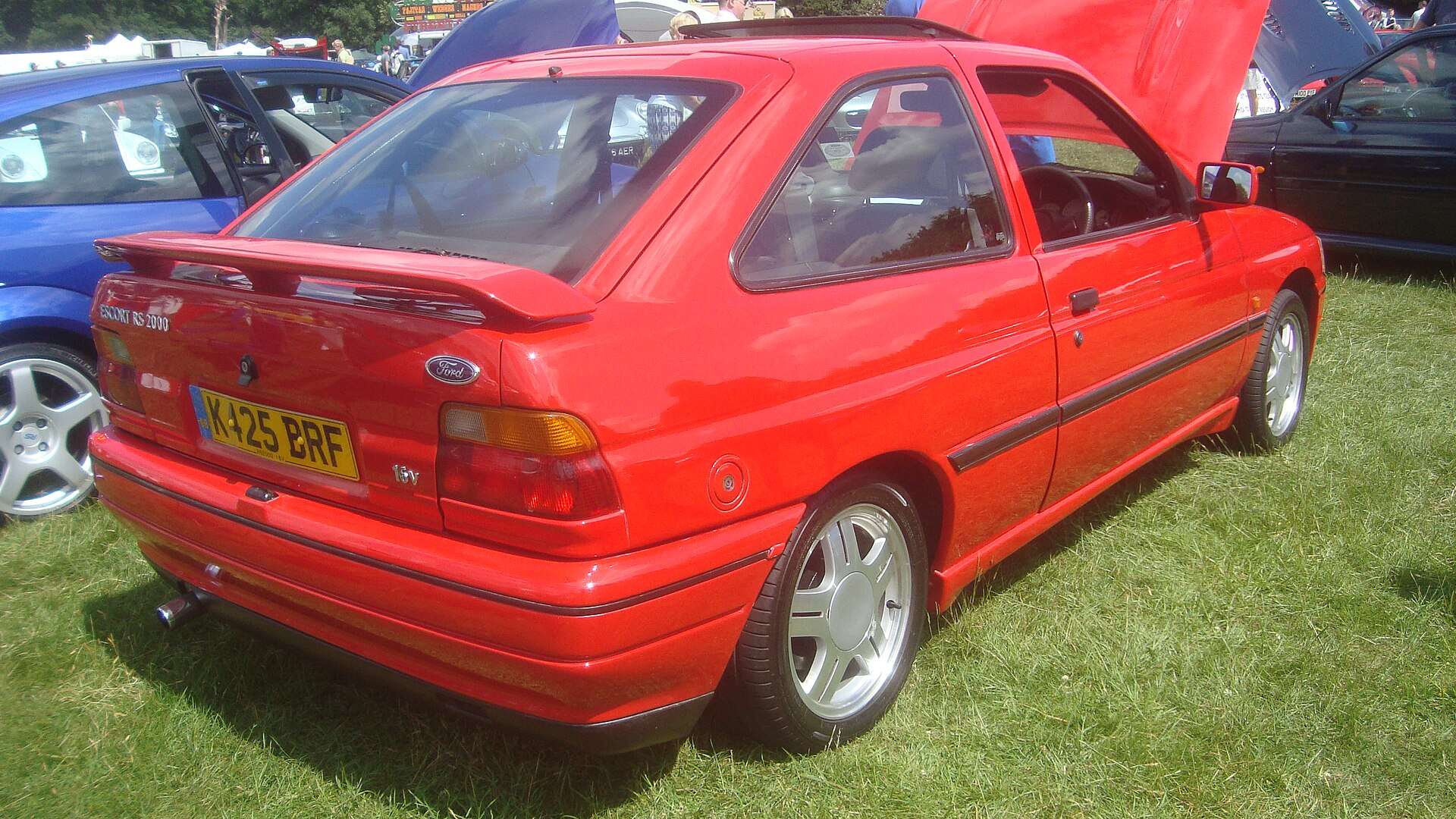
The distinction shows up particularly well alongside a contemporary Escort RS2000. Here was another quick, entirely legitimate RS with a two-litre engine, on sale to people who liked the same badge. It used a different mechanical layout and occupied a different place in the range. In the nineties you might have settled for one while dreaming of the Cosworth. Today the sight of a tidy surviving RS2000 can stop a Ford enthusiast in their tracks precisely because everybody thought to save the car with the enormous wing.
Three Focus generations and three ways out of a corner
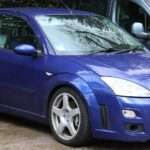
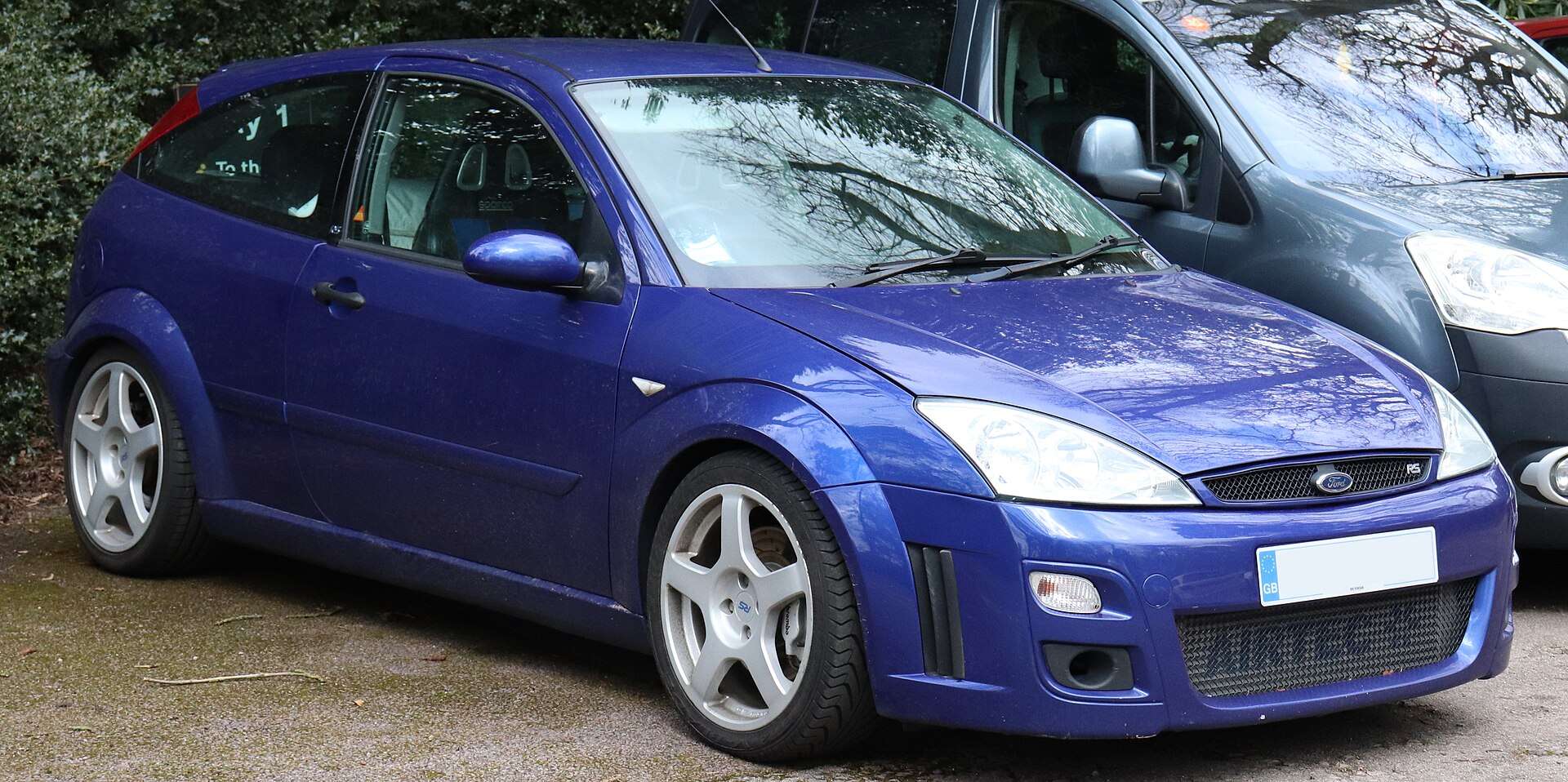
When the first Focus RS arrived in 2002, Ford had an awkward act to follow. The Escort Cosworth had four driven wheels and instant visual recognition. The Focus had two driven wheels and a body shape familiar from a thousand driving-school cars. Ford chose to spend money where a driver would feel it. There was a 215 PS turbocharged two-litre engine, a Quaife differential, Brembo brakes and OZ wheels. Imperial Blue paint made the finished car easy to pick out. Choosing a colour was one decision the salesman could spare you.
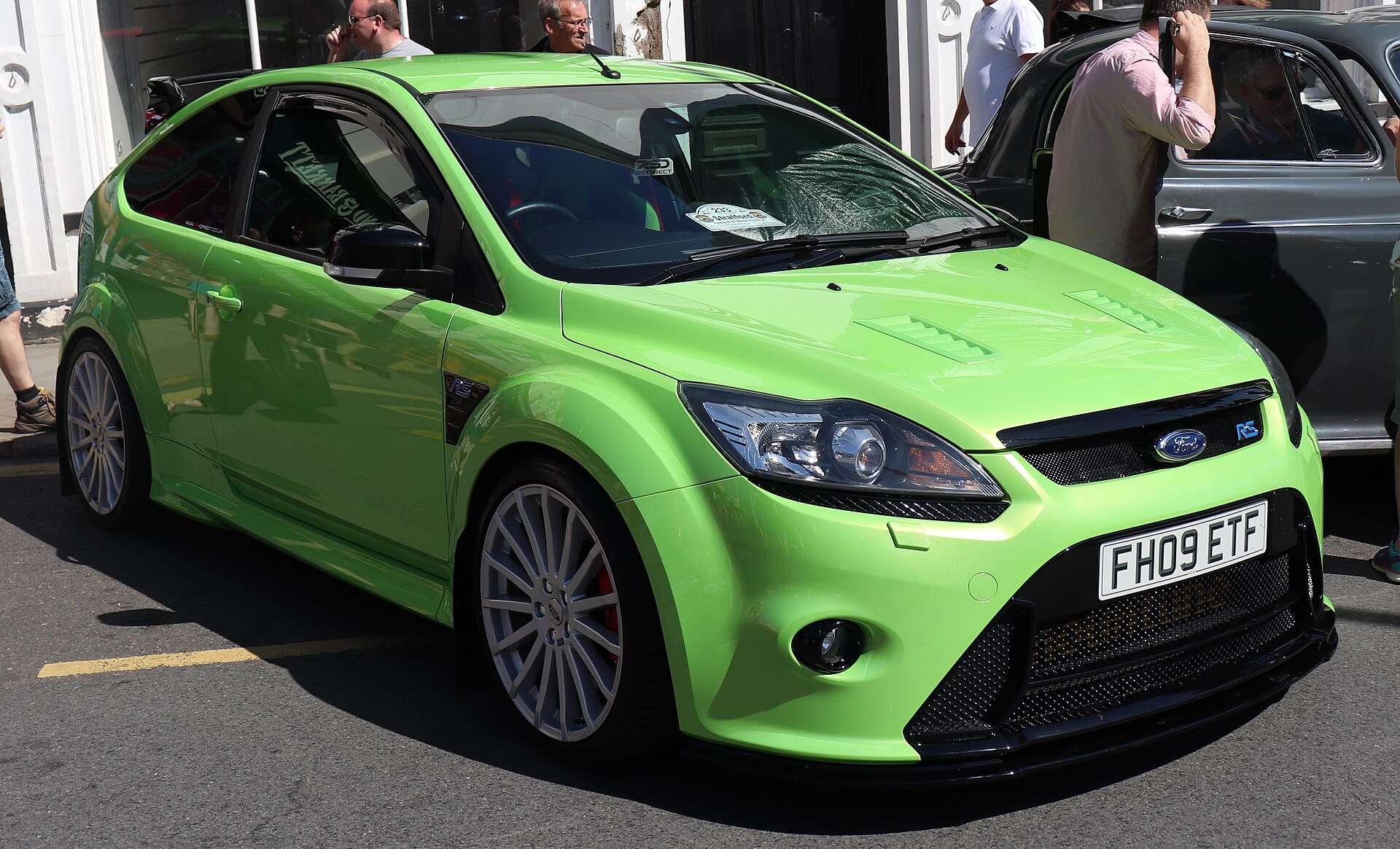
Seven years later the second Focus RS revisited the front axle with a five-cylinder turbo engine and 305 PS. Its RevoKnuckle front suspension altered the steering geometry to reduce the leverage through which drive forces could tug at the wheel. A limited-slip differential helped share the available traction. The remarkable thing about a bright green Mk2 is how much engineering went into making the bit you cannot see live up to the bit you can. Then you heard the uneven five-cylinder beat and wanted one for an entirely different reason.
Ford revived the RS500 name for a limited run of 350 PS Focus models. This time the number counted an exclusive road-car series. On the Sierra, the five hundred had served a touring-car programme. The same inscription on the tail therefore tells two quite different stories. It also supplies a useful answer if a friend casually announces they have seen an RS500. Before asking how much it was worth, ask which end of the car was doing the driving.
The third Focus RS finally sent power to all four wheels. Its 2.3-litre turbo four and clever rear drive unit could vary the amount of torque delivered to each rear wheel. Directing more to the outside wheel helped turn the car into a bend. Back in the seventies, an Escort driver had performed a rather more manual version of that conversation with the rear axle. Now a five-door family hatchback had a driving mode expressly devoted to going sideways.
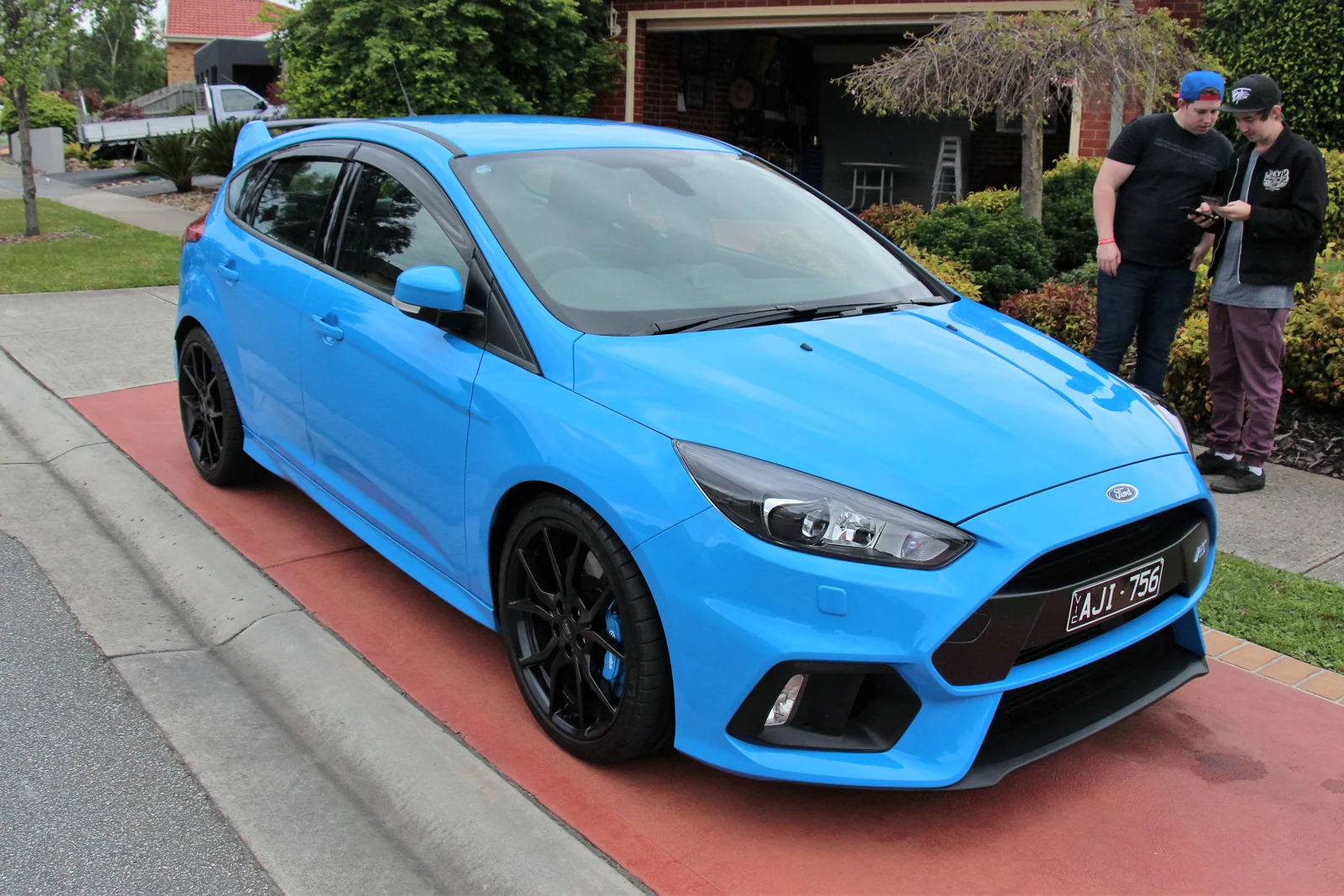
In 2018 the fifty orange UK Heritage Edition cars rounded off the Focus RS story with a Quaife front differential and a Mountune performance upgrade. Fifty years separated them from those first German RS models. Over that half-century Ford had tried front, rear and four-wheel drive, put engines at opposite ends of the car and given the world at least two spoilers you could recognise in silhouette. The wonderful thing is that fans still have a perfectly reasonable excuse to disagree over which was best. For me, the decider would be a set of Escort Cosworth keys. I’d lift the bonnet first. There would be plenty of time to admire the wing on the way back indoors.
Sources and further reading
- Ford: 50 years of RS (2018)
- Ford: rally and WRC heritage
- FIA Historic Database: Ford RS200
- Ford: third-generation Focus RS preview (2015)
- RS Owners Club: RS timeline
- Ford: Focus RS launch information (2002)
- Quaife: second-generation Focus RS differential (2009)
- Ford: Focus RS500 announcement (2010)
- Quaife: Focus RS Heritage Edition (2018)
- Unusual Cars guide to Ford RS models and editions