
IN-DEPTH BUYING GUIDE · F30 SALOON / F31 TOURING · FOUR-CYLINDER PETROL
The petrol BMW 3 Series F30 and F31 is a sensible alternative to both the familiar diesel and the more expensive six-cylinder models. A healthy 320i has useful everyday performance; a 328i or later 330i adds more without moving into 335i/340i ownership. The important question is which engine, transmission and drivetrain you are buying, not how many M badges appear in the photographs.
This guide concentrates on the 2.0-litre N20 and B48 petrol 320i, 328i and 330i in F30 saloon and F31 Touring form. It flags the separate 1.6-litre 320i EfficientDynamics Edition so you do not mistake it for the same mechanical car. It excludes the older E9x 330i, later G20/G21, 330e plug-in hybrid, diesel, six-cylinder and F34 Gran Turismo versions. Use their separate guides rather than transplanting their faults, parts or maintenance budgets here.
The buying verdict
Our starting point: a correctly identified, well-maintained B48-era 320i or 330i, preferably on sensible wheels, with a healthy gearbox and documented cooling/oil-leak repairs where required. A sound N20 320i or 328i can also make sense when its timing-drive condition and maintenance are properly assessed and the price leaves a realistic reserve.
Pay for: invoices, a cold-start inspection, BMW-aware diagnostics, lift access and a meaningful drive. Do not price as a small fault: an N20 chain concern without diagnosis, an oil-pressure warning, overheating, persistent gearbox slip or xDrive shudder. The lowest plausible repair is not an appropriate allowance for an unexplained major symptom.
320i, 328i and 330i: the badge is not the engine code
The generation spans a major petrol-engine change. Earlier 2.0-litre 320i and 328i use the N20 family. The 2015 update introduced BMW’s newer modular petrol engines, including the four-cylinder 320i and 330i; the latter replaced the earlier 328i position in the range. The relevant later 2.0-litre engine family is B48.
Registration dates around the changeover need care. Confirm VIN, production date, engine code, transmission and rear-wheel-drive/xDrive specification before valuing the car. A replacement engine, imported example or changed badge adds another reason to read the documentation and inspect the installation.
| Version | Identity to establish | Main buying distinction |
|---|---|---|
| Earlier 2.0 320i/328i | N20 engine, build date and repair history | Timing-chain/guide and associated oil-drive work need a clear assessment. |
| Later 2.0 320i/330i | B48 engine and actual production specification | Different engine architecture and parts; do not apply an N20 repair menu automatically. |
| 320i EfficientDynamics Edition 1.6 | Separate N13 application; confirm code/capacity | Not a 2.0 N20/B48 with economy trim. Its timing, cooling and service parts need their own specification. |
| Rear-wheel drive or xDrive | Actual driven-wheel layout | xDrive adds transfer case, front driveline and tyre-compatibility considerations. |
| Manual or eight-speed automatic | Exact gearbox | Clutch/flywheel and automatic-fluid/pan work are different budgets. |
| F30 saloon or F31 Touring | Body and fitted rear-access equipment | Inspect the Touring’s separate rear glass, load area and powered tailgate where fitted. |
BMW’s contemporary material identifies the 320i EfficientDynamics Edition as a 1.6-litre four-cylinder. If that is the car you want, have a specialist assess the N13 specifically; the 2.0-litre parts searches and N20 chain price below are not a quote for it. This distinction prevents an apparently correct 320i service kit from becoming the wrong purchase.
Choose equipment for use, not resale folklore
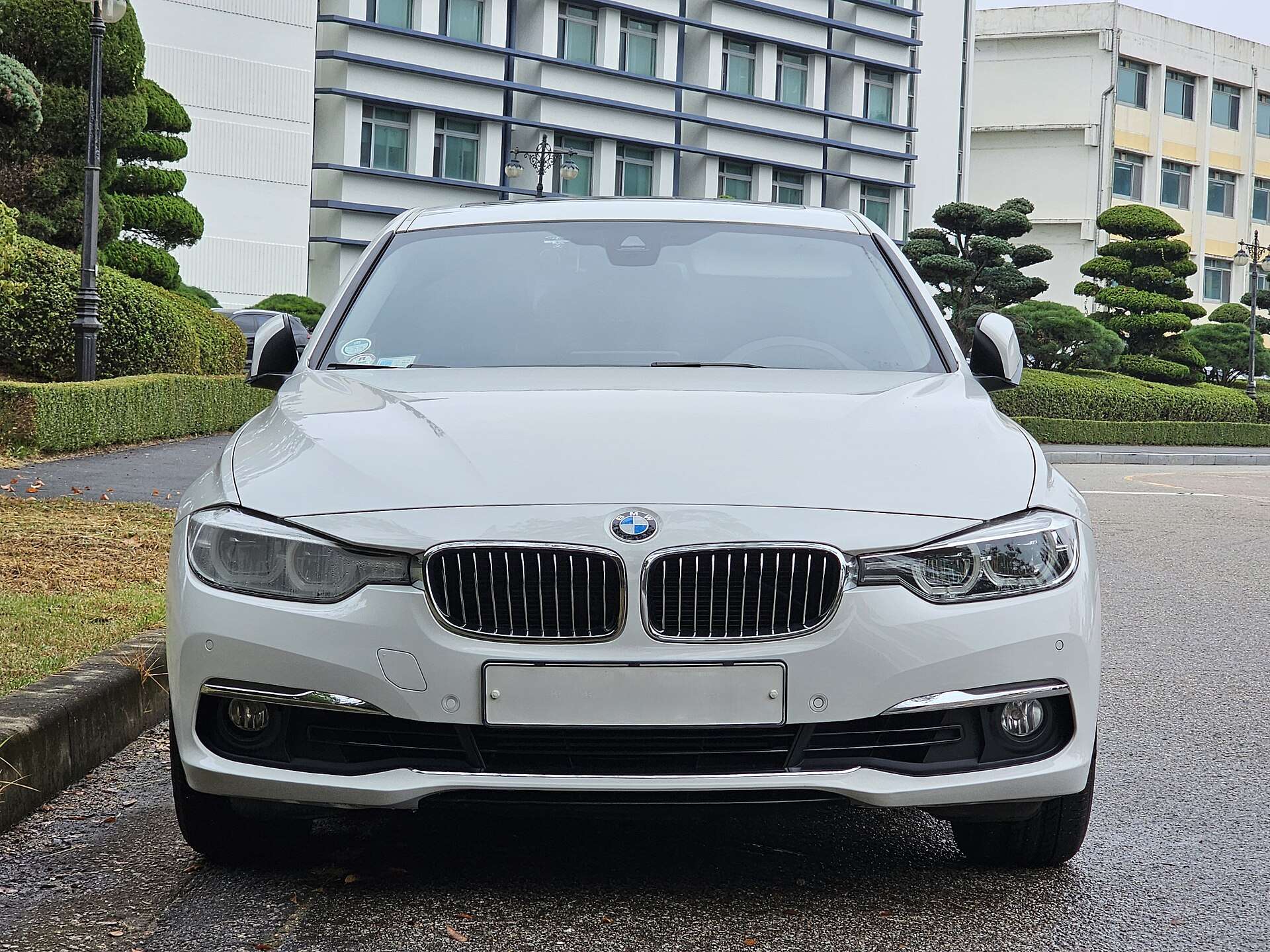
Try standard/sport seats, wheel sizes, suspension and the actual steering feel. M Sport is a specification choice, not proof of mechanical superiority or an M3 drivetrain. Optional adaptive dampers, larger brakes, upgraded lights and entertainment systems need their own checks and costs.
Confirm the build against what is installed. A larger iDrive display, steering wheel, body kit or exhaust can be a competent retrofit, but it can also conceal incomplete coding or an undeclared tune. Ask for the parts and installation records and obtain an insurance quote with the changes disclosed.
Set a petrol 3 Series budget around the full car
Compare N20 and B48 separately, then match body style, transmission, drivetrain, age, mileage and equipment. A 328i asking price should not be interpreted through an older six-cylinder 328i’s reputation or a later 330i’s engine. The wider UK 320i market spans generations, so filter the actual F30/F31 examples.
Record asking prices alongside major work and outstanding defects. Separate dealer/private stock and asking prices from completed transactions. If a car has been advertised repeatedly, treat it as one example, not several confirmations of market value. An expensive repair invoice is relevant when it identifies good work, not simply because its total is large.
For an N20, ask a competent workshop to assess timing-drive evidence before negotiating. A car with a documented, properly scoped repair is a different proposition from one described as quiet on a quick start. Reserve funds for other work too: chain history does not make old tyres, a coolant leak or a shuddering transfer case disappear.
Obtain insurance and current tax information for the registration, then add inspection, immediate service work, tyres and known repairs. An attractive discount can be consumed by one substantial job. Agree what a dealer will repair before collection and read warranty limits in relation to the actual concerns.
N20 timing chains, guides and oil-drive scope
Timing-drive evidence is a central N20 buying question. UK specialist Element Performance describes chain/guide deterioration and the importance of addressing guide debris in the sump. Its workshop examples are useful evidence of the type of repair, but are not a statistical failure-rate survey or proof that every engine fails at the same mileage.
A quiet start is reassuring only within its limits. It cannot prove the condition of every guide and chain component. Conversely, a noise needs identifying: chain, accessory drive, turbo, injection and other mechanical sounds must not be diagnosed remotely from a short recording.
Ask what a previous timing repair actually renewed. The main camshaft drive, guides, tensioning components and associated oil-pump/balance-shaft drive need distinguishing. Request invoice details, part numbers, who performed the work and whether debris was found. A note saying chain done is incomplete evidence if its scope is unclear.
Where a guide has deteriorated, establish what inspection and cleaning was undertaken. Element explicitly warns that missing guide pieces can require sump removal at additional cost. Simply renewing the most visible chain component does not answer a question about debris or restricted oil supply.
If there is a credible timing or oil-pressure concern, stop treating the car as ready for a long drive home. Ask the specialist whether it should be transported, what tests are needed and which work is preventive versus repair of existing damage. An oil-pressure warning or internal damage is not the same job as a planned chain service.
How to read a chain-kit advertisement
Catalogue headings can cover very different contents. The N20 catalogue example in the cost table is explicitly an INA Slim Set containing a chain, tensioner and grease. It is not a complete set of guides, all drives, sprockets, seals, fixings and fluids. Its price should never be presented as the cost of comprehensively repairing an N20.
Compare the written workshop scope with the parts list and engine application. Ask how any previous damage affects the quote and warranty. Do not rely on an overseas warranty extension or a forum production cutoff as evidence that a UK car is covered or that an engine just outside a stated date is immune.
Oil leaks, crankcase ventilation, cooling and boost
Start with a cold engine and an inspection from above and below. Look for wetness around the cam cover, oil-filter housing area, sump and relevant pipework, but have the source established before buying a gasket. Fluid can travel and old residue can remain after a repair; fresh cleaning can also obscure a useful trail.
Ask about oil consumption over a stated distance, oil-service dates and the actual approval used. A service display reset or an unitemised stamp is not a complete record. Investigate smoke, whistle, rough running or excessive crankcase-pressure symptoms as part of the breather/engine assessment rather than assuming a particular cover will solve everything.
N20 and B48 cooling architecture and parts are different. Do not order an N20-style pump package for a B48 simply because both cars say 320i. Check the actual system, pressure-test a suspected leak and establish whether the pump, thermostat, housings, reservoir or pipe connections require work.
| Observation | Investigation | Buying consequence |
|---|---|---|
| Chain-type noise or oil-pressure concern | Relevant timing/oil-system assessment; identify the source | Do not keep driving to see whether it clears. |
| Coolant loss or overheating | Find leaks and assess circulation/control and internal faults if indicated | Stop the test if overheating; never open a hot coolant cap. |
| Misfire under load | Ignition, air/boost integrity, fuelling and mechanical condition | Coils are a possibility, not a diagnosis. |
| Reduced boost or drivetrain message | Read relevant faults and data, including boost control and transmission | A dashboard description does not identify the failed component. |
| Oil wetness or smoke | Separate external leaks, breather faults and internal consumption | Price the confirmed repair and any affected surrounding components. |
Check boost response under normal road use, not repeated aggressive demonstrations. Ask about tuning, downpipe/exhaust changes, intake modifications and previous software returns to standard. A car flashed back before sale may still have a modified history. Calibration, fuel requirements and the condition of the rest of the drivetrain matter more than an unverified power claim.
Love cars you don’t see every day?
Get forgotten cars, surprising motoring stories and the most interesting finds from Unusual Cars by email.
Free to join. No spam. Unsubscribe whenever you like. See our privacy policy.
Eight-speed automatic: service history and a proper road test
The eight-speed Steptronic is a major part of these cars’ appeal, but establish the exact unit and application. Try drive/reverse engagement from stationary, gentle changes, moderate acceleration, coasting and low-speed manoeuvres. Repeat after a long enough drive to warm the transmission, rather than relying on a quick loop near the seller.
Investigate shudder, repeated harsh changes, a delay followed by a bang, flare/slip and warning messages. An engine misfire, worn mount or driveline problem can feel like a gearbox fault, so obtain a complete diagnosis. A seller saying the gearbox only needs an adaptation reset has not answered those questions.
Ask for the fluid/pan service invoice and its parts, fluid specification and procedure. ZF’s own maintenance information explains that automatic fluid ages more quickly at high operating temperatures and gives a use-dependent oil-change recommendation around 150,000 km. It also emphasises correct filling conditions and fluid. This is not permission to wait for that mileage when a particular car’s use, age or symptoms justify earlier specialist attention.
Have the chosen workshop reconcile manufacturer information with the actual unit and history. A fluid service is maintenance, not a guaranteed remedy for internal wear. If a proposed service includes a pan/filter, seals and fixings, compare that scope with a cheaper oil-only quotation. Avoid additives or aggressive procedures proposed as a substitute for diagnosis.
Manual clutch and flywheel
Check clutch take-up and pedal action, then all forward gears and reverse under appropriate conditions. Listen for rattles, release-bearing-type changes, crunching or a gearbox that becomes difficult when warm. Distinguish a linkage or hydraulic fault from an internal problem.
Assess slip under ordinary acceleration and judder during normal starts, avoiding abusive stall tests. Ask whether a clutch quote includes the applicable flywheel, release components and necessary fixings. On a tuned N20 or B48, additional torque can expose a marginal clutch; a claimed software-only upgrade still belongs in the buying assessment.
xDrive: tyres and transfer case belong together
Confirm whether the car is rear-wheel drive or xDrive. For xDrive, inspect the approved wheel/tyre combination, actual sizes, wear and replacement history. Some factory combinations are staggered, so the instruction is not simply to fit four tyres of one size. The correct rolling relationship and compatible specification matter.
Drive normally through low-speed turns and changes of load, checking for binding, shudder, vibration or a driveline warning. Do not force repeated full-lock manoeuvres if the car protests. Have tyres, wheels, mounts, shafts and transfer-case operation assessed rather than immediately ordering one expensive assembly.
Ask about transfer-case and differential maintenance, fluid work, adaptations and previous repairs. A fresh fluid invoice is relevant, but cannot prove that a damaged unit has become healthy. Have an existing symptom diagnosed and demonstrate the result after repair. Budget the front driveline inspection as part of an xDrive purchase.
Chassis, brakes and optional adaptive equipment
Check front suspension arms/bushes, rear links, springs, dampers and bearings on a lift. During the drive, note steering precision, wandering, knocks, vibration and braking stability. An alignment report cannot compensate for worn components or repair a distorted wheel.
Look carefully at inner tyre shoulders, wheel cracks/damage and previous puncture repairs. Large wheels and run-flat or conventional tyre choices affect comfort and costs. Assess what is fitted and whether the set is appropriate, rather than assuming the most aggressive appearance is the best ownership specification.
Where adaptive suspension is fitted, test its controls and look for leaks or relevant faults. Do not use an ordinary damper price to budget for an electronic unit. Check lowered cars for a coherent parts specification, alignment evidence and competent installation.
Brake hardware varies with options. Verify disc dimensions, caliper application and wear-sensor requirements before buying parts. During safe progressive braking, investigate pulling, vibration and an inconsistent pedal. Inspect pipes, hoses and the parking-brake system, not only the outer face of the front discs.
F30 and F31 body checks
Compare panel gaps, paint depth/finish where assessed professionally and the quality of visible seams. Ask for evidence of major accident work. Inspect sills, jacking points, subframes, suspension mounting areas and brake pipes. Fresh underbody coating needs judging in context, not treating as proof of a restored underside.
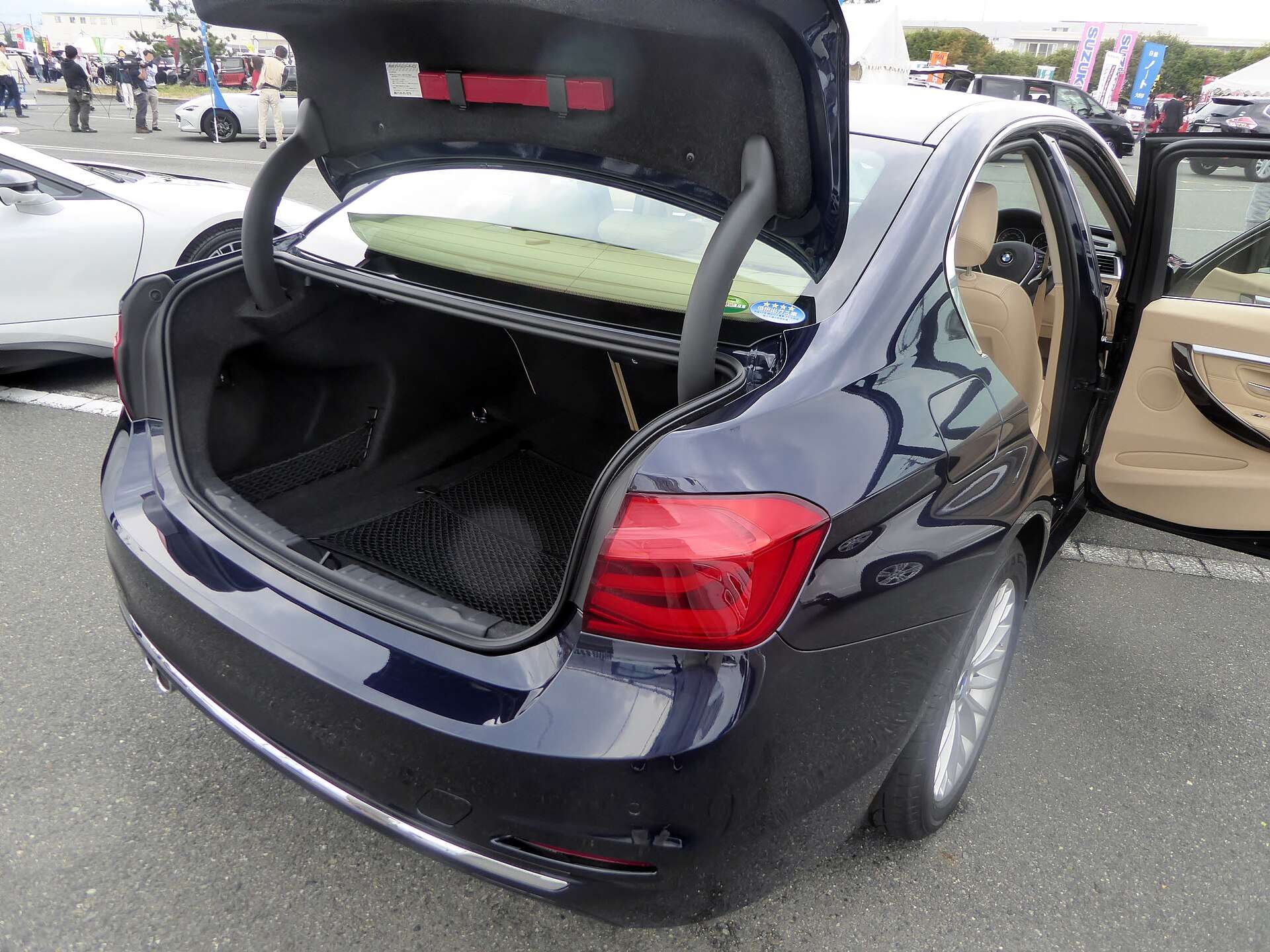
Check carpets and lower boot compartments for water, staining and musty smell. A recently valeted interior can conceal the immediate evidence without resolving a leak. Trace the cause through relevant seals, apertures, drainage and previous repairs, rather than assuming a particular gasket from a photograph.
F31 Touring: use every rear-access function
The Touring’s practical appeal should be checked in use. Try the tailgate and separately opening rear glass, rear wiper/washer, locks, luggage cover and folding seats. Where a powered tailgate is fitted, confirm consistent opening, closing and latching under normal operating conditions.

Inspect the load floor, lower storage, trim and seat backs for heavy-use damage. Check wiring around moving areas and ask about intermittent rear electrical faults. A working tailgate at one viewing does not automatically settle a previous intermittent complaint, so request repair records.
If it has a towbar, verify the installation, electrics, actual vehicle limits and use history. Ask what was towed and what drivetrain maintenance followed. A family estate can have an easy motorway life or repeated heavy work; the odometer alone does not tell you which.
iDrive, keys and cabin checks
Try both keys and every everyday function: locks, windows, mirrors, seat controls, heating, demisters, lights, wipers and parking equipment. Inspect seat wear and adjusters, belt condition, rear-seat latches and signs of damp. Test the actual child-seat or luggage arrangement you need.
Check iDrive menus, controller, audio, phone pairing and navigation where fitted. Ask about screen/control-unit replacements and coding. A retrofit can work well, but make sure all features operate and documentation exists. Historical connected-service claims do not establish current support or subscription costs.
Read the service entries alongside paper/digital invoices. A history displayed in iDrive is useful, but its entry alone is not a complete description of the work. An independent workshop can legitimately add records; ask for the supporting evidence rather than judging only the logo shown on screen.
Investigate weak-starting and low-voltage complaints by testing battery, charging and relevant electrical faults. Replacement battery type/capacity and registration need to suit the car. Repeated warning messages should not be dismissed as all BMWs doing that, even when a battery is one plausible cause.
UK parts, labour and fitted-cost references
These are published examples observed in November 2026, not guaranteed quotes or averages of all owners’ bills. They distinguish a named incomplete parts set, a specialist chain job and a model-menu service. Confirm the VIN, scope, VAT, extra diagnosis and terms with the workshop.
| Job/reference | Parts evidence | Labour/fitted reference | Limit |
|---|---|---|---|
| N20 chain retail example | INA 559 1709 10 Slim Set: £56.99 including VAT, excluding delivery | Not a fitted-job quote | Displayed contents: chain, tensioner and grease. Guides, associated drives, fixings and repair labour are not established by this price. |
| N20 specialist timing-chain work | Provider states OE chain supplier and new consumable bolts | Element Performance from £995 including VAT; about six hours stated | Missing guide pieces can require additional sump work. Confirm main/associated drive scope; damage is extra. |
| 320i oil/filter service | Included in published package | Mini & BMW Specialist Bronze £198 | Model-menu reference; confirm actual N20/B48/ED application. |
| 320i Gold service/vehicle check | Oil, oil filter, air and cabin filters in displayed scope | £300 | Plugs not included in that displayed package. |
| 320i Platinum petrol service/vehicle check | Displayed scope adds spark plugs | £450 | Confirm which engine and due items apply. |
| Front discs/pads/sensor | Included in provider’s model menu | £420 | Brake options/dimensions can alter application. |
| Brake-fluid flush | Fluid included in menu job | £100 | Confirm final scope for the car. |
| Major inspection | Diagnostic/inspection service, not repair parts | £145; provider describes around three hours | Agree access and whether it is suitable as your pre-purchase assessment. |
Sources: Element Performance N20 service, The Mini & BMW Specialist 320i menu and AUTODOC’s N20 320i catalogue. The service provider states its prices include parts, labour and VAT. Do not subtract one retailer’s incomplete set from a different workshop’s fitted job to invent an hourly rate.
Obtain separate B48 and 328i/330i quotes rather than assuming the 320i menu or N20 chain price applies. A cooling repair, turbo fault or internal engine damage requires diagnosis before a useful budget exists. A low headline parts price does not include access, special tools, cleaning, fluids and the installer’s responsibility.
eBay service-parts table: separate N20 and B48
Affiliate disclosure: these links use campaign 5339238906. We may earn a commission from qualifying purchases at no extra cost to you. They are engine/model searches, not fitment certification. Verify VIN, codes, dimensions and workshop requirements. The 1.6 ED needs a separate N13 parts specification.
| Part | Choose engine/application | Before ordering |
|---|---|---|
| Oil/filter service kit | N20 2.0 · B48 2.0 | Confirm the BMW oil approval for engine/build date. |
| Air filter | N20 2.0 · B48 2.0 | Match intake housing and engine application. |
| Cabin filters | N20 2.0 · B48 2.0 | Check type and quantity supplied. |
| Spark plugs | N20 2.0 · B48 2.0 | Correct specification; modified engines require a documented plan. |
| Ignition coils | N20 2.0 · B48 2.0 | Diagnose the cause before replacing a set. |
| Timing-chain components | N20 2.0 · B48 2.0 | Read contents: a slim set is not the complete job. |
| Oil-pump/associated drive parts | N20 2.0 · B48 2.0 | Have the installer define the exact drive and parts scope. |
| Cover/breather components | N20 2.0 · B48 2.0 | Identify the leak/pressure fault and correct assembly. |
| Cooling parts | N20 2.0 · B48 2.0 | N20 and B48 layouts differ; identify the actual fault. |
| Front discs/pads/sensor | N20 2.0 · B48 2.0 | Brake options and sizes must match the VIN/build. |
| Battery | N20 2.0 · B48 2.0 | Confirm technology, capacity and registration procedure. |
| Alternator | N20 2.0 · B48 2.0 | Verify output, pulley and connectors; check core charges. |
For the automatic, compare ZF 8HP pan/filter/fluid searches with the actual transmission specification. N20 timing/associated-drive kits need their contents checked carefully. For B48 alternators, confirm output, pulley, connections and exchange terms after charging-system diagnosis.
Agree parts supply and warranty with the garage before buying. Complete contents, suitable components and competent installation matter more than the cheapest advert. A chain, transmission or xDrive job should not become a sequence of speculative parts purchases.
Hidden ownership costs
Catch-up work: four tyres, a battery, a second key, overdue plugs/fluid and oil leaks can accumulate alongside a larger engine concern. Make a separate list so one reassuring chain invoice does not dominate the whole buying decision.
Options: adaptive dampers, larger brake packages, headlamps and infotainment repairs need prices for the actual fitted specification. A standard-model menu is only a reference.
Modified history: obtain a complete specification, calibration invoices and insurance quotes. A car returned to standard software may still have experienced higher loads or have changed hardware. An unverified dyno graph does not establish engine health.
Downtime: diagnosis, debris inspection or additional sump work can extend an apparently straightforward job. Discuss transport and contingency costs if this is your only vehicle. A warranty’s practical limits matter as well as its headline duration.
The viewing and test-drive sequence
- Identify: VIN, build date, N20/B48/1.6 ED, transmission, body and rear-wheel-drive/xDrive. Verify documents before valuing a badge.
- Read the record: oil approvals, dates/mileage, chain scope where relevant, cooling, gearbox and xDrive work. Compare with MOT progression.
- Inspect cold: fluid evidence, warning lamps, starting, noises, idle and initial response. Arrange a specialist assessment of material concerns.
- Use a lift: inspect leaks, cooling components, structural repairs, tyres, brakes and suspension rather than relying on exterior presentation.
- Drive fully warm: assess power delivery, clutch/automatic behaviour, braking, steering, vibration and low-speed driveline operation.
- Check equipment: both keys, iDrive, climate, options and every Touring rear-access function.
- Before paying: commission diagnosis, obtain written repair scopes and compare the total with a better-prepared example.
If oil pressure, overheating or a significant timing concern is present, stop the drive and discuss transport. If an inspection cannot establish a material fault’s cause, retain that uncertainty in the decision. Do not turn a possible inexpensive fix into a promise on the seller’s behalf.
Frequently asked questions
Is an F30 330i a six-cylinder?
The 330i in this guide is the later four-cylinder B48 application. It is different from an older E9x 330i. Identify generation and engine rather than assuming from the badge.
Are all F30 320i cars 2.0 litres?
No. The 1.6-litre EfficientDynamics Edition is a separate application. Confirm the capacity and engine code before using an N20/B48 parts list.
Does a quiet N20 prove the chain is healthy?
No. It is one observation. Repair evidence, scope and a competent assessment matter, and guide debris/associated drives can require separate attention.
Is B48 a reason to skip inspection?
No. It changes the engine-specific questions, but cooling, leaks, history, transmission and the rest of the car still need examining.
Does lifetime automatic fluid mean no maintenance decision?
Ask the relevant specialist to reconcile the exact unit, manufacturer’s information and use history. ZF publishes an oil-change recommendation that reflects operating conditions; fluid work is not a cure for existing internal damage.
Must xDrive have four tyres of identical size?
Use the correct approved combination; some factory sets are staggered. Appropriate rolling relationship, specification and wear are the issues to establish.
Our recommendation
Start with engine identity, then buy evidence of competent maintenance and normal operation. A healthy B48 320i/330i is an appealing everyday choice; an N20 car can justify itself when timing-drive questions and the wider condition are answered. Use the broad market to find a complete car whose costs you understand before purchase.

Love cars you don’t see every day?
Get forgotten cars, surprising motoring stories and the most interesting finds from Unusual Cars by email.
Free to join. No spam. Unsubscribe whenever you like. See our privacy policy.