
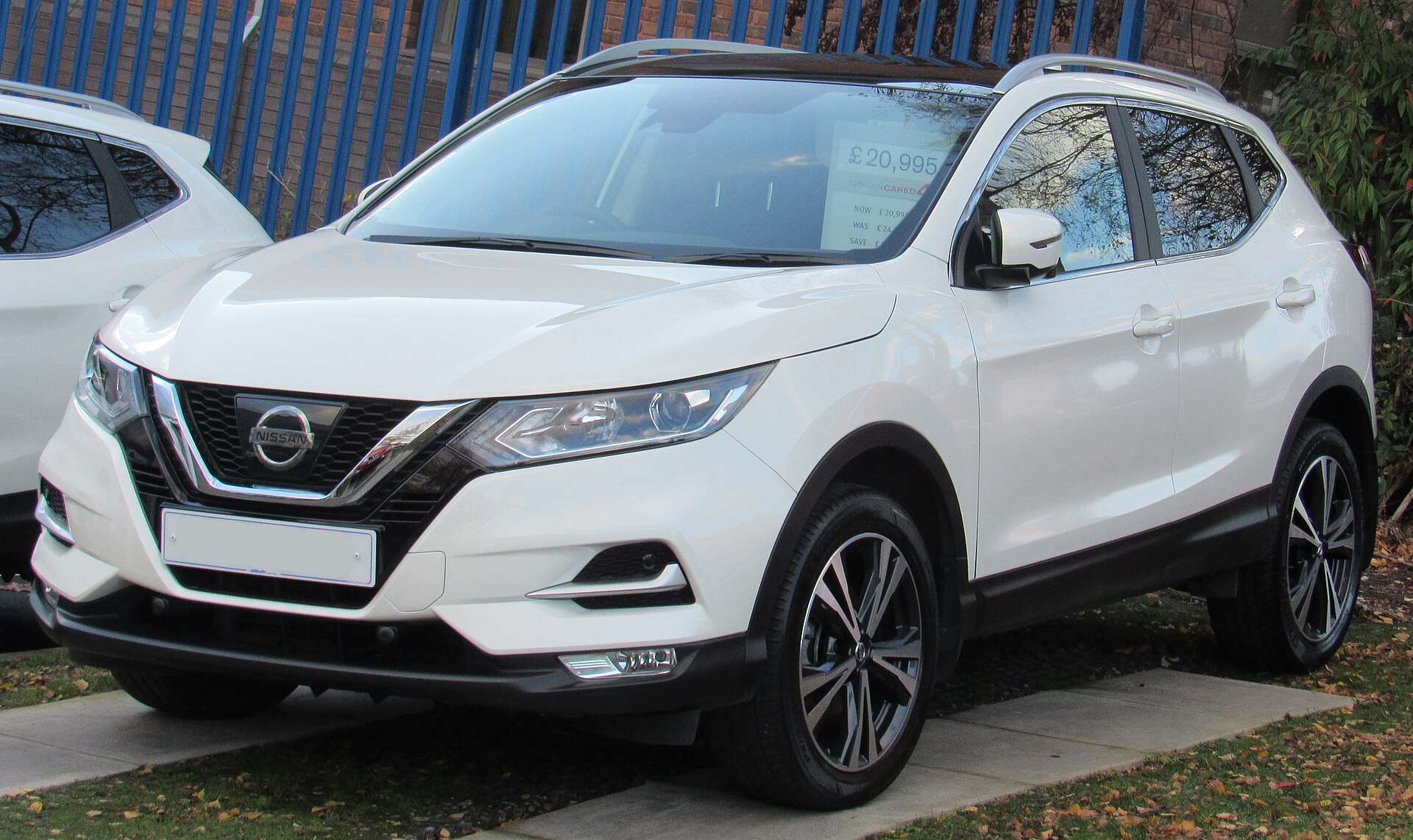
The second-generation Nissan Qashqai, known as the J11, is a sensible used family-car candidate because there are enough cars for sale to compare condition rather than accepting the first one nearby. The difficult part is choosing the right engine and transmission, then distinguishing normal servicing from an expensive unresolved fault. A tidy Tekna with attractive wheels is not automatically a better purchase than a less elaborate car with clear maintenance evidence.
This guide covers the UK J11 generation, including its 2017 facelift and later petrol-engine changes. It does not cover the older J10, the later J12 mild-hybrid/e-POWER range or overseas models with different engines. Confirm the actual build, engine and gearbox from the VIN and paperwork before using a service schedule or ordering parts.
Our buying verdict: start with a well-maintained 1.3 DIG-T manual for mixed family use, or consider a 1.5 dCi when your normal journeys suit a diesel and its maintenance is documented. Treat the 1.2 DIG-T’s oil-use history as a central buying question. For an automatic, identify the transmission first: a later DCT and an earlier Xtronic CVT are different propositions.
Which Qashqai J11 should you buy?
Nissan’s contemporary UK material dates the second generation to 2014 and the substantial refresh to 2017. That facelift did not change every engine and gearbox at once. A 2017 registration can describe an earlier-looking car, while a facelift body can still contain an outgoing engine. Read the engine capacity, fuel type, transmission and production information together.
| Version | Buying case | Evidence to demand |
|---|---|---|
| 1.2 DIG-T petrol | An affordable early petrol, but do not buy around unexplained oil use, noise or a misfire. | Oil-service invoices, quantified top-up history and investigation of suspicious symptoms. |
| 1.3 DIG-T petrol | Our starting point for ordinary mixed use; compare 140 and 160 PS versions. | Correct service history, normal cold/hot behaviour and confirmation of manual or DCT. |
| 1.5 dCi diesel | Worth considering for regular longer journeys and sensible fuel use. | Timing-belt evidence for the actual engine, emissions-system condition and appropriate oil. |
| Other J11 engines | 1.6 petrol/diesel and later diesel variants require their own checks. | Exact specification, drivetrain and service schedule; do not apply a 1.5 dCi parts basket. |
| Automatic or four-wheel drive | Choose for an actual need, with an inspection reflecting the additional equipment. | Gearbox identity, fluid/service evidence and operation of the fitted drivetrain. |
The 1.3 launch release is particularly useful. Nissan lists 140 PS and 160 PS six-speed manuals, plus a 160 PS seven-speed wet-clutch DCT. It states that these replaced the 1.2 115 PS manual/CVT and 1.6 163 PS manual petrol choices. That is why a generic advert saying “automatic Qashqai” is not enough information.
Choose the trim by what you will use. Check the exact equipment fitted rather than assuming every N-Connecta or Tekna has identical cameras, headlights, driver assistance or infotainment. Larger wheels bring tyre costs and a different ride. Sit in the actual car, test rear-seat access and load the buggy, mobility aid or luggage that determines whether it works for you.
UK asking prices: compare the right cars
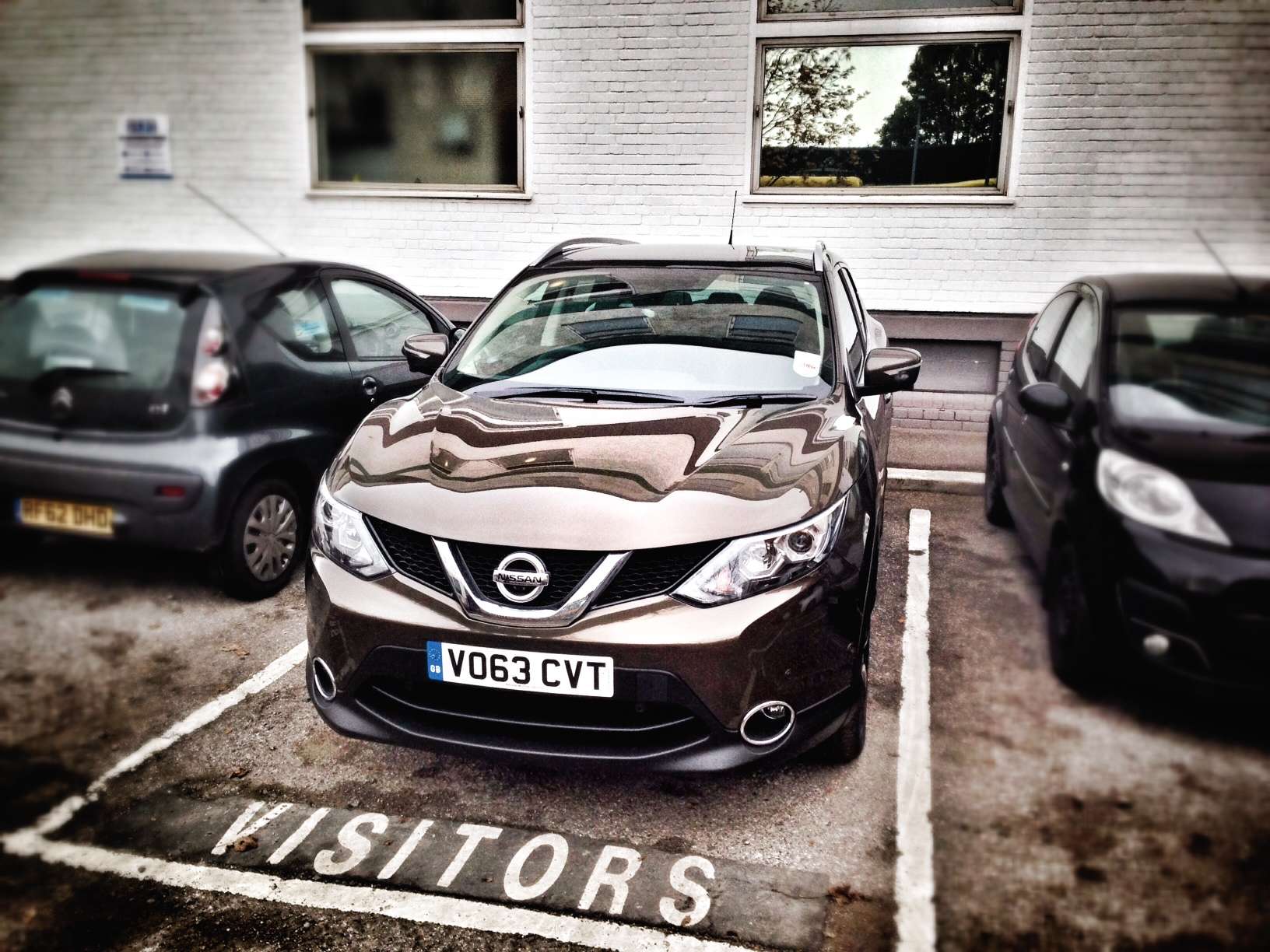
There is no useful single price for a J11 covering petrol, diesel, manual, automatic, early and late examples. The current Qashqai market contains different generations and damaged or repair-project advertisements alongside usable cars. A model-wide total proves there is stock to compare; it does not establish the value of a particular J11.
Use the live advertisements below as a starting point, then build a shortlist with the same engine, gearbox, approximate age and mileage. Separate private from trade sales and account for warranty scope, preparation, tyre quality and service work already completed. Save the advertisement before travelling, including statements about the engine, ownership and maintenance.
Ask for written estimates for any overdue work before making an offer. A cheap diesel without belt evidence is not directly comparable with one carrying an itemised replacement invoice. An automatic with an unexplained judder should not be valued as a healthy car minus the price of a fluid bottle. The repair may be much more involved.
Build a first-year budget before negotiating
List inspection, collection, the service actually due, tyres and brakes separately from unresolved faults. Keep contingency beyond that list. The seller’s view that a warning is “just a sensor” does not identify which component failed or whether the fault is consequential. Let an independent diagnosis establish the repair before assigning it a small allowance.
A documented repair can be a positive if its cause, scope and subsequent running are clear. For an engine replacement, ask for the unit’s identity, supplier, installation invoice, ancillary work and warranty terms. A bare receipt for an engine is not proof that installation and the original cause of failure were addressed.
Identity, history and structural condition
Match the VIN, registration document and seller’s identity or trading details. Obtain a provenance check for outstanding finance, theft and recorded write-off history. Read the MOT history as a sequence: recurring tyre wear, suspension play, corrosion or brake advisories can reveal neglected maintenance even if the latest test passed.
Ask to see the car cold in daylight. Inspect panel gaps, paint texture, fasteners, lamps, wheelarches, sill areas and the boot floor for repair evidence. Get the underside examined on suitable workshop equipment. Plastic covers and underseal can conceal a leak or poor repair; a photograph of a clean bonnet is not an underside inspection.
Check the windscreen and the equipment around it. A replaced screen, front-end repair or bumper damage can have implications for camera/radar alignment where fitted. Request evidence of required calibration after relevant work. Do not test an emergency-braking function by driving at an obstacle.
Petrol engines: oil use, cold starts and meaningful diagnosis
1.2 DIG-T: make oil history a buying condition
Ask how much oil the owner adds, over what distance, and whether the pattern has changed. “They all use a bit” is not a measurement. Read the servicing record for the oil specification and intervals, then compare the account with the dipstick reading and evidence of leaks. A full oil level at the viewing proves only the level that day.
A UK engine-rebuilding business describes oil-consumption, compression and bore/piston problems among the 1.2 DIG-T engines reaching its workshops. That is a repairer’s account of its workload, not a failure-rate study or proof that every 1.2 is defective. It does justify requiring a proper explanation when a candidate shows oil loss, smoke, rough running or suspicious noise.
Observe the first start without music masking it. Persistent or repeated rattling, a misfire, blue smoke, a low oil-pressure warning or a deep knock warrants investigation before purchase. Compression/leak-down measurements, oil-pressure tests and inspection can be appropriate depending on the symptom. Replacing plugs or clearing codes does not prove the underlying problem has gone.
Do not assume a new timing-chain kit will cure oil consumption or mechanical wear. Ask which measurements supported the diagnosis, what components were replaced and what mileage the car has covered since. If the owner will not permit a meaningful independent assessment, there are enough other Qashqais to inspect.
1.3 DIG-T: assess the actual car, not a shared-engine badge
The later 1.3 is a different engine choice, not a 1.2 with a changed badge. Nissan’s launch information describes a petrol particulate filter and the wet-clutch DCT option. It does not mean every 1.3 has a DCT, nor does collaboration with another manufacturer make a used engine immune to poor servicing.
Look for dated oil/filter servicing, normal starting and idle, consistent performance and stable coolant temperature. Inspect for accessible leaks, damaged intake hoses and coolant staining. Ask directly about top-ups, overheating and warning messages. A pressure test or other targeted investigation is more useful than accepting an unexplained loss as normal.
Do not copy an oil grade, plug interval or coolant specification from an unrelated Nissan. Nissan’s release discusses extended mileage intervals for the 1.3, but the vehicle’s applicable schedule, elapsed time and operating conditions still matter. A modest annual mileage does not justify ignoring a time-based service.
1.5 dCi: belt evidence and emissions-system suitability
The 1.5 dCi is a belt-driven diesel; the petrol timing-chain discussion is not its service plan. Establish the engine/build and ask Nissan or a model-aware workshop for the correct mileage/time requirements. Online schedules from another country, a Qashqai+2 or a different diesel can conflict. Where evidence is missing, obtain a quote and plan the work rather than inventing a universal interval.
An invoice should identify a proper kit and the related work, not simply say “belt checked”. Ask whether the relevant tensioners, pump, auxiliary-drive components, fasteners and coolant were included as appropriate to the engine and procedure. A new auxiliary belt is not proof that the timing belt was replaced.
Match a diesel to your actual use. Regular short cold trips can make emissions-system operation more difficult, and a seller’s promise that one motorway run cures every warning is not a diagnosis. Read stored codes and live data with appropriate equipment, looking at the whole fault context rather than replacing a DPF or EGR valve from a code description alone.
Later diesel equipment can include SCR/AdBlue. Confirm what is fitted. A countdown after refilling may indicate a system fault rather than simply insufficient fluid; insist on a diagnosis and a demonstrated resolution. Check local clean-air-zone compliance using the registration instead of assuming that a badge or registration year guarantees access.
Love cars you don’t see every day?
Get forgotten cars, surprising motoring stories and the most interesting finds from Unusual Cars by email.
Free to join. No spam. Unsubscribe whenever you like. See our privacy policy.
Manual, Xtronic CVT and later DCT
Use the VIN, engine and transmission information to identify the gearbox. Nissan’s 2018 petrol launch describes its new seven-speed DCT as a wet-clutch transmission, replacing the earlier petrol CVT choice. That distinction affects operation, diagnosis, servicing and replacement parts. Do not use “DSG oil” as a generic description for any automatic gearbox.
Manual checks
Try all forward gears and reverse from cold and again once warm. Listen for unusual bearing or driveline noise on and off the throttle, and check for a consistent bite, vibration and smooth take-up. An unusually heavy pedal, slipping under normal load or difficult selection needs assessment. Do not deliberately abuse the clutch with a high-gear stall test.
Price a clutch job around the diagnosed scope. A kit advertisement can exclude a flywheel, release mechanism, fluid, seals and labour. Whether any of those items is needed depends on the actual powertrain and inspection. Ask for a written fitted quote rather than adding a generic parts figure to an assumed hourly rate.
Automatic checks
Drive an automatic both cold and fully warm, including normal parking manoeuvres, reversing, gentle acceleration and steady cruising. Look for delayed engagement, pronounced shudder, flaring, surging, warnings or unexpected loss of drive. A CVT’s normal change in engine speed is not itself proof of failure, but it should still operate consistently and without alarming symptoms.
For the DCT, evaluate low-speed take-up as well as ordinary shifts. Establish the correct fluid and service requirements from the transmission identity. An invoice naming only “gearbox oil” leaves questions about the product, quantity and procedure. A fluid change can be maintenance; it is not a guaranteed repair for internal wear or control faults.
Where fitted, check the four-wheel-drive system, its service history and all tyre specifications. Do not assume that an SUV-shaped Qashqai has four-wheel drive. Tyre mismatch, unusual vibration or drivetrain warnings deserve investigation before committing to the car.
Suspension, steering, tyres and brakes
Check the tyres for matching approved sizes, sufficient tread, sidewall damage, age and uneven wear. Inside-edge wear can be missed from a standing inspection. Four attractive alloys do not compensate for poor tyres, damaged rims or geometry problems. Use the fitted wheel size when obtaining a replacement-tyre quote.
Listen for knocks over ordinary road imperfections and assess steering return, straight-line tracking and vibration at legal speeds. An underside inspection should distinguish bushes, links, bearings and dampers rather than diagnosing every knock as the cheapest available drop link. Request an alignment assessment where tyre wear or steering behaviour suggests it is needed.
Inspect both faces of the discs where accessible, not just the shiny outside surface. Check for pulling, judder, dragging and abnormal noise during sensible braking. A car can pass an MOT and still have consumables approaching replacement. On versions with an electronic parking brake, use the correct service procedure and suitable tools for rear-brake work.
ABS, stability-control or parking-brake warnings require an appropriate scan and physical inspection. Low voltage can contribute to electrical complaints, but it should be tested rather than offered as an explanation for every warning. Do not clear codes before the inspection record has been saved.
Cabin, water leaks, cameras and everyday equipment
Operate the heating and every fan speed, then check that the air conditioning produces sustained cooling. A fan that only runs on its highest setting needs diagnosis of the resistor/controller, motor and wiring as applicable. Do not accept an air-conditioning fault as “only a regas” until leak and system checks support that conclusion.
Lift accessible mats and inspect the boot well, surrounding trim and headlining for dampness or staining. Check door seals, roof equipment where fitted and repaired areas for possible water paths. A heavily perfumed interior can conceal dampness, but a smell alone cannot locate the leak. Repeat an inspection after wet weather if there are concerns.
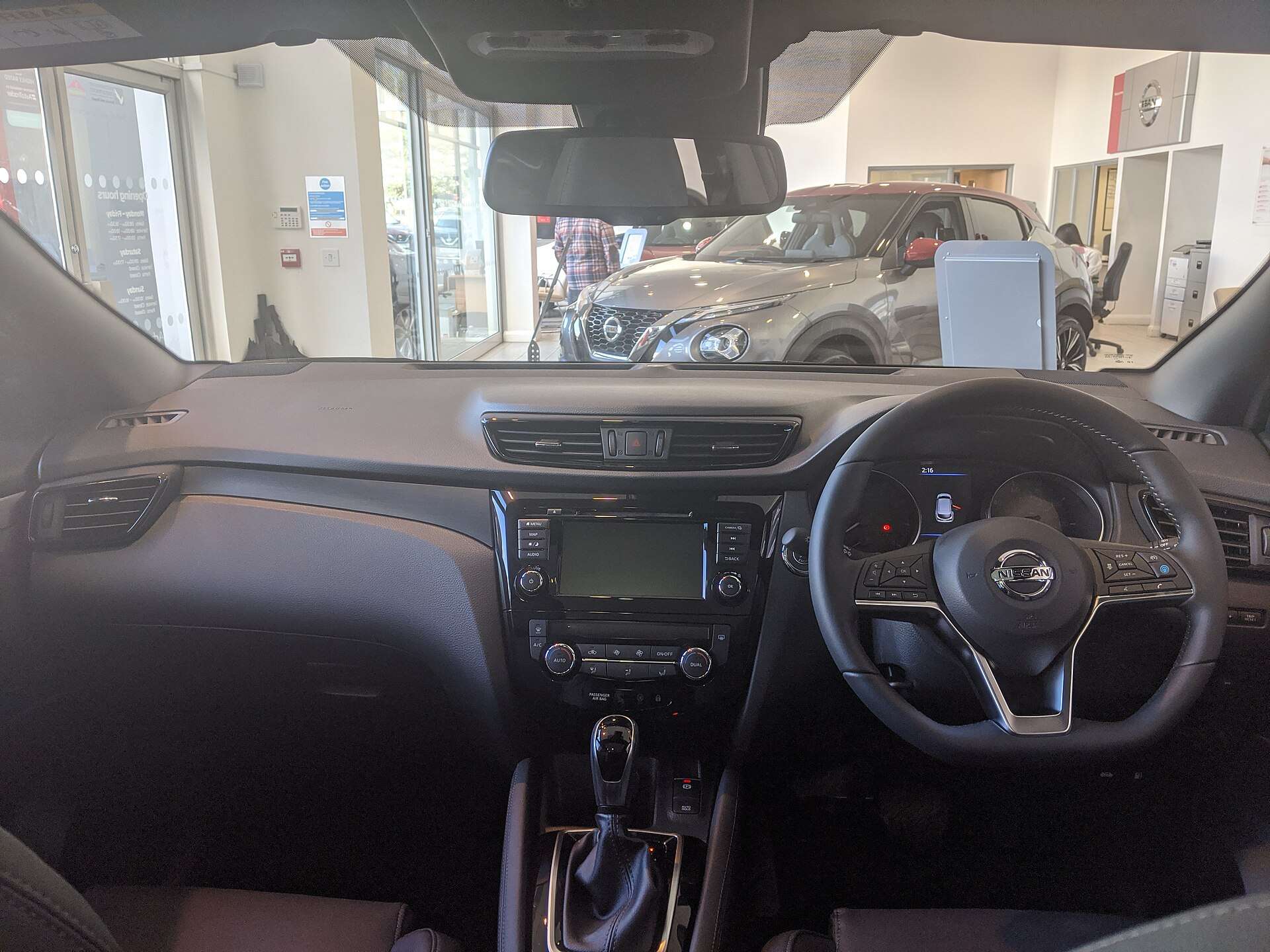
Test the screen, audio, navigation if fitted, phone pairing, parking sensors and every camera view. Look for intermittent images, damaged mirror housings and inconsistent sensor operation. Driver-assistance features should complete normal self-checks without persistent warnings; do not assume a software update will repair collision damage or a failed component.
Test both keys, central locking, windows, heated equipment and seat adjustments. Compare wear at the wheel, pedals, seat bolsters and load area with the mileage and stated use. Family wear is normal, but damage and missing equipment should be reflected in your budget. Verify any towbar installation and permitted limits for the exact vehicle if towing matters.

Qashqai maintenance costs: parts, labour and fitted scope
These are published UK references checked in November 2026, not personalised quotations. Nissan’s fixed-price scheme has participation and vehicle-eligibility conditions; additional dealer charges can apply. Its major service is broader than an oil/filter kit. Parts advertisements are separate comparisons, with fitment and oil approval still to establish.
| Job | Parts reference / contents | Published fitted or labour position | How to use it |
|---|---|---|---|
| Petrol minor service | Oil, oil filter, washer, screenwash and pollen filter within Nissan’s published scope. | Nissan advertises £299.99. A separate labour allowance is not published. | Confirm eligibility and the work due for the actual engine. |
| Petrol major service | Nissan’s scope adds air filter and brake fluid to the minor-service items. | Advertised £399.99; plugs and other scheduled extras need confirmation. | Do not count a brake-fluid job twice if included. |
| Diesel minor / major | Major scope includes the fuel filter in addition to the listed oil/filter and other items. | Nissan advertises £299.99 minor and £449.99 major. | Ask what the quote includes and which additional engine-specific items are due. |
| 1.5 dCi service kit | Compare engine-specific service kits; an observed oil/air-filter and 5-litre oil package was advertised at £56.99. | Parts only; labour and the rest of a dealer service are not included. | Check the oil approval, filter identity and required quantity, not just viscosity. |
| Diesel timing-belt work | Compare belt and pump kits; confirm contents and engine code. | BookMyGarage publishes a broad Qashqai cambelt range of £200–£500 and describes several hours of work, without an itemised J11 labour rate. | This mixed-model reference is not a confirmed J11 belt-and-pump fitted price. Obtain a written scope and quote. |
| Clutch / automatic fault | Identify the actual gearbox and diagnose before ordering a kit or fluid. | No dependable universal J11 fitted total is established by these sources. | Request separate parts, labour, VAT and diagnostic lines. |
| 1.2 engine investigation | Compression, oil-pressure and other tests should follow the symptoms. | An engine rebuilder advertises work from £2,600; VAT, transport and exact scope require a quote. | A commercial starting price is not a typical repair bill or proof a rebuild is needed. |
Turn the menu into a useful first-year budget
If a petrol car genuinely needs a major service under the published Nissan offer, start with £399.99 and add only the work outside that package. A diesel major reference is £449.99. Do not add another minor service and another brake-fluid change simply because they also appear in a price list: check what is already included.
Keep a separate belt/pump quotation where due, plus tyres, brakes or a battery established by inspection. Do not build a confident-looking total by combining the cheapest unverified kit with a guessed labour rate. For a warning light, allocate diagnostic time first and let the results determine the repair cost.
Ask the workshop whether it accepts customer-supplied parts and how that affects warranty responsibility. Exchange alternators or other units can require a refundable surcharge, return postage and a suitable old unit. For a car needing recovery, include transport and temporary travel costs before deciding the purchase is affordable.
Model-specific eBay service-parts table
Affiliate disclosure: these links use our eBay campaign 5339238906. We may earn a commission from qualifying purchases. They open searches, not guaranteed-fit recommendations. Check the VIN, engine code, part number, approvals, connector and physical specification with the seller before buying.
| Part or job | What must match | Compare on eBay UK |
|---|---|---|
| 1.2 DIG-T service kit | Correct petrol filters and required oil approval; check kit contents. | 1.2 petrol service kits |
| 1.3 DIG-T service kit | The 1.3’s own oil/filter specification and quantity. | 1.3 petrol service kits |
| 1.5 dCi service kit | Diesel filters, build and approved low-ash oil where specified. | 1.5 dCi service kits |
| 1.5 timing belt/pump | Engine code, pump design and complete kit contents. | Timing kits and pumps |
| Petrol spark plugs | Separate 1.2 and 1.3 applications; correct heat range and specification. | Petrol spark plugs |
| Auxiliary drive | Engine, belt routing and tensioner; not the timing belt. | Auxiliary belts and tensioners |
| Alternator | Engine, output, pulley, mounting, plug and exchange terms. | Alternators |
| Battery | Correct size, rating and stop/start technology where fitted. | Replacement batteries |
| Brake discs/pads | Axle, disc dimensions and parking-brake equipment. | Brake parts |
| Manual clutch | Actual gearbox; release components and flywheel scope. | Manual clutch kits |
| Cabin filter/wipers | Correct generation and body fittings. | Cabin filters and wipers |
| Suspension components | Diagnosed component, side and axle; geometry after relevant work. | Suspension parts |
Hidden ownership costs
Budget for equipment as well as the engine: large tyres, a second key, camera or parking-sensor investigation, air-conditioning repairs and electronic parking-brake work can change the economics of a cheap car. Establish what a third-party warranty excludes, including diagnostics, wear, pre-existing faults and consequential damage.
For a diesel, consider whether your journeys and local access rules suit it before paying extra for apparent economy. For an automatic, preserve funds for its correct servicing rather than assuming every gearbox is maintenance-free. For any version, keep an inspection and contingency allowance outside the purchase price.
A practical Qashqai viewing and test-drive checklist
Before travelling
- Confirm J11, actual engine, transmission, drivetrain and trim equipment.
- Read MOT/provenance information and request dated service and repair invoices.
- Ask for measured oil/coolant top-up history, especially on a 1.2 DIG-T.
- For a 1.5 dCi, establish the applicable belt requirement and replacement evidence.
- Arrange a cold start, legal fully warm drive, suitable scan and underside inspection.
At the car and on the road
Match identity, examine repair quality, tyres, accessible fluids and water ingress. Watch warning-light self-tests, then listen to the cold start. Test the fan, air conditioning, cameras, windows, locks and both keys. Confirm that family equipment fits before concentrating on cosmetic extras.
Drive gently from cold to fully warm, checking steering, braking, normal performance and gearbox behaviour. Repeat low-speed manoeuvres and selection when hot. Stop safely for serious warnings, overheating or abnormal mechanical noise. Recheck for fresh leaks and save diagnostic findings rather than clearing them to see whether the car seems better.
Buy, investigate or walk away?
Buy when the identity, structure, maintenance and independent inspection support the asking price. Negotiate around diagnosed, quoted work. Pause for unexplained oil loss, smoke, misfire, overheating, gearbox judder, an unresolved emissions countdown or evidence of unsafe repair. A discounted price does not turn an unknown major fault into a minor one.
Qashqai buying questions
Is every facelift a 1.3 petrol?
No. The 2017 body update and later petrol-engine introduction were different events. Check the actual engine rather than inferring it from the grille or registration.
Is every automatic the same?
No. Earlier Xtronic CVT and later wet-clutch DCT choices need their own identification, checks and service procedures.
Does a 1.5 dCi use the petrol timing chain?
No. It uses a timing belt. Confirm the actual engine’s time/mileage requirements and the scope of any previous replacement.
Should I rule out every 1.2 DIG-T?
The evidence does not establish that every engine fails. It does make oil-use history and independent assessment particularly important; unexplained symptoms should be resolved before purchase.
Can an MOT pass replace a buying inspection?
No. It does not establish engine internal condition, correct gearbox maintenance, full accident history or the remaining life of every consumable.
Continue your research
Our Qashqai J11 scanner guide covers diagnostic-tool selection. Use it alongside physical inspection and the correct workshop information. The later J12 and earlier J10 guides cover different vehicles.

Love cars you don’t see every day?
Get forgotten cars, surprising motoring stories and the most interesting finds from Unusual Cars by email.
Free to join. No spam. Unsubscribe whenever you like. See our privacy policy.
