A used Ford Fiesta Mk7 petrol can be an excellent everyday car, but the badge covers very different buying propositions. A documented 1.25 manual is a straightforward choice for local use. A healthy 1.0 EcoBoost is more flexible, especially on faster roads, but its belt-in-oil installation makes service history and the scope of past belt work central to the purchase. An automatic requires its own identification and inspection; do not treat every Fiesta automatic as the same gearbox.
This guide covers the 2008–2017 UK Fiesta hatchback generation, commonly called Mk7 and, after its facelift, Mk7.5. Some international catalogues number it differently. It focuses on the ordinary petrol 1.25 and 1.0 EcoBoost, with context for other petrol derivatives. It excludes ST models, diesels and the next-generation 2017-on Fiesta, which has a separate guide. Identify the actual generation, engine and gearbox before applying a service interval or buying parts.
Affiliate disclosure: we may earn commission from qualifying eBay purchases through links here, at no extra cost to you. Search results can include incorrectly described parts; registration, VIN, engine code and supplier confirmation establish fitment.
The buying verdict
For a first car or mostly short local trips, start with the best maintained 1.25 manual you can find. Try it on the roads you normally use, because its modest low-speed torque means more gear-changing with passengers and hills. For regular mixed driving, a 1.0 EcoBoost manual can make a much stronger all-round proposition, provided the engine is healthy and its maintenance evidence withstands scrutiny.
Our priority order is identity, structure, engine history, gearbox behaviour, then equipment and cosmetics. Do not spend the whole budget on a higher trim and leave nothing for tyres, brakes, overdue maintenance or an independent inspection. A cheaper EcoBoost needing an uncertain amount of oil-system work can be the expensive route into Fiesta ownership.
Which Fiesta petrol engine should you buy?
1.25: the uncomplicated local-use option
The 1.25 is a naturally aspirated four-cylinder petrol, offered in different outputs. Establish which derivative the advertisement describes rather than assuming all 1.25 cars perform identically. A lower-output example may be entirely adequate around town but less appealing for a loaded commute involving steep climbs and motorway joining.
The appeal is predictable delivery and fewer turbo-related components. That is a reason to consider it, not a reason to ignore condition. These cars are now old enough for cooling-system leaks, ignition faults, clutch wear and neglected belt maintenance to matter more than the reputation of the engine family. Ask for dated invoices, not a general assurance that the engine is “bulletproof”.
On the road, use the gears normally and allow it to rev when needed without labouring it. Distinguish the normal sound of an engine working from persistent knocking, misfiring or hesitation. A correctly running 1.25 should be consistent through warm-up and hot restart. A seller who explains a misfire as a characteristic of a small engine has not supplied a diagnosis.
1.0 EcoBoost: more flexibility, a different maintenance decision
The turbocharged three-cylinder EcoBoost provides stronger response in everyday acceleration than the naturally aspirated 1.25. Different power outputs and trims were offered, so verify the exact derivative and any modification history. The attraction is flexibility rather than simply a higher maximum-power figure.
On this generation, establish the condition and service history of the wet timing drive and associated oil system. Correct oil specification, recorded changes and proper belt-replacement evidence are purchasing essentials. An invoice describing an auxiliary belt, an oil service or only a loose timing kit does not establish that the complete wet-belt job was done.
A car with documented professional work can be preferable to a lower-mileage car with no meaningful records. Low annual mileage can mean repeated cold journeys and long gaps between oil changes. Conversely, a large invoice does not by itself prove that all consequences of earlier oil-pressure loss were resolved. Ask why the work was done, what was found and whether the car has operated normally since.
What about the ordinary 1.0, 1.4 and 1.6?
A listing that says “1.0 petrol” does not necessarily identify a turbocharged EcoBoost. Other petrol versions appeared within the range. Before using this guide’s comparative advice, establish the engine from the vehicle details and original specification. Do not infer an EcoBoost from engine size alone or use a turbo-engine parts search for every one-litre Fiesta.
Earlier 1.4 and 1.6 examples can be useful alternatives, but their transmission and maintenance requirements need to be checked individually. A period automatic and a later PowerShift are not interchangeable propositions. Buy those cars on their own documented specification rather than assuming the advice for a 1.25 manual covers every petrol Fiesta.
Manual gearbox or automatic?
A healthy manual is the easiest starting point for a buyer trying to minimise uncertainty. Check the clutch from cold and after the road test, try every ratio and reverse, and listen for noises that change with pedal position. Slipping, persistent selection difficulty or a very uneven take-up require a scoped estimate.
For an automatic, identify the exact transmission before the viewing. If it is a PowerShift dual-clutch version, check engagement, slow traffic, reverse and warm manoeuvring carefully. Repeated judder, delays or warnings need specialist diagnosis. Do not budget an ordinary oil change as a guaranteed cure for clutch or electronic control faults.
Maintenance advice for a different Ford PowerShift gearbox must not be copied across without checking the gearbox code. Likewise, older conventional automatic advice is not a substitute for evaluating a dual-clutch car. Ask a transmission specialist to explain the work actually needed and whether any warranty offered by the seller covers that concern.
Facelift, doors and trim: what changes the buying decision?
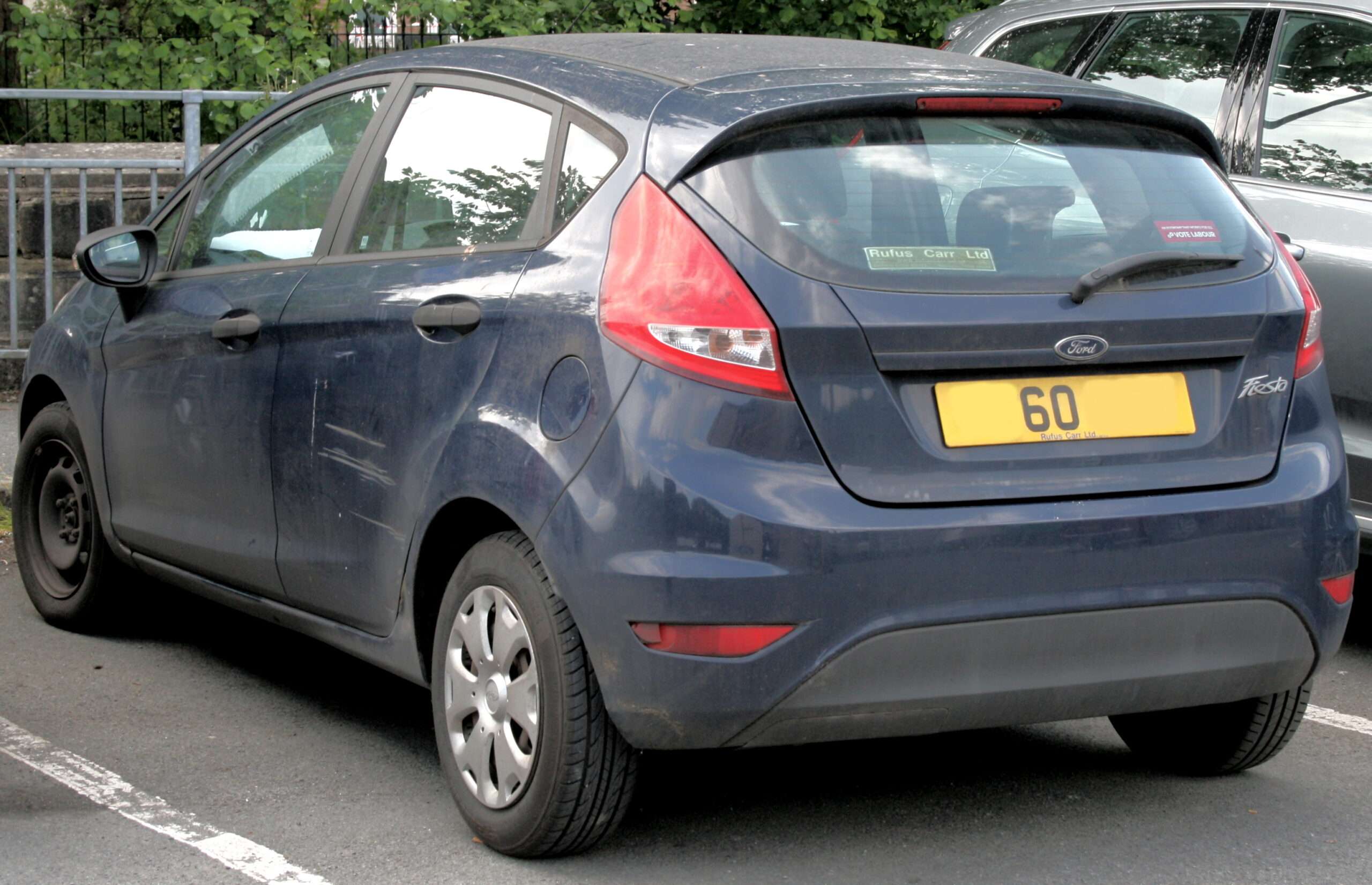
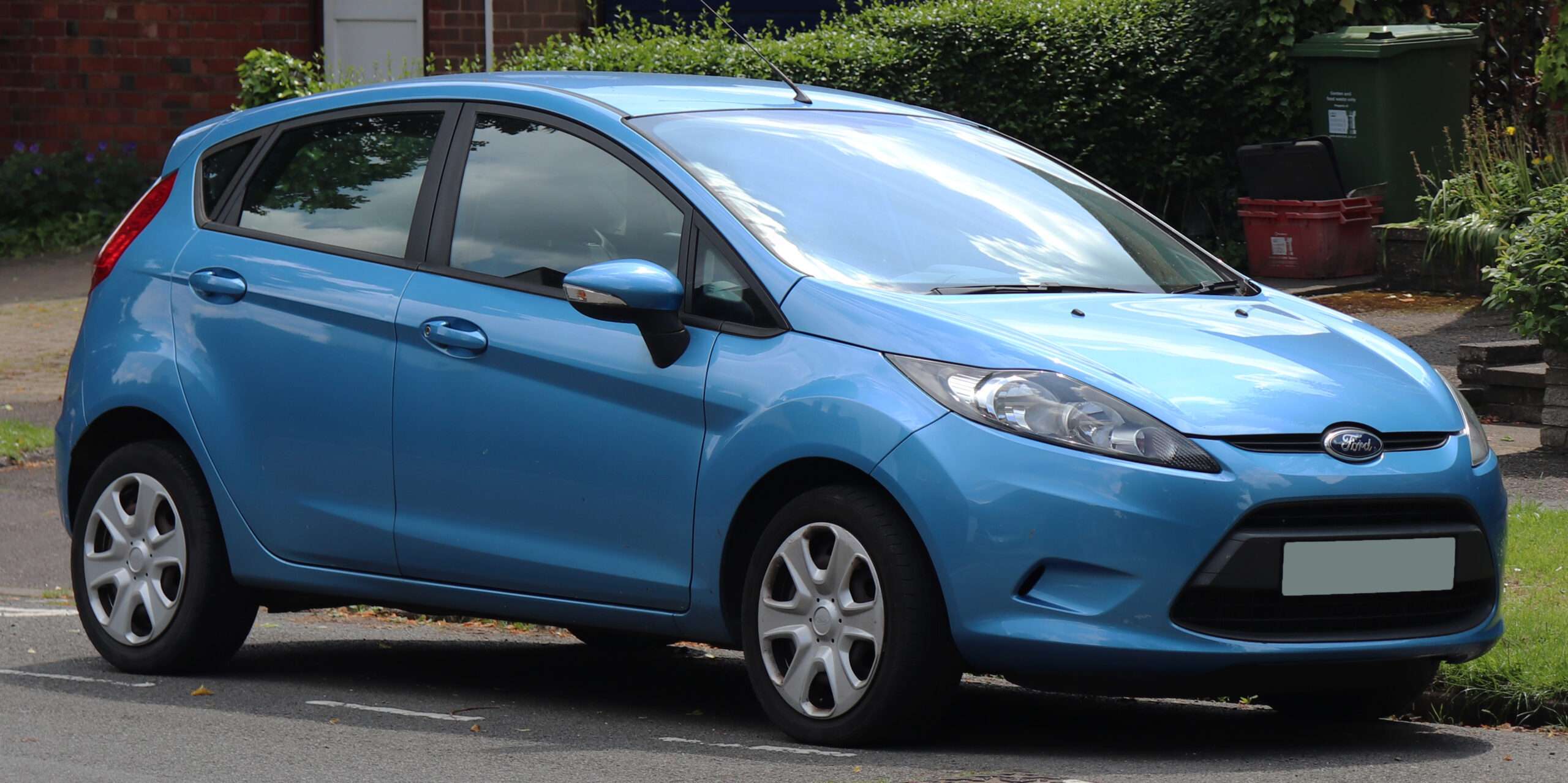
The facelift is recognisable by its revised nose and grille, but appearance does not establish every mechanical detail. Registration timing, build date and model year can differ. Establish the car’s specification with the VIN and documentation, particularly around the changeover to the next-generation Fiesta in 2017.
Three-door cars can offer a smart appearance but have longer front doors and less convenient rear access. Open the door fully in a realistic parking space and test entry with any child seats you use. A five-door may be worth more to you than a higher trim if rear-seat access is a daily requirement.
Studio, Edge, Zetec, Titanium and sportier-looking editions need individual equipment checks. Verify air-conditioning, heated windscreen if fitted, parking assistance, phone connection and the number of working keys. A trim name in an advertisement is not proof of a particular feature. Optional packs and production changes complicate assumptions.
Try the driving position and visibility before becoming attached to a colour. Check seat-height and steering adjustment, rear headroom and boot opening. Bring the buggy, luggage or mobility equipment you regularly carry. A small car can be practical, but a claimed boot capacity does not tell you whether your particular object fits through the opening.
UK prices: assess the actual car
Current advertised eBay examples included a 2013 1.0 EcoBoost Zetec S at £2,995 with around 80,000 miles, a 2015 1.25 Zetec at £2,500 with about 71,000 miles and a 2016 1.25 Zetec at £6,280 with about 44,000 miles. These are individual asking prices, not completed-sale evidence, a national average or confirmation of condition.
The spread illustrates why you need comparable specifications and histories. Separate dealer preparation and warranty scope from a private asking price. Compare engine, output, transmission, body style, mileage and maintenance evidence. Repeated advertisements of one registration are one car, not several independent observations.
For an EcoBoost, compare purchase plus documented catch-up work. A missing belt record should trigger an engine-specific assessment and written quote before you decide what discount is enough. If there has been an oil-pressure warning or overheating, the uncertainty extends beyond the price of preventive belt replacement.
For a 1.25, do not assume the apparently simpler engine makes the total bill trivial. Tyres, clutch, timing-belt requirements and accident repairs can dominate the budget. A slightly dearer car with genuine evidence of completed maintenance may be better value than one needing all those items together.
How to make an offer
Divide findings into consumables, overdue scheduled work and unresolved faults. Worn tyres have a measurable specification and price. Missing maintenance needs investigation of what is due. A gearbox warning or coolant loss remains a diagnostic uncertainty. Those are different negotiating situations and should not receive the same casual allowance.
Ask for an itemised estimate from the workshop you would use, including VAT, labour and associated work. If a dealer agrees to rectify something, put the precise scope and evidence required in the order. “Serviced before collection” could mean an oil-and-filter change; it does not automatically include timing-drive work, plugs or brake fluid.
Identity, service records and recalls
Before travelling, obtain the registration, engine description, gearbox type and service invoices. Review MOT mileage progression and recurring advisories. An MOT pass is a minimum roadworthiness result on the test date, not an engine-health report or proof that an oil-pressure issue has been repaired.
Match the VIN and identifying details to the V5C and the seller’s account. Complete appropriate finance, theft and write-off checks before payment. The V5C records the registered keeper; it is not proof of legal ownership. A discrepancy in identity or entitlement to sell needs resolving independently rather than being traded for a discount.
Ask Ford to check outstanding recalls and service campaigns against the VIN. Do not use a model-wide list to conclude that every car is affected or unaffected. Evidence of campaign completion is distinct from a routine service stamp, and a new MOT does not confirm the campaign status.
Read invoices in date and mileage order. Look for the specified oil, parts references, descriptions of faults and the workshop responsible. A belt invoice should identify the engine and completed job, while a replacement-engine invoice should explain the unit’s provenance, ancillary work and warranty. Ask permission to contact the workshop when clarification would decide the purchase.
A thorough Fiesta viewing and test-drive plan
1. Arrange a cold start
Request that the car remains unstarted before your arrival. Touching appropriate external components cautiously can help establish whether it has been run, but do not risk burns. If it is already warm, arrange another opportunity to see a cold start. There may be an innocent explanation, but you still need evidence of cold behaviour.
Look at fluid levels safely before starting. Check for oil staining, coolant residue, damaged wiring and improvised hose repairs. Never open a hot pressurised cooling system. A recently cleaned bay should be considered alongside the rest of the car; cleanliness alone neither proves a fault nor rules one out.
2. Observe starting and warm-up
Watch the normal warning-light sequence and confirm warning lamps are not simply absent. Start without excessive throttle. Listen for persistent abnormal noise and watch for uneven idle or heavy smoke. Brief condensation on a cold day is different from continuing smoke after warm-up; a qualified inspection should interpret suspicious symptoms.
Stop for a serious oil-pressure warning, overheating or severe misfire. Do not continue a test to demonstrate the symptom repeatedly. Ask for diagnosis of the cause, not simply a replacement sensor or cleared fault code. Belt-related oil-system concerns can have implications for the engine and turbo beyond the visible belt.
3. Inspect the cooling system
Check the expansion tank, visible hose connections and surrounding areas for dried residue, staining or signs of repeated top-ups. During the drive, confirm normal temperature behaviour and useful cabin heat. Afterwards, look for new leaks or smells without opening the system while hot.
If a seller describes past overheating, establish the original cause and the evidence that the engine remains healthy. A new reservoir, hose or thermostat is not proof that overheating caused no further damage. A car with continuing coolant loss should be assessed before purchase rather than collected with instructions to keep topping it up.
4. Inspect bodywork and structure
Walk around the car in daylight, checking colour consistency, gaps, lamp fit and door closure. Look around the boot floor, sill edges and jacking points for distortion or poor repairs. Cosmetic bumper damage and compromised structural repairs have very different implications.
A lift inspection is worthwhile on an older Fiesta, particularly if it has spent years in harsh road conditions. Ask about corrosion around load-bearing mountings, suspension areas, seams and brake pipes. Surface rust needs interpretation; thick fresh coating should not automatically be accepted as evidence of sound metal beneath.
5. Check water entry
Feel accessible carpets, inspect the spare-wheel recess and look for stains around rear trim and the headlining. Check that the boot seal and lamp areas have not been surrounded with unexplained sealant. Dampness needs tracing to a cause before it can be priced as a minor repair.
A freshly cleaned cabin, strong fragrance or new floor mats should not distract you from checking below. Water can affect wiring and trim as well as comfort. Do not diagnose a leak remotely from one photograph; ask a workshop to establish the path and repair scope.
6. Wheels, tyres and suspension
Inspect the whole tread, sidewalls and age of the tyres, and verify the specified sizes and ratings. Mixed brands are not automatically a mechanical fault, but incompatible sizes, severe wear and damaged wheels indicate costs you need to quantify. Uneven wear may call for alignment or suspension investigation.
On ordinary rough roads, listen for knocks and rattles while paying attention to steering accuracy. A pull, off-centre wheel or vibration requires a cause, not an assumed wheel balance. Check for signs that a kerb strike damaged more than the visible wheel rim.
7. Brakes and handbrake
Brake progressively on a safe route. Watch for pulling, pedal inconsistency, judder and abnormal noise. Confirm the handbrake operates correctly without an excessive travel or dragging sensation. Do not touch brake components after a drive to judge temperature.
Ask an inspector to identify rear drums or discs and the actual brake specification before pricing parts. Pads alone do not cure a sticking caliper or damaged disc. A cheap brake-kit advertisement is not a fitted quote and should not determine your repair reserve.
8. Gearbox cold and hot
In a manual, check a clean change through all ratios and reverse, then repeat low-speed manoeuvring when warm. Test the clutch sensibly without deliberate abusive slipping. A high bite point alone is not a complete diagnosis; combine its behaviour with slipping, vibration and noise.
For an automatic, include a period of gentle urban driving after the faster section. Reverse onto a slight incline if safe and permitted, and observe engagement without excessive throttle. A brief smooth cold departure does not settle warm clutch or control-system behaviour.
9. Cabin, electrics and security
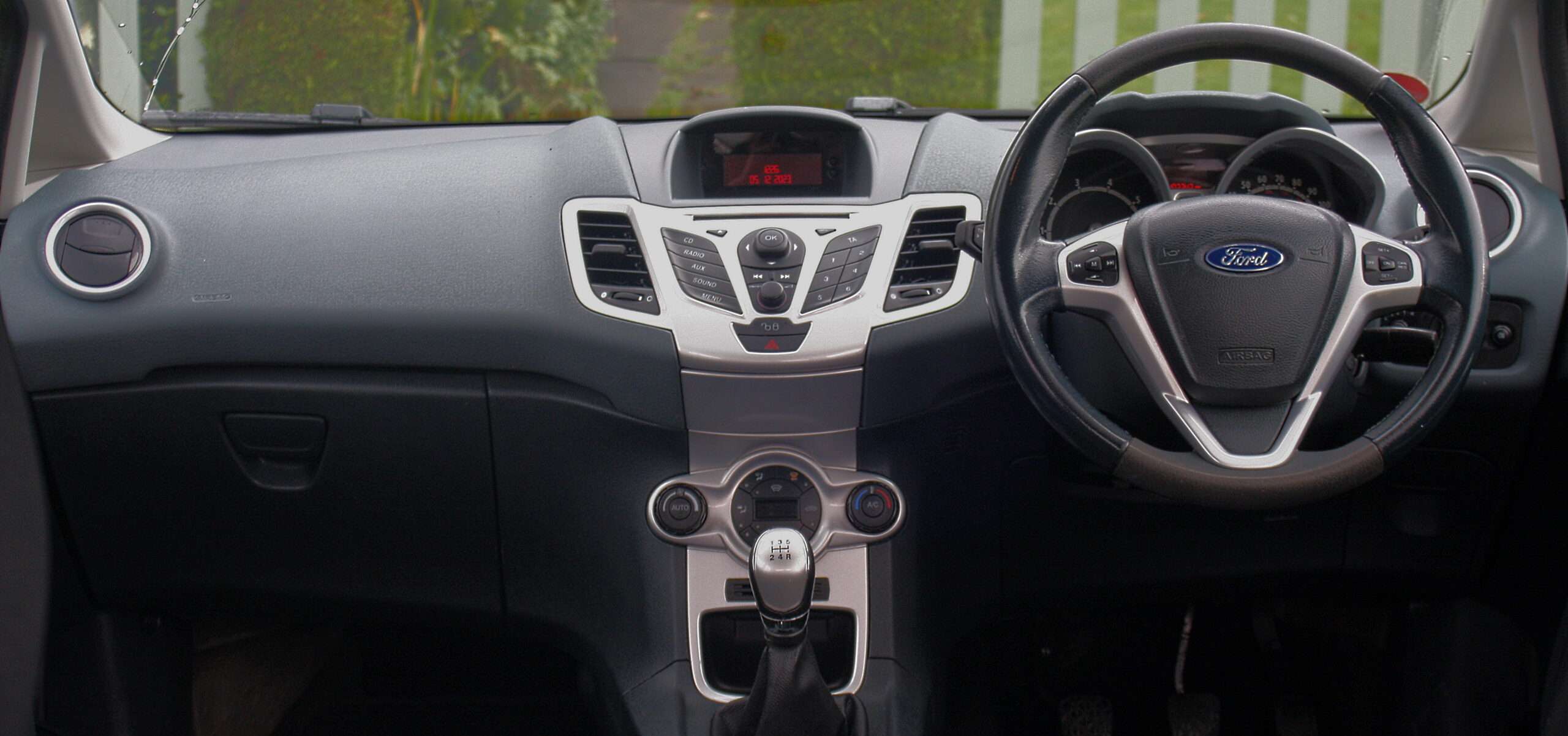
Operate every window, lock, mirror and control. Test the radio, phone integration and charging socket with your own device while stationary. Older infotainment does not necessarily support the same functions as a modern phone, even if Bluetooth audio works.
Check the air-conditioning for actual cooling and fan operation through the available speeds. A claim that it only needs gas should be supported by a leak/performance test. Test both keys and any remote functions. A missing spare key should be priced before payment, including programming where required.
10. Hot restart and final inspection
Restart after the road test and watch for new warnings. Recheck accessible areas for leaks and compare the engine’s running with its initial behaviour. A car that restarts badly or loses coolant after warming up has not passed because its first start was impressive.
Review your findings away from the seller’s sales pitch. If the price depends on an unverified explanation, pause for inspection. It is easier to assess another Fiesta than to reverse a purchase made on the assumption that an uncertain fault will be cheap.
Love cars you don’t see every day?
Get forgotten cars, surprising motoring stories and the most interesting finds from Unusual Cars by email.
Free to join. No spam. Unsubscribe whenever you like. See our privacy policy.
Maintenance: records, belts and the correct job scope
Oil changes and specification
Use the oil specification and service schedule confirmed for the actual engine and market. Viscosity alone is not the complete specification, and a generic service-kit description may be wrong. Ask for invoices showing what was used and investigate long gaps or unexplained changes.
For the EcoBoost, correct oil and timely maintenance are part of the wet-belt assessment. Do not rely on an externally clean engine or a recently reset service indicator. If history is uncertain, get a professional plan that considers present condition rather than simply starting a new service schedule and ignoring what came before.
Wet timing belt, oil-pump belt and sump work
For this generation’s EcoBoost, ask whether replacement work included the relevant timing components, oil-pump belt, seals/fixings, correct oil and filter and inspection/cleaning of the oil pickup as needed. The workshop should explain what the job includes and what it found, especially where degradation or oil-pressure symptoms prompted the work.
Do not describe preventive belt replacement and an engine that has already suffered oil starvation as the same job. A fresh belt does not repair damaged bearings or a worn turbo. Where there has been a warning, request evidence of diagnosis and the checks supporting continued engine health.
Ford Wet Belt Specialists publishes a Fiesta 1.0 EcoBoost fitted price of £1,260 including VAT, with the oil-pump belt included and the water pump excluded as an optional extra. It advises an earlier preventive interval of six years/60,000 miles; that is the workshop’s advice, not presented here as a universal Ford requirement. Confirm Ford’s current VIN-specific schedule separately.
The 1.25 has its own timing-drive requirements
Do not apply the EcoBoost wet-belt package or its parts list to the 1.25. Confirm the dry timing-belt requirements for the actual engine, age and mileage and inspect the supporting records. “Not a wet-belt engine” is not the same as “no belt maintenance needed”.
Ask which ancillary items are included in a belt quote and whether the water pump or auxiliary drive should be addressed on that installation. Obtain a written scope rather than assuming a package for another engine represents the correct work. Timing-drive replacement is a skilled workshop task, not a viewing-day improvisation.
UK costs: distinguish parts from fitted work
| Job or item | Published example | What it includes or excludes |
|---|---|---|
| Ford Essential Service for an eligible older car | From £209 RRP | Ford oil/filter service and checks; confirm eligibility and additions. Not a complete timing-drive package. |
| Fiesta 1.0 EcoBoost wet-belt job | £1,260 including VAT at the cited specialist | Published fitted price; oil-pump belt included, water pump extra. Confirm registration and current quote. |
| 1.25 filter kit with plugs | Example eBay advertisement £62.99 parts only | Check brands, quantities and engine fitment. Labour and any oil not included in the kit are additional. |
| 1.0 EcoBoost oil/air filter and oil kit | Example advertisement £50.99 parts only | Verify current oil approval and fill quantity. Not evidence of suitable oil from the title alone. |
| Clutch, automatic fault or overheating repair | Diagnosis and written quotation required | No single fitted price is defensible without the engine, gearbox and fault scope. |
A £1,260 belt job plus a £209 service headline would total £1,469, but do not simply add them together: oil/filter work and inspection may overlap. Ask the workshop to remove duplicated scope and price necessary extras. This is a purchasing calculation, not a forecast of annual running costs.
The cited published sources do not separate a reliable labour-only charge for all common jobs. Request parts, labour hours or charge, VAT and diagnosis on the written estimate; a cheap component does not establish the fitted cost. Confirm whether the workshop accepts customer-supplied parts and who bears responsibility if fitment is wrong.
Fiesta Mk7 service-parts table
These model-specific eBay UK searches use campaign 5339238906. Choose the correct engine and component references, and ask the supplier to confirm fitment. Search results routinely mix generations and even describe a 1.25 as a 1.2; neither a matching title nor an automated compatibility tick replaces the engine code.
| Service part | Fitment and buying advice | eBay UK comparison |
|---|---|---|
| 1.25 service kit | Match 1.25 engine, oil approval and kit contents; often catalogued loosely as 1.2. | Compare 1.25 service kit |
| 1.0 EcoBoost service kit | Verify the required Ford oil approval, not just viscosity. | Compare 1.0 ecoboost service kit |
| 1.0 EcoBoost wet timing kit | Workshop job; establish oil-pump belt, seals, fixings and oil-system scope separately. | Compare 1.0 ecoboost wet timing kit |
| 1.25 timing-belt kit | Dry-belt engine; identify exact engine and associated parts. | Compare 1.25 timing-belt kit |
| Spark plugs | Choose one engine’s exact specification; three- and four-cylinder sets differ. | Compare spark plugs |
| Cabin filter | Check fitment, dimensions and standard/carbon options. | Compare cabin filter |
| Front brakes | Confirm brake size, engine and derivative before ordering. | Compare front brakes |
| Rear brake parts | Check drums/discs and actual hardware; not all versions share components. | Compare rear brake parts |
| Battery | Match technology, rating and dimensions; stop-start versions need appropriate specification. | Compare battery |
| Alternator | Match engine, connector, rating and pulley. Note exchange surcharges. | Compare alternator |
| Manual clutch kit | Manual only; identify gearbox and release-component scope. | Compare manual clutch kit |
| Wiper blades | Confirm front lengths and rear attachment for the generation. | Compare wiper blades |
Hidden ownership costs: beyond the purchase price
Buying missing maintenance
A partial service book can leave several different jobs unanswered. Oil, plugs, filters, brake fluid and timing-drive decisions are not interchangeable. Price each item against the actual schedule. Do not assume a major service sold by an independent workshop includes exactly the same work as Ford’s scheduled maintenance at that mileage.
For an EcoBoost with no belt evidence, establish whether you are budgeting preventive work on an otherwise healthy engine or investigating damage already caused. The second proposition can require a very different reserve. Avoid collecting a car with a warning light and planning to deal with it after the first long journey.
Automatic transmission uncertainty
Buying an automatic only because it is cheaper than the manuals can create an expensive mismatch. Have symptoms assessed by a workshop familiar with that transmission. Diagnosis, clutch work, control electronics and internal repair are different scopes. A seller’s warranty limit may cover only a fraction of a repair, and a pre-existing fault may be excluded.
Get confirmation of what is covered in writing before purchase and ask how authorisation, inspection and transport work. A verbal statement that the gearbox is covered does not tell you whether diagnosis, labour, fluids or consequential damage are included. A healthy car with clear evidence is preferable to relying on an unclear promise.
Tyres, brakes and wheel damage
On a budget Fiesta, replacing a full set of tyres can absorb a meaningful share of the purchase saving. Price a suitable specification including fitting, valves and disposal. Damaged wheels or uneven wear may add alignment or suspension work; do not assume four new tyres alone solve the underlying issue.
Likewise, brakes must be priced as a complete diagnosed job. If a caliper or handbrake mechanism is sticking, the cost is not represented by the cheapest pad set online. Ask whether the workshop estimate includes fitting hardware, fluid work and the relevant checks after replacement.
Keys and everyday equipment
Price the spare key before agreeing the sale. A replacement may require programming as well as a physical key, and a non-working remote is not equivalent to a fully functional spare. Check the central locking and all doors, including the boot, using each supplied key.
A failed heated screen, air-conditioning system or infotainment unit can be disproportionately expensive compared with the value of an older car. Buy the equipment you need and confirm it works. If it does not, negotiate against a diagnosis rather than a guess that the fault is a fuse.
Insurance, tax, recovery and transport
Obtain insurance and registration-specific tax figures before paying. Engine size alone does not determine tax or insurance cost; emissions, first-registration date, output and modifications matter. Ensure your quotation identifies the car accurately and declare modifications, including a remap.
Allow for collection transport if the car cannot be safely driven or has serious symptoms. Breakdown cover is useful when you rely on it for work, but it is not an alternative to repairing a known fault before use. Do not assume a seller’s roadside cover transfers with the car.
Modified Fiestas: distinguish style from mechanical changes
Wheels, suspension, exhaust changes and remaps need to be documented. Ask for the actual specification, installation invoices and the reason for the changes. The fact that parts are sold widely does not establish that a particular installation is sound or compliant with your insurance.
For a tuned EcoBoost, ask how the supporting maintenance, cooling and clutch requirements have been assessed. Do not accept an enthusiastic acceleration demonstration as evidence of durability. If your objective is predictable daily use, an ordinary documented car is a stronger starting point than an unknown tuning project.
On lowered cars, look for tyre rubbing, damaged sills, cracked components and poor ride or alignment. Confirm wheel and tyre specification, and inspect any removed or altered wiring. A modified car can be worthwhile, but its condition and valuation should be assessed against comparable modified examples rather than assumed equivalent to a standard car.
First-month ownership plan
Give your chosen workshop the records and ask for a baseline inspection against the actual engine and gearbox. Agree urgent safety defects, scheduled work and optional improvements separately. This avoids buying a generic service and discovering afterwards that the job you were concerned about was outside its scope.
Record tyre pressures and safe cold fluid levels after collection, then compare like-for-like checks over the following weeks. A level trend is more useful than a vague recollection that something looked low once. Act promptly on warnings or recurring fluid loss and avoid driving through a serious oil-pressure or overheating event.
Learn how the spare wheel or repair kit is used, check the locking-wheel key and confirm both keys function. Keep the service schedule and invoices together, noting the specification of fluids and parts. That record makes future maintenance decisions clearer and supports the car’s credibility when you sell.
Buy, investigate or walk away?
| Finding | Response |
|---|---|
| Clear identity, consistent history, sound inspection and normal cold/hot running | Proceed subject to normal purchase checks and an adequate maintenance reserve. |
| Worn tyres, overdue routine service or clearly diagnosed minor fault | Price the complete work, agree preparation in writing and recheck before collection. |
| Uncertain belt history on an otherwise healthy EcoBoost | Obtain a specialist assessment and complete written scope before deciding the offer. |
| Oil-pressure warning, overheating history without proof of resolution, substantial automatic symptoms | Pause for diagnosis. A discount is not a substitute for knowing the extent of the fault. |
| Identity discrepancy, concealed structural repair or refusal of a meaningful inspection | Keep looking unless the issue can be resolved independently before purchase. |
Fiesta Mk7 petrol buying questions
Is the 1.25 the better first car?
It is our starting point for straightforward local use, provided the particular example is healthy and maintained. Try the output and body style you are buying on representative roads. Its simpler delivery does not remove the need to check timing-belt history, clutch, cooling and age-related wear.
Should I avoid every 1.0 EcoBoost?
No. Evaluate the individual engine and evidence. A healthy, documented car with properly scoped belt work is different from one with gaps, pressure warnings or an uncertain repair. Buy on that distinction rather than accepting either blanket reassurance or a blanket rejection of the badge.
Does low mileage make the wet belt safe?
No. Age, oil history and operating pattern also matter. An older low-mileage car still needs the correct maintenance assessment. A quick visual glance cannot establish the entire belt and oil system’s condition.
Is the 2017 Fiesta definitely a Mk7?
Not from registration year alone. The generation change creates overlap. Check appearance, VIN specification and original vehicle details before using this guide, the later Fiesta guide or a parts catalogue.
Is a PowerShift oil service enough to fix judder?
Do not assume so. First identify the transmission and diagnose the symptom. A fluid service for another PowerShift variant is not a universal solution to clutch, actuator or electronic faults on the car in front of you.
What evidence would you want for an engine replacement?
The unit’s identity and provenance, mileage where documented, the cause of the original failure, invoices for installation and ancillary work, and warranty terms. Verify normal running and current condition independently. A replacement engine is a fact to investigate, not automatically a reason to buy or reject the car.
Our final recommendation
Choose a sound 1.25 manual for predominantly local use, or a documented, independently checked 1.0 EcoBoost when its flexibility suits your driving. Do not let trim, low mileage or fresh paint outrank the evidence. The best Fiesta is the one with a clear identity, a healthy engine and gearbox, and enough money left in your budget to maintain it properly.
Ford Fiesta Mk7 Petrol cars for sale
Compare current asking prices, then verify the generation, engine, history and condition of each advertised car. Results can include incorrectly described vehicles.

Love cars you don’t see every day?
Get forgotten cars, surprising motoring stories and the most interesting finds from Unusual Cars by email.
Free to join. No spam. Unsubscribe whenever you like. See our privacy policy.