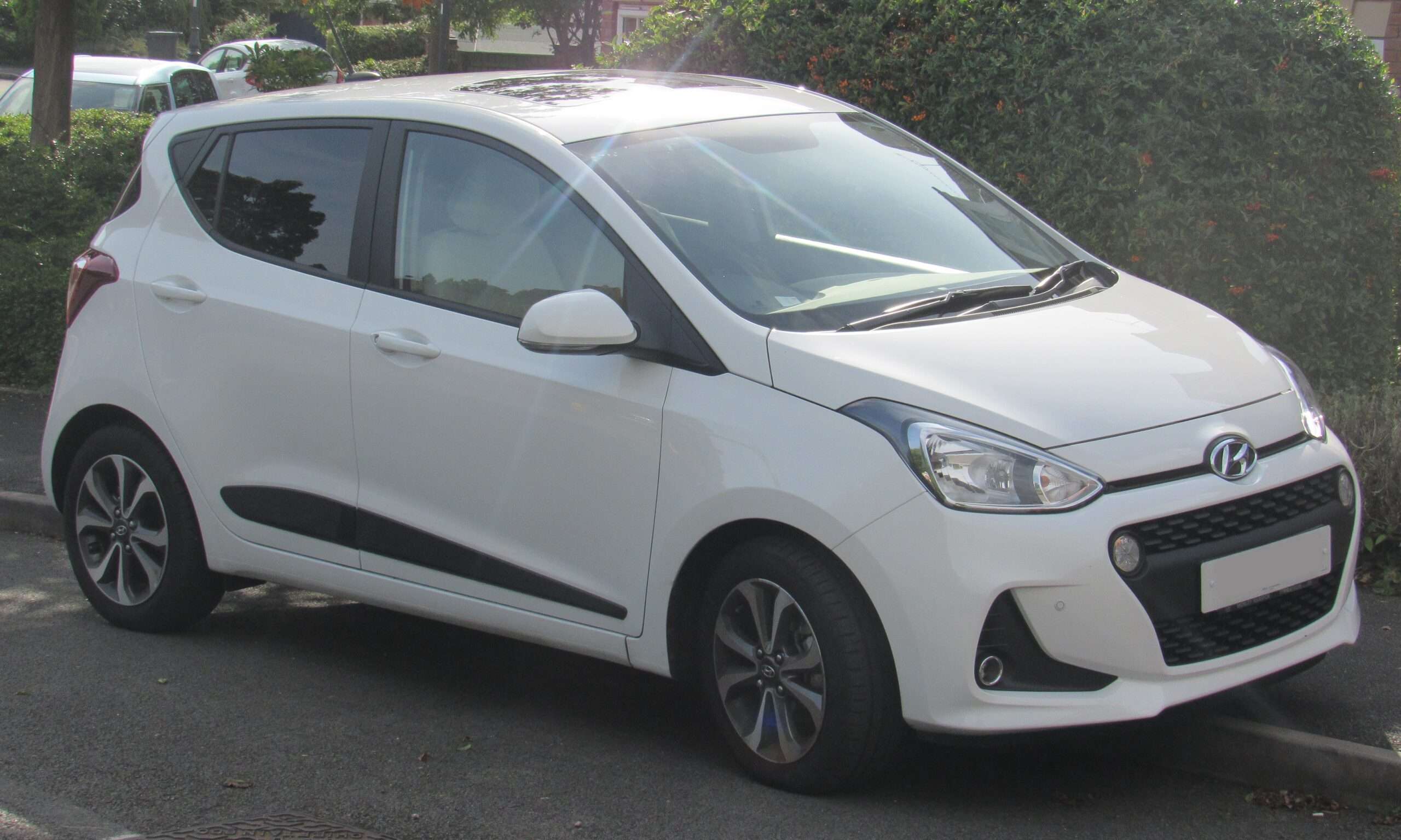
Buying Guides / Hyundai i10 Mk2 · UK buying advice
The second-generation i10 is a strong candidate for a first car, a local runabout or an inexpensive small automatic. Buy on condition and maintenance rather than accepting that a simple petrol engine makes inspection unnecessary. A sound 1.0 manual suits many local journeys; the 1.2 is worth trying if you regularly carry passengers or travel on faster roads.
This guide covers the European-market Mk2, generally sold in the UK from 2014 to 2019, including the facelift introduced for 2017. It excludes the earlier Mk1, later Mk3, overseas Grand i10 and newer automated-manual variants. Late registrations can overlap generations, so confirm the actual body and build before applying advice or ordering parts.
Affiliate disclosure: we may earn commission from qualifying eBay purchases at no extra cost to you. The parts links use campaign 5339238906. Search results are comparisons, not fitment guarantees; confirm VIN, engine, dimensions and original references.
The buying verdict: 1.0, 1.2 or automatic?
Our default shortlist is a clean 1.0 manual with credible servicing and working air conditioning, if you want it. It is appropriate for many local journeys and does not need a high trim level to be useful. Take it on your own kind of route, including a hill or faster section where relevant, before deciding that its performance is sufficient.
The 1.2, also described as 1.25 in some advertisements and catalogues, offers a different driving experience without turning the i10 into a performance car. It is worth comparing if your use includes passengers, luggage and regular out-of-town travel. Do not pay more simply for engine size if the supposedly better car has a poor history or an unresolved fault.
The Mk2 1.2 automatic is a useful option for buyers who want a small conventional automatic. Hyundai’s UK facelift information identifies a four-speed automatic, distinct from the five-speed manual. That matters because advice about the later i10’s automated manual is not interchangeable. Assess the actual gearbox cold and hot before paying an automatic premium.
Understanding generations, trim and the facelift
| Version | Why consider it? | What to verify |
|---|---|---|
| 1.0 manual | Everyday local and mixed use where modest performance is acceptable. | Service history, smooth running and suitability on your route. |
| 1.2 manual | Worth trying for loaded or faster-road journeys. | Engine identity, clutch condition and price relative to a good 1.0. |
| 1.2 automatic | Small conventional automatic for easy manoeuvring. | Cold/warm shifts, engagement and documented maintenance. |
| S/SE/Premium/Premium SE | Different equipment and comfort priorities. | Exact year-specific specification; demonstrate the features. |
| SE Blue | Economy-oriented version. | Actual seating capacity and stop-start specification. |
Hyundai’s December 2016 UK release describes the facelift’s revised grille, bumpers and equipment. Premium SE gained integrated navigation and smartphone functions; these were not universal across the range. The same release identifies the SE Blue’s four-seat interior. Check seat belts and vehicle documentation if carrying five people matters to you.
Do not infer equipment from an alloy wheel or badge. An aftermarket radio, replacement bumper or a seller’s copied specification can make an advert inaccurate. Check whether the car has air conditioning, the phone functions you want, the correct number of keys and any optional driver-assistance equipment before paying for a particular trim.
Warning systems are not automatically autonomous braking. Ask what a fitted assistance feature actually does and consult the handbook. Similarly, an original connected-service subscription does not establish that the service remains available today. Price the car on functioning equipment, not a launch-era list copied into an advertisement.
Documents and history: small cars still need evidence
Request the registration, VIN, mileage and service invoices before travelling. Compare the MOT mileage sequence with servicing and ask about recurring tyre, brake or suspension advisories. A car that has done little mileage can still need age-related work and may have accumulated wear through short trips, cold starts and parking manoeuvres.
Look for dates, mileages and oil specifications on invoices. A stamp does not establish that every supplementary item was completed. Ask when plugs, air and cabin filters, brake fluid and coolant were last addressed, then have a workshop identify what becomes due during your first year.
Ask about previous use. A driving-school or delivery history is not an automatic rejection, but it should influence the inspection of clutch, gearbox, seats and bodywork. Equally, a one-owner description does not guarantee careful maintenance. Condition and supporting evidence remain the basis of the decision.
Check any outstanding recall or campaign with Hyundai using the VIN and inspect the official MOT record. Most examples are beyond their original five-year warranty, so do not assume a Hyundai badge provides remaining manufacturer cover. Establish any current seller warranty in writing, including exclusions, diagnosis and who performs repairs.
Petrol engines: what to check from cold
Arrange the viewing before the engine has been warmed up. Watch the warning-light sequence, starting effort and the way the idle settles. A three-cylinder 1.0 can feel different from a four-cylinder 1.2, but a pronounced misfire, persistent metallic noise, heavy smoke or repeated stalling needs investigation. Do not let engine size become an excuse for poor running.
Ask how often the owner checks oil and whether it needs topping up between services. Examine accessible areas for oil traces and coolant staining, then have the underside inspected. A freshly cleaned engine bay is not necessarily suspicious, but ask why it was cleaned and whether a leak has been repaired.
These petrol engines require identification before timing-drive advice or parts selection. Do not import a generic timing-belt replacement from a different i10 engine or market. Have the VIN-specific maintenance information checked, and investigate persistent timing-related noise rather than assuming a chain is exempt from condition assessment.
Once warm, drive with normal acceleration through the gears. The engine should respond consistently without hesitation, warning lights or an abrupt loss of power. A basic code reader can identify an emissions-related code, but it does not prove that a particular sensor, coil or catalyst is the failed part. Ask for diagnosis based on symptoms and relevant measurements.
Inspect the cooling system for evidence of repeated top-ups, damage or poor repairs. Check that the cabin heater works and that temperature behaviour is consistent during the drive. Never remove a hot cooling-system cap. If the seller reports overheating, establish the cause and repair evidence rather than accepting that new coolant proves the issue is solved.
Manual gearbox and clutch checks
The manual’s condition is important on a car that may have spent much of its life in traffic. Check the clutch bite, smooth take-up and gear selection. Reverse engagement and parking movements can reveal problems that a short drive in higher gears misses. Do not force selection or accept repeated grinding as normal.
Listen with the clutch pressed and released and note changes under load or overrun. The source may be a bearing, mounting or another component, so record the behaviour rather than making an instant diagnosis. Under load, engine speed should rise in proportion to road speed rather than flaring because the clutch slips.
A clutch quotation should identify the complete job, parts, associated components, labour and warranty. An inexpensive kit is not the fitted bill. Ask whether any leaks or hydraulic concerns need correcting at the same time. If the seller has recently replaced the clutch, request an invoice and test the car after the work.
Check that the gear lever and pedals feel appropriate throughout the route, including after the car has warmed. A stiff or inconsistent response is more useful evidence than a seller’s estimate of how much life remains. A clean, quieter lower-mileage example may justify more money if the alternative needs immediate drivetrain work.

The 1.2 four-speed automatic: how to assess it
Begin from cold with the brake applied and select reverse and drive normally. Engagement should be predictable, without an excessive pause followed by a violent jolt. Move gently in both directions in a safe area, then drive through ordinary acceleration and deceleration. Do not judge it from one warm lap of the seller’s forecourt.
Repeat manoeuvres after a longer road test and include a warm restart. Check for slipping or flaring between changes, repeated banging, warning messages or a loss of drive. A four-speed transmission can hold engine speed differently from a modern unit with more ratios; that is not permission to dismiss symptoms.
Ask about transmission maintenance and any previous repair. Confirm the correct fluid and requirements for this gearbox rather than buying a generic Hyundai automatic kit. A fluid change and an internal repair are different jobs. If poor behaviour exists, arrange diagnosis before agreeing to a purchase or assuming servicing will cure it.
Budget using comparable automatic examples, not the cheapest manual advert. In the checked eBay listings, older Mk2 manuals appeared around £3,900–£6,400, while a lower-mileage 2015 automatic was advertised around £8,600. Those individual asking prices are not a valuation range or evidence of completed sales, but they show why transmission and mileage must be matched in comparisons.
Love cars you don’t see every day?
Get forgotten cars, surprising motoring stories and the most interesting finds from Unusual Cars by email.
Free to join. No spam. Unsubscribe whenever you like. See our privacy policy.
Steering, suspension and brakes
Small dimensions invite urban use, so inspect the wheels, lower bumpers, sills and underbody for kerb damage. Look for uneven paint finish, mismatched lights and poor panel alignment. A repaired bumper can be harmless cosmetic work; a buyer should still understand the reason and whether the structure or alignment was affected.
Check tyres across the full width, including inner shoulders, and look for sidewall damage and inconsistent specifications. Low annual mileage does not prevent tyres becoming old or damaged. If a new set is needed, establish whether alignment or worn suspension caused the old set’s wear before fitting replacements.
Drive over an uneven surface and note repeated knocks, steering pull or vibration. Have joints, bushes, springs and dampers inspected on a lift. Ask for a clear identification of the worn component and a fitted price. Buying several inexpensive parts without diagnosis can cost more than addressing one confirmed fault properly.
Brake progressively and confirm the car remains straight without grinding or pedal pulsation. Check the parking brake and have the rear brake arrangement inspected. A parts catalogue can combine generations or versions, so identify the actual drums, discs and associated components before ordering. Pads-only prices should not be compared with complete disc-and-pad work.
Cabin, air conditioning and equipment
Try the driving position carefully. A city car can be used for longer journeys, but only if the seat, pedals and steering position suit you. Spend time in the rear and check the number of seats and belts on the actual car. The economy-focused SE Blue is particularly important to verify if you expect five-seat capacity.
Put your normal luggage, shopping or mobility equipment in the boot before deciding it is large enough. Check that the rear seat folds as expected, the load floor is sound and the parcel shelf is present. Inspect the luggage area and footwells for dampness or a musty smell, and ask about any earlier water ingress.
Air conditioning is worth testing properly, especially if the car is bought for regular urban use. Run it from a warm cabin and check sustained cooling, fan speeds and unusual noises. A seller saying it needs only a regas has not established why the refrigerant is low or ruled out a leak. Price the diagnosis and repair rather than a recharge alone.
Test windows, mirrors, locks, lights and both keys. Pair your phone and try the functions you need. The facelift Premium SE’s touchscreen equipment is different from simpler radios, so do not assume every Bluetooth-equipped car has navigation, CarPlay or Android Auto. Check any aftermarket installation for secure mounting and retained original functions.
Inspect seat bolsters, pedal rubbers, belts and the steering wheel, then compare wear with the stated history. Heavy use does not make a car unbuyable, but it should be reflected in condition and price. A tidy valet cannot demonstrate that a warning light, electrical fault or unpleasant smell has been addressed.
A viewing plan for a first-time buyer
Do the paperwork checks before the visit, then take enough time to inspect the car in daylight. Bring someone experienced if you are unfamiliar with assessing used cars, and consider a professional inspection where the history or condition is uncertain. An inexpensive car can still carry a repair bill that is large relative to its price.
- Confirm registration, VIN, engine, gearbox, mileage and supplied keys.
- Read MOT history and invoices, including age-related maintenance.
- Observe a cold start and check warning-lamp behaviour.
- Inspect tyres, wheels, bodywork, luggage area and equipment.
- Drive a route that includes the conditions you expect to use.
- Test the clutch or automatic again when warm.
- Obtain written quotes for findings and calculate the first-year total.
Arrange insurance and permission before driving. Do not rush into a deposit because another buyer is supposedly on the way. If a deposit is conditional on inspection or repair, have that condition recorded clearly. Where the seller agrees to fix an issue, inspect the result and retain the invoice before collecting.
UK servicing, parts and labour: what the sources support
Hyundai UK’s fixed-price servicing programme is intended for cars beyond the original five-year warranty. It advertises Core servicing from £199 and Major servicing from £299, with an MOT add-on at £40. Check retailer participation, vehicle applicability and any additional scheduled work when obtaining your quote.
| Operation | Published price | What it covers or means |
|---|---|---|
| Hyundai Core service | From £199 | Oil and filter, visual checks and the programme’s listed benefits. |
| Hyundai Major service | From £299 | Additional air/cabin filters, brake/clutch fluid and listed checks. |
| MOT with the service | £40 | Test fee; repairs required to pass are separate. |
| Clutch, alternator or brake repair | VIN-specific quote | Agree parts, labour, fluids, diagnosis and VAT before work. |
The service menu does not publish a separate parts-and-labour split, and it should not be treated as a quote for a fault repair. Ask the workshop to itemise any additional work. A quoted labour time and hourly rate are useful when comparing like-for-like jobs; subtracting an unrelated online kit from a service package does not establish the workshop’s labour charge.
For parts-only context, the checked eBay search included an i10 oil, air and cabin-filter package with oil around £50, an oil/filter package around £38, and a larger service set including plugs around £99. Contents and advertised applications vary. Confirm engine and oil specification; a broad year range in a title is not proof of fitment.
For front brakes, insist on a quote stating whether it includes both discs and pads, the correct diameter, fitting hardware and any seized components. For a clutch, clarify associated parts and leaks. For an alternator, establish whether diagnosis has confirmed a charging fault and whether battery condition, wiring or a belt issue is involved.
A workshop fitting customer-supplied parts may have different warranty terms or decline uncertain applications. Ask before ordering. A parts-only saving is not useful if the kit is wrong, the workshop cannot fit it or the car remains off the road while replacements are sourced.
How to compare two i10s and set an offer
Build a shortlist with the same generation, transmission and broadly similar mileage. A low-mileage automatic and a high-mileage manual serve different buyers, so their prices are not directly comparable. Confirm whether the example has air conditioning and demonstrate it: buying the cheapest car and adding missing factory equipment later is rarely a straightforward plan.
Separate findings into work needed before normal use, scheduled work becoming due and optional cosmetics. Tyre damage or a braking concern belongs in the first group. A service approaching its due date belongs in the second. A small trim mark belongs in the third. This helps you make a sensible decision without treating every imperfection as equally serious.
Ask for written quotes against the actual registration, then compare the total with the alternative car. If the gearbox behaves badly or the engine has unexplained noise, the uncertainty may be too large to price sensibly during a viewing. Choosing another example is a legitimate outcome; you do not have to negotiate every car into becoming a good purchase.
Hidden ownership costs on a budget city car
Budget for the first year rather than the advert price. A service, tyres, brakes, a second key and air-conditioning work can arrive together. Add the inspection findings to the purchase cost and compare the result with a better-maintained example. Small cars are affordable to own when their condition is understood, not simply because individual parts are inexpensive.
Get an insurance quote on the actual registration before paying a deposit, particularly for a first driver. Engine, trim, postcode, driver and declared modifications can all matter. Check tax from the official vehicle record rather than assuming every 1.0 is in the same band or applying an older advert’s annual charge.
Automatic models can command a premium. Decide how much that convenience is worth to you and compare equivalent condition and mileage. A cheap symptomatic automatic is not necessarily a bargain, while a well-maintained manual can leave more money available for insurance and repairs.
Consider the cost of downtime too. A car used for commuting, caring responsibilities or essential errands needs a realistic contingency if a fault takes time to diagnose. Keep a repair reserve beyond scheduled servicing and avoid spending the entire budget on the highest trim you can finance.
Model-specific eBay service-parts table
Select the correct European Mk2 and engine before comparing results. Grand i10 and later-generation parts can appear in broad searches. Verify original numbers, dimensions, kit contents and seller returns, and do not order a component solely because a fault code mentions it.
| Service part | Fitment and buying advice | eBay UK comparison |
|---|---|---|
| Engine oil and filter | Match 1.0 or 1.2 engine and required oil specification. | Compare engine oil and filter |
| Air filter | Confirm engine, dimensions and housing. | Compare air filter |
| Cabin filter | Check fitment and filter type. | Compare cabin filter |
| Spark plugs | Three-cylinder 1.0 and four-cylinder 1.2 require different sets. | Compare spark plugs |
| Auxiliary belt kit | Inspect pulleys and establish the source of noise. | Compare auxiliary belt kit |
| Front discs and pads | Match disc diameter and caliper; check kit contents. | Compare front discs and pads |
| Rear brake components | Confirm actual rear brake arrangement and dimensions. | Compare rear brake components |
| Battery | Check size, capacity and whether stop-start changes requirements. | Compare battery |
| Alternator | Match engine, output, pulley and connector. | Compare alternator |
| Wiper blades | Check blade lengths, attachment and complete set contents. | Compare wiper blades |
| Clutch kit | Diagnosis and a complete fitted quote before ordering. | Compare clutch kit |
| Coolant service supplies | Use the specified chemistry and procedure; do not mix by colour alone. | Compare coolant service supplies |
Common i10 Mk2 buying questions
Is the 1.0 enough for motorway driving?
Test it on the kind of journey you will make, with a realistic load. The answer depends on expectations and use. Compare a 1.2 if you want more flexibility, but choose condition and history before engine size.
Is the Mk2 automatic an automated manual?
The UK 1.2 automatic in this guide uses a four-speed automatic as identified in Hyundai’s facelift information. Advice about later automated-manual versions belongs to a different generation.
Does every i10 have five seats?
No assumption should replace checking the car. Hyundai’s UK facelift specification identifies the SE Blue as a four-seat version. Verify belts, seats and documentation if carrying five is important.
Should a low-mileage example cost more?
Only when condition and history support it. Short trips, age-related maintenance and old tyres still matter. A higher-mileage car with clear servicing can be preferable to an apparently little-used example needing immediate work.
Is a full service all the maintenance it needs?
Not necessarily. Compare the invoice contents with the vehicle’s schedule and condition. Tyres, brakes, coolant, plugs and fault repairs should not be assumed current because a seller uses the phrase “full service”.
Our final i10 buying advice
Choose a standard, well-documented car that suits your journeys and has working equipment. Prioritise a clean cold start, a healthy clutch or automatic, sound tyres and brakes, and a realistic first-year budget. The best i10 is the one that remains convincing after the inspection, not simply the smallest price in the search results.
Hyundai i10 Mk2 cars for sale
Compare current asking prices, then verify the generation, engine, history and condition of each advertised car. Results may include incorrectly described vehicles.

Love cars you don’t see every day?
Get forgotten cars, surprising motoring stories and the most interesting finds from Unusual Cars by email.
Free to join. No spam. Unsubscribe whenever you like. See our privacy policy.