
Buying Guides / Kia Niro DE Mk1 1.6 Hybrid · UK buying advice
The first Niro Hybrid is a practical route into petrol-electric ownership without arranging home charging. Its appeal is everyday usability and a conventional-feeling six-speed dual-clutch transmission, but it still needs a proper engine, gearbox and hybrid-system inspection. Buy the service evidence and operating condition before the highest trim level.
This guide concentrates on the first-generation DE Niro 1.6 GDi full hybrid sold from 2016 to 2022, including the 2019 facelift. The plug-in hybrid needs additional charging and battery checks, while the all-electric e-Niro and second-generation SG2 are separate buying subjects. Adverts sometimes mix them, so confirm the drivetrain before comparing prices or ordering parts.
Affiliate disclosure: eBay links may earn us commission at no additional cost to you. Model-specific parts searches use campaign 5339238906. Confirm VIN, model year, hybrid type and original part references; search compatibility is not a fitment guarantee.
Which Niro should you buy?
Our starting point is a standard, well-documented full hybrid in a trim whose equipment you will use. Smaller wheels can be attractive for comfort and replacement-tyre costs. A higher specification is worthwhile when its seats, lighting, assistance systems and infotainment work, but a large screen should not distract from neglected servicing or an unresolved drivetrain fault.
The full hybrid suits a buyer who wants electrified assistance without plugging in. Its battery and electric drive support the petrol engine, with short electric operation possible in appropriate conditions. It should not be bought on the expectation of a fixed electric-only commute or treated as a battery-electric car with an engine backup.
Consider the plug-in version only after checking whether you can charge regularly and whether its additional hardware and luggage arrangements suit you. Do not pay a PHEV premium solely because an advert calls both cars “hybrid”. This guide’s main recommendation and parts advice concern the ordinary HEV; confirm each vehicle’s identity.
HEV, PHEV and e-Niro: identify the actual car
| Version | Buying distinction | What to verify |
|---|---|---|
| Niro HEV | Petrol-electric full hybrid without plug-in charging. | DE generation, 1.6 GDi system, service history and hybrid diagnostics. |
| Niro PHEV | Plug-in hybrid with different battery and charging hardware. | Charging operation, equipment and version-specific maintenance. |
| e-Niro | Battery-electric model, not the petrol hybrid in this guide. | Separate EV buying and battery assessment. |
| 2019 facelift | Revised appearance, cabin and equipment. | Build date and exact year-specific specification. |
| SG2 replacement | Second generation with different hardware and body. | Do not apply DE parts or service assumptions. |
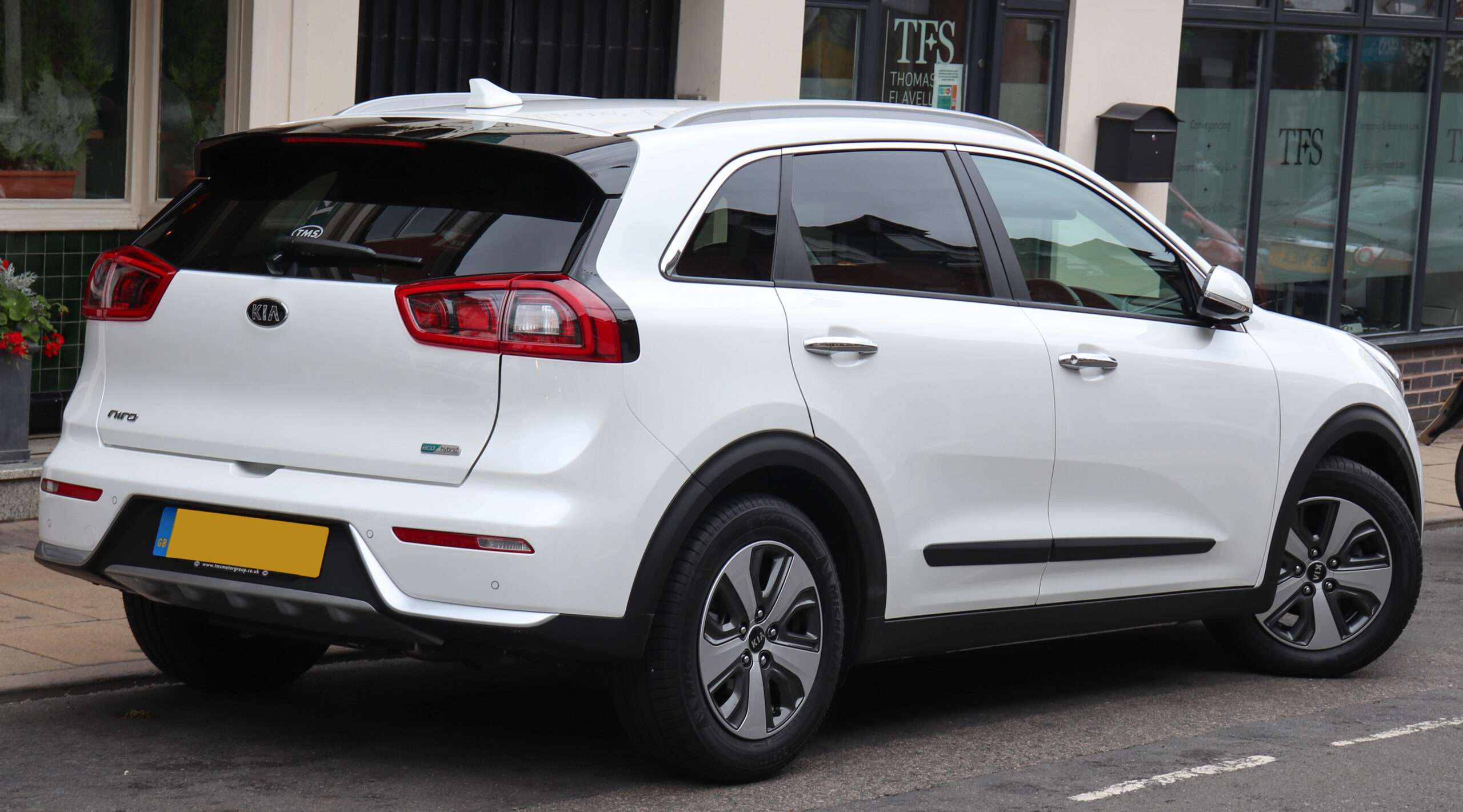
Kia’s archived UK press pack confirms the DE hybrid’s 1.6-litre petrol engine, electric motor and six-speed dual-clutch transmission, with front-wheel drive. It also distinguishes the PHEV introduced later and the electric model. The crossover appearance does not mean that an ordinary Niro Hybrid is four-wheel drive.
Request registration and VIN before visiting. Ask the seller to identify whether the car is HEV or PHEV, which generation it is and what factory equipment is fitted. Use the vehicle record and physical inspection to resolve any contradiction. Do not rely on a marketplace’s fuel-type category or a copied advert description.
Service history and the hybrid-specific questions
A hybrid still has a petrol engine requiring correct oil, filters and scheduled maintenance. Ask for dated invoices with mileages and specifications, not simply a claim that it has been serviced annually. Compare those records with the MOT history and investigate gaps or unexplained mileage changes before travelling.
Ask a Kia-aware workshop to check the schedule for the actual VIN, including supplementary items. In particular, request evidence about the hybrid starter-generator belt, engine-clutch actuator fluid, relevant coolant circuits, brake fluid and transmission requirements. A generic oil-change receipt does not establish that all of those have been addressed.
Distinguish the HSG belt from the engine’s internal timing drive. A belt appearing on a hybrid service invoice is not automatically evidence of a timing-belt replacement. Likewise, the engine-clutch actuator’s hydraulic maintenance is not interchangeable with a gearbox oil change or ordinary brake-fluid work.
Inspect invoices for any hybrid, actuator, engine or transmission repairs. Ask what failed, what diagnosis supported the repair and whether the latest software or relevant component revisions were considered by the workshop. A replacement part alone does not prove that the original cause was corrected.
Use Kia’s VIN-based recall service or a dealer to establish outstanding campaigns and completed actions. Do not apply a recall from another country or a different build range without checking the UK vehicle. Ask for documentary confirmation rather than accepting a seller’s recollection that it was probably done.
What healthy hybrid operation should look like
Start with the car properly switched off, then observe the normal power-on sequence. The engine may remain silent when the vehicle is ready to drive; the READY indication matters. Ask the seller to demonstrate normal operation using the handbook rather than judging starting solely by whether the petrol engine immediately runs.
During a suitable road test, observe transitions between electric assistance, engine operation and deceleration. The system’s decisions depend on temperature, battery state, load and other conditions. A short viewing cannot establish battery capacity simply by counting how long the engine stays off.
Check for warning messages, abrupt power loss, unusual repeated vibration or poor transitions. A hybrid-aware inspection should cover the relevant control modules and stored faults, not only the engine’s emissions codes. Ask the inspector to explain measurements and limitations rather than treating one screen labelled “battery health” as a complete warranty.
Investigate unexplained changes in battery indication or repeated starting problems. They can have different causes, and a battery replacement should not be ordered from symptoms alone. The hybrid battery and low-voltage system are different subjects; a basic 12-volt battery test does not assess the traction battery.
Some HEV builds use a low-voltage battery arrangement and reset function that differ from a conventional petrol car. Follow the actual handbook and identify the installed system before buying a battery or using starting equipment. The PHEV and other model years must not be assumed identical. Repeated need for a reset deserves diagnosis rather than being treated as normal ownership.
Inspect the rear-seat and luggage areas for water ingress, damage or obstructed ventilation openings where applicable. Ask about flood or accident history. High-voltage components require suitable training and equipment; a used-car viewing is not the place to open battery covers or disconnect orange-cabled components.
Petrol engine, cooling and HSG checks
Request a cold car even though the petrol engine may not start immediately. Have the inspector assess the first engine start under appropriate normal operating conditions. Listen for persistent metallic noise, misfire, heavy smoke or repeated rough running. Do not dismiss a symptom simply because the engine can switch itself off later.
Check oil history and ask about top-ups. Inspect accessible engine areas and the underside for leaks, then examine the cooling-system condition without opening hot caps. The engine and hybrid-related cooling requirements need correct identification; a coolant of the right colour is not necessarily the right specification.
Ask whether coolant has needed repeated topping up and whether there has been overheating, loss of cabin heat or unexplained exhaust steam after warming. Those are reasons for investigation, not an instruction to buy a particular pump, heat exchanger or head gasket. A written diagnosis should precede the repair budget.
The hybrid starter-generator and its belt make this drivetrain different from a conventional petrol car’s starter-and-alternator arrangement. Ask the workshop to inspect the belt, tensioning and related hardware against the VIN-specific schedule. Do not order an ordinary alternator because a broad catalogue returns a charging-system result.
Accelerate moderately once the car is warm and assess consistent response. A warning or repeated hesitation should be recorded and investigated with suitable equipment. Engine servicing remains necessary even if the car has spent some time moving electrically; low engine-running time does not automatically cancel calendar-based maintenance.
Six-speed DCT and engine-clutch actuator
The Niro HEV uses a dual-clutch gearbox rather than a Toyota-style hybrid e-CVT. That is a major buying distinction. It can feel familiar to a driver moving from a conventional car, but its clutches and control behaviour still need assessment. Do not describe every change in engine speed as either a fault or normal hybrid behaviour without investigation.
Test reverse and drive engagement, gentle parking manoeuvres, ordinary acceleration and a warm restart. Include slow traffic and a sensible incline where safe. Avoid holding the car stationary on the accelerator; use the controls as directed in the handbook. A seller demonstrating only smooth higher-speed driving has not shown how it behaves in low-speed use.
Persistent shudder, long delays, violent engagement, repeated flare or a warning message needs specialist diagnosis. A gearbox oil service is not automatically a cure for clutch wear, actuator problems or an electrical fault. Ask for a quotation that separates diagnosis from any proposed repair.
The engine-clutch actuator is part of the hybrid powertrain, and its fluid and lines deserve specific attention in the service record. Confirm the correct maintenance procedure and fluid for the build. Do not confuse topping up a reservoir with correcting a leak, and do not assume that changing the brake fluid covers this separate operation.
Ask the inspector to check relevant campaign status, stored faults and evidence of leakage or earlier repair. A car with documented work can be a sound purchase, but the documentation should explain what was done and the test outcome. A warning cleared immediately before sale is not equivalent evidence.
Love cars you don’t see every day?
Get forgotten cars, surprising motoring stories and the most interesting finds from Unusual Cars by email.
Free to join. No spam. Unsubscribe whenever you like. See our privacy policy.
Brakes, tyres, suspension and the underside
Regenerative braking changes how the car slows, but the friction brakes still need inspection. Check both visible and less visible disc faces for corrosion or uneven contact, and assess pads, calipers and the parking brake. Low pad wear is not proof that the braking system is in good condition.
Brake progressively at sensible speeds and check for pulling, pulsation, scraping or warnings. The transition between regenerative and friction braking should not be used to excuse a repeatable abnormality. Have the system assessed by someone familiar with hybrids, including any procedure needed for brake servicing or bleeding.
Confirm whether the actual car uses the earlier foot-operated parking brake or a later electronic arrangement. The parts and workshop procedure can differ. A rear brake quote should identify the correct version; comparing a basic rear disc-and-pad price with an electronic-parking-brake job can be misleading.
Inspect tyres across their full width, with attention to inner edges and sidewall damage. Check wheel size, condition and matching specifications. Large wheels can change comfort and replacement cost, so drive the specification you are considering rather than assuming another Niro’s ride represents it.
On a lift, inspect suspension joints, bushes, dampers, leaks, protective covers and signs of impact or poor repairs. The Niro’s crossover styling does not make it an off-road vehicle. Kerb strikes, rough parking areas or accident damage can affect components beneath otherwise tidy bodywork.
Cabin, infotainment and assistance systems
Try the driving position, rear access and luggage area with your normal passengers and equipment. Check child seats using the relevant instructions and inspect the load floor, parcel shelf and seat-folding operation. HEV and PHEV packaging should be assessed separately rather than assuming their boots are interchangeable.
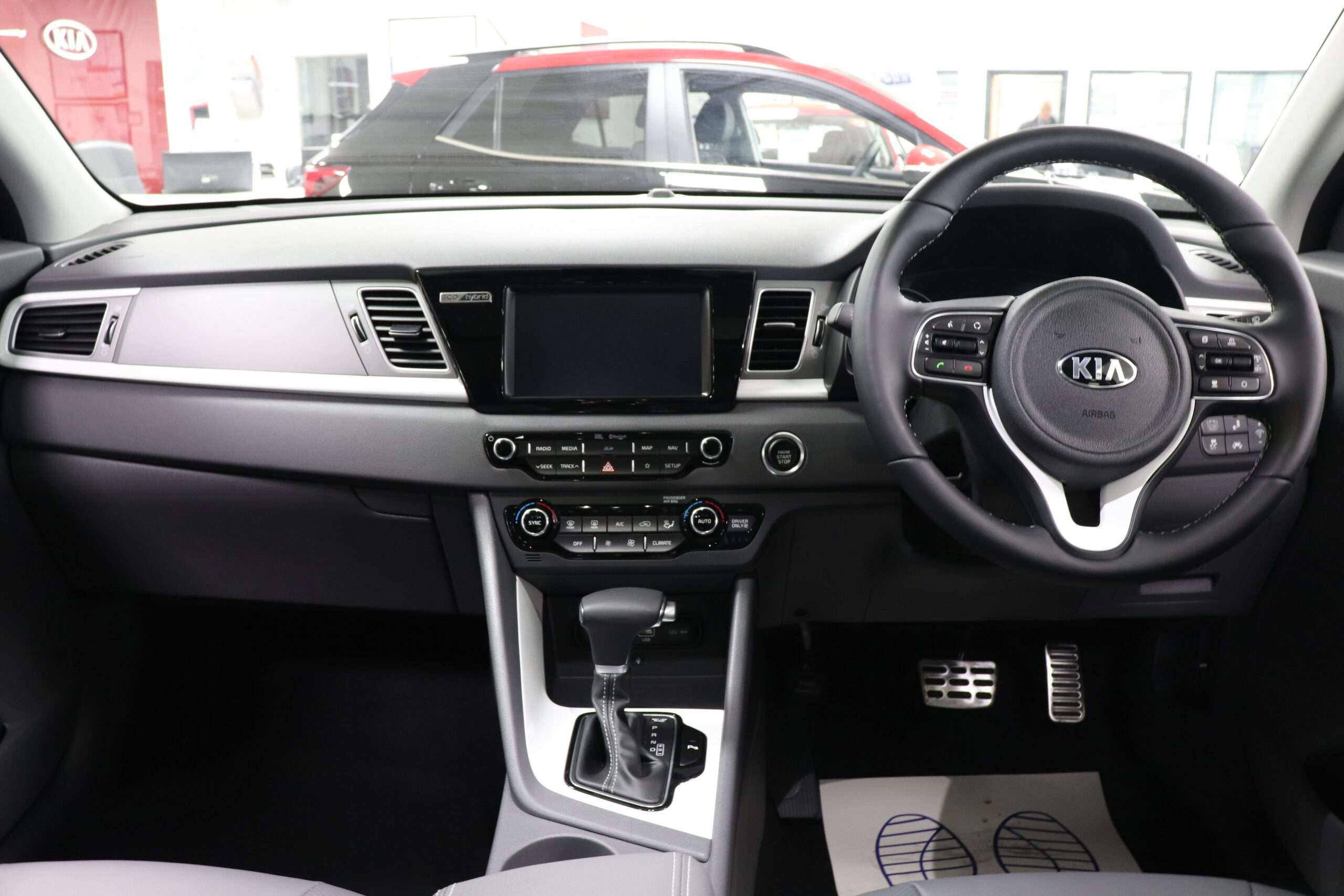
Test climate control from a warm cabin, including cooling, fan speeds and temperature adjustment. Weak performance needs diagnosis, not an unsupported promise that a regas will cure it. Check heated or ventilated seats, steering-wheel heating and electric adjustments where fitted; their value depends on working condition.
Pair your own phone and demonstrate navigation, audio, camera and parking sensors. The facelift brought equipment changes, but screens and connected-service functions vary by grade and build. Verify the actual system and current functionality rather than relying on an original subscription description or a generic specification list.
Inspect the windscreen and body areas associated with cameras and sensors. Ask about previous windscreen or collision repairs and any required calibration. A dashboard without a current warning does not prove that every assistance function has been checked. Avoid testing emergency systems by deliberately creating a hazardous situation.
Check both keys, locks, windows, mirrors and tailgate. Look for damp carpets, staining and improvised aftermarket wiring. Dashcams, trackers and other accessories can affect the low-voltage system if poorly installed, so ask about persistent discharge or reset problems and inspect the installation professionally where necessary.
A hybrid-aware viewing checklist
- Verify DE generation, HEV versus PHEV, registration, VIN and first-registration date.
- Check MOT history, itemised service records and supplementary hybrid maintenance.
- Confirm outstanding recalls and campaign completion with Kia.
- Observe power-on, READY indication and the first normal engine start.
- Road-test the hybrid transitions and DCT from cold to fully warm.
- Inspect friction brakes, tyres, underside and evidence of water or accident damage.
- Obtain suitable hybrid diagnostics and written repair quotations.
- Check remaining warranty against the actual vehicle and budget the first year.
A scan is most useful when the inspector explains both the findings and what it cannot establish. Ask whether faults were recently cleared where that can be determined. Do not equate a clean basic emissions scan with a full battery, gearbox and hybrid-system assessment.
UK service, parts, labour and fitted costs
Fixter’s Niro service page publishes the following examples for its 1.6 grade 2 entries. These are provider estimates, not a Kia maintenance schedule or a promise that all hybrid-specific supplementary work is included. Request the VIN-specific manufacturer service where that is what you need.
| Job and specification | Published fitted estimate | Published labour time or scope |
|---|---|---|
| 1.6 grade 2 full service | £114–£179 | Provider’s grade 2 service labour guide: 55 minutes–1 hour 32 minutes. |
| 1.6 grade 2 major service | £166–£260 | Confirm actual contents and supplementary hybrid items. |
| Grade 2 rear discs and pads | £130–£204 | Confirm parking-brake type and vehicle application. |
| Grade 2 rear discs/pads with electronic parking brake | £151–£238 | Different procedure; confirm fitted specification. |
The brake figures come from Fixter’s own Niro brake page. Prices vary with vehicle, location and scope. The displayed labour guide is not a separate labour charge, and the pages do not provide a complete itemised parts-versus-labour split for each example.
For parts-only context, the checked eBay search included genuine Niro hybrid oil-and-air-filter sets around £55 and genuine oil, air and pollen-filter sets around £75. Other packages with oil were advertised around £62–£92. Contents differ, so compare the same items and verify oil specification. These figures do not include fitting, diagnosis or supplementary hybrid maintenance.
For an HSG belt, actuator-related work, a coolant service or a DCT repair, ask for an itemised quote identifying diagnosis, parts, labour hours, rate, fluids, VAT and any follow-up procedures. Do not accept a conventional-car alternator or clutch quote without establishing how it relates to the actual hybrid system.
Warranty: check the terms that belong to this car
Kia’s UK warranty information describes seven-year/100,000-mile cover with remaining cover transferable subject to terms. That does not mean every used Niro still has manufacturer protection. Check first-registration date, mileage, maintenance compliance, exclusions and any previous claim directly with Kia before relying on it.
Do not apply a current new-EV battery promise to an older HEV. Battery terms, wear items and the treatment of particular components need confirmation against the original vehicle and applicable policy. A dealer’s separate used-car warranty should also be read for exclusions, claim limits and responsibility for diagnostic costs.

Comparing asking prices and deciding what to offer
The checked eBay listings included a 2017 HEV advertised around £11,500, a 2019 HEV around £12,000 and a 2020 HEV around £13,500, with different mileages and specifications. These are individual advertised examples, not completed-sale prices or a valuation of an unseen car. PHEV and electric listings must be separated from HEV comparisons.
Compare generation, powertrain, mileage, trim, seller terms and evidence of servicing together. A lower asking price can be erased by tyres, corroded brakes, missing keys and supplementary work. Equally, a higher grade is not worth its premium if the equipment you want is broken or its history is unclear.
Negotiate from written findings and quotations. An overdue routine operation is one kind of cost; an unexplained hybrid or gearbox warning is a different uncertainty. Do not assume the latter can be priced using a cheap online part. If inspection cannot resolve it, another car may be the better purchase even after a substantial discount.
Hidden ownership costs
Hybrid economy does not remove ordinary car bills. Add tyres, friction brakes, fluids, overdue supplementary work and any equipment faults to the purchase price. A well-maintained car with smaller wheels can be a more convincing budget proposition than a neglected high-grade example advertised on fuel savings alone.
Check insurance and tax using the actual registration. Estimate fuel costs from your real journeys rather than assuming a fixed official economy figure. A cold short trip, winter heating and faster-road use can produce a different result from a gentle warm urban drive. The instrument display on a seller’s chosen route is not an annual running-cost forecast.
Keep a repair reserve after routine servicing. A hybrid or transmission fault may require specialist time and more than one visit, so consider downtime as well as the repair itself. Do not spend the entire budget on a newer registration if that leaves no room for diagnosis or immediate maintenance identified by the inspection.
Hybrid-specific eBay service-parts table
The table deliberately avoids presenting a conventional alternator or universal battery as routine Niro HEV purchases. Match every item to the VIN and installed system. HSG, clutch-actuator and high-voltage-related work needs the correct workshop competence and procedure; a search result does not establish a diagnosis or suitable fitment.
| Service part | Fitment and buying advice | eBay UK comparison |
|---|---|---|
| Engine oil and filter | Match HEV build and required oil approval; exclude EV results. | Compare engine oil and filter |
| Engine air filter | Confirm housing and original part number. | Compare engine air filter |
| Cabin filter | Check dimensions and filter type. | Compare cabin filter |
| Spark plugs | Use the specified plug and quantity for the engine. | Compare spark plugs |
| HSG drive belt | Confirm VIN and full belt/tensioner job; not an internal timing belt. | Compare hsg drive belt |
| HSG tensioner | Inspect and diagnose; confirm original part references. | Compare hsg tensioner |
| Front discs and pads | Verify diameter, caliper and hybrid application. | Compare front discs and pads |
| Rear discs and pads | Confirm parking-brake type and required servicing procedure. | Compare rear discs and pads |
| Engine-clutch actuator service fluid | Workshop-confirmed specification and procedure; not a universal gearbox kit. | Compare engine-clutch actuator service fluid |
| Wiper blades | Check lengths, attachment and complete set contents. | Compare wiper blades |
| Engine coolant supplies | Confirm circuit and specified chemistry; do not choose by colour. | Compare engine coolant supplies |
| Brake service fluid | Use the specified product and hybrid-aware bleeding procedure where required. | Compare brake service fluid |
Niro Hybrid buying questions
Does the ordinary hybrid need plugging in?
No. The HEV in this guide is distinct from the PHEV and electric e-Niro. Confirm the drivetrain in an advert before comparing its range claims, luggage space or maintenance requirements.
Is the gearbox a CVT?
The DE full hybrid uses a six-speed dual-clutch transmission. It needs its own road-test and maintenance assessment rather than advice transferred from a different manufacturer’s hybrid transmission.
Can a short test drive prove battery health?
No. Engine-off time and the battery display vary with conditions. Use appropriate diagnostics and an experienced inspection, and ask what the test can and cannot establish.
Can I buy a normal replacement 12-volt battery?
Identify the installed low-voltage system first. HEV builds and PHEV versions can differ, and some have a reset function. Follow the correct handbook and workshop advice rather than choosing a battery by model name alone.
Is a newer facelift always the better buy?
Only when its condition, history and equipment justify the price. A sound earlier HEV with documented maintenance can be preferable to a neglected facelift. Check the complete first-year budget before deciding.
Our final Niro buying advice
Buy the hybrid whose identity, service requirements and operating condition you understand. Prioritise smooth cold-to-hot behaviour, a healthy DCT, correct supplementary maintenance, sound friction brakes and clear campaign status. The best example makes sense as a complete car, not merely as an appealing fuel-economy claim.
Kia Niro Mk1 Hybrid cars for sale
Compare current asking prices, then verify the generation, engine, history and condition of each advertised car. Results may include incorrectly described vehicles.

Love cars you don’t see every day?
Get forgotten cars, surprising motoring stories and the most interesting finds from Unusual Cars by email.
Free to join. No spam. Unsubscribe whenever you like. See our privacy policy.