
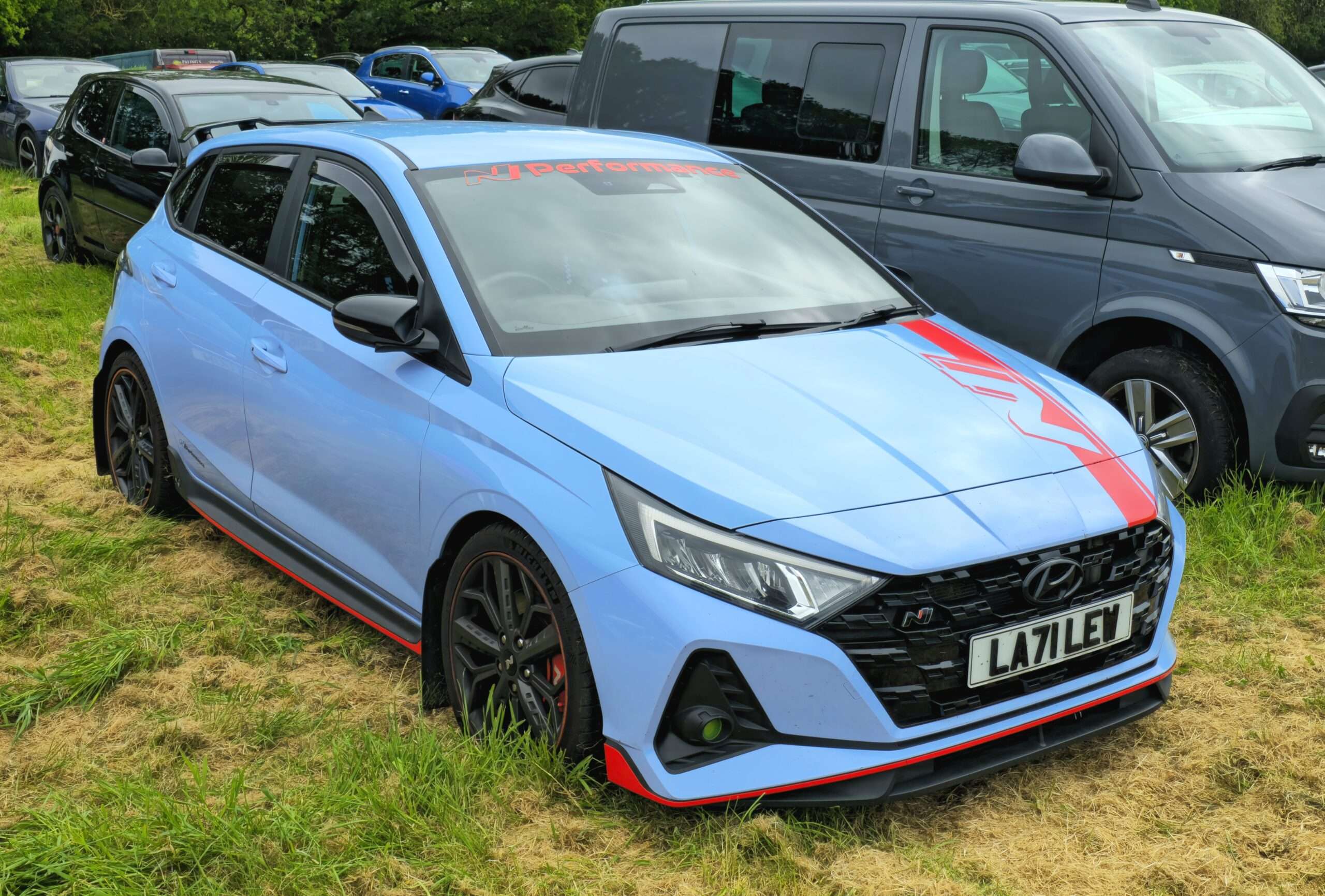
A Hyundai-capable scanner gives an i20 N owner a record of what the car saw, even when the engine warning lamp never came on. It can help you compare two journeys, check whether a driver input reached the controller and give a specialist something more precise than ‘it felt different today’. For an owner running the car beyond its next service, the ability to keep and compare reports is often the feature worth paying for.
Rev matching illustrates the difference. Engine RPM is easy to display. It shows that a downshift blip happened, or that it did not. Hyundai-specific input data, where supported, can help establish whether the car recognised the clutch movement and gear selection that should have come first. That is a much more useful question before paying someone to replace a pedal switch or investigate an engine response.
Make the first comparison from the driver’s seat
This guide is for the i20 N 1.6 T-GDi with the six-speed manual. The N Line badge describes a different specification. Hyundai’s handbook sets out how rev matching behaves in different modes. In Sport, check whether the REV button has enabled it after starting and look for the yellow REV indication. In N mode the handbook describes automatic activation and a red indication, with the option to switch it off. Record the actual mode and indicator rather than relying on your recollection of yesterday’s setting.
Hyundai also specifies fully depressing the clutch. If the feature appears to have stopped working after restarting in another mode, establish whether it was requested at all before paying for diagnostics. A screenshot of the indicator and a note of the mode are often the most valuable first evidence.
Amazon affiliate link. As an Amazon Associate, Unusual Cars earns from qualifying purchases.
What has to happen before the engine blips?
To match revs on a downshift, the system needs enough information to decide that a shift is taking place and what engine speed is appropriate for the incoming gear. A generic engine reader may show engine speed and throttle data. Those values describe the response. They do little to explain whether the i20 N recognised the clutch movement or gear selection that preceded it.
Ask the workshop what its enhanced Hyundai data actually includes for this engine software. Useful candidates are clutch input, gear recognition and rev-match enable status where available. The wording and number of clutch signals can vary. A starter interlock working normally does not establish that every clutch-related input seen by the engine controller changes correctly through the pedal travel.
Like our guides and unusual cars?
Get forgotten finds, useful motoring content and the most interesting car stuff from us by email.
Free to join. No spam. Unsubscribe whenever you like. See our privacy policy.
What evidence is worth keeping with a missed blip?
| Owner’s question | What to read or compare | How it changes the next step |
|---|---|---|
| The feature works in one drive mode only. | Record the actual mode, REV indicator and whether the engine had just been restarted. | Compare with the handbook’s activation rules before diagnosing an electrical fault. |
| The indicator is on but the blip is intermittent. | Ask whether full clutch travel is recognised consistently and what gear information the engine software exposes. | A missing input gives the workshop a circuit to test. |
| The car blips but the change still feels harsh. | Describe the shift, clutch take-up and whether mechanical resistance is present with rev matching off as well. | Avoid attributing a clutch or linkage problem to a feature that visibly operated. |
Why a successful engine start is incomplete evidence
An owner might reasonably ask why anyone would check a clutch input when the car starts every morning. Starting shows that the conditions permitting that start were met. It does not show the full sequence during a later moving gear change. The technician needs to identify which clutch-related parameter is on screen, what it represents and whether it follows the pedal through the relevant part of its travel.
The same caution applies to gear data. A calculated gear derived from road speed and engine speed may be useful once the clutch is engaged. It tells you less about gear recognition while the clutch is down. Ask the scanner supplier or technician what the parameter actually measures. A screen full of plausible numbers is less valuable than one reliable signal that changes at the moment the symptom occurs.
Worked example — the indicator is on but the response disappears
Imagine the same driver notices an intermittent loss of the blip in the same mode on a familiar downshift. There is no engine warning lamp. A passenger can note the conditions, or the owner can describe them after parking. The workshop can separately check the reported clutch input during a stationary pedal movement. If the state fails to change despite full travel, ask for a comparison with the physical switch or sensor and wiring before approving a replacement.
Suppose clutch recognition is reliable. The next useful question is whether the car recognises the intended gear and whether the rev-matching function was enabled at the time. A technician can capture these alongside engine speed under suitable controlled conditions. If the available scanner exposes only RPM, a graph showing no blip repeats the symptom. It cannot distinguish an absent gear input, a disabled function or a command that was never issued.
When the gear change itself feels wrong
Separate a missing automatic blip from a clutch that slips under load or a lever that physically resists selecting a gear. Tell the garage which behaviour changed and whether it occurs with rev matching switched off too. A scan cannot measure friction material condition or prove the mechanical linkage is sound. Avoid recreating the complaint with aggressive downshifts.
For a buying decision, ask the supplier for the exact i20 N engine data list. Give the model year and six-speed manual specification. If the reader cannot display the relevant inputs, a diagnostic appointment with a Hyundai specialist may buy more information than another basic engine-code reader.
Amazon affiliate link. As an Amazon Associate, Unusual Cars earns from qualifying purchases.
For the iCarsoft JP V3.0, confirm the functions above with the supplier for your UK model year and equipment before ordering.
Hyundai i20 N owner’s manual, rev matching and operating modes, pages 237–240 · Explore the Hyundai scanner guides
Model photograph by Calreyn88, CC BY-SA 4.0.
Like our guides and unusual cars?
Get forgotten finds, useful motoring content and the most interesting car stuff from us by email.
Free to join. No spam. Unsubscribe whenever you like. See our privacy policy.
