
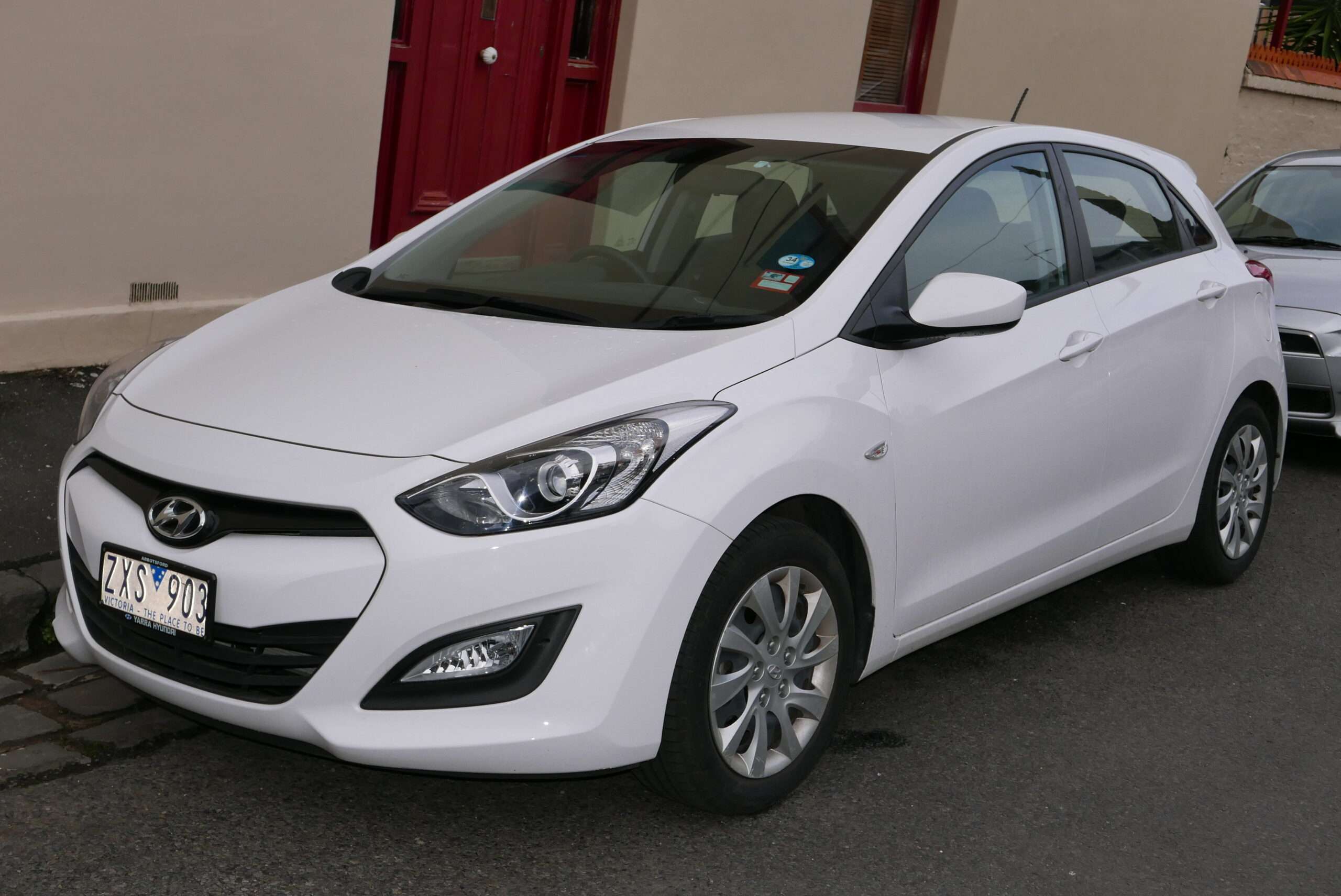
The best reason to own a Hyundai-capable scanner for an i30 diesel is being able to keep a good journey for comparison with a bad one. You can record how the warm engine normally responds on a familiar hill, then give a workshop the same readings when the car feels flat. That is a much better starting point for a repair estimate than remembering that the engine light came on somewhere near the top.
A basic reader is already useful for emissions codes. The advantage worth paying for is the ability to see what the GD’s diesel controller requested alongside what it measured. Exhaust recirculation, fresh airflow and boost affect one another. A tool that graphs them together can help a technician decide whether to test a valve, a sensor or the intake plumbing before pricing a turbo.
Match the diesel and save the first scan
This guide concerns the second-generation GD 1.6 CRDi. Record the build year, power output, engine identification and emissions equipment. Save any freeze-frame showing engine speed, load and coolant temperature. A complaint that occurs accelerating uphill with a warm engine can disappear entirely in a stationary test on a cold morning. Write down the gear and conditions. Never watch a scanner while driving.

Amazon affiliate link. As an Amazon Associate, Unusual Cars earns from qualifying purchases.
Why an EGR flow code does not price the repair
P0401 is an emissions code that a generic reader may display. The 2013 European i30 GDe diagnostic reference describes the engine controller using measured fresh-air mass as feedback for EGR. When recirculated exhaust displaces part of the fresh intake charge, the meter should see a corresponding change under suitable conditions. The controller can therefore detect an unexpected flow result without directly seeing a blocked passage.
On a tool that supports the appropriate data, compare EGR command, reported position where fitted, air mass and engine operating conditions. Keep units visible. Command percentage and position percentage may use different scales or conventions. A lone percentage on a phone screenshot gives a workshop very little to reproduce.
Like our guides and unusual cars?
Get forgotten finds, useful motoring content and the most interesting car stuff from us by email.
Free to join. No spam. Unsubscribe whenever you like. See our privacy policy.
Which trace answers which diesel question?
| Owner’s question | What to read or compare | How it changes the next step |
|---|---|---|
| The report says EGR flow was too low. | Compare EGR command and available position feedback with fresh-air mass under the specified conditions. | A valve reporting movement with little airflow change calls for a flow-path and measurement check. |
| The engine loses pull under load. | Compare requested and actual manifold pressure on the same time axis. | A sustained shortfall despite demand supports a charge-air and control-system investigation. |
| Actual pressure looks low, but demand is low too. | Look at the controller’s operating state and other faults recorded at the same time. | Find out why demand was limited before treating low pressure as turbo failure. |
Reading an underboost report without buying a turbo
The European 2013 i30 diagnostic reference lists P0299 for underboost. It is a useful companion to the EGR example because a generic reader can report either code. What matters is whether actual boost lagged a genuine request under load. Two graphs taken at idle can match beautifully even when the fault occurs every time the car climbs a hill. European i30 P0299 reference.
For a workshop recording, keep the units, engine speed and load with the pressure traces. A single peak value loses the sequence. Did demand rise first while pressure failed to follow, or did demand itself drop as the engine entered a protective mode? Those observations call for different tests. Have a passenger or technician handle the recorder. A short, relevant recording beats a phone full of disconnected screenshots.
Worked example — the valve appears to move
Imagine that a warm GD records insufficient EGR flow. Under controlled conditions a technician sees the requested position change and the reported position follow, yet the fresh-air reading shows little corresponding change. That makes it worth checking the gas path and the plausibility of the airflow measurement before ordering the actuator. Position feedback tells you where the mechanism reports being. It cannot tell you how much exhaust actually passed through the route.
Suppose instead that the reported position stays fixed across a valid command change. Now the position feedback, electrical supply, wiring and movement of the valve deserve closer investigation. If the engine never commanded a change during the recording, neither conclusion is justified. Repeat the observation under the manufacturer’s specified conditions.
Where boost fits into the picture
An i30 that feels flat only under load may need a separate comparison of requested and actual manifold pressure. Check whether the display uses absolute pressure or pressure above atmosphere before interpreting a number. Low measured boost relative to demand can justify a charge-air leak check. It does not by itself condemn the turbo. If the controller is already limiting demand, the same lack of acceleration can produce a quite different graph.
Give the workshop the original code, its status, the freeze-frame and the short section of the trace where the response diverged. Ask which physical test will distinguish an obstructed passage, a misleading sensor and a valve that cannot follow its request.
What to check before buying a scanner
Ask for the enhanced data list for your GD 1.6 CRDi engine and software version. Look for simultaneous recording of EGR request, feedback where available, fresh-air mass and boost target. A simple tool that already supplies those readings may meet your needs.
Amazon affiliate link. As an Amazon Associate, Unusual Cars earns from qualifying purchases.
Ask the supplier to confirm the functions against your UK model year and VIN. The Amazon link opens search results for the iCarsoft JP V3.0. Individual listings and software versions can differ.
AutoHex diagnostic reference for P0401 on the European 2013 i30 · More Hyundai scanner guides
Like our guides and unusual cars?
Get forgotten finds, useful motoring content and the most interesting car stuff from us by email.
Free to join. No spam. Unsubscribe whenever you like. See our privacy policy.
Featured photograph of the Hyundai i30 GD by OSX, public domain. Original photograph.

