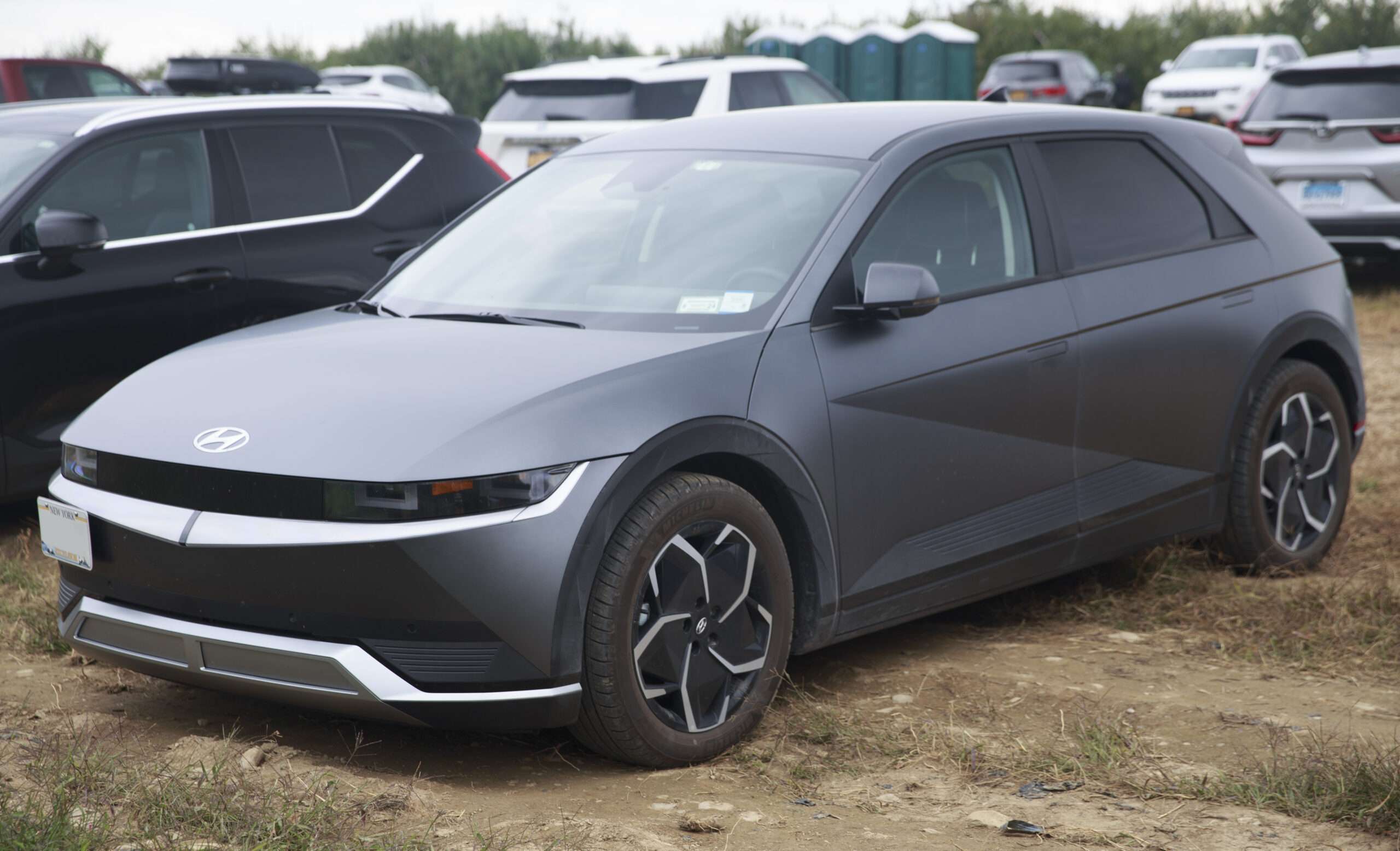
A scanner that genuinely supports the Ioniq 5 can help you answer an expensive ownership question: when the car has gone flat, what evidence can you give the workshop before the next battery is fitted? The dashboard charge percentage describes the traction battery. The ordinary 12-volt system still has its own job to do. A saved report can connect the owner’s experience with what the charging electronics recorded, especially when the car appears healthy again by the appointment.
What is worth paying for on an electric Hyundai?
Choose coverage for the NE-generation Ioniq 5. An OBD plug that physically fits, or a menu that reads the charge percentage, is a poor guide to the information available. Ask whether the integrated charging control unit, usually abbreviated to ICCU, is individually accessible. Ask to see how the scanner displays active and historical entries and whether it keeps the full suffix. These checks are particularly important on an EV because generic emissions coverage tells you little about the equipment you need to reach.
The traction battery and the 12-volt battery answer different questions. A good state-of-charge reading on the dashboard does not establish that the auxiliary battery is healthy or that the system charging it works reliably. Equally, a dead 12-volt battery does not automatically identify an ICCU failure. A useful diagnosis brings the battery test and the charging-system report together.
One complete code that changes the workshop’s decision
Hyundai’s US recall 272 bulletin, 24-01-086H-1, instructs technicians to interrogate the ICCU for P1A9096 in active or historical status. Hyundai describes a DC/DC converter input-voltage sensor concern. In the specified US campaign, that recorded result leads to an ICCU and fuse replacement branch and a software check. A different stored code calls for its own diagnosis. The same bulletin has a separate route for an affected car without that code. This is a reason to keep the whole identifier and the first report.
An empty generic scan and an ICCU scan that completed with no entries are two different findings. In the first case you still do not know what the ICCU recorded. If the tool cannot communicate because the vehicle’s 12-volt supply is too low, tell the recovery technician exactly that. Save the recovery and battery-test paperwork. Avoid clearing codes when normal communication returns.
Like our guides and unusual cars?
Get forgotten finds, useful motoring content and the most interesting car stuff from us by email.
Free to join. No spam. Unsubscribe whenever you like. See our privacy policy.
A worked example: a second flat battery
Suppose the battery was replaced three months ago. Today the car would not wake, although the traction battery had plenty of charge. Record when the car last drove, when it last charged and whether any dashboard warnings preceded the failure. Ask for a battery-condition test and a scan that explicitly names the ICCU. A voltage reading taken straight after recovery cannot by itself establish long-term battery health.
If the report includes P1A9096, ask the Hyundai dealer to check the VIN, UK campaign history and current local procedure before you authorise private repairs. If the ICCU communicates and the code is absent, keep investigating the auxiliary battery, charging behaviour and any unexpected drain. A normal report today may still leave an intermittent fault unresolved. Different evidence deserves a different diagnostic plan, even where the recovery symptoms look identical.
Before paying for parts or a scanner
A separate Hyundai technical bulletin also discusses diagnosed ICCU replacement in connection with inoperative AC charging. Explain whether the problem was a flat 12-volt battery, a public charger refusing a session, or repeated AC charging failures at more than one known working point. Keep dates, charge-point messages and the original scan. One unsuccessful charging session on its own cannot identify an internal car fault.
For a safety recall, use the UK registration lookup and confirm campaign completion with Hyundai. The American bulletin is useful technical evidence, while the UK VIN record decides the individual car’s position. If the vehicle displays a stop warning or loses drive, arrange recovery. The ICCU, its fuse and high-voltage circuits are workshop jobs. A scanner’s value to the owner is access to evidence, not authorisation to open those components.
Checking iCarsoft JP V3.0 coverage
If you are considering the JP V3.0, ask the supplier for written confirmation of NE ICCU fault access, including historical entries and the complete P1A9096 identifier. Give them the VIN and software version. A general Hyundai listing leaves those individual functions unconfirmed. Check the manufacturer’s coverage lookup and establish whether a report can be exported or needs to be photographed.
Further reading
Hyundai ICCU recall decision chart, US applications · Hyundai ICCU service information · UK recall check · All Hyundai scanner guides
Featured photograph by Mr.choppers, CC BY-SA 3.0 and original on Wikimedia Commons. Photograph illustrates the model generation.
Like our guides and unusual cars?
Get forgotten finds, useful motoring content and the most interesting car stuff from us by email.
Free to join. No spam. Unsubscribe whenever you like. See our privacy policy.