
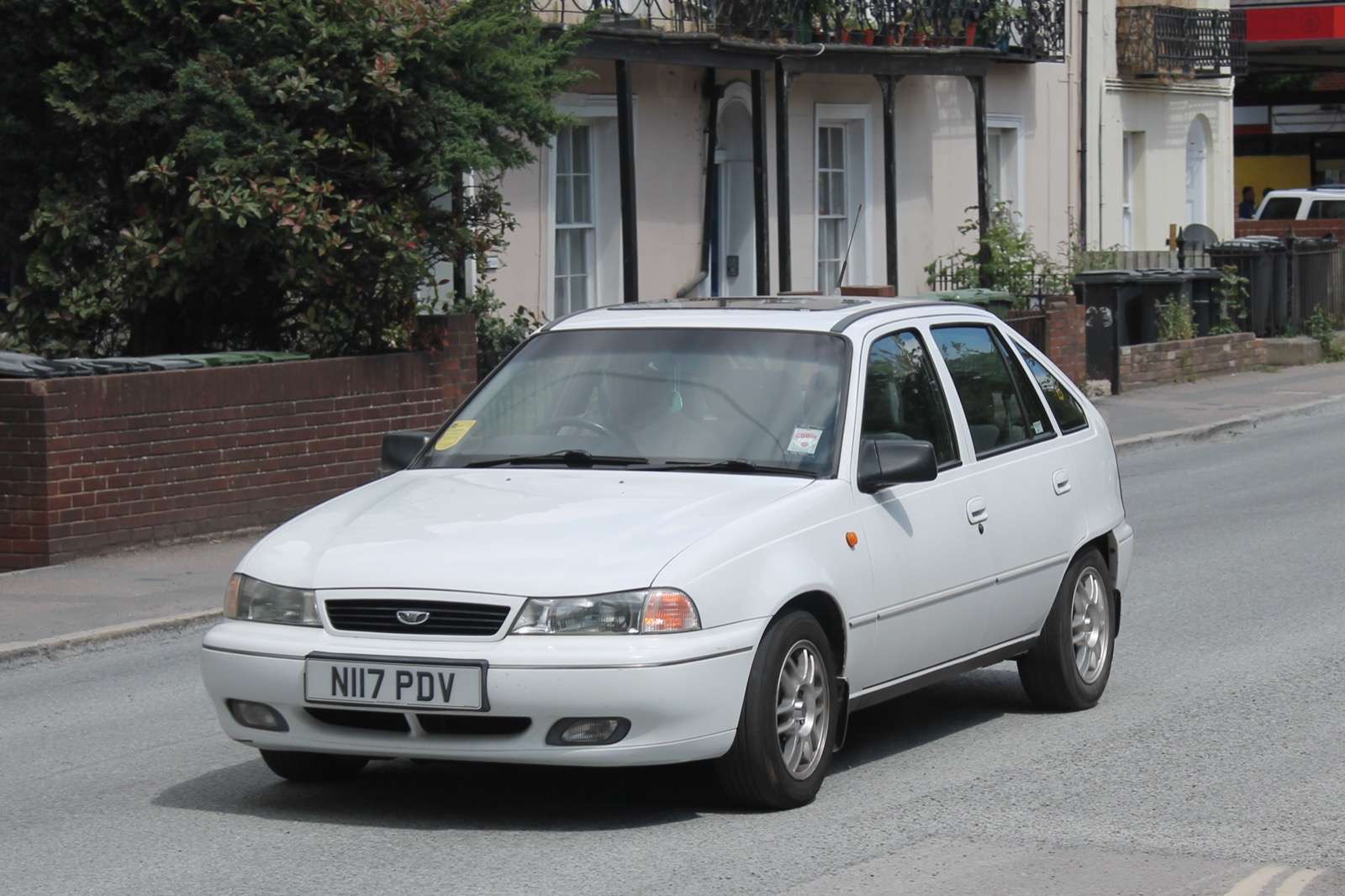
The Daewoo Nexia was the car that introduced most British buyers to Daewoo. Launched in April 1995 with fixed prices, direct sales and an unusually generous ownership package, it turned the familiar Vauxhall Astra Mk2/Cavalier-era formula into one of the decade’s most distinctive value propositions.
Daewoo arrives in Britain
Daewoo did not enter the UK quietly. Instead of relying on a conventional franchised dealer network, the company used its own retail centres, fixed no-haggle pricing and a package including a three-year warranty, three years of servicing and AA cover. The Nexia was the volume car in that launch, offered beside the larger Espero.
Underneath, the Nexia traced its roots to the Daewoo LeMans and therefore the Vauxhall Astra Mk2/Opel Kadett E. That ancestry was already mature by 1995, but it gave the new arrival simple, proven mechanicals and dimensions that suited British roads.

UK range and specifications
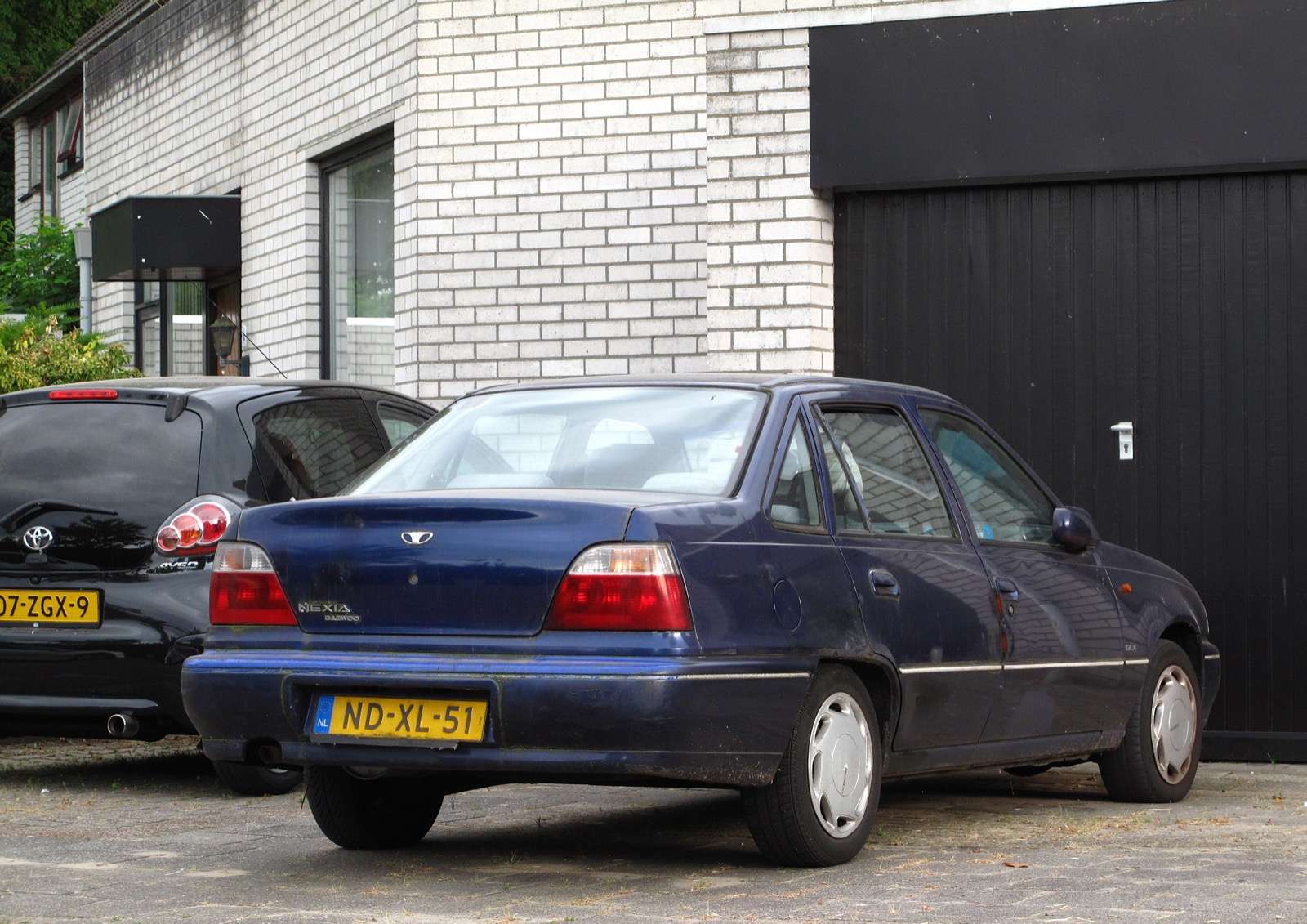
British buyers could choose three-door and five-door hatchbacks or a four-door saloon. The entry GLi used a 1.5-litre eight-valve engine producing about 75bhp, while the better-equipped GLXi added a 16-valve version with roughly 90bhp. Manual and automatic gearboxes were available.
| UK detail | Nexia specification |
|---|---|
| On sale | April 1995 to September 1997 |
| Body styles | 3-door hatch, 5-door hatch, 4-door saloon |
| Engines | 1.5 8v, about 75bhp; 1.5 16v, about 90bhp |
| Gearboxes | 5-speed manual or automatic |
| Trim | GLi and GLXi |
| Replacement | Daewoo Lanos |
Equipment was the headline. Power steering, central locking, an alarm, a driver’s airbag, ABS and a radio were offered at prices that undercut many established rivals. Early promotional prices began at around £8,295, while the ownership package removed several costs that usually arrived after purchase.
What was it like to drive?
The Nexia’s dynamic character matched its origins. Steering and suspension were tuned for ease rather than excitement, and refinement was ordinary by mid-1990s standards. The 16-valve model was usefully livelier, but neither version pretended to be a hot hatch.
That misses the point. The Nexia was light, easy to see out of and straightforward to place. Controls were familiar, the hatchbacks were practical and the saloon offered a large boot. For buyers moving from an older Escort, Astra or Maestro, it delivered a new car with plenty of equipment and minimal financial uncertainty.
Buying a surviving Daewoo Nexia
Rust and bodywork
Corrosion is now the biggest threat. Inspect sills, rear arches, floor edges, suspension mounting areas and the bottoms of doors. Accident repairs matter because model-specific trim and panels are much harder to locate than routine service parts.
Engine and timing belt
Both 1.5-litre engines should start cleanly and settle without heavy smoke or persistent tapping. Evidence of timing-belt maintenance is important; age matters as much as mileage. Cooling-system neglect, oil leaks and tired engine mounts are more significant today than the original performance figures.
Brakes, steering and electrics
Check that the ABS warning light behaves correctly, the car stops straight and the power steering is quiet. Test every switch, the central locking and the alarm. Trim plastics can be brittle, so a complete interior is valuable even if it is not perfect.
Parts and ownership
Some mechanical parts remain obtainable because of the car’s shared GM ancestry and its long production life overseas. UK-specific trim, lamps and clean body panels are the challenge. Joining an owners’ community before buying is sensible.

Why the Nexia deserves remembering
The Nexia was not revolutionary engineering, yet its way of being sold genuinely challenged the UK market. Fixed prices, inclusive servicing and a long warranty made the ownership proposition as important as the car itself. Most have disappeared, leaving a once-common launch model surprisingly rare.
A sound survivor is best appreciated as a social-history object: the car that helped an unfamiliar Korean badge win British buyers through clarity, reassurance and value.
Love cars you don’t see every day?
Get forgotten cars, surprising motoring stories and the most interesting finds from Unusual Cars by email.
Free to join. No spam. Unsubscribe whenever you like. See our privacy policy.
Explore more unusual Daewoos
See the complete Daewoo collection on our Rare & Forgotten Daewoos hub.
