Jaguar’s first attempt to replace its big V12 saloon produced an unusual overlap. The newer XJ40 was already on sale while customers who wanted twelve cylinders kept buying the previous body.
1. The XJ40 arrived without a V12
Jaguar introduced the new XJ in 1986 with six-cylinder engines. The V12 had to wait until Jaguar could package it in the newer body.
2. The old car stayed in production to fill the gap
Jaguar Daimler Heritage Trust explains that the Series III V12 continued while the newer car was prepared. The last Series III was a Daimler Double Six built in December 1992.

3. Jaguar called the V12 development XJ81
The code marks the twelve-cylinder derivative of the XJ40 shape. It is useful when sifting through parts books, press material and photos for a car whose badges were familiar before and after.
4. The engine arrived in 1993
The XJ81 reached the market in 1993 with a 6.0-litre V12. That distinguished it from the 5.3-litre Series III that had kept the place open.
Love cars you don’t see every day?
Get forgotten cars, surprising motoring stories and the most interesting finds from Unusual Cars by email.
Free to join. No spam. Unsubscribe whenever you like. See our Privacy Policy.
5. Fitting it involved real body changes
The newest XJ shell needed an engine bay that could accommodate the wider V12 installation. The engineering work was buried under a body that still looked recognisably like an XJ40.
6. The gearbox changed with the engine
The six-litre was paired with a four-speed automatic. That gave the new flagship a different transmission specification from the three-speed automatic normally associated with its immediate Series III predecessor.
7. There were Jaguar and Daimler versions
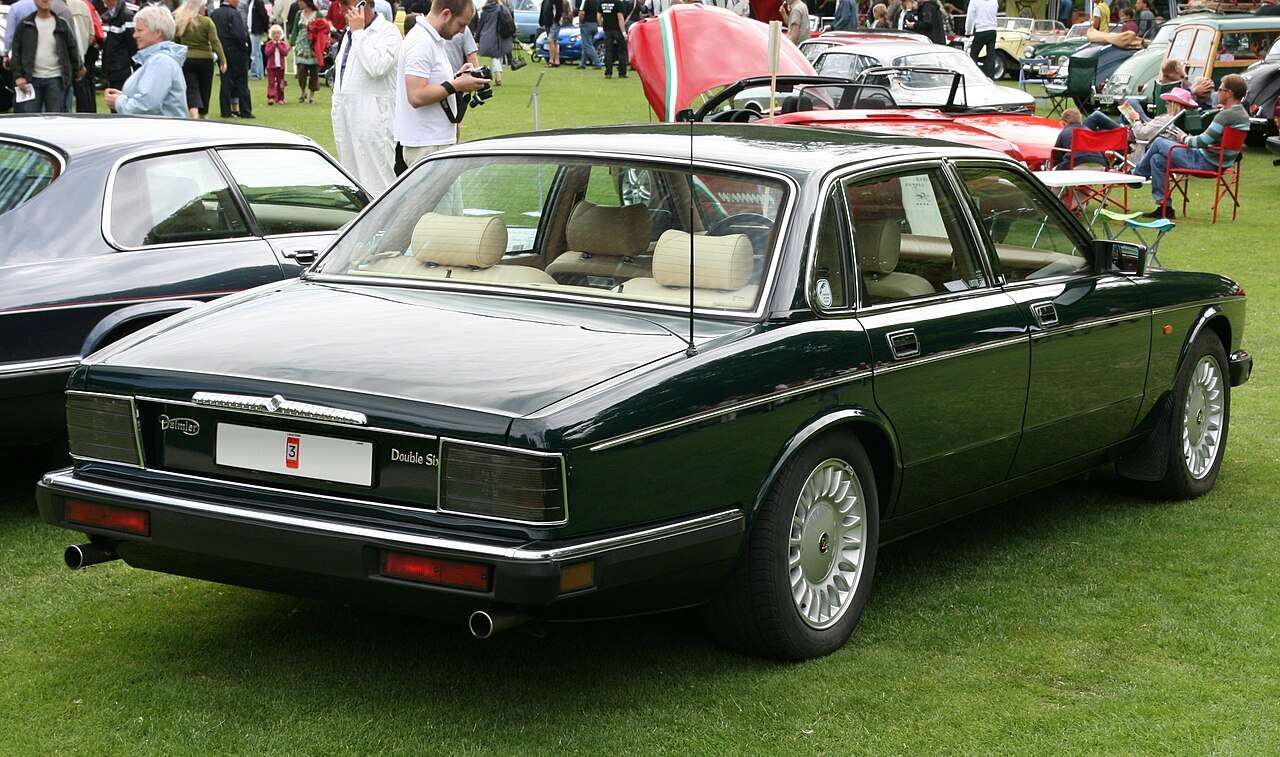
Jaguar offered the XJ12 and Daimler Double Six identities. The Daimler treatment included familiar luxury cues such as its fluted grille. It helps explain why the same mechanical story appears under both names.
8. It looked deliberately discreet
The V12 did not turn the saloon into a sports model with conspicuous add-ons. Badging and trim details had to do the identifying for a car that retained the sober XJ40 silhouette.
9. It was a short bridge between generations
The XJ81 carried the V12 in this body in 1993–94. Jaguar then used the six-litre engine in the next XJ generation, so a later six-litre XJ12 is a related but differently shaped car.
10. Jaguar’s parts literature makes the distinction explicit
Factory technical publications list the XJ40 six-cylinder versions and XJ81 6.0 separately. That is a useful way to verify what a badge photograph alone may leave unclear.
Read our 10 Things article on the Jaguar XJR X300.
Explore more 10 Things articles
Browse the Unusual Cars 10 Things hub.
Sources and further reading
- Jaguar Daimler Heritage Trust, the Series III to XJ81 transition
- Jaguar original technical publications, XJ12 6.0 handbook listing
- Jaguar original parts publications, XJ40 and XJ81
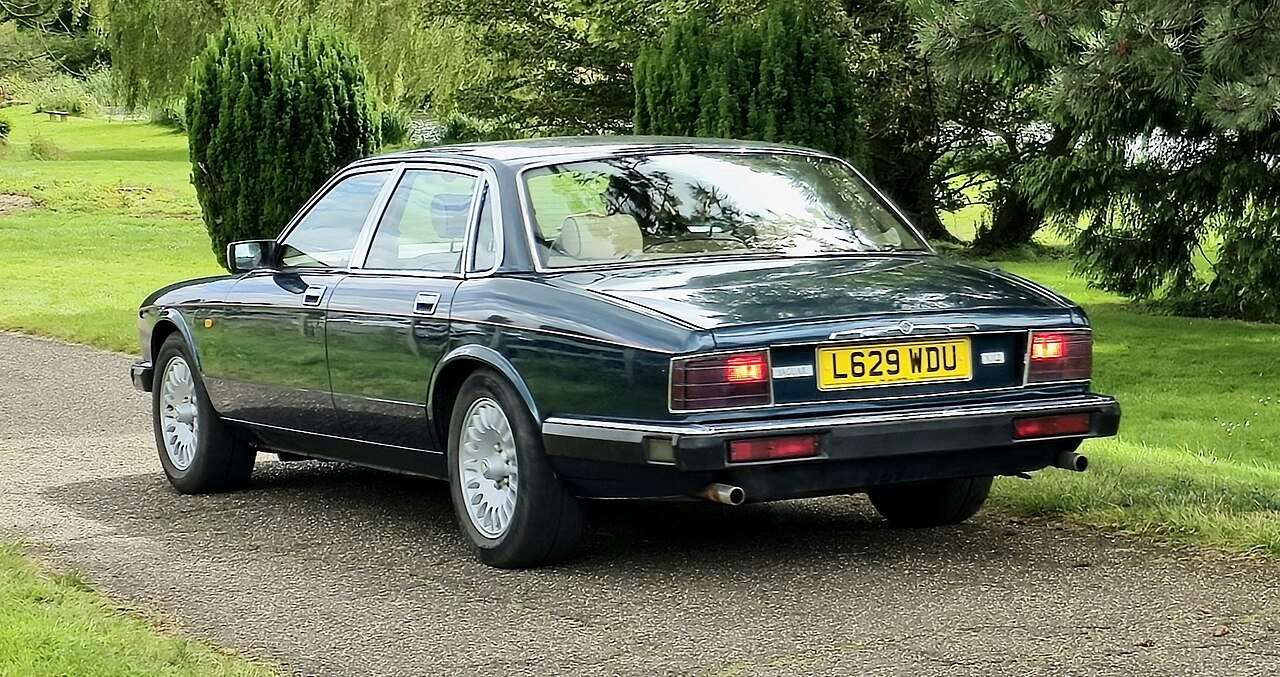
Featured image: 1994 Jaguar XJ12 photographed from the rear. Photo by Calreyn88 via Wikimedia Commons (CC BY-SA 4.0, resized).
Join the Unusual Cars Club
Get more forgotten performance cars, surprising motoring stories and new 10 Things articles by email.
Free to join. No spam. Unsubscribe whenever you like. See our Privacy Policy.