The bargain scanner that works beautifully on a modern Octavia could be a complete waste of money on a Felicia. The plug might fit, the screen might light up, and you could still learn absolutely nothing about why your 1.3 MPI keeps stalling. Yet a garage with equipment that speaks the car’s own diagnostic language can investigate fuel mixture, temperature inputs, throttle settings and, where fitted, the ABS. That gap makes this one of the most interesting Škodas on which to ask whether a dedicated reader is worth buying.
For an owner keeping a Felicia, the investment starts with buying the right conversation with the car. In one real case a driver with a troublesome idle retrieved four different engine entries. Another Felicia owner investigating a reluctant start found the engine had recorded an immobiliser intervention. And a 1998 MPI owner reported a fault concerning the ABS hydraulic pump. Those findings lead to three quite different decisions. Here is how to choose equipment that can help, what to do with a useful reading and when a session with an older-Škoda specialist represents the better buy.
Identify the 1.3 MPI before judging a reader
MPI means multi-point injection. This guide concerns the later injected 1.3, not every car that has worn the Felicia name. Earlier single-point injection, the 1.6 petrol and the diesel have different management arrangements. An old registration document that says only 1.3 might leave some uncertainty. Ask the garage to confirm the engine code and management system, or check your original service records. A photograph of the vehicle data label and any existing diagnostic invoice can be far more useful to a tool supplier than an online listing chosen because the car in the picture looks similar.
The critical distinction is between a physical socket, the electrical means of communication and the diagnostic language used over it. An adapter can receive power without understanding a single request to the Felicia’s engine. An application which works in standard EOBD mode on later petrol cars may have no appropriate way to ask this older ECU for its manufacturer data. That is why the question “does the plug fit?” has such poor buying value here. Ask which exact Felicia ECU the software can identify and what information it can display once connected. Read the practical Felicia owner discussion about readers and interfaces.

An honest demonstration starts with an ECU identification on a comparable car, followed by a fault-memory read or a live engine temperature. If ABS matters, ask for a separate demonstration of the brake controller on an ABS-equipped car. Equipment varies. A blank entry for a feature your car never had is entirely different from a brake unit physically present that will not communicate. Check what is actually fitted before comparing the length of two sellers’ function lists. A short, accurate list can be much more valuable than a long menu copied from a modern Škoda.
00522 and a Felicia that idles badly
A 1.3 MPI owner investigating erratic idle reported 00522 for the engine coolant temperature sensor alongside knock and oxygen-related entries. The owner had also changed thermostat-related parts. Here the first useful function is wonderfully unglamorous. A suitable reader can show the temperature the engine controller thinks it is seeing, provided the relevant measuring value is available. A cold engine parked overnight should give a plausible starting reading for the surroundings. Recording that first value is often more informative than looking only after the engine bay has warmed up. Read the Felicia owner’s idle and temperature investigation.
An engine uses temperature information when deciding how to run during warm-up. An input reading very cold when the engine is actually hot can mislead the fuelling strategy. But an engine physically running cool and an ECU being told the wrong temperature are different faults. A thermostat affects the former. A sensor circuit or wrong component can affect the latter. The display cannot settle the distinction on its own. A workshop can compare the reported value with an independent temperature check, identify the correct sensor for that installation and examine the circuit if the two disagree.
Keep a small timeline for the garage. Record when the engine was last used, whether the initial reading was taken before starting, whether the idle changed abruptly or gradually, and what happened once warm. Also note anything recently unplugged. A stored entry can be the result of a disconnected sensor during earlier work, particularly on an older car with a busy repair history. Clearing it on the driveway before saving the report leaves the next person trying to reconstruct that sequence from memory. A current implausible reading is much stronger evidence than a historical label on its own.
00525 and 00537 and why two entries need not mean two new parts
In the same owner’s report the reader described 00525 for low oxygen-sensor voltage and 00537 for oxygen-sensor control. One concerns a signal and the other concerns the engine management’s ability to control mixture. Put the two on the same page of your notes. A specialist considering a replacement lambda probe will want to know whether it reaches its working condition, whether the wiring and any heater supply are sound, and what the engine is doing when the signal is assessed. The numbers establish that the ECU saw trouble. They cannot price the repair for you.
Try thinking about the sensor as a witness. If the mixture really is lean or the exhaust sample is affected by a leak, an abnormal reading can be a truthful account of conditions. If the signal circuit is faulty, the ECU may be acting on misleading information. And if the engine has an unresolved temperature problem, the conditions for interpreting the mixture may be different again. A technician who can observe the warm engine, check the signal and test the surrounding system has a way to distinguish those explanations. Reading a replacement probe’s price into the first code does not.
This is a good question for someone selling a handheld. Can it show the Felicia’s measuring values with comprehensible labels or a trustworthy explanation of the measuring blocks? A scrolling stream of unidentified numbers is difficult to compare with an independent test. The ability to record a short sequence, or just take a legible picture of values at cold start and at normal operating temperature, may be more valuable to you than dozens of maintenance features for newer vehicles. Let the garage collect any running measurements that require concentrating on the road or working around moving components.
What a throttle adaptation actually buys you
A useful technical note from HELLA describes poor idle, cutting out and lack of throttle response on the Felicia 1.3. It identifies contamination in the throttle housing as a possible cause and says suitable diagnostic equipment is needed to adapt the housing to the ECU after cleaning or replacement. That last detail matters if you have already paid for a throttle body and the car still runs poorly. A reader which retrieves faults may be perfectly incapable of performing the required basic setting. Those are different functions and often different purchasing decisions. Read HELLA’s Felicia throttle and idle bulletin.
Like our guides and unusual cars?
Get forgotten finds, useful motoring content and the most interesting car stuff from us by email.
Free to join. No spam. Unsubscribe whenever you like. See our privacy policy.
Think of adaptation as the controller learning the relevant operating positions under a specified procedure. It cannot cure an intake leak, repair a sticking linkage or restore an electrical supply. A technician should identify the engine management and ensure that the mechanical and electrical conditions for the procedure are right. If a seller promises a “throttle reset”, ask whether that applies to this particular MPI system and whether the tool reports success or failure. A generic option to erase engine memory is a different operation altogether.
There is a practical budget decision here. If the Felicia needs one confirmed adaptation after a repair, paying someone who supports the system can be cheaper than buying a laptop, interface and licence. If you look after several older Volkswagen Group cars, a compatible setup that can both read measurements and perform the correct procedure may earn its keep. Ask the specialist to put the original symptom, the work done and the outcome of the adaptation on the job sheet. That record helps if a separate idle or temperature problem resurfaces later.
17978 when the car refuses to start
A Felicia owner trying to understand intermittent fuel-pump behaviour retrieved 17978 from the engine. It records that an engine start had been blocked by the immobiliser. Crucially, a fault saved at some time in the past cannot establish why the engine failed to start today. In the discussion a sensible question was whether the engine never fired, or started and died almost immediately. Those two stories can sound identical over the phone if both are described as “won’t start”. They lead to different diagnostic priorities. See the Felicia starting complaint and immobiliser entry.
The next time the fault occurs, note what happened at the key, whether the starter turned the engine, whether it fired at all and whether a dashboard indication changed. If you normally use two authorised keys, record whether the problem consistently follows one of them. Also tell the garage whether the battery has recently gone flat or the starter was turning unusually slowly. These are observations that can accompany a read-only report. Leave immobiliser programming, key matching and ownership checks to the appropriately equipped specialist.
A garage can check whether start authorisation is present on the actual failed attempt and then investigate fuel delivery, ignition, power or engine-speed input as appropriate. On an intermittent car it might be reasonable to keep a reader handy for that observation, rather than order a fuel pump and hope. On the other hand, if the car is stranded or smells strongly of fuel, the decision is recovery and proper assessment. A stored 17978 does not compel you to keep trying the starter, and an audible fuel pump would not by itself establish correct fuel pressure.
01276 on an ABS-equipped 1998 Felicia
A driver with a 1998 1.3 MPI reported 01276 concerning the ABS hydraulic pump V64. That is an excellent test case for the claim that an adapter “works on a Felicia”. It may talk to the engine but still be unable to reach the braking system on the same car. If ABS is your concern, ask for that controller explicitly. There is also a large financial difference between a fault mentioning a hydraulic pump and a hydraulic assembly proved defective after electrical testing. Read the owner’s 1998 Felicia ABS entry. See Ross-Tech’s reference for 01276.
Preserve the full fault and any extra wording your tool supplies. The workshop can then establish the correct arrangement, check supply and ground under appropriate load, inspect the relevant wiring and follow the specified tests for the unit. A sound-looking fuse and an unloaded voltage reading are starting points. They do not prove the circuit supplies the current a pump needs. If a replacement is recommended, ask what test eliminated the supply circuit. The answer tells you far more about the quote than the fact that the word pump appears on the screen.
Braking performance and the state of a dashboard lamp are different observations. A basic reader reporting no engine faults gives no assurance about ABS operation. If the red brake warning is illuminated with the handbrake off, braking changes or the pedal feels wrong, stop safely and arrange assistance. Even an amber ABS warning warrants proper assessment. Do not attempt pump actuation, bleeding routines or road tests to provoke the fault simply to see what the scanner does. There is useful work the owner can do by saving the original entry and recording when the warning appeared.
What I would ask before buying for this car
iCarsoft’s published Škoda VAWS V3.0 coverage table lists several Škodas including the Fabia and Octavia, but the Felicia does not appear in its model table. The Amazon graphics on this page lead to a search for Škoda scanners. They are an invitation to compare listings, not evidence that an iCarsoft VAWS supports your Felicia. I would want written confirmation for the engine management, ABS if fitted and any specific basic-setting function you intend to use. Ask what happens if the supplied tool will not identify the ECU on your car. Retain the reply with the order.
Ross-Tech’s VCDS-Lite page describes a laptop route for appropriate older non-CAN diagnostic applications. Its free shareware has specific limitations, including no AutoScan or Basic Settings. That detail matters if the whole point of the purchase is the throttle adaptation discussed above. Match the car, supported interface, software edition and computer before adding up the cost. A recognised engine ECU and credible live temperature from a trial setup can be useful evidence of communication, while advanced functions can still depend on the licence and controller.
What to keep in a scan report before you book a repair
Imagine arriving at a garage on Monday with a car that behaved badly on Saturday but is running perfectly again. The difference between a useful handover and an expensive attempt to recreate the problem is often a couple of lines of information. Save the original scan before clearing anything. Keep the identity of the controller, the whole fault description, its status and any conditions stored alongside it. Photograph the dash message while parked. A picture of a code copied from a search result can lose the one detail that tells two similar faults apart.
Add three things the car cannot reliably record for you. What did you ask it to do? What did it actually do? What happened on the next occasion you used it normally? Include recent work if the timing fits, particularly a battery change or a repair near the affected equipment. Mileage is useful when different controllers use different clocks. If the scanner gives no time or distance for an entry, say so. Guessing that two undated faults occurred together can send a technician down the wrong path.
Ask the person quoting to explain the first test and what each possible result would mean. A quote for investigation is easier to weigh up when you know whether it includes checking wiring, comparing live readings or inspecting a mechanical part. Agree how they will contact you before parts are ordered. Keep the job sheet and the post-repair report together. If the same warning appears months later, you will have a record of what was tested, which part or circuit received attention and what worked afterwards.
The Felicia buying verdict
For a Felicia you intend to keep, start with verified access to the MPI engine and readable live values. Add ABS coverage if the car has it, then decide whether a licensed basic-setting function is worth the extra outlay. If a seller cannot identify the system they have tested, keep your money for a specialist session. A modest tool that actually speaks to your Felicia is a far better investment than a sophisticated reader that can do everything on the Škoda parked next to it.
Browse all Škoda diagnostic scanner guides
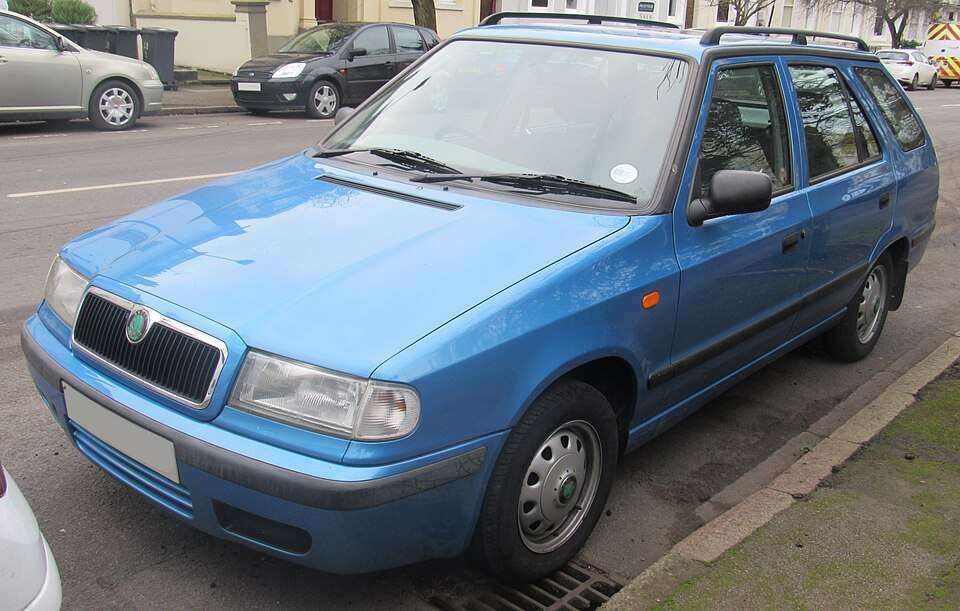
Felicia 1.3 MPI photograph by Vauxford, CC BY-SA 4.0, resized for display.
Like our guides and unusual cars?
Get forgotten finds, useful motoring content and the most interesting car stuff from us by email.
Free to join. No spam. Unsubscribe whenever you like. See our privacy policy.