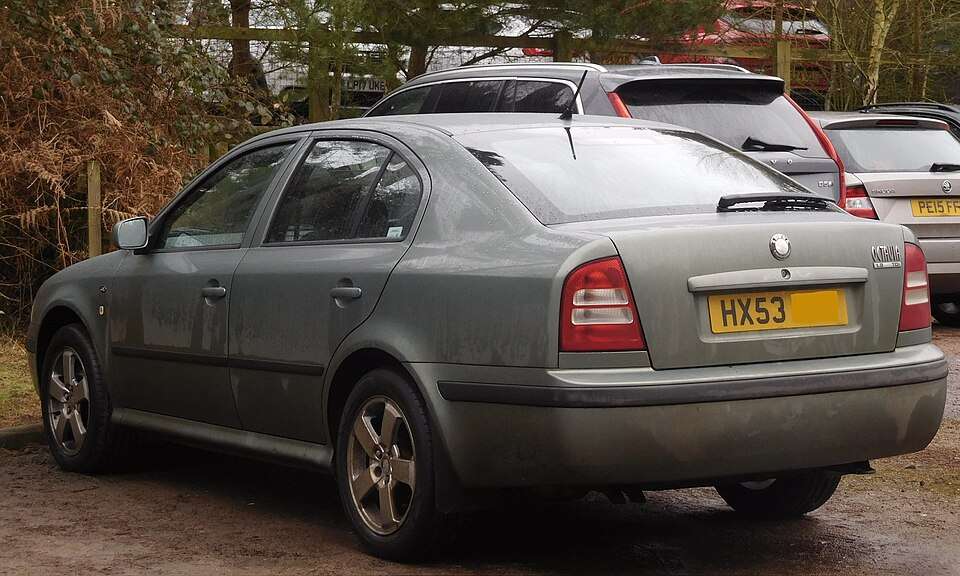
What would you do if a scanner named all four door locks on your Mk1 Octavia? One owner tried changing the central convenience unit, but the trouble persisted. The breakthrough came when an electrical feed was traced. Once that was repaired, the owner reported that the locks, fuel-filler release and heated mirrors worked again. This is where a Škoda-specific reader can be a worthwhile investment. It can show you which parts of the car have something to say, and sometimes the most useful clue is the sheer unlikelihood of four things having broken at once.
It is equally handy on the original 1.8T vRS, where a pressure-drop code can turn a hesitating car into an alarming conversation about a turbocharger. This guide is for owners of the first-generation Octavia, including ordinary petrol and diesel versions. We’ll look at what an inexpensive reader can already tell you, what extra information comes from the Škoda controllers and how to turn it into a sensible next test. You do not have to fix everything yourself to benefit. Giving the right specialist an accurate account of an intermittent fault can be money well spent.
Choose the original Octavia, type 1U
Identify the generation before choosing an Octavia in a scanner menu. The original car is type 1U. Registration dates around a model change can be misleading, and a Mk1 registered late does not acquire the electrical architecture of its Mk2 neighbour. Write down your fuel type, engine identification, gearbox and the equipment you want to investigate. A petrol vRS, a diesel Elegance and a four-wheel-drive estate have overlapping equipment but different diagnostic priorities. The owner of the estate may reasonably ask for coverage of the fitted transmission system before anything else.
A generic OBD2 or EOBD reader is primarily a window into standard emissions information on a compatible vehicle. It may report the engine code behind a warning, show some live values and save a snapshot of the conditions when it appeared. Support varies across the early petrol and diesel cars. A Škoda-aware scanner with the right protocol can talk the manufacturer’s language and contact other systems. That ability matters more than a colourful screen if you want to read the climate controller or find out which door thinks it is still open.

Try a simple question before purchasing. Ask for an example report from a 1U that identifies an engine and a convenience controller separately. Then ask which measuring values are available in the units you care about. A tool can genuinely support reading codes in a controller yet provide a much shorter list of live values than a specialist setup. On the other hand, an inexpensive handheld which clearly prints the relevant controller, code and status may already meet your needs if you only want to make better decisions about workshop time.
17705 or P1297 on the 1.8T vRS
A vRS owner investigating hesitant running wondered whether the airflow meter was at fault. Further inspection uncovered a significant split in a breather pipe. The same account records 17705, also displayed as P1297, describing a pressure drop between the turbo and throttle valve. Another Mk1 vRS discussion documents the same pairing. These are helpful accounts for understanding the scope of a code. Airflow measurement, pressure measurement, the pipes carrying the air and the valve that recirculates it play different roles. Finding a split merits attention, but the number by itself cannot certify a particular component has failed. Read the vRS owner’s observations and scan. See the Mk1 discussion of the 17705 code.
You might already get P1297 on a compatible engine reader. A VAG-aware description gives the other number and a more recognisable starting point for the workshop literature. The next advantage is access to the measuring values the fitted ECU supports. Requested and measured charge pressure at a known engine load are much more informative together than one isolated peak reading. Give the garage a clear description of the hesitation. Did it happen just after a cold start, while pulling under load, or when coming back onto the accelerator? Conditions change how a technician will try to distinguish the possibilities.
Ask what evidence points to a leak, a regulating fault or an inaccurate reading. A workshop can investigate the intake and pressure system and test suspect components under the appropriate conditions. The familiar mention of a diverter valve in a code description is an invitation to consider it. It is not a test result for the valve fitted to your car. A written estimate becomes much more persuasive when the proposed part has an observable defect or has failed a relevant test. Buying a meter, valve and turbo in succession is a costly substitute for that distinction.
Modifications are part of the history on some surviving vRS cars. If there is a different intake, remap or aftermarket valve, make a note and tell the specialist. A reading taken from a modified installation can be perfectly genuine while comparing poorly with figures from a standard car. Equally, recent work may have disturbed a connector or pipe. A photograph of the engine bay before and after a repair, with an invoice explaining what was changed, can help the garage identify the correct configuration. Nobody needs a high-speed demonstration from the driver’s seat to start that investigation.
What three numbers told a 1.9 TDI owner
A 2001 Octavia Elegance 1.9 TDI owner retrieved 17564, 17569 and 18062 but could not find them in the book supplied with the reader. The forum identified the first as a manifold-pressure sensor circuit entry and the second as a manifold-temperature sensor circuit entry. The third directed attention to fault memory in the instrument cluster. It is a good example of the limits of possessing a number without its Škoda context. The engine was effectively directing the person with the scanner to read another part of the car. Read the diesel Elegance scan and code identifications.
There are two different investigations here. With pressure and temperature reporting electrical faults together, the technician can identify the fitted sensor arrangement and check connectors, shared wiring where applicable, power and reference values. A pressure reading that is impossible before the engine even starts deserves investigation before anyone blames boost production on the road. Similarly, intake temperature after the car has stood overnight should make sense in its surroundings. The engine bay can warm quickly once running, so note when the observation was made. The raw readings are useful clues, not a component verdict.
For 18062, ask the scanner to open the instrument cluster if it supports it and keep the cluster’s own findings. That instruction does not mean buy a set of clocks. It explains why a cheap tool that reads the engine beautifully may leave the job half done. If the scanner cannot reach the instruments, tell the specialist exactly that. There is a substantial difference between a cluster that answered with no stored faults and an app which never attempted to contact it. A neatly printed green tick in an engine report cannot settle that question.
Like our guides and unusual cars?
Get forgotten finds, useful motoring content and the most interesting car stuff from us by email.
Free to join. No spam. Unsubscribe whenever you like. See our privacy policy.
Four door codes, one working boot and a wiring discovery
The locking case began with an intriguing detail. The boot still responded to the remote and the key, although the doors had stopped locking properly. The VAG scan returned 00928, 00929, 00930 and 00931, covering the four door-locking modules with an implausible-signal description. Changing a control unit had not solved the problem. The owner later reported that repairing the supply path restored several functions. They also found a separate fuse issue affecting the radio supply. It would be easy to join all these symptoms together in hindsight. The owner’s investigation is more instructive than that. Follow the Octavia locking investigation through to its outcome.
If this were your driveway, one working boot would be a valuable observation. It suggests that at least some part of the remote command is getting through. It does not prove the entire remote, receiver and convenience system work under every condition. List which individual doors respond to the key, remote and interior switch where fitted. Check what happens to the interior light or door-open display as each door is opened normally. Note whether the fuel flap behaves differently at the same time. You can make those observations with the car parked without taking any trim off.
With a suitable tool, contact the convenience controller and look for supported door-state and lock-state readings. If one door consistently reports closed when open, compare it with a known working door. If four stop responding together, a technician has a reason to test shared supply and connections under load before pricing four mechanisms. An apparently intact wire or a plausible voltage with no load can still disappoint when several devices try to operate. The solution on the reported car is evidence for checking a circuit. The wiring repair itself should follow the correct diagram and protection for your own vehicle.
01274 in Climatronic and the hesitation that belongs elsewhere
A Mk1 vRS owner investigating hesitation reported that the only fault retrieved was 01274 in climate control. It concerned V71, the air-flow flap positioning motor. A separate published Mk1 vRS scan also showed 01274 in address 08. This is a useful discipline for anybody excited to get their first diagnostic result. A real fault in the memories can be unrelated to the complaint that prompted the scan. If the driver asks about hesitation but the climate controller describes a flap, keep both observations. The climate entry gives you a way into a ventilation investigation. Read the hesitation and climate-code example. See the vRS controller-by-controller report.
Try describing what happens inside the cabin. Does the blower vary speed? Is there a difference between the outlets selected? Does changing the temperature alter the heat coming through? Air volume, direction and temperature are distinct. If the installed controller supplies requested and reported positions, a workshop can compare whether the flap follows a command. If the data shows movement but the flow does not change, the physical mechanism deserves attention. If the position never moves, wiring, motor and feedback all need consideration. Ask what evidence supports dismantling the dash before agreeing to the labour.
00532 in the airbag controller and the meaning of an old voltage entry
The published two-code vRS report illustrates a second trap. Address 15, the airbag controller, listed 00532 relating to the positive supply voltage. Note where that entry lived. The number describes an electrical supply observation made by the restraint controller. It does not identify a particular airbag as defective. If the car recently needed a jump start, had a battery removed or suffered a poor connection, pass on that history. A current warning with no obvious power event still needs assessment by someone familiar with the restraint system.
On early Volkswagen Group cars, ask about the suitability of the interface and software for the exact airbag control unit before reading it. Ross-Tech documented an issue on particular older controllers, including part number 6Q0 909 605 A. A similar-looking model year is insufficient to identify a unit. Leave identification and diagnosis to the specialist if in doubt, and leave airbag connectors and deployment circuits alone. For the owner, the valuable steps are recording the dashboard warning, preserving any existing report and identifying relevant battery work. An extinguished warning after a reset is no substitute for a system diagnosis. Read the historical Ross-Tech controller-specific advisory.
Picking a scanner for an early Octavia
iCarsoft’s published Škoda VAWS V3.0 coverage table starts Octavia coverage in 1997. If you have a particularly early car, make the build date part of your enquiry. Even within the listed years ask for the specific controller and functions. For a vRS I would want the engine measuring values, a report from the comfort system and communication with fitted Climatronic. For a TDI I would add a demonstration of the instrument cluster and the live pressures relevant to the engine. If an automatic or four-wheel-drive system is the main reason for buying, ask for a diagnostic report from that actual installation.
A quick check when viewing a used Mk1 vRS
With the seller’s agreement, take a read-only scan and leave the original records intact. A well-maintained Octavia can have an old convenience entry, and a freshly cleared engine can have very little to tell you. Look at the service paperwork alongside the report. An invoice for a turbo hose followed by a period of normal running has more meaning than the seller simply saying the turbo was done. Ask whether “done” meant a pipe, valve, actuator or complete turbocharger. Record the mileage of that work beside the mileage on today’s scan.
Try the mundane equipment as well. A functioning key fob should be judged by what the doors actually do, and a climate-control panel by what comes out of the vents. If the remote flashes the indicators but one door stays unlocked, put that on the inspection sheet even if the scan appears clear. A buyer is paying for a usable car as well as a collection of controllers that answer the tester.
What to keep in a scan report before you book a repair
Imagine arriving at a garage on Monday with a car that behaved badly on Saturday but is running perfectly again. The difference between a useful handover and an expensive attempt to recreate the problem is often a couple of lines of information. Save the original scan before clearing anything. Keep the identity of the controller, the whole fault description, its status and any conditions stored alongside it. Photograph the dash message while parked. A picture of a code copied from a search result can lose the one detail that tells two similar faults apart.
Add three things the car cannot reliably record for you. What did you ask it to do? What did it actually do? What happened on the next occasion you used it normally? Include recent work if the timing fits, particularly a battery change or a repair near the affected equipment. Mileage is useful when different controllers use different clocks. If the scanner gives no time or distance for an entry, say so. Guessing that two undated faults occurred together can send a technician down the wrong path.
Ask the person quoting to explain the first test and what each possible result would mean. A quote for investigation is easier to weigh up when you know whether it includes checking wiring, comparing live readings or inspecting a mechanical part. Agree how they will contact you before parts are ordered. Keep the job sheet and the post-repair report together. If the same warning appears months later, you will have a record of what was tested, which part or circuit received attention and what worked afterwards.
What makes the reader an investment on a Mk1?
A specialist visit can make more sense for a single urgent warning, especially on safety systems. Ownership makes a stronger case when an older Octavia is staying in the family and intermittent faults keep arriving in different systems. Judge a prospective tool by a practical test. Could it have sent the diesel owner to the instrument cluster, shown all four door entries on the same page, and told the vRS owner that the air flap belonged to the heater? Those are decisions worth paying for. The number of advertised service resets is a distant second.
Browse all Škoda diagnostic scanner guides
Octavia Mk1 photograph by Aboutdamnavantime.wiki, CC BY 4.0, resized for display.
Like our guides and unusual cars?
Get forgotten finds, useful motoring content and the most interesting car stuff from us by email.
Free to join. No spam. Unsubscribe whenever you like. See our privacy policy.