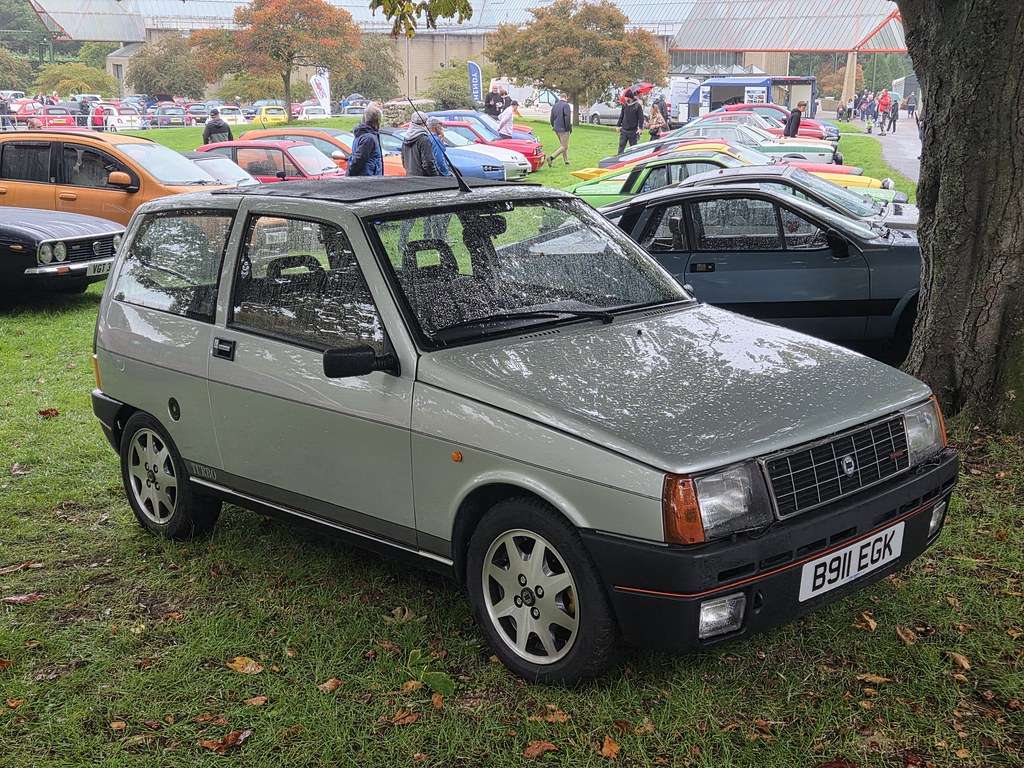
The Y10 Turbo put boost into a tiny Italian city car with a famously abrupt tail. Britain knew it as a Lancia. Its home-market badge and small engine both have stories of their own.
1. Italy knew the Y10 as an Autobianchi
The same model appeared with Autobianchi branding in Italy and Lancia branding in Britain. A period Italian brochure wears both emblems. Both names are worth using when searching for contemporary footage.
2. The Turbo had its own 1,049 cc engine
The engine was a turbocharged 1,049 cc four rated at 85 PS in period literature. Some sources round or misstate the capacity. The FIA papers and contemporary sales specification are better references for the exact number.
3. The FIRE badge belongs to a different Y10
An early Y10 could also come with a 999 cc FIRE engine. The Turbo designation identified a separate engine, with the distinction clearly set out in the period range brochure. The two characters were quite different despite the shared shell.
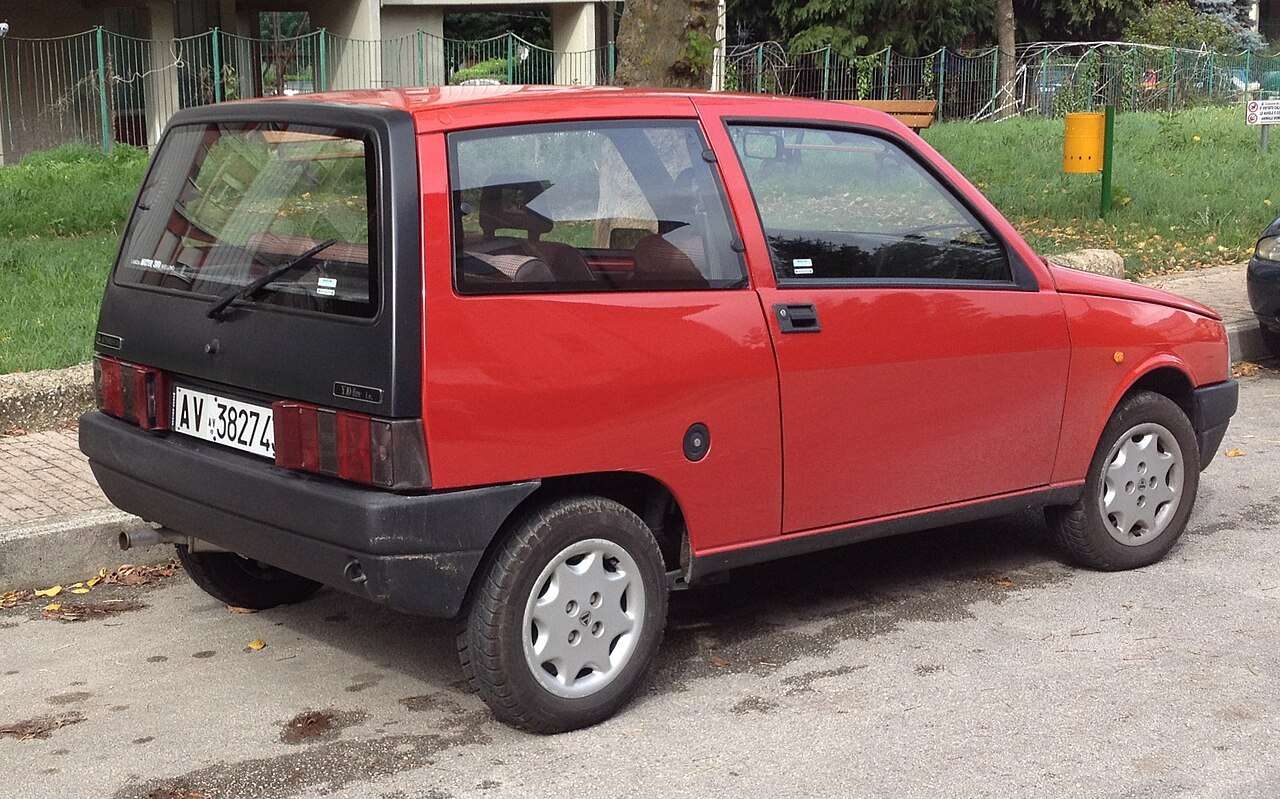
4. The black tailgate was part of the design
The abrupt tail was finished in black on regular examples. It is the detail most people remember and makes the little car recognisable from behind. Period special editions could play with that treatment.
Love cars you don’t see every day?
Get forgotten cars, surprising motoring stories and the most interesting finds from Unusual Cars by email.
Free to join. No spam. Unsubscribe whenever you like. See our Privacy Policy.
5. The upholstery was part of the pitch
The Y10 sold city-car size with unusually upmarket interior presentation for the period. Period trim photos show why details such as upholstery are worth recording by version. A Turbo and a later special edition need separate captions.
6. Lancia filed Group A papers for it
The FIA historic database holds a Group A homologation form for the Y10 Turbo, numbered 5281. That gives us period photographs and original technical data. The paperwork documents eligibility and specifications, without making a claim about competition results.
7. The period road test describes a very rev-dependent engine
Bill Boddy drove the Turbo from London to mid-Wales for Motor Sport. He reported a modest response low down and much stronger acceleration with the revs up. That first-hand account gives the performance figures some life.
8. It shared showroom space with some heavyweight Lancias
A 1986 export brochure put the Y10 in the same range as the Delta, Prisma and Thema. The little Turbo sat at the opposite end of the size scale from the executive cars, with a personality of its own.
9. Martini stripes made it onto a Y10
The Martini Turbo special edition carried the famous stripes. The livery brought a little of Lancia’s competition imagery to the smallest corner of the showroom. It is worth checking the version when attributing a period photograph.
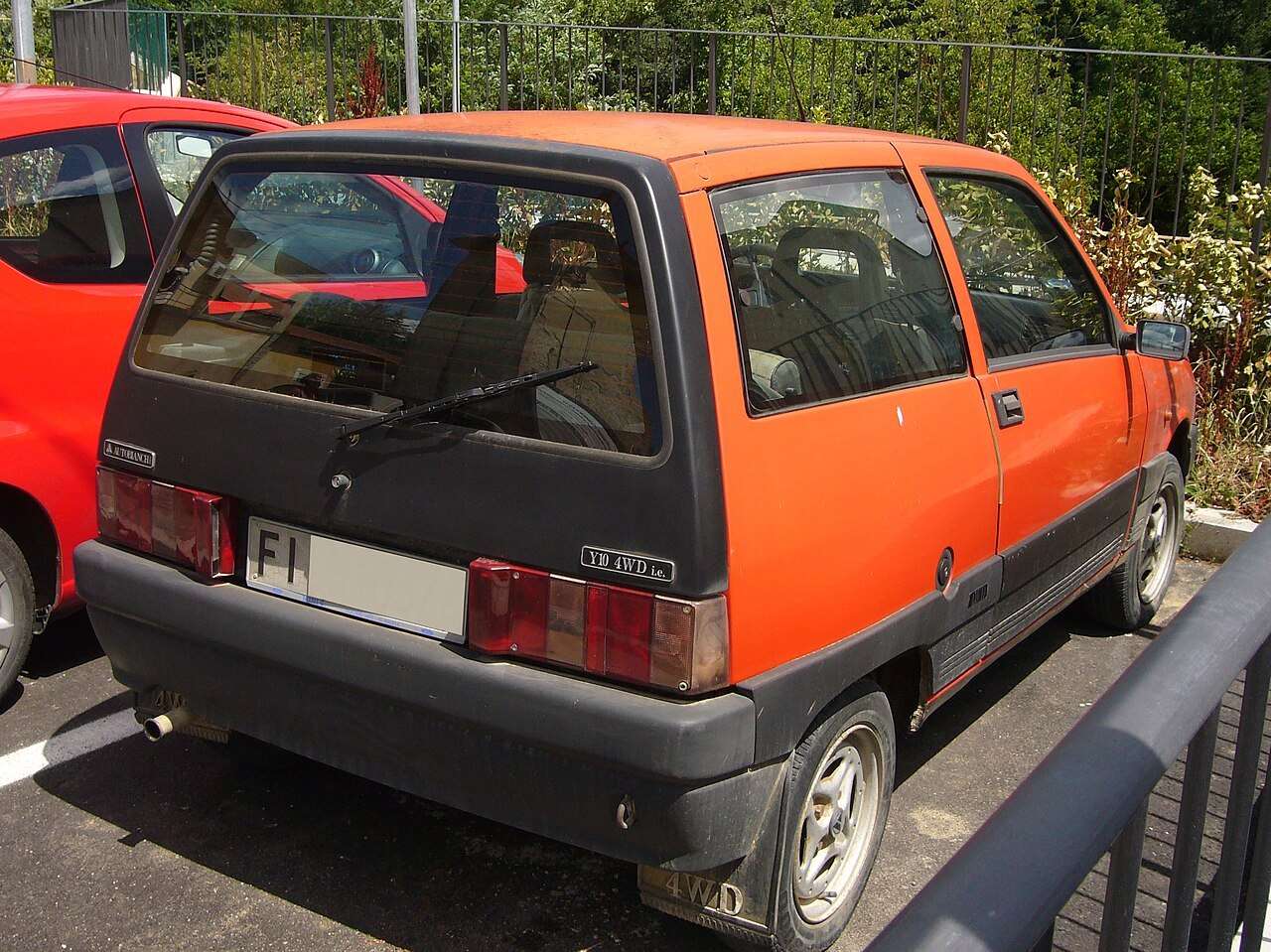
10. A four-wheel-drive Y10 also existed
The Y10 family later included a FIRE-engined 4WD model. The Turbo discussed here was a different proposition. Seeing both in the range shows just how many directions the designers took one little three-door body.
Read our Lancia Y10 Turbo UK history and buying guide.
Explore more 10 Things articles
Browse the Unusual Cars 10 Things hub.
Sources and further reading
- FIA Group A Y10 Turbo homologation papers
- 1986 Autobianchi Y10 brochure
- Motor Sport 1985 road impressions
- RAC contemporary range and special edition guide
Featured image: 1985 Lancia Y10 Turbo at Simply Italian, Beaulieu. Photo by Andrew Bone via Flickr (CC BY 4.0, resized).
Join the Unusual Cars Club
Get more forgotten performance cars, surprising motoring stories and new 10 Things articles by email.
Free to join. No spam. Unsubscribe whenever you like. See our Privacy Policy.