Reliant’s four-wheeled Kitten looks familiar until you count the front wheels. Its fibreglass shell, tiny engine and choice of body styles made it a more interesting proposition than the family likeness suggests.
1. It went on sale in the 1970s
Reliant’s launch-era literature dates from 1975. The first brochures put the standard car and the estate side by side. Both took Reliant’s approach to making a light car into the mainstream four-wheel market.
2. There really were two wheels at the front
The Robin carried a single front wheel. The Kitten had a front suspension assembly serving two, with wishbones and separate spring and damper units. That is a much bigger change underneath than adding one more tyre.
3. The engine moved forwards
On the four-wheeler, Reliant could package its engine further forward than in the Robin. The workshop manual shows how the engine and steering occupied the nose. The familiar profile concealed quite different packaging at the front.
4. The engine was Reliant’s own 850
The compact overhead-valve four displaced about 850cc. It worked through a four-speed manual to the rear axle. The layout is especially striking alongside later small city cars that put the transmission and driven wheels at the front.
Love cars you don’t see every day?
Get forgotten cars, surprising motoring stories and the most interesting finds from Unusual Cars by email.
Free to join. No spam. Unsubscribe whenever you like. See our Privacy Policy.
5. The body was glassfibre over a chassis
Reliant built expertise in moulded glass-reinforced plastic and brought it straight over to the Kitten. The shell sat on a steel chassis. That distinction is useful when looking at a survivor because the shiny body cannot tell you what has happened to the steel below.
6. You could buy an estate from the start
Reliant’s 1975 brochure depicts the estate alongside the saloon. The extra usable load space suited a car intended to work hard despite its small size. The estate profile also gives the Kitten a character of its own.
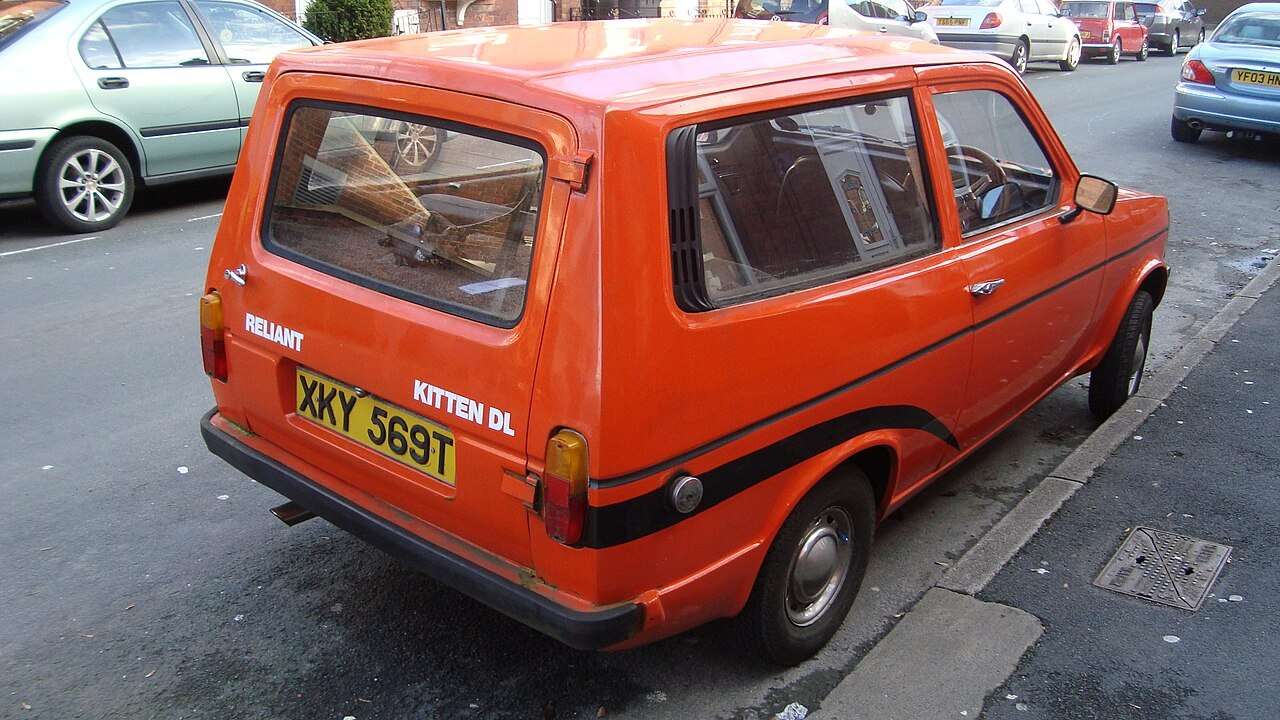
7. There was a commercial van
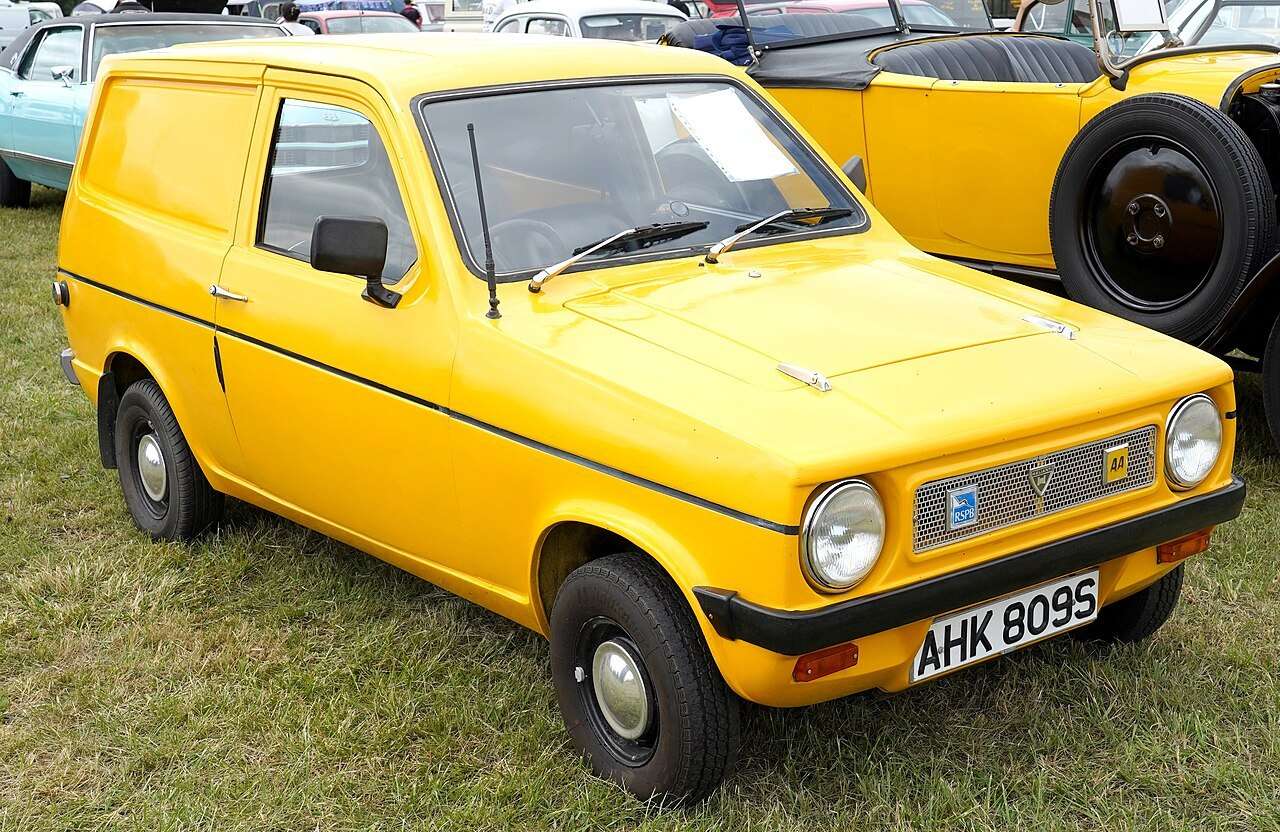
The Reliant archive has a dedicated Kitten van brochure from 1976. By 1978, the manufacturer’s price lists still grouped the Kitten DL with the van. It was possible to see the same engineering doing a very different job on a high street.
8. The quoted load space changed between brochures
The brochure archive records early estate figures of 40 cubic feet and then 35 with the rear seat folded. A later brochure lists 34. Those are changes in the printed figures, so a period claim is best read with its edition attached.
9. It had car-style steering
The factory manual gives the Kitten a rack-and-pinion steering system. That is worth knowing if the only Reliant you’ve driven used a single front wheel. Under the nose, this was a purpose-built four-wheeler.
10. The factory manual treats saloon and estate as one mechanical family
Reliant covered both bodies in the same 1975 workshop manual. Much of the servicing story is shared even when the back of the car serves a very different purpose. The manual also makes the perfect companion to the cheerful sales photographs because the two documents show entirely different sides of the car.
Explore more 10 Things articles
Browse the Unusual Cars 10 Things hub.
Sources and further reading
- Reliant’s original Kitten workshop manual
- Reliant Motor Club’s original Kitten brochure catalogue
- Reliant original price lists for the Kitten, DL and van
Featured image: A blue 1977 Reliant Kitten DL estate. Photo by Andrew Bone from Weymouth, England via Wikimedia Commons (CC BY 2.0, resized).
Join the Unusual Cars Club
Get more forgotten performance cars, surprising motoring stories and new 10 Things articles by email.
Free to join. No spam. Unsubscribe whenever you like. See our Privacy Policy.