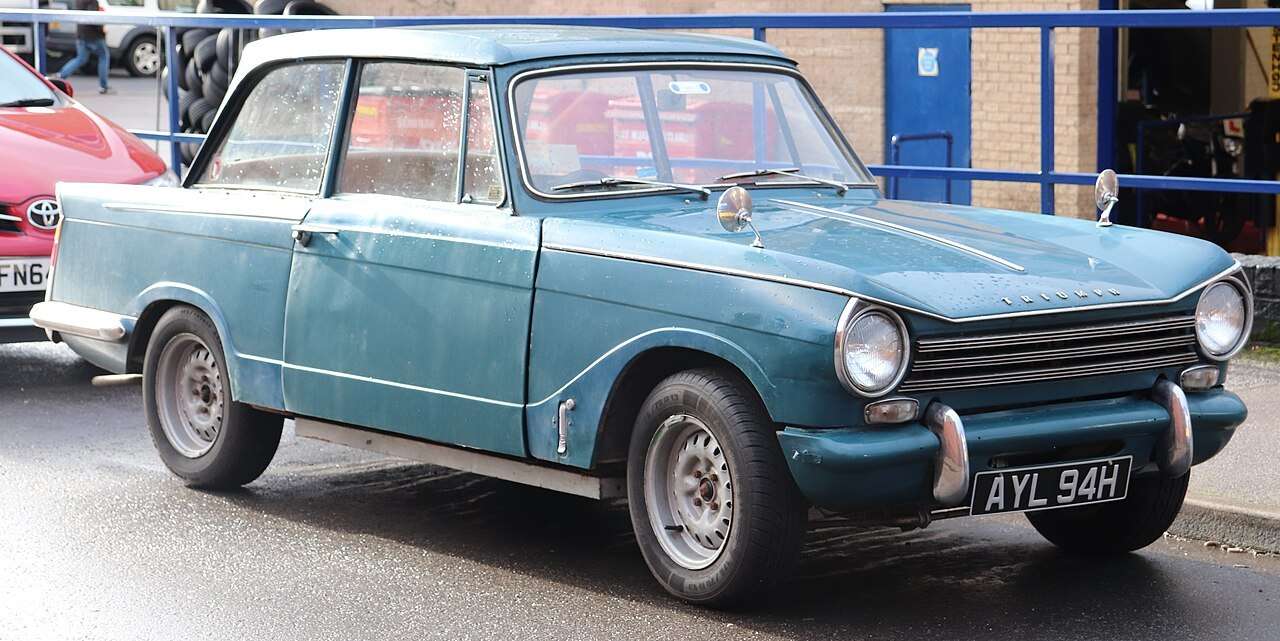
The 13/60 was the last major version of Triumph’s Herald. It brought a bigger engine and a new face to a car that could already surprise a driver with its turning circle and a mechanic with its bonnet.
1. It was the last step in the original Herald line
The 13/60 arrived in 1967, eight years after the original Herald. It kept the Herald’s independent front and rear suspension and separate chassis. The changes were concentrated in the engine, trim and the immediately recognisable nose.
2. The engine measured 1,296cc
The 13/60 used the four-cylinder engine size also found in the contemporary Triumph 1300. The Herald sent its power to the back wheels. The engine connection makes it an interesting bridge between the two cars, despite their different layouts.
3. The new front had a family resemblance
Michelotti’s revised nose used a different bonnet and grille treatment from earlier Heralds. It borrowed some of the character of Triumph’s Vitesse without copying its twin-headlamp front. A 13/60 is easiest to recognise from head on.
4. The front wings went up with the bonnet
The front assembly tipped forward in one piece, spring assistance helping to lift it. That left room to reach down alongside the engine from either side. It is one of the biggest practical differences between working on a Herald and on most small saloons.
Love cars you don’t see every day?
Get forgotten cars, surprising motoring stories and the most interesting finds from Unusual Cars by email.
Free to join. No spam. Unsubscribe whenever you like. See our Privacy Policy.
5. Triumph offered it with three bodies
The Sports Six Club lists a saloon, a convertible and an estate. All three carried the 13/60 name, so it describes more than the saloon. A sound survivor in any body has an identity within the same late Herald family.

6. The chassis was a separate assembly
The original workshop manual breaks down the frame and body in separate sections. That gave Triumph a way to use common mechanical parts across different body styles. It also meant a good-looking body could tell you surprisingly little about the condition of the structure underneath.
7. Its turning circle was a selling point
The Herald’s steering geometry allowed plenty of lock, a trait that made it unusually nimble for parking and U-turns. It is a useful detail to remember if your mental picture of a Herald is somebody pottering down a country lane.
8. The back used a transverse leaf spring
The original suspension used swing axles at the rear with a single spring mounted across the car. It gave the Herald independent rear suspension in a small saloon. The layout also explains why the rear wheels can sit at quite striking angles as the suspension moves.
9. The cabin gained a timber fascia
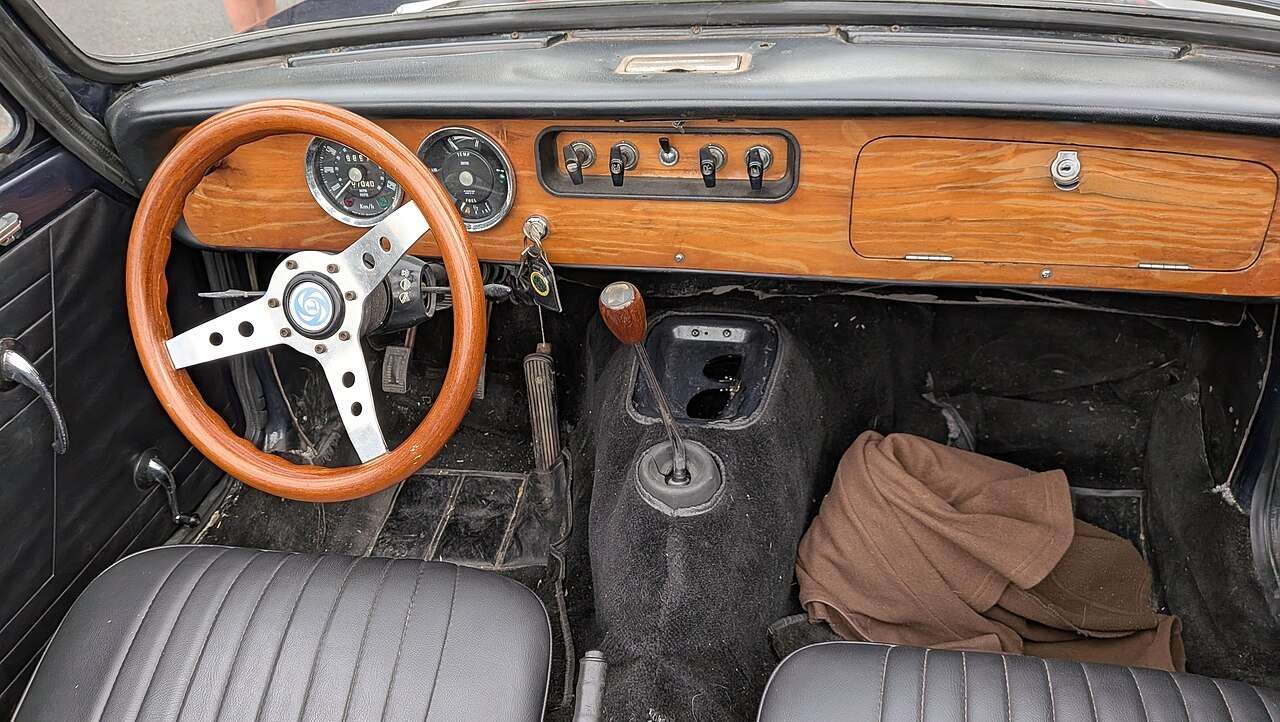
The 13/60’s dashboard presented the main instruments ahead of the driver and brought the smaller controls together across a timber fascia. Those interior details helped Triumph modernise the car without changing the whole body. A good cabin photograph tells the story better than a front view alone.
10. The estate and convertible outlasted the saloon
The Triumph Sports Six Club dates the end of saloon production to December 1970. Its records carry the convertible and estate through to May 1971. The last chapter of the Herald story therefore belonged to the two more specialised versions.
Explore more 10 Things articles
Browse the Unusual Cars 10 Things hub.
Sources and further reading
- Triumph Sports Six Club’s 13/60 saloon record
- Triumph Sports Six Club’s convertible record
- Triumph Sports Six Club’s estate record
- Original Triumph workshop manual
- Triumph Sports Six Club Herald buyer’s guide
Featured image: A blue 1969 Triumph Herald 13/60. Photo by Vauxford via Wikimedia Commons (CC BY-SA 4.0, resized).
Join the Unusual Cars Club
Get more forgotten performance cars, surprising motoring stories and new 10 Things articles by email.
Free to join. No spam. Unsubscribe whenever you like. See our Privacy Policy.