Unusual Cars model guide
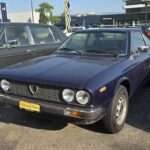
Lancia Trevi and Trevi Volumex
A conventional three-box body surrounding one of the boldest dashboards of the 1980s—and, in VX form, a supercharger.

Quick answer: The Trevi was Lancia’s compact executive saloon derived from the Beta and sold in Britain during the early 1980s. The rare Volumex added a belt-driven supercharger to the 2.0-litre twin-cam, giving immediate response and making the understated saloon genuinely quick for its era.
History and character
Introduced in 1980, the Trevi combined familiar Beta mechanicals with a new notchback body. Its defining feature was Mario Bellini’s dashboard: a dramatic slab filled with circular recesses for instruments, switches and ventilation controls. Nothing else in its class looked remotely similar.
UK cars were offered with twin-cam four-cylinder engines, including the 1.6 and 2.0-litre. Fuel injection appeared on later 2.0-litre cars. The 1982 Volumex used a Roots-type supercharger and carburettor, producing about 135 bhp with strong low-speed torque. Unlike a period turbo, the VX delivered boost without waiting for exhaust energy.
The Trevi was never common in Britain and surviving Volumex cars are especially scarce. Its rarity should not obscure the basics: it shares much with the Beta family, but body, dashboard and VX-specific parts can be difficult to replace.
Key specifications
| Years | 1980–1984 |
|---|---|
| Engines | 1.6 and 2.0-litre twin-cam |
| Volumex output | About 135 bhp |
| Transmission | Five-speed manual |
| Drive | Front-wheel drive |
What to check before buying
- Corrosion: examine sills, floor, subframe mounts, arches, doors and screen surrounds.
- Supercharger: check for noise, oil leakage, correct belt tension and smooth boost delivery.
- Twin-cam: verify timing-belt changes, oil pressure and cooling-system health.
- Dashboard: test every instrument and switch; cracked or missing Bellini trim is hard to source.
- Suspension: look for worn bushes, tired dampers and uneven tyre wear.
Verdict
Lancia Trevi and Trevi Volumex earns its place here because it combines genuine UK-market relevance with engineering and design that have become increasingly unusual. The best example is the one with the strongest history, soundest structure and fewest improvised repairs—not necessarily the shiniest paint.
Research basis: Lancia technical material, contemporary road tests and surviving UK-market cars.