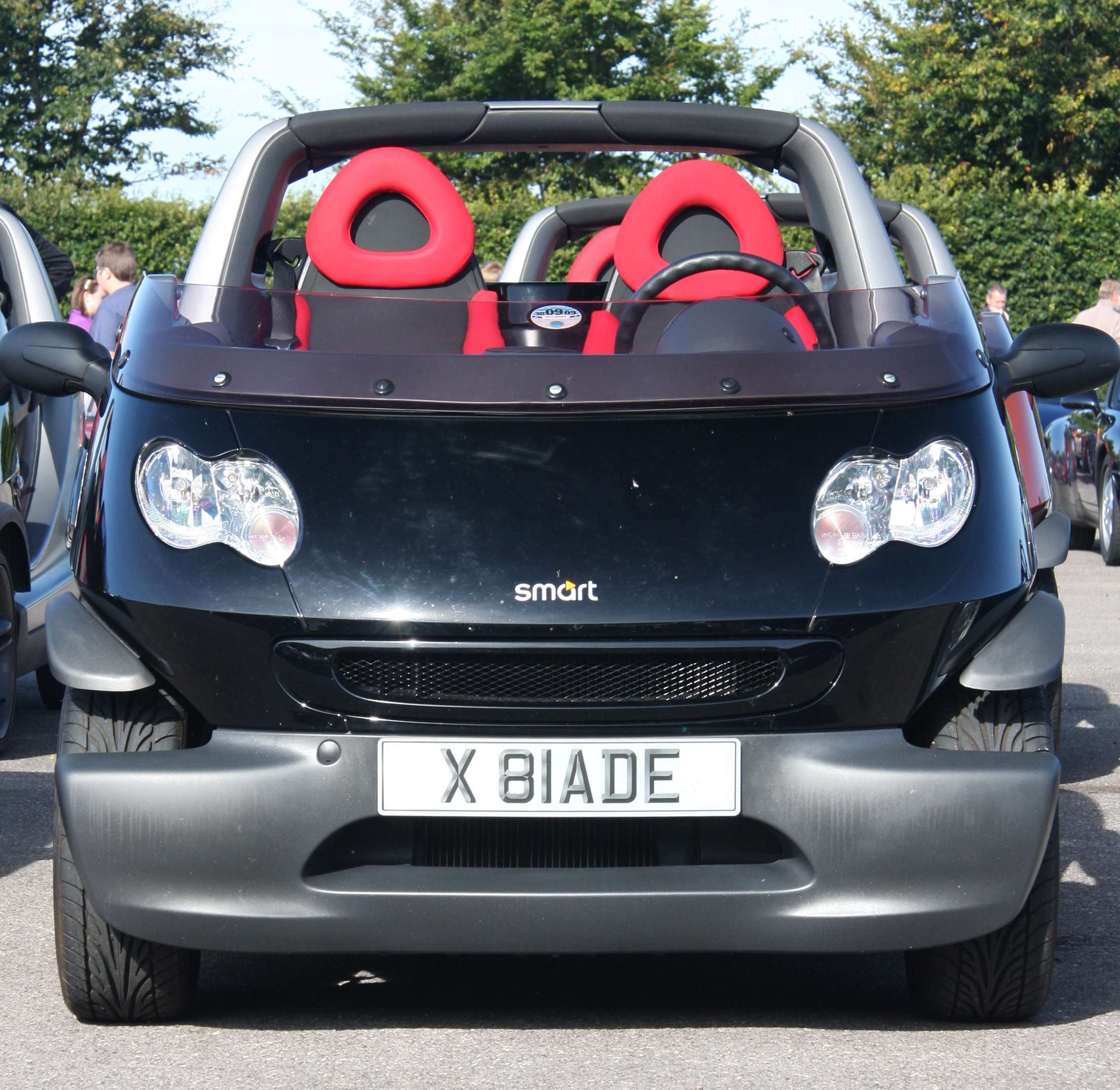
The Smart Crossblade is one of the strangest road cars offered to British buyers in the modern era. It has no conventional windscreen, roof or doors; instead, narrow side bars and a small transparent deflector leave occupants exposed to the weather. Based on the first-generation Smart city car, it was built as a numbered limited edition rather than a normal production derivative.
Daimler’s 2002 annual report confirmed production was limited to 2,000 cars. A small number reached the UK through official and specialist channels, often in left-hand drive, so registration history and provenance deserve close attention. Its rarity is real, but condition and completeness matter more than the plaque alone.
History and specification
The Crossblade grew from a Smart design study and entered production in 2002. It used the original 450 platform, a rear-mounted 599cc turbocharged three-cylinder engine and a six-speed automated manual gearbox driving the rear wheels. Output was approximately 71PS. Performance was modest, but with very low weight and virtually no weather protection the sensation was anything but ordinary.
Water-resistant seat materials, drain provisions and simplified trim helped it survive brief exposure, yet it was never a substitute for a closed car. The side protection bars hinge to aid access, while a low wind deflector replaces a full windscreen. Helmets or eye protection are sensible at speed, and owners need secure dry storage.
UK ownership considerations
Confirm how the car entered Britain, whether it is correctly registered and whether its identification numbers match the documents. Many Crossblades are left-hand drive. Check insurance availability before purchase and remember that the unusual body configuration may affect storage, security and everyday use. A complete weather cover and original accessories add practical and financial value.
Smart Crossblade common problems
Completeness and originality
The numbered plaque, bars, deflector, body panels, special seats, wheels and documentation are central to the car’s identity. Missing or damaged Crossblade-only parts can be extremely difficult to replace. Compare the car carefully with period photographs and seek evidence of its production number and ownership history.
Weather exposure
Although the cabin was designed to tolerate rain, years of outdoor storage can damage switches, connectors, seat materials and the SAM electrical module. Check drains, lift removable floor coverings and inspect every connector that may have been wet. Corrosion around fasteners and underbody seams is more important than a freshly cleaned cabin.
Engine, turbo and breather system
The 599cc engine needs disciplined oil-level checks and regular servicing. Look for smoke, excessive oil consumption, uneven running, failed crankcase breathers and turbo or manifold problems. A compression test is prudent because an engine rebuild is a significant cost even before rare Crossblade trim is considered.
Gearbox and clutch actuator
Test the automated manual from cold and hot. Slow shifts are normal, but refusal to select reverse, dashboard warning bars, violent take-up or slipping are not. Diagnostic checks should include clutch adaptation and actuator operation.
Storage-related faults
Low-mileage examples may have spent long periods stationary. Check date codes and cracking on tyres, seized calipers, corroded discs, tired batteries, stale fuel and perished hoses. Suspension springs and brake pipes should be inspected on a lift. A recent recommissioning invoice is more persuasive than a very low mileage figure.
Accident damage
The plastic exterior can hide damage to the steel Tridion cell. Examine the side-bar mountings, panel gaps, wheel alignment, jacking points and underside. Repairs to bespoke panels or the wind deflector can be difficult to reproduce accurately.
Parts availability
Mechanical service parts overlap with other early Smart models, and specialists understand the engine and transmission. Crossblade-specific components are the challenge. Before buying an incomplete example, confirm that the required item actually exists rather than assuming it can be ordered or fabricated cheaply.
Buying checklist
- Verify the numbered identity, VIN, registration and import history.
- Confirm the unique bars, deflector, seats, wheels, cover and documents.
- Inspect for weather damage, corrosion and damp-related electrical faults.
- Check compression, oil consumption, turbo boost and cooling.
- Test gearbox and clutch actuator operation with diagnostics.
- Budget for secure dry storage and specialist insurance.
Verdict
The Smart Crossblade is too compromised to recommend as ordinary transport, which is precisely why it belongs in a collection of rare and forgotten cars. Its value lies in its audacity and completeness. Buy the best documented, most original example available, because restoring a cheaper incomplete car can be far harder than repairing its familiar Smart mechanical components.
Research sources included Smart’s official heritage archive, Daimler’s 2002 annual report, contemporary specifications and independent ownership material. Image: Brian Snelson, CC BY 2.0, via Wikimedia Commons.