

The Toyota Corolla GTi-16 is one of the forgotten heroes of the 1980s hot-hatch boom. Across the AE82 and AE92 generations it combined the celebrated 4A-GE twin-cam engine with everyday Corolla durability. It lacked the image of a Golf GTI, but its engineering and rarity make it fascinating today.
1. The AE82 marked a front-wheel-drive revolution
The fifth-generation Corolla moved most of the range to front-wheel drive in 1983. The three-door AE82 GT became the performance flagship, proving that Toyota’s new practical layout could still produce an entertaining driver’s car. Rear-wheel drive survived only in the famous AE86 coupés.
2. It shared an engine family with the AE86 and MR2
Both generations used versions of Toyota’s 1.6-litre 4A-GE: a fuel-injected, 16-valve, twin-cam four-cylinder that thrived on revs. The same basic engine powered the AE86 Corolla GT and first-generation MR2, giving the humble hatchback a direct connection to two recognised enthusiasts’ cars.
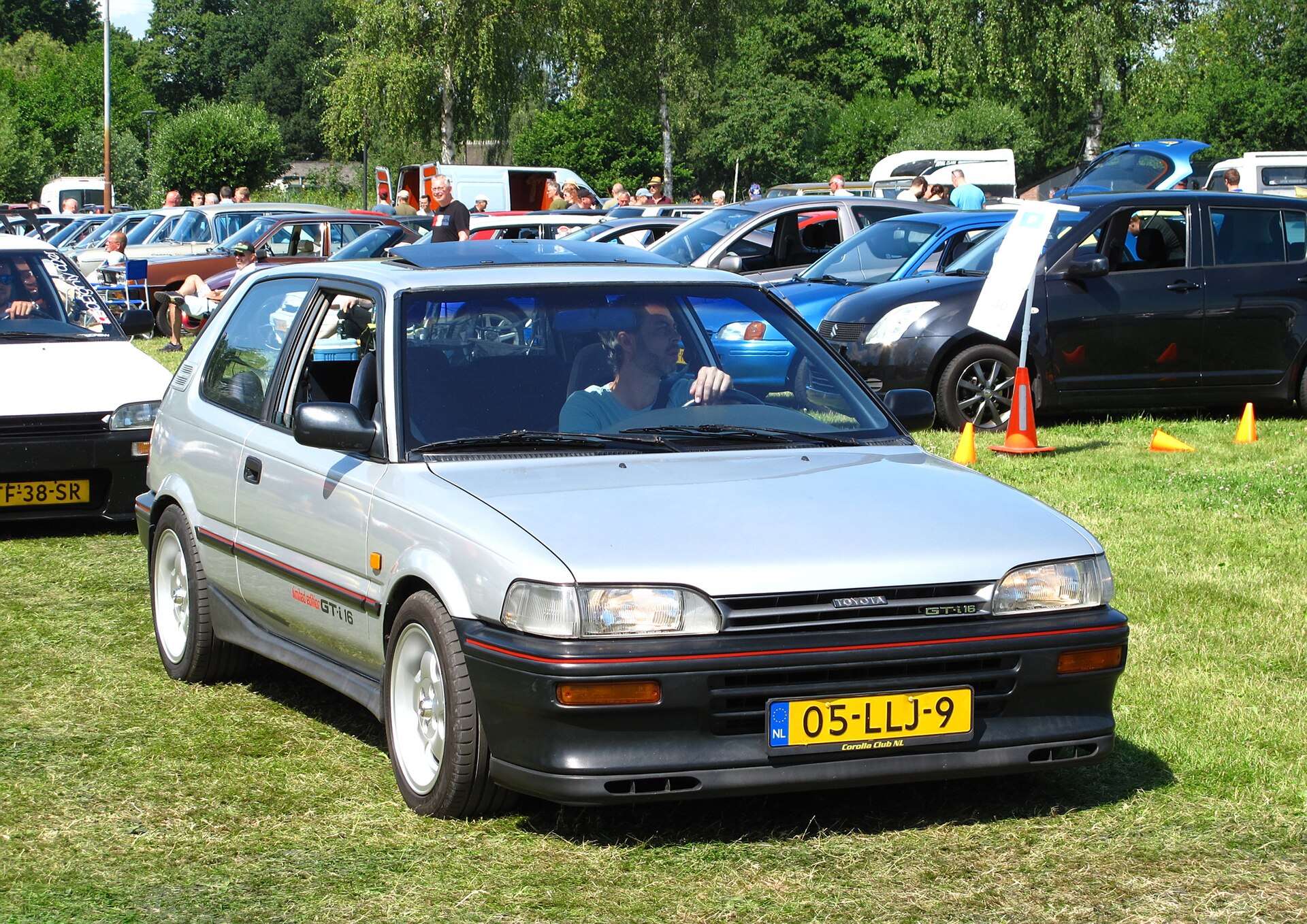
3. The later AE92 became the GTi-16
When the sixth-generation Corolla arrived in 1987, the performance hatch evolved into the smoother, more mature AE92 GTi-16. Toyota UK continued selling the model into the early 1990s, placing it above ordinary Corollas with model-specific trim, sports suspension and four-wheel disc brakes.
4. Power figures varied by market and year
Official Japanese specifications list representative AE92 4A-GE outputs around 120PS, while European figures are often quoted slightly differently according to emissions equipment and measurement standard. What mattered on the road was the engine’s appetite for revs and crisp response rather than huge torque.
Love cars you don’t see every day?
Get forgotten cars, surprising motoring stories and the most interesting finds from Unusual Cars by email.
Free to join. No spam. Unsubscribe whenever you like. See our Privacy Policy.
5. It used Toyota’s T-VIS intake system
Earlier 4A-GE versions featured Toyota Variable Induction System. At lower engine speeds, the system restricted part of the intake path to improve air velocity and response; at higher revs it opened fully for greater breathing. It helped make a peaky twin-cam more usable in ordinary driving.
6. The chassis was more serious than the styling
Independent suspension, front and rear anti-roll bars and four-wheel disc brakes gave the GTi-16 genuine dynamic credibility. The body remained narrow and practical, and Toyota avoided the oversized spoilers that defined some rivals. That subtlety is one reason so many people failed to notice the model when it was new.
7. Japan received an FX-GT version
In Japan the hot hatch was sold within the Corolla FX range as the FX-GT. Toyota promoted features including supportive multi-adjustable seats, low-profile tyres and disc brakes on all four wheels. The badge differed, but the concept was the same: serious twin-cam performance in a compact everyday hatch.

8. It was lighter than modern hot hatches
Depending on body and market, an AE92 GT model weighed only a little over a tonne. That modest mass allowed roughly 120bhp to deliver lively performance and responsive handling. It also meant the brakes, tyres and suspension did not need to be enormous to feel effective.
9. Reliability worked against collectability
Because these cars behaved like ordinary Corollas when required, many accumulated huge mileages and were treated as disposable transport rather than preserved performance models. Rust, modifications and engine swaps removed others. The reputation for indestructibility did not guarantee survival.
10. The hatch is much rarer than the famous rear-drive Corolla
The AE86 became a global cult car through motorsport and drifting, while the front-driven GTi-16 quietly disappeared. Today an original AE82 or AE92 hot hatch is far harder to encounter in Britain. Its combination of 4A-GE character, practicality and understatement now feels refreshingly honest.
The Corolla GTi-16 was never the loudest hot hatch, but it contained all the right ingredients. A great engine, low weight and Toyota durability make it one of the era’s most overlooked performers.
Explore every 10 Things article in the Unusual Cars hub →
Join the Unusual Cars Club
Get more forgotten performance cars, surprising motoring stories and new 10 Things articles by email.
Free to join. No spam. Unsubscribe whenever you like. See our Privacy Policy.