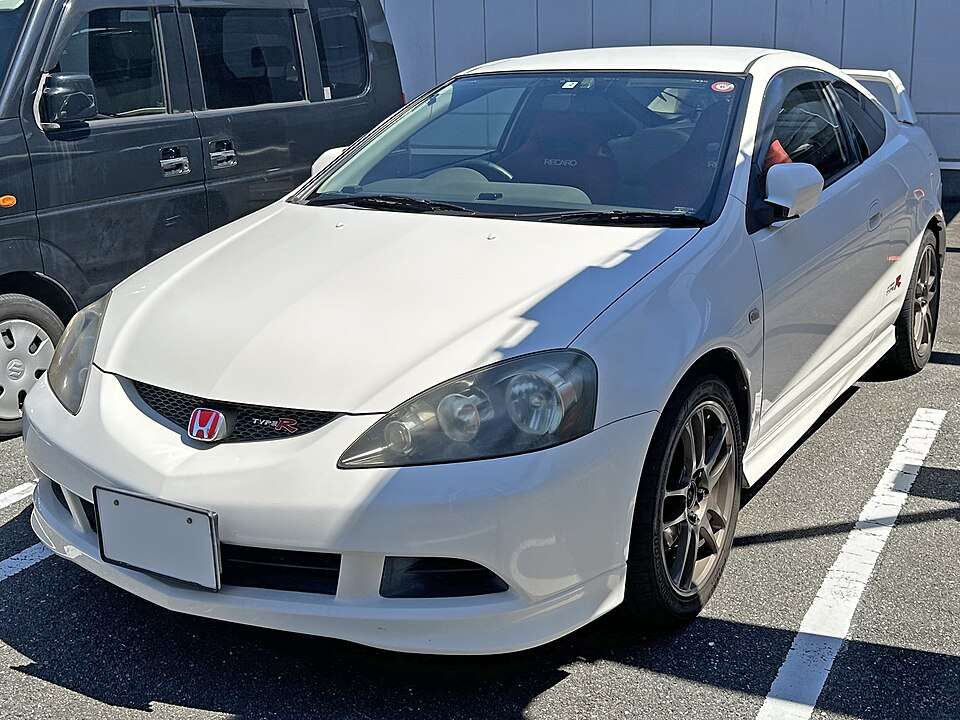
The Integra Type R DC5 combines a naturally aspirated K20A engine, close-ratio manual gearbox and limited-slip differential in a useful coupe body. For a UK buyer, identifying a genuine Type R and understanding the import history are as important as the test drive. Two decades of age, possible accident repairs and mixed-market parts mean a red badge is only the beginning of the investigation.
Our buying verdict
Choose a genuine, structurally sound car with a coherent Japanese-to-UK history and documented maintenance. Have a Honda specialist check engine condition, gear selection, brakes and suspension before paying a premium for low mileage or a facelift. A fresh import is not automatically rust-free; a long-term UK car is not automatically a poor buy. Evidence and present condition decide.

Type R, iS, Type S or RSX: confirm identity
Honda’s July 2001 Japanese factory release distinguishes the Type R from the lower-powered iS. The Type R was specified with a 2.0-litre DOHC i-VTEC engine producing 220PS, a close-ratio six-speed manual, helical limited-slip differential, Brembo-developed front brakes and Recaro front seats. A similar body or a replacement set of seats does not establish that the car has that original specification.
| Description | Buying implication | Verification |
|---|---|---|
| JDM Type R DC5 | The core car covered here | Chassis/build information, K20A installation and original equipment. |
| Early / facelift Type R | Styling and detail differences | Actual build date and whether panels or lamps were changed. |
| iS / Type S / Acura RSX | Related cars with different specifications by market | Do not apply JDM Type R values or parts lists automatically. |
| C Package / equipment claims | Convenience equipment can vary | Original record and functioning fitted equipment. |
| Converted / heavily modified car | Potentially mixed engines, gears, brakes or electronics | Detailed invoices and specialist identification of the current combination. |
For UK use, review the Japanese export and registration information, import date, previous records and UK documents together. Establish when any odometer conversion happened and what units each mileage entry uses. A kilometre-to-mile discrepancy can be a recordkeeping issue, but it needs a convincing explanation rather than an optimistic assumption.
Ask an experienced importer or inspector to verify any auction sheet and translated history rather than accepting an image as self-authenticating. An old auction grade describes a car at a point in time and does not replace a present underside and mechanical examination. Confirm repairs and modifications carried out after export too.
The Type R is a four-seat fastback coupe with a usable hatch, but try the low seats and rear access. Standard geometry and sensible wheels can make a better road car than an aggressive track setup. Original trim and correct hardware can be expensive to restore after years of changes.
UK price evidence: location and specification matter
Checked 4 November 2026. PistonHeads showed four Integra adverts across very different versions. One relevant 2006 DC5 Type R in Leeds was advertised at £16,490 with 85,000 miles. A 2002 DC5 Type R at £27,000 with 32,000 miles was located in Hong Kong. These are asking prices, not sold values, and the overseas car is not a direct UK-stock comparison.
Other visible results included a Type S automatic with inconsistent engine labelling and an older-generation car. They were excluded from a Type R valuation. The sample is too small to establish a credible national DC5 price band or a fixed facelift premium.
For an overseas purchase, obtain the complete landed, prepared and registered scope before comparing it with a UK car. For a UK-stock car, compare structural condition, authenticity, import/mileage evidence and actual maintenance. A high auction grade or low odometer reading cannot by itself establish engine health or absence of repaired damage.
List immediate tyres, brakes, service work and inspection findings next to the asking price. Establish insurance terms for an import and all modifications before a deposit. A more expensive, well-documented car may cost less overall than a cheap example needing rust repair and an unidentified gearbox job.
Rust, accident repairs and import preparation
Inspect inner and outer sills, rear arches, jacking areas, floor seams, suspension mounts and accessible rear structure on a lift. Look behind accessible covers where permitted and have the inspector identify areas needing further access. Fresh underseal should follow examination of the metal, not prevent it.
Check the boot/spare-wheel area, lamp seals, carpets and tailgate surround for moisture, corrosion or disturbed repair seams. Look for water marks and damp insulation, not just visible puddles. A clean upper body or recently valeted carpet cannot rule out concealed water entry.
Compare paint texture, panel gaps, inner wings, front support areas, chassis rails and boot floor for accident repairs. Ask for photographs and invoices for bodywork. A different-colour engine bay, replacement lights or non-standard bonnet may have an innocent explanation, but each should be understood before paying an originality premium.
Inspect the spoiler, bumper mounts, splitters, arch liners and exhaust clearance. Long doors need smooth hinges, secure catches and correctly sealing glass. Check the quality of import-related lighting, speedometer and electrical work. Keep a record of what was altered rather than assuming every current component left the factory with the car.

K20A engine, six-speed gearbox and chassis checks
Start genuinely cold and observe idle, exhaust smoke and warning-lamp self-checks, then inspect again after a fully warm drive. Ask about measured oil use, oil-level checks and any overheating or over-rev event. A high-revving engine should be warmed properly; do not use a cold full-throttle demonstration as a substitute for inspection.
The K20A uses a timing chain rather than the older DC2’s cambelt. Good oil history still matters, and unusual start-up or running noise needs diagnosis. Confirm the correct schedule for the actual engine, including valve-clearance inspection requirements. A service stamp is useful only when the invoice identifies the work completed.
Check for oil leakage around the engine, coolant loss, deteriorated hoses, radiator condition and evidence of overheated or badly repaired cooling hardware. VTEC-related running complaints can involve oil level/pressure, sensors, wiring or other causes; a seller’s claim that it only needs a solenoid is not a diagnosis.
If oil consumption, smoke, misfires or inconsistent performance raises concern, let a specialist recommend compression, leak-down or other tests and explain their limitations. A quiet idle cannot guarantee piston/ring or valve condition. A replacement engine needs identity, source, installation and maintenance evidence, not only a receipt for a used long block.
Test all six gears and reverse with the gearbox cold and hot. Check selection during ordinary acceleration and deceleration without forcing it. Crunching, baulking, jumping out of gear or noises need a specialist assessment. Fresh correct fluid may help operation, but it cannot guarantee that a worn synchro or bearing has been repaired.
Check clutch bite, slip, pedal return and noises that change with clutch position. The fitted clutch, flywheel, differential and final drive may differ from original after track use. A conversion invoice should identify the combination, parts and workmanship. Do not assume that an aggressive clutch or short-shift kit is an improvement for your daily use.
Inspect front Brembo calipers, discs, pads, hoses and rear brake/handbrake operation. Uneven wear, binding or damaged fixings need a proper scope. Similar-looking aftermarket or other-market brake parts may not match the JDM Type R application, so establish what is installed before ordering.
Assess arms, bushes, ball joints, springs, dampers, wheel bearings, driveshafts and steering. Uneven tyres, a steering pull or poor self-centring can reflect wear, geometry or unsuitable modifications. Check quality and fitment of wheels and tyres and repair worn parts before alignment. A track-car setup should be assessed as a complete system rather than a shopping list of branded parts.
Recaros, electrics and cabin originality
Inspect Recaro bolsters, adjustment and seat mounts, the steering wheel, gear lever and instruments. Worn seats are repairable, but missing original trim and improvised safety-equipment installations need careful costing. Verify warning-lamp self-tests and the condition of airbags and belts on modified cars.
Test air conditioning, heater, windows, mirrors, locks and both keys. Check imported audio equipment, added alarms and speedometer conversions for tidy installation. Identify display units and compare mileage entries correctly rather than assuming that every number in the history is in miles.
Try rear access, hatch opening and folding seats and inspect carpets and the boot for dampness. Confirm tools, wheel-lock key and any spare-wheel arrangement. A mechanically attractive car can still need substantial expenditure on everyday convenience and original interior pieces.

Maintenance costs and Type R-specific parts searches
The figures below are editorial planning allowances for parts only, unless a fitted service is explicitly identified. They are not live eBay quotes: brand, specification, availability, delivery and VAT treatment vary. Obtain a registration/VIN-matched written estimate before committing to a repair. Cheap search results can include incompatible parts, deposits or single components rather than a complete kit.
Affiliate disclosure: the parts searches below use our eBay affiliate campaign. We may earn a commission if you buy, at no additional cost to you. Search results are not a recommendation of every seller or product; verify fitment, maker, returns and warranty.
| Maintenance item | Parts allowance / search | What to check |
|---|---|---|
| Oil/filter service parts | £45–£85 | Correct K20A specification and quantity; labour extra. |
| Four spark plugs | £35–£80 | Verify genuine Type R engine and heat range. |
| Air/cabin filters | £20–£55 | Check original or modified intake. |
| Auxiliary belt | £20–£45 | Separate from the internal timing chain. |
| Alternator | £120–£280 | Match JDM unit, output and exchange terms. |
| Water pump | £55–£130 | Confirm engine and installation; coolant/labour extra. |
| Gearbox fluid | £25–£55 | Correct quantity/specification; diagnose selection faults first. |
| Front discs and pads | £140–£300 | Correct JDM Type R application; inspect calipers. |
| Clutch kit | £140–£280 | Fitted flywheel, hydraulics and labour may add cost. |
| Suspension joint parts | £40–£100 | Confirm side/quantity and fitted arms; geometry extra. |
Ask a specialist for a time-and-mileage service plan covering oil, plugs, valve-clearance checks, coolant, brake fluid and transmission requirements. An older or replacement engine may need additional assessment. Do not order an RSX or Civic component merely because a search result groups the models together.
Written estimates should identify VAT, labour, seals, fluids and any related access work. Gearbox rebuilding, caliper overhaul and rust repair need individual scopes. The component allowances are useful for planning, not evidence that every listing is suitable or a complete repair.
Hidden ownership costs: imported history and originality
An overseas asking price does not include every cost of a road-ready UK car. Obtain a complete written import/preparation scope and clarify transport, registration-related work, inspection, warranty and what happens if the delivered car differs from the description. Compare that total with an already registered example on equivalent condition.
For a UK car, authentication and mileage evidence can require expert time. Keep original documents and translations together, including when the speedometer or engine changed. A good specialist can explain gaps; unsupported assumptions can leave you paying an originality premium for a car with uncertain provenance.
Rust repair, worn synchros and a binding brake can arrive together. Ask for complete bodyshop and mechanical estimates before negotiation. Original seats, spoilers, lights and trim can be harder to replace than routine service parts, and overseas sourcing can add delivery time and returns complications.
Get insurance terms for the exact imported specification and modifications, check current tax and any emissions-zone position by registration and budget fuel appropriately. Preserve a repair reserve after purchase. A lower mileage reading is not a reason to spend the money needed for inspection and maintenance.

Integra DC5 viewing checklist
- Confirm genuine Type R identity, engine, gearbox, differential and original market.
- Trace Japanese-to-UK documentation, mileage units and conversion dates.
- Verify auction/history claims independently and inspect current condition.
- Check structure, arches, sills, mounts and boot areas for rust and poor repairs.
- Start cold, drive warm and assess oil/coolant use, noises and running.
- Test clutch and all gears cold/hot; diagnose crunching or jumping out of gear.
- Inspect calipers, suspension, tyre fitment, cabin safety equipment and electrics.
- Price full repair/import scopes, confirm insurance and retain a reserve.
Integra Type R DC5 buying questions
Is every DC5 or RSX a Type R?
No. Related cars differ by market and version. Verify chassis/build identity and installed engine, transmission, differential and brakes rather than relying on seats and badges.
Does the DC5 have a timing belt?
The K20A uses a timing chain. The earlier DC2’s cambelt advice is not interchangeable; oil history and the correct inspection/service schedule still matter.
Is a fresh import rust-free?
Do not assume so. Examine the underside and repair history and assess any coating applied during preparation. An auction sheet is not a current structural inspection.
Can gearbox oil cure a crunch?
Correct fluid is important, but clutch operation, synchros, bearings or other issues may require repair. Have persistent cold or hot selection problems diagnosed.
Is an overseas price comparable with a UK advert?
Only after the full landed, prepared and registered scope is understood. Location, specification, warranty, condition and documentation can materially change the comparison.
Sources, method and image credits
Checked 4 November 2026. The guide is independently written from Honda’s original Japanese specification, importer context and a limited live advert sample. The inspection recommendations are not claims of a measured fault rate, and we have not inspected the cars pictured or advertised.
- Honda: July 2001 Integra model change and Type R versus iS hardware
- Torque GT: current personal-import service context; individual terms require a written scope
- PistonHeads: dated UK and Hong Kong DC5 asking-price observations
Four licensed photographs illustrate early/facelift body differences and include Japanese-market cars. They do not establish a prospective purchase’s originality or condition. Image credits and licences appear adjacent to the photographs, with hub thumbnail attribution kept outside cards.