UK buying guide · Abarth Grande Punto and Esseesse
The Abarth Grande Punto marked the Scorpion’s official return to Britain in 2008. It was larger and more mature than the Abarth 500 that followed, yet it retained the essentials: a turbocharged 1.4-litre engine, six-speed manual gearbox, uprated brakes and a chassis developed to feel sharper than the ordinary Fiat. Today it is much scarcer than the 500 and 595, making originality, parts availability and evidence of maintenance especially important.
Our buying verdict
A standard 155 bhp Grande Punto with continuous history is the safest entry point. A genuine Esseesse can be more desirable, but only when the conversion and its components are properly documented. Buy on condition rather than claimed power: a modified car without invoices is not equivalent to a factory-supported Esseesse conversion. Allow for age-related suspension, braking, cooling and electrical work even when the mileage is modest.
UK history and versions
Abarth returned to the UK as a separate performance marque with the Grande Punto. The regular car used the 1,368cc turbocharged T-Jet engine and six-speed manual transmission. Contemporary UK manufacturer material quoted 155 bhp when suitable high-octane fuel was used, with Sport Boost altering throttle response and steering assistance.
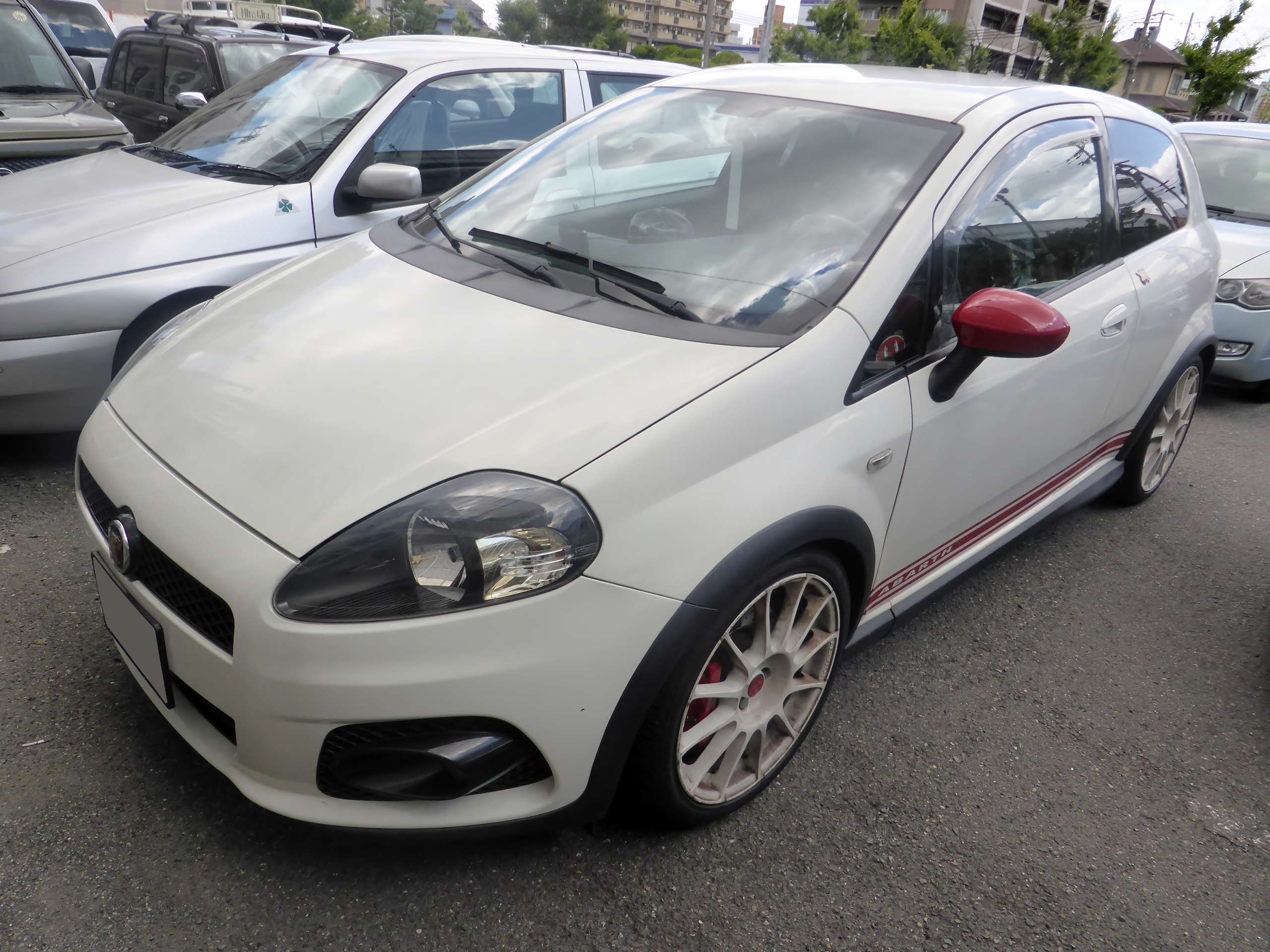
The Esseesse package raised output to 180 bhp and added a Garrett GT1446 turbocharger, 18-inch wheels, Brembo front brakes, lowered suspension and associated hardware. Period kits were supplied through the approved Abarth network and installed under controlled conditions. Do not assume that badges, white wheels or an aftermarket remap prove an Esseesse conversion.
| Version | Headline specification | Buying priority |
|---|---|---|
| Grande Punto Abarth | 1.4 T-Jet, six-speed manual, approximately 155 bhp | Service history, timing belt evidence and standard specification |
| Grande Punto Abarth Esseesse | 180 bhp conversion with larger turbo, brakes, wheels and suspension | Conversion invoices, component identity and condition of scarce parts |
Identity and originality
Start with the VIN, registration document and MOT chronology. Compare the car’s equipment with manufacturer literature and any conversion invoice. An Esseesse should not be valued purely from badges. Establish who installed the kit, when it was fitted and which components remain. Photograph turbo, brake, suspension and wheel markings for the inspecting specialist.
Many cars have subsequently been remapped or fitted with non-standard exhausts, induction systems and suspension. Modifications are not automatically undesirable, but they must be declared to the insurer and supported by invoices. Ask who wrote the software, what fuel it requires and whether supporting cooling and braking work was completed.
Engine, turbo and timing-belt checks
Arrange to see the engine start completely cold. Listen for persistent mechanical noise, watch for smoke and check that warning lamps complete their normal self-test. Inspect the oil level and condition using the correct procedure, then look for leaks around the engine, turbo oil lines and intercooler plumbing.
The T-Jet uses a timing belt. Obtain an itemised invoice showing the date, mileage and parts replaced; a general service stamp is not proof. Confirm the current interval for the exact vehicle with the handbook or an Abarth specialist. If documentary evidence is missing, budget for belt, tensioner and water-pump work before relying on the car.
Power delivery should be smooth and repeatable. Hesitation can have several causes, including ignition components, boost leaks, fuel delivery, sensors or calibration. Have fault codes and live data assessed rather than assuming the turbo is responsible. On an Esseesse, confirm that the GT1446 and associated hardware are genuine and healthy.
Cooling system
Inspect the radiator, expansion tank, hoses and visible joints when cold. During the road test watch the temperature behaviour and confirm that the heater works consistently. Recheck for fresh leaks after the drive without opening a hot system. Evidence of repeated coolant loss, overheating or improvised sealant warrants specialist diagnosis.
Six-speed gearbox, clutch and driveshafts
All UK Grande Punto Abarths use a six-speed manual gearbox. Check every ratio from cold and again when warm, including gentle acceleration in the higher gears. Listen for bearing noise and investigate any resistance, jumping out of gear or rumble rather than accepting it as normal. Parts availability makes early diagnosis particularly important.
Test clutch engagement, bite point and slip under normal load. Examine the history for clutch, flywheel and hydraulic work. Clicking on lock, vibration under acceleration or grease around a CV boot requires driveshaft and joint inspection. Ask a specialist to identify the actual fault before ordering discontinued or expensive components.
Steering, suspension and brakes
Check that the electric steering assistance and Sport Boost function operate without warnings or inconsistent weight. A steering pull may be caused by tyres, alignment, suspension wear or previous damage, so do not assume tracking alone will cure it.
Inspect springs, dampers, top mounts, bushes and anti-roll-bar links. Uneven tyre wear, clunks and a nervous motorway feel deserve investigation. Esseesse suspension and 18-inch wheels increase replacement costs; check the inside faces of the wheels for cracks or repairs and confirm correct tyre sizes and load ratings.
Standard and Esseesse brakes differ. Examine both disc faces, pad wear, calipers, hoses and fluid history. On Brembo-equipped cars check for seized hardware, damaged bleed nipples and uneven operation. A decorative caliper finish is not proof of an original Esseesse braking package.
Bodywork, corrosion and accident repairs
Inspect sills, jacking points, floor edges, rear axle and suspension mounting areas on a lift. Look for crushed lifting seams, corrosion hidden beneath fresh coating and repairs that obstruct drainage. Check the front bumper, splitter and wheelarch edges for impact damage.
Compare panel gaps and paint texture around the bonnet, wings, doors and tailgate. Overspray on seals or fasteners, mismatched lamps and an off-centre steering wheel can indicate earlier repairs. A provenance report and clean MOT history cannot replace a structural inspection.
Interior and electrical equipment
Test climate control, windows, mirrors, central locking, Blue&Me functions, steering-wheel controls, lights and every dashboard display. Check the battery and charging system before diagnosing intermittent electronics. Inspect aftermarket audio, alarms and gauges for secure wiring.
Seat bolsters, steering wheels and gear knobs reveal how the car has been used, but replacements can disguise wear. Check that both seat frames lock securely and that airbags and belt pretensioners have not been bypassed. Damp carpets require the leak source to be found, not merely dried.
Running costs and parts availability
The engine shares some architecture with other Fiat-group cars, but Abarth-specific trim, brakes, wheels, turbo hardware and body parts can be harder to source. Before buying an incomplete car, locate the missing component and obtain a realistic price. Imported used parts may differ in specification or condition.
Budget for an immediate baseline service, fluids, tyres and any overdue belt work. Insurance should be quoted against the precise version and every modification. A cheap car needing suspension, brakes, tyres and gearbox work can quickly exceed the cost of a well-documented example.
Viewing checklist
- Obtain the VIN, MOT chronology, invoices and a complete modification list before travelling.
- For an Esseesse, verify the conversion paperwork and fitted hardware.
- Inspect the underside, lifting points and suspension mounts on a ramp.
- Start from cold and check oil, coolant, smoke, leaks and warning lights.
- Confirm smooth boost and scan all relevant control modules.
- Test all six gears, clutch operation and driveshafts cold and hot.
- Inspect tyres, wheels, brakes and suspension components individually.
- Test every electrical function and investigate damp or non-standard wiring.
- Price all immediate work before negotiating.
Frequently asked questions
Is the Abarth Grande Punto rare in the UK?
It is considerably less common than the Abarth 500 and 595. That scarcity increases the importance of finding model-specific body, trim and drivetrain parts before committing to a project.
How can I identify a genuine Esseesse?
Use documentary evidence from the approved conversion, then confirm the fitted turbo, brakes, suspension, wheels and associated components. Badges and a claimed 180 bhp figure are insufficient.
Is a modified car worth buying?
Only after the specification, workmanship, calibration and insurance position have been established. A documented, sympathetically upgraded car can be viable; an unexplained collection of parts creates financial and diagnostic uncertainty.
Sources and research method
This guide was researched using Abarth and Stellantis UK manufacturer material, period specifications, specialist buying information and UK government vehicle-check resources. Manufacturer figures describe period specification, not the condition of an individual car.
- Stellantis Media: Abarth returns to the UK press pack
- GOV.UK MOT history service
- GOV.UK vehicle recall checker
This is a research-based buying guide, not an inspection of a particular vehicle. Specifications, parts and costs vary; confirm them against the VIN and obtain an independent specialist inspection.