UK buying guide · Abarth 124 Spider and GT
The Abarth 124 Spider combined a Mazda-built rear-wheel-drive roadster platform with Fiat’s turbocharged 1.4-litre MultiAir engine and a distinctly Italian specification. Sold in Britain from 2016 until 2019, it is now much rarer than the related Mazda MX-5. Its scarcity, unique body panels and Abarth-specific drivetrain make careful accident, maintenance and parts checks essential.
Our buying verdict
A standard manual Spider with complete annual servicing, documented belt work when due, an undamaged roof and no unresolved warning lights is the strongest buy. The automatic suits some drivers but needs its own recall and operation checks. The carbon-roof GT is collectible, although completeness and panel condition matter more than the badge. Avoid heavily modified cars unless the calibration, hardware and insurance position are fully documented.
UK history and specifications
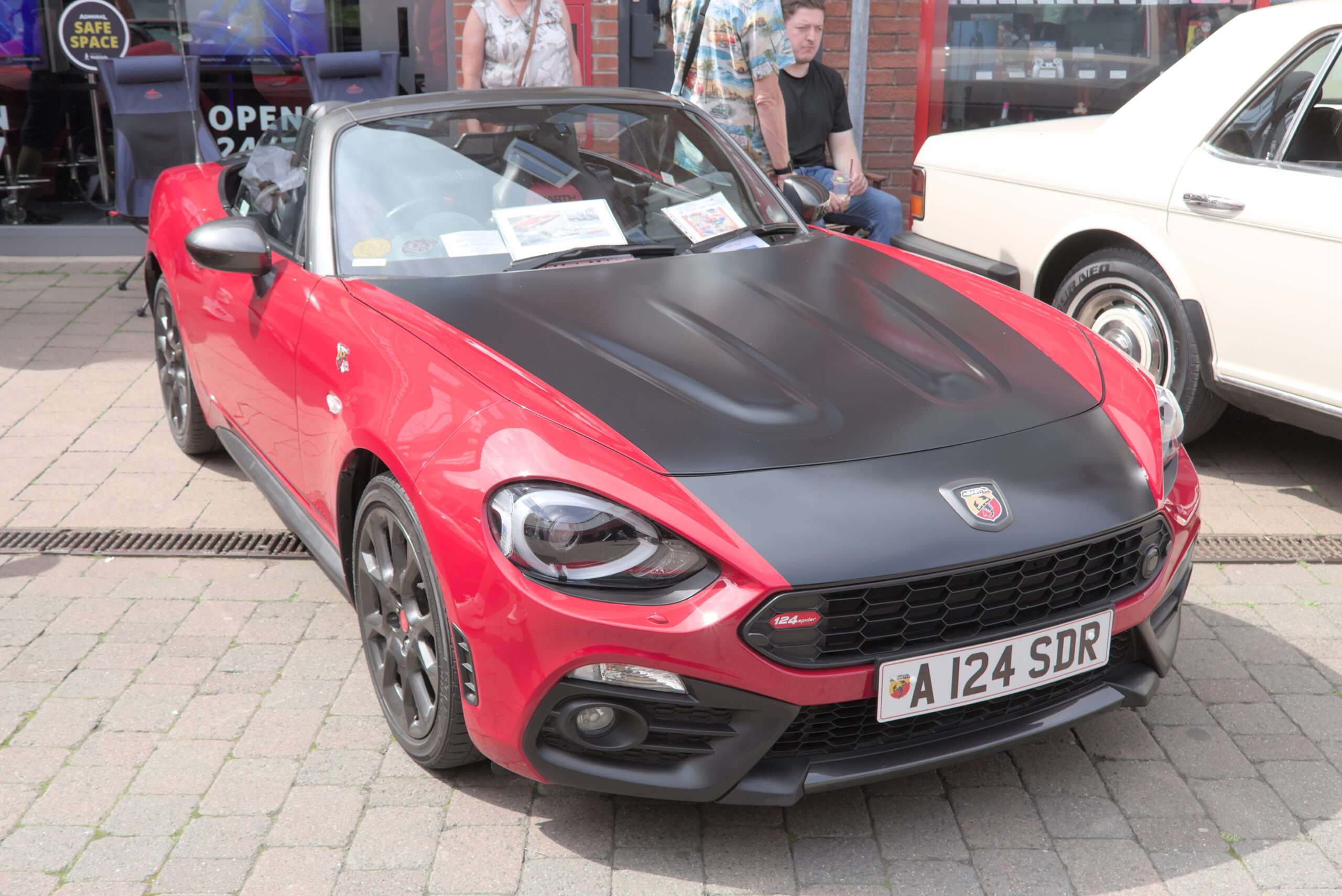
The Abarth was built at Mazda’s Hiroshima plant alongside the fourth-generation MX-5, but used Fiat’s 1,368cc turbocharged MultiAir engine. UK cars were rated at 170 hp and 250 Nm in Sport mode. A six-speed manual gearbox was standard, with a six-speed automatic available. A mechanical limited-slip differential, Bilstein dampers, uprated springs, Brembo front brakes and a four-outlet exhaust distinguished it from the ordinary Fiat 124 Spider.
Manufacturer figures quoted 0–62 mph in 6.8 seconds for the manual and a 144 mph maximum speed. The GT added a removable carbon-fibre hardtop and distinctive equipment. Confirm the exact UK specification from the VIN because imported cars and market-specific equipment can differ.
| Version | Buying appeal | Key check |
|---|---|---|
| 124 Spider manual | Most direct and mechanically straightforward | Clutch, gearbox, MultiAir servicing and differential |
| 124 Spider automatic | Rare alternative with paddle selection | Recall completion, fluid leaks and hot operation |
| 124 Spider GT | Collectible carbon-roof derivative | Roof completeness, fit, seals and damage |
Identity, imports and accident history
Check the VIN, registration record, MOT chronology and provenance before inspecting equipment. Abarth 124s were sold in several markets, so establish whether the car is an original UK example or an import and verify headlights, instruments, emissions equipment and documentation accordingly.
Use a paint-depth gauge and inspect panel gaps around the bonnet, wings, doors and boot. Replacement Abarth body panels, lamps and trim can be expensive or slow to source. Examine the aluminium bonnet and boot lid for poor repairs and corrosion where dissimilar materials or damaged paint meet. Inspect the floor and suspension mounting areas on a lift.
MultiAir engine and cold-start checks
See the engine start after an overnight rest. It should settle without persistent misfire, abnormal ticking, smoke or warning lamps. The MultiAir system relies on correct oil specification and regular changes. Ask for itemised invoices rather than accepting a service-screen entry as proof.
After oil drainage or a long period standing, MultiAir engines can require correct priming procedures. A non-start, severe misfire or low compression reading should be diagnosed by a specialist familiar with the system before parts are ordered. Do not repeatedly crank an engine with unexplained oil-pressure or mechanical symptoms.
Power delivery should be progressive, with stronger response in Sport mode. Investigate hesitation using fault codes, live data, ignition checks and a boost-leak test. Modified cars may have remaps, larger intercoolers or exhaust changes; obtain the software identity and supporting invoices.
Timing belt, cooling and fluids
The 1.4 MultiAir uses a timing belt. Confirm the applicable UK schedule for the VIN and obtain an invoice showing the belt, tensioner and associated work. Age matters on low-mileage weekend cars. Missing proof should be treated as work due, not as evidence that the belt looks acceptable.
Inspect coolant hoses, radiator, expansion tank and turbo connections when cold. Monitor temperature and heater output on the drive, then look for fresh leaks. Confirm the engine, gearbox and differential oils used, especially where servicing has been carried out outside the dealer network.
Manual gearbox, clutch and differential
The manual should select all six ratios cleanly from cold and when hot. Check clutch engagement, bite point and slip under boost. Listen for differential or wheel-bearing noises on steady throttle and overrun. A limited-slip differential can influence low-speed behaviour, but clunks, vibration or leakage still require investigation.
Inspect the gear-lever gaiter and cabin for signs of water entry that could affect the mechanism or electronics. Do not assume Mazda MX-5 parts are interchangeable: engine, gearbox, differential ratios and numerous fittings differ.
Automatic transmission and recalls
On an automatic, test selection, creeping, reverse, paddle changes and repeated hot restarts. Changes should be consistent without warning messages or refusal to engage. Ask an Abarth retailer to check outstanding campaigns against the VIN, including transmission software actions applicable to certain cars. Recall completion must be verified by VIN rather than inferred from age.
Roof, GT hardtop and water ingress
Operate the fabric roof several times. Check the frame, latches, rear window, drainage and seals. Look behind seats, beneath carpets and in the boot for damp or staining. A blocked drain can create more than a cosmetic problem.
For a GT, confirm that the carbon roof, mounting hardware, storage equipment and associated trim are present. Examine the carbon finish for impact damage, cracking, poor repairs and UV deterioration. Test fit and sealing rather than accepting a roof stored separately.
Suspension, brakes, wheels and tyres
Inspect Bilstein dampers for leaks, springs for damage and bushes and links for play. Uneven tyre wear can indicate alignment or accident issues. Check all four wheels on both faces and confirm matching, correctly rated tyres.
Examine the Brembo front calipers, pads, discs, hoses and fluid history. Cars used infrequently can develop corrosion on hidden disc faces and sticking components. A low annual mileage does not eliminate brake-fluid, tyre-age or suspension concerns.
Interior and electrical equipment
Test climate control, infotainment, navigation, Bluetooth, windows, mirrors, central locking, seat heating where fitted, lights, tyre-pressure monitoring and all steering-wheel controls. Inspect the battery and charging system because stored roadsters often suffer low-voltage faults.
Check seat bolsters, roof-release trim and door cards. Confirm that the alarm behaves normally; period reports noted false alarms on some cars. Any intermittent fault should be documented and diagnosed rather than dismissed.
Ownership costs and parts
The chassis connection with the MX-5 helps with some service items, but Abarth-specific engine, turbo, body, exhaust, trim and electronic parts can be costly. Confirm compatibility by VIN. Before purchasing a damaged car, price the windscreen, lamps, bumpers, bonnet, boot lid and roof components rather than relying on generic 124 listings.
Budget for specialist inspection, insurance, tyres, annual servicing and scheduled belt work. Cars stored outdoors may require roof and drainage attention, while little-used cars still age through fluids, seals, batteries and tyres.
Viewing checklist
- Verify VIN, UK or imported status, MOT history and recall completion.
- Inspect body panels, underside and suspension mounts for damage or poor repairs.
- Start completely cold and assess MultiAir operation, oil pressure, smoke and faults.
- Confirm timing-belt evidence and correct oil servicing.
- Test manual or automatic transmission and differential cold and hot.
- Operate the fabric roof and inspect every drain and interior for damp.
- For a GT, verify carbon-roof completeness, condition and fit.
- Inspect brakes, Bilstein dampers, wheels and tyre dates.
- Test every electrical function and scan relevant control modules.
- Price Abarth-specific parts before negotiating.
Frequently asked questions
Is the Abarth 124 simply a Mazda MX-5?
No. It shares its manufacturing base and much of its platform with the ND MX-5, but uses a Fiat MultiAir turbo engine, different transmissions and calibration, unique bodywork and Abarth-specific equipment.
Does every UK Abarth 124 have a limited-slip differential?
The UK Abarth specification included a mechanical limited-slip differential, but confirm the hardware and service history of the individual car, particularly after repairs or modification.
Why was it withdrawn from Britain?
UK sales ended after a short production run. The result is a small used supply, which strengthens rarity but also makes accident-damaged or incomplete cars harder to repair economically.
Sources and research method
- Abarth: 124 Spider technical specification
- Abarth UK: 124 Spider brochure
- evo: Abarth 124 Spider review and market context
- GOV.UK recall checker
This is a research-based UK guide. Confirm specifications and campaigns against the VIN and commission an independent inspection before purchase.