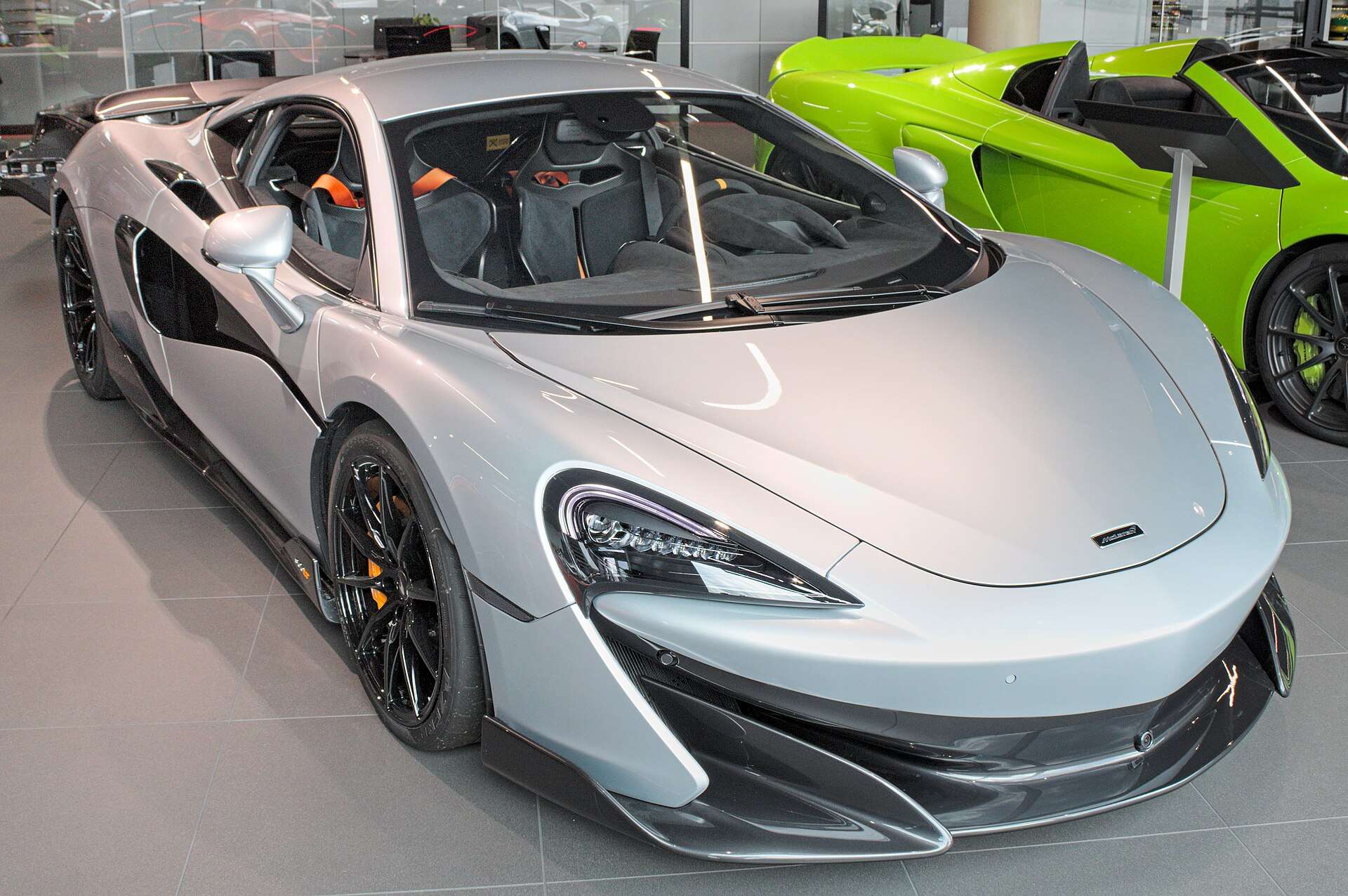
The McLaren 600LT brought the Longtail philosophy to the more accessible Sports Series. Revealed in 2018, it transformed the 570S into a lighter, more aerodynamically effective and noticeably more engaging supercar. Its spectacular top-exit exhausts made the headline, but the real achievement was the depth of the engineering beneath them.
McLaren described it as the fourth Longtail after the F1 GTR Longtail, 675LT coupé and 675LT Spider. As with those cars, the badge meant more than a power increase: the 600LT was longer, lighter and sharper, with a much stronger focus on driver involvement.
From 570S to 600LT
The Sports Series had already demonstrated that McLaren could make a relatively usable carbon-chassis supercar. The 600LT kept the 570S architecture but changed approximately a quarter of its parts. New carbon-fibre bodywork, an extended front splitter, deeper side sills and a fixed rear wing increased stability and gave the car a more purposeful silhouette.
The body was 74mm longer overall. Weight reduction reached as much as 96kg compared with a similarly specified 570S, depending on options.
Engine and performance
The familiar 3.8-litre twin-turbo V8 produced 600PS (592bhp) and 620Nm. It drove the rear wheels through a seven-speed dual-clutch gearbox, delivering acceleration that remains startling.
- Engine: 3.8-litre twin-turbo V8
- Power: 600PS / 592bhp
- Torque: 620Nm
- 0–62mph: 2.9 seconds
- Top speed: 204mph
- Dry weight: from 1,247kg
- Structure: carbon-fibre MonoCell II
The shortened exhaust system exited upwards through the rear deck, saving weight and reducing back pressure. Flames could sometimes be seen during hard use, making it one of the defining visual details of any modern McLaren.
Chassis and driving character
Revised geometry, stiffer engine mounts, a wider front track and components derived from the 720S sharpened the responses. The electro-hydraulic steering communicated road texture without becoming nervous, while the reduced mass made the car feel compact and immediate.
Optional Senna-style carbon seats and harnesses could make the cabin more track-focused, although standard cars remained usable on the road.
600LT versus 570S
The comparison is less about straight-line speed than personality. A 570S is more relaxed, quieter and easier to use regularly. The 600LT feels busier and more alert, with stronger braking, a more vocal drivetrain and greater aerodynamic confidence. It rewards commitment but does not need a circuit to feel special.
McLaren also produced a 600LT Spider. The carbon MonoCell was sufficiently rigid that removing the roof required no heavy structural reinforcement, allowing the open car to preserve much of the coupé’s character.
Production and significance
Unlike the 675LT, the 600LT was not capped at a fixed numbered total. Production was limited by time, however, and occupied only a defined portion of McLaren’s manufacturing schedule. That makes it uncommon without turning it into an unobtainable museum piece.
Its importance is clear: the 600LT proved that the lighter Sports Series platform could deliver one of McLaren’s most expressive driving experiences.
Ownership snapshot
Condition and history matter more than headline mileage. Prospective owners should check servicing, brake and tyre wear, suspension noises, exhaust heat shielding, bodywork condition and completion of manufacturer campaigns. A detailed specialist inspection remains sensible; a separate buying guide will cover these areas fully.
Image via Wikimedia Commons under Creative Commons licence. Specifications referenced against McLaren’s official 600LT model information.