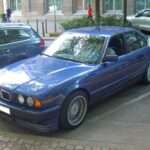
The Alpina B10 Bi-Turbo was the moment Buchloe stopped being regarded merely as a BMW tuner and produced one of the fastest four-door cars in the world. Based on the E34 BMW 535i, it combined discreet executive-car styling with extensive engineering of its own. The result was not a lightly modified 5 Series, but a low-volume manufacturer-built machine with the pace of contemporary supercars and the long-distance character that defined Alpina.
From E34 535i to Bi-Turbo
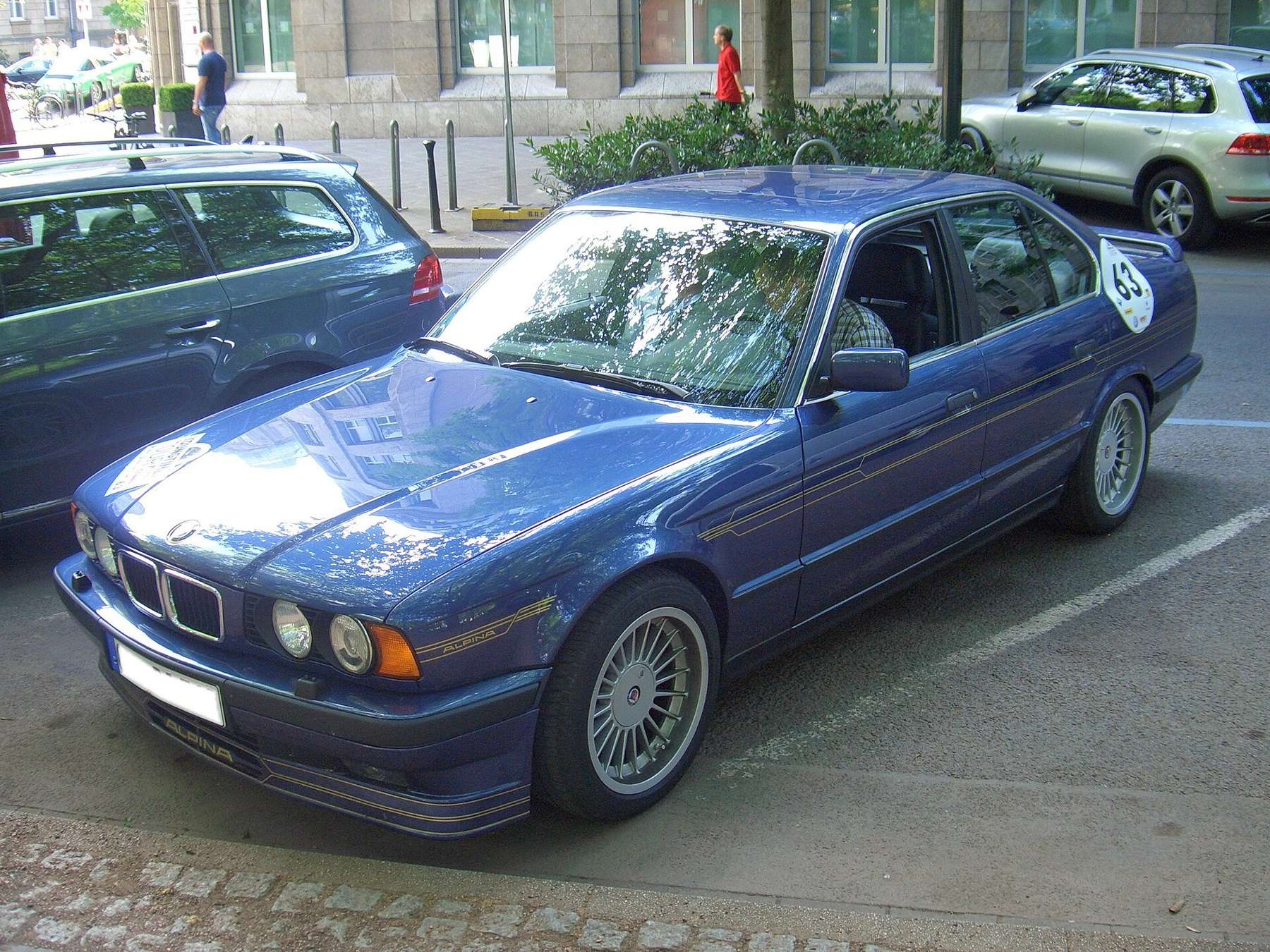
Production began in 1989. Standard 535i bodies travelled from BMW to Alpina’s factory in Buchloe, where the cars were effectively rebuilt around a heavily developed version of BMW’s 3.4-litre M30 straight-six. Alpina changed the pistons, connecting rods, cylinder head, camshaft, cooling and management, then added two Garrett turbochargers and a large intercooler. A five-speed Getrag manual gearbox sent power to the rear wheels through a limited-slip differential.
Early cars produced about 360 PS and 520 Nm, figures that placed the B10 in extraordinary company at the end of the 1980s. Alpina quoted 0–100 km/h in roughly five seconds and a maximum speed above 180 mph. The numbers mattered, but so did the way the performance arrived: progressive, forceful and usable rather than deliberately theatrical.
A different answer to the M5
BMW’s E34 M5 was a high-revving, naturally aspirated sports saloon. The B10 Bi-Turbo took another route. Its enormous mid-range thrust made overtaking almost effortless, while supple suspension and a richly finished cabin encouraged very long journeys. It retained the E34’s upright visibility and understated proportions, adding Alpina’s deep front spoiler, multi-spoke wheels, subtle striping and small badges.
That contrast explains why enthusiasts continue to search for comparisons such as Alpina B10 Bi-Turbo vs BMW M5. The two cars shared a basic shell but expressed very different ideas: the M5 was the sharper factory sports saloon, while the Alpina was a rapid grand tourer with four doors.
Production and rarity
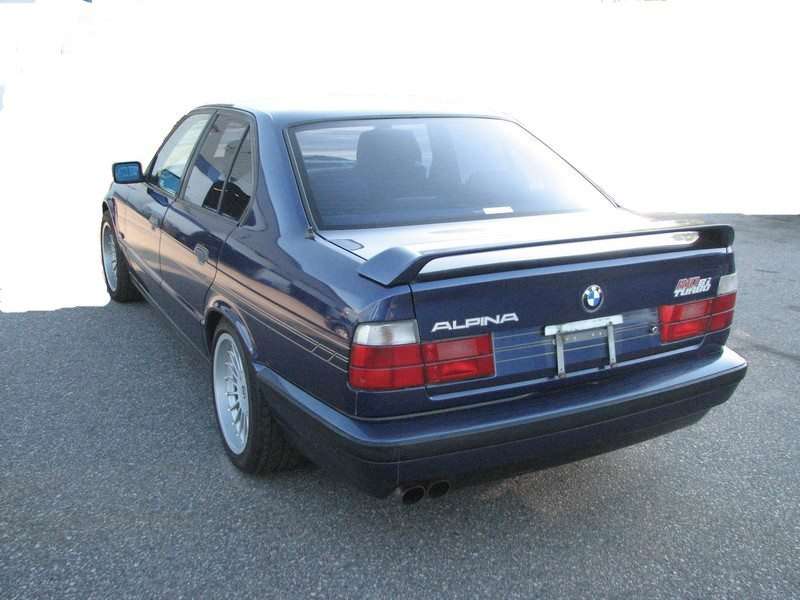
Alpina built 507 examples between 1989 and 1994. For a hand-finished car, that was a notable production run; in ordinary traffic it was vanishingly rare. Right-hand-drive examples reached Britain in very small numbers through Alpina’s UK representation, and surviving cars are now highly prized.
Each car carried an Alpina production plaque and its own manufacturer identity. That distinction is important. The B10 was developed, assembled and documented by Alpina, whose status as an automobile manufacturer separated its products from dealer conversions and replicas wearing similar wheels or graphics.
Why the B10 Bi-Turbo matters
The B10 demonstrated that a luxury saloon could deliver genuine supercar performance without losing comfort or subtlety. It also established a template Alpina would revisit repeatedly: muscular torque, unrestricted high-speed ability, carefully judged ride quality and a cabin tailored to its first owner.
Later B5 and B7 models became faster and more sophisticated, yet the E34 B10 remains one of Alpina’s defining achievements. It appeared before 500bhp executive cars became familiar, and its speed came from unusually deep engineering rather than an electronic driving-mode menu. That combination of analogue character, restrained appearance and immense ability is why the B10 Bi-Turbo still occupies such a special place in European performance-car history.
Key specifications
- Production: 1989–1994
- Basis: BMW 535i E34
- Engine: 3.4-litre twin-turbocharged straight-six
- Power: approximately 360 PS
- Transmission: five-speed manual, rear-wheel drive
- Production total: 507
Join the Unusual Cars Club
Get more stories about rare, forgotten and genuinely interesting cars delivered to your inbox.