Unusual Cars · Buying guides
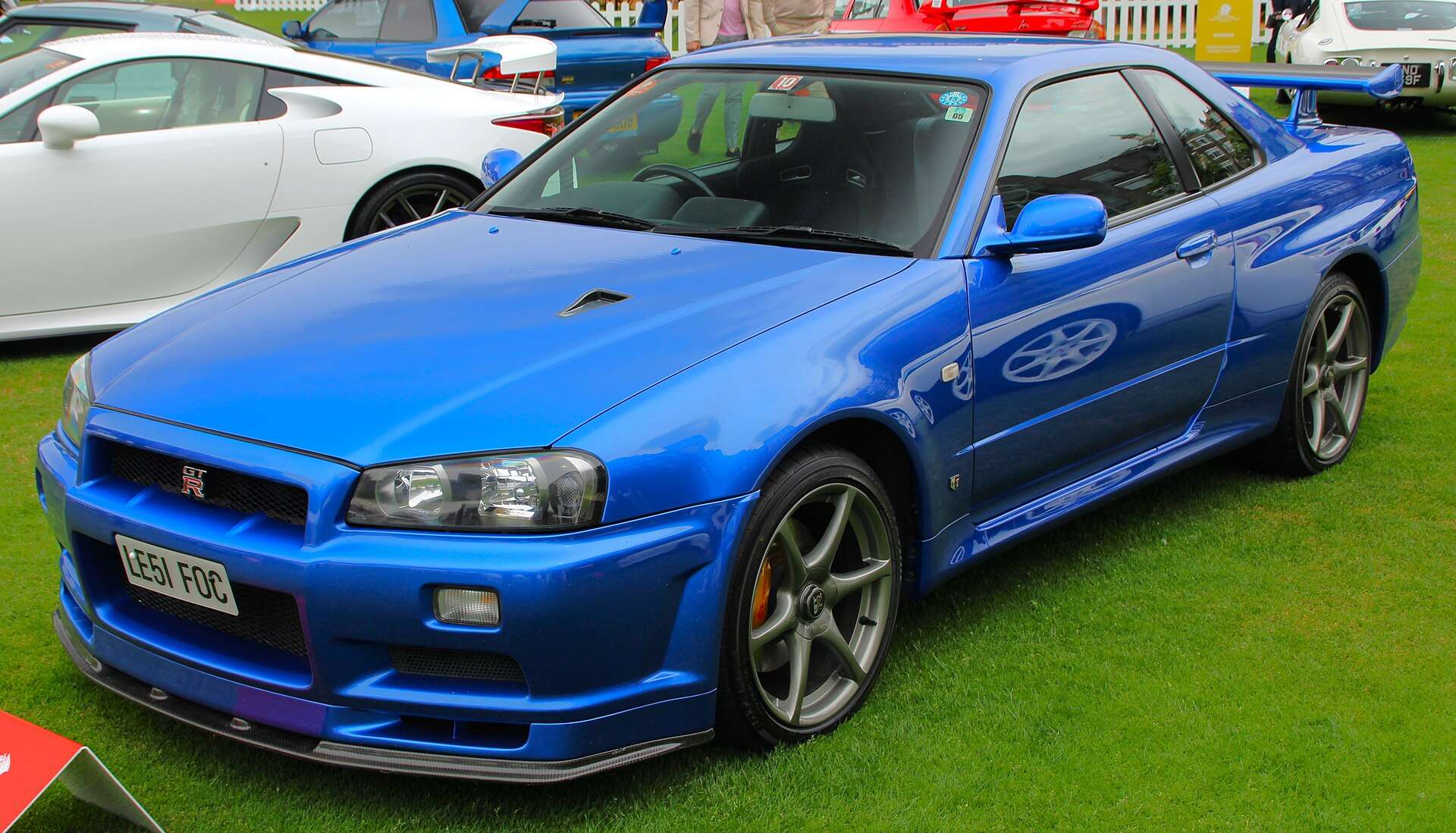
The Nissan Skyline R34 GT-R combines an RB26 twin-turbo straight-six, a six-speed manual gearbox and an extraordinary reputation. That reputation can make buyers overlook the basics. At today’s collector-car asking prices, establishing what the car is, how it has been repaired and what is inside its engine matters as much as the colour or the badge on its boot.
This UK buying guide covers the BNR34 GT-R rather than the wider R34 Skyline range. It explains how to investigate provenance, inspect the structure, assess a modified engine, compare versions and build a realistic maintenance plan. A powerful test drive is not a substitute for specialist inspection, and an auction sheet is only useful when it can be authenticated and connected to the actual chassis.
Affiliate disclosure: eBay links in this guide are affiliate links. We may earn a commission on qualifying purchases. Verify BNR34/RB26 fitment, authenticity, condition and the delivered price; search results are not compatibility guarantees.
R34 GT-R versions: know the car before valuing it
Nissan’s Heritage Collection entry for the BNR34 V-spec II distinguishes the 1998 arrival of the wider R34 Skyline from the GT-R’s 1999 introduction. It identifies the 2,568 cc RB26DETT and a factory rating of 280 PS. The entry also explains the V-spec’s active LSD and aerodynamic changes, and the V-spec II’s 2000 arrival with a carbon bonnet and NACA duct. Those details are useful starting points for specification checking, not a complete authentication procedure.
| Advertised version | What to establish |
|---|---|
| GT-R | Genuine BNR34 identity, original build specification, repair history and present mechanical condition. |
| V-spec | Factory variant evidence and the presence, condition and operation of the appropriate drivetrain and aero equipment. |
| V-spec II | Build record and correct version-specific parts; a bonnet swap alone does not prove the variant. |
| M-spec, Nür or another premium specification | Independent verification of the exact edition and original equipment before paying the associated premium. |
| UK-supplied or officially prepared example | Original supply documentation and chassis-linked records supporting the claim. |
| Modified / rebuilt | Complete hardware, engine-build and calibration records, plus evidence of the current condition. |
A GT-T, another R34 with a body conversion, or a car fitted with an RB26 is not automatically a factory GT-R. Check the stamped chassis identity, plates and documentation together. A specialist should compare the shell, drivetrain and build information rather than authenticating it from bumpers, badges or a single photograph of a plate.
Special-edition claims need evidence independent of the seller’s description. Ask how the edition has been verified, which original components remain and which have been replaced. A genuine special edition can still have a substituted engine, missing equipment or major body repairs. Authenticity and condition are separate questions, and both affect the purchase.
Which version would we choose?
For an owner who intends to drive regularly, condition, a coherent service record and a specification suited to road use should come before the rarest badge. Paying for collectible originality makes sense only if you want to preserve it. Someone planning extensive modifications may be better served by an already well-documented build than by dismantling the features that created an original car’s premium.
For a collection, employ someone who knows BNR34 detail and can substantiate version, finish and equipment. For road use, give equal weight to cold starting, temperature control, a manageable clutch, sensible geometry and access to the specialist who will maintain it. A car that looks ideal online can be tiring if its build priorities differ from yours.
UK R34 GT-R prices: compare the specification and evidence
As a concrete asking-price example, a 2001 R34 GT-R advertised by a Leeds dealer on PistonHeads was listed at £174,995 with 83,159 recorded miles when checked. That is one seller’s asking price, not a sold value, a market average or a prediction of appreciation. The advert’s investment language is a sales claim, not evidence that future returns are assured.
Use the R34 Skyline listings carefully because they can mix GT-Rs and other R34 variants. Compare equivalent cars by verified version, original market, mileage evidence, modifications, structural condition and seller terms. A cheap-looking GT-T is not a pricing reference for a genuine BNR34, and an exceptional limited edition is not a sensible baseline for every ordinary GT-R.
Write down the total purchase proposition: asking price, inspection, transport, immediate mechanical work, tyres, unresolved bodywork, insurance and any missing equipment. For an imported car, establish what paperwork and preparation are already complete. Do not assume a car advertised in Britain is ready for normal use merely because it has a registration number.
A repaint need not disqualify a car, but it changes the questions. An engine rebuild need not reduce its appeal, but an undocumented build should not command the same confidence as a measured, invoiced and properly run-in engine. Compare the strength of the evidence instead of counting impressive words in the advert.
Import history, mileage and identity
Build a continuous record
Ask for the available Japanese export and registration documents, original service records, authenticated auction information where applicable, import paperwork and UK maintenance history. Match chassis numbers and dates across the documents. If a record appears to belong to a different car or the same identity appears in contradictory photographs, stop and resolve it before discussing payment.
A translated auction sheet is not self-authenticating. Establish the auction, date, lot and chassis connection through a reliable independent source. A grade describes a particular inspection at a particular time; it does not certify the condition after shipping, years of use or later repairs. Read the written notes and damage diagram rather than focusing only on the grade.
Track the units as well as the numbers. Japanese records may use kilometres, UK records may use miles, and replacement instruments complicate the chronology. Ask for the date and recorded reading at any conversion or instrument change, the original cluster if available, and invoices documenting the work. Do not calculate lifetime mileage from the current odometer alone when its history is incomplete.
Inspect the evidence on the car
Compare the identity stamping, surrounding metal and plates with the paperwork, using a specialist familiar with legitimate factory presentation and repairs. Look at the body as a whole for indications that identity components or major sections have been changed. A vehicle-history report adds information but cannot physically authenticate a shell or reveal every overseas incident.
Confirm the seller’s authority to sell and investigate any finance or ownership discrepancy using appropriate checks. Where the advert makes an expensive originality or special-edition claim, put the exact representation in writing. A friendly explanation is useful; verifiable records are what allow the next owner to understand the same car.
Love cars you don’t see every day?
Get forgotten cars, surprising motoring stories and the most interesting finds from Unusual Cars by email.
Free to join. No spam. Unsubscribe whenever you like. See our privacy policy.
Rust: strut tops, sills and the underside
Corrosion can be hidden beneath an attractive exterior. Slide Motorsport’s first-hand R34 strut-top repair account shows how moisture between layered panels can leave more damage than the visible finish suggests. This is a reason to inspect the structure carefully, not proof that every R34 requires the same repair.
Examine the front suspension-turret areas and seams for swelling, lifting sealant, cracking, staining or unusually fresh finishes. Have the specialist assess the accessible faces and adjoining structure. Do not allow a reassuring coat of paint to settle the matter if there are signs of previous repair or corrosion underneath. Any dismantling must be agreed with the owner.
Put the car on a lift. Inspect the inner and outer sills, jacking points, floor, chassis rails, wheel housings and suspension/subframe mounting areas. Look at brake and fuel lines, fasteners and brackets as well as structural panels. Corroded ancillary parts can add significantly to a restoration even when the shell is repairable.
Check the boot and spare-wheel area for water or repair evidence. Inspect rear quarters, arch lips and the areas around seals and trim. A recent underside restoration should come with a clear account of preparation, metal replacement, welding, seam sealing, coating and cavity protection. Photographs taken before, during and after the work are more informative than a finished black underside.
What constitutes a convincing repair?
Ask who completed it, what was exposed, how far corrosion extended and whether any structural alignment was checked. A panel invoice does not establish the quality of installation. You want evidence that deteriorated metal was removed, the repair scope made sense and appropriate protection was reinstated.
Repair-panel prices are easily misunderstood. SR Autosource’s R33/R34 strut-top panels were advertised at £249 for a pair, available on backorder. This is a component listing, not a fitted restoration price. Confirm VAT treatment and delivery; stripping, additional metalwork, welding, refinishing and reassembly need a separate written quote after inspection.
Evidence of a collision requires the same practical approach. Check panel gaps, seams, rails and attachment points, and have the geometry assessed where appropriate. A properly documented repair can be understood and valued. An unexplained reshell, identity discrepancy or concealed structural repair is a different level of risk.
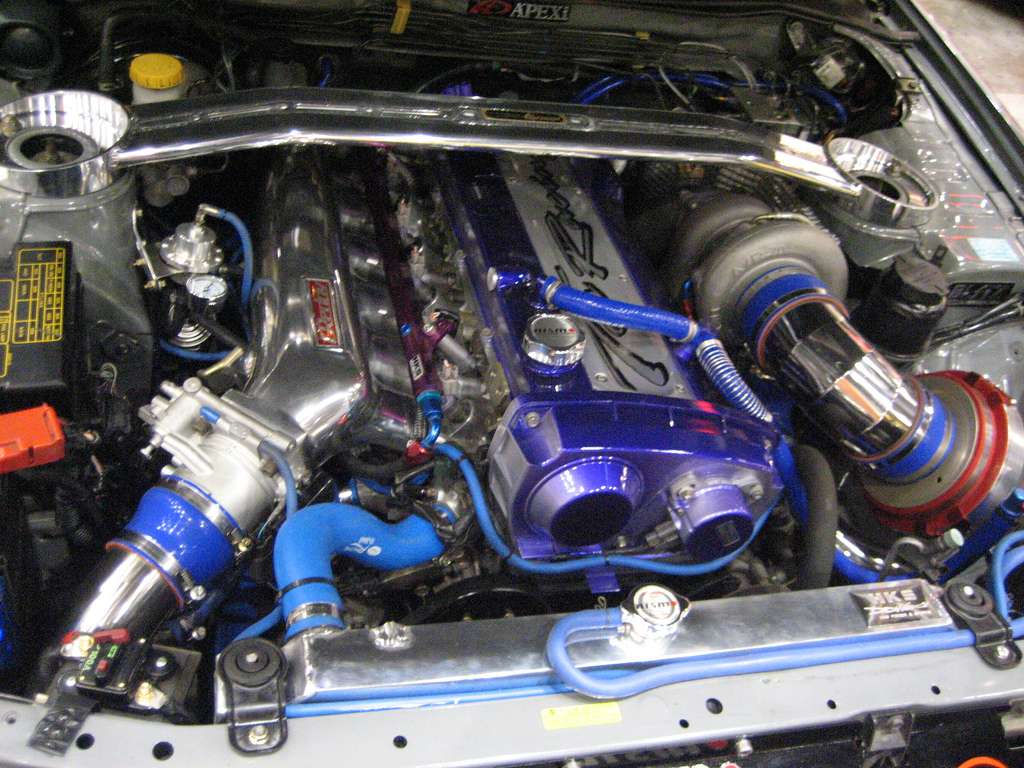
RB26DETT: evaluate the engine you are actually buying
Cold start and measured health checks
Arrange a cold start and observe starting speed, idle quality, warning lights, smoke and persistent mechanical noises. Let an experienced inspector distinguish a symptom from its possible causes. A rebuilt engine that starts cleanly still needs documentary evidence of what was rebuilt and measured.
Where indicated, commission compression, leak-down and oil-pressure checks using the appropriate procedure, with results recorded and interpreted by a specialist. Ask about test conditions and consistency between cylinders rather than treating a number copied into an advert as a guarantee. Investigate metal contamination, unexplained low pressure, overheating or coolant loss before purchase.
Different RB26 generations and rebuilt engines can have different internal components. Do not assume a failure mode or preventative modification discussed for an early R32 applies unchanged to a BNR34. Identify the actual crank, pump, sump and oil-control arrangements where relevant, and ask the builder or inspector to explain why the current specification suits the intended use.
Timing belt, water pump and baseline maintenance
Find the timing-drive invoice and establish date, mileage, belt, tensioner, idler and any water-pump or seal work. A brightly coloured belt or an engine-bay sticker is not sufficient evidence of the full job. If records are uncertain, agree a baseline service with the workshop before putting the car into demanding use.
The Tarmac Sportz Nissan timing-kit listing identifies a belt, tensioner pulley, idler and tensioner spring, while recommending water-pump replacement separately. It quotes a mileage interval attributed to Nissan, but an old, low-mileage or modified car also needs an age- and usage-based plan from its maintainer. Do not treat a mileage figure as permission to ignore a decades-old belt.
Compare RB26 timing-belt and water-pump kits with the installer’s approved parts list. Check whether the pump, seals, coolant and required hardware are actually included. A service kit for a different engine or a belt-only upgrade cannot be priced as a complete fitted job.
Turbochargers, boost and tuning records
Identify the turbochargers physically and through invoices. Factory-type units, replacement twins and a single-turbo conversion are different systems. Do not accept an unqualified statement that a certain boost level is safe for every RB26. Turbo condition, engine specification, fuel, calibration, cooling and intended use all matter.
Request the current ECU and mapping details, who calibrated it, the specified fuel and whether the hardware has changed since. A dyno result should show useful context and be treated as evidence of one test, not permanent proof of engine health. Ask whether figures are measured at the wheels or estimated at the engine, and avoid comparing incompatible charts.
During the inspection, assess intake and intercooler plumbing, fuel-system installation, heat management and the routing of oil and water lines. Look for chafing, loose connectors, unsupported pipework and improvised wiring. Repeated misfire, smoke or boost instability should be diagnosed before hard use, rather than demonstrated away with another full-throttle run.
How to read a rebuild invoice
“Forged engine” describes a component choice, not build quality. Ask for the builder, date, mileage, block and head work, measured clearances, rotating assembly, bearing and oil-system details, and the parts used. Establish the compression ratio and capacity where changed, then check that the calibration and fuel requirements match.
Find out why the engine was rebuilt and what was done to address the original cause. If an earlier turbo or lubrication problem damaged the engine, ask how associated systems were inspected and cleaned or replaced. Obtain running-in and subsequent service evidence, and ask whether any warranty remains transferable rather than assuming it follows the car.
Six-speed gearbox, clutch, ATTESA and rear steering
Test every gear from cold and again once warm with normal, unhurried changes. Listen for load-related whining and feel for resistance, crunching or movement of the lever as drive is taken up. A short test cannot establish the health of every internal component, so a problem should lead to diagnosis and a quote rather than a seller’s guess that it only needs different oil.
Assess clutch take-up, pedal consistency, noise and slip under sensible conditions. A multi-plate clutch may have different manners from a standard assembly; decide whether you can live with it in traffic. Ask exactly what is fitted, whether replacement friction components remain available and what the complete installed repair would involve.
Have the specialist check the four-wheel-drive system, warning lights, fluid history and evidence of leaks or modifications. The ATTESA equipment and, where fitted, active rear differential need an inspection appropriate to the actual variant. A car that drives forwards is not proof that all its drivetrain control systems are operating correctly.
Check the HICAS rear-steering arrangement or any documented replacement/lockout installation, including joints, wiring and geometry. A modified rear-steering system should be explained, correctly installed and declared where required by the insurer. Tyre choice, rolling circumference, pressures and alignment also affect how the car behaves; assess the chassis as a complete system.
Do not apply R35 GR6 dual-clutch servicing or failure advice to the R34’s manual transmission. Workshop websites sometimes discuss several GT-R generations on the same page. Ask specifically for a BNR34 job specification, including gearbox, transfer and differential fluids as appropriate, and identify any non-standard components.
Brakes, suspension and electrical equipment
Inspect calipers, discs, pads, hoses and brake pipes together. Look for leaks, damaged seals, uneven wear, binding and signs that cosmetic refinishing has concealed poor hardware. During a safe test, investigate pulling, judder and inconsistent pedal response. A big-brake conversion needs identifiable components, suitable clearance and future parts support.
Look at dampers, springs, arms, joints, bushes and mounting points. Very low ride height can create clearance and geometry problems even when the car photographs well. Check for tyre rubbing and damage underneath. A proper alignment follows the repair of worn or seized parts; a printout does not make deteriorated joints acceptable.
Test the multifunction display, instruments, warning lights, climate control, blower, windows, mirrors, central locking, lights and wipers. Ask about aftermarket alarms, immobilisers, trackers and audio wiring. Verify charging performance and investigate a flat battery rather than automatically replacing the alternator or assuming a battery conditioner solves a parasitic drain.
Check seat and trim condition, water ingress and signs that the cabin has been dismantled roughly. Missing original equipment can be expensive or difficult to replace. A functioning aftermarket screen is not the same as a complete original interior if collector originality is part of the asking price.

R34 GT-R maintenance and UK costs
Use a workshop that understands the RB26 and BNR34 rather than buying a generic modern GT-R package. RB Motorsport describes Skyline servicing, repairs, diagnostics and engine work. Perfect Touch lists R34 maintenance and pre-purchase inspection services. Neither page supplies a complete model-specific fitted menu for the jobs below, so obtain a written quotation for the individual car.
As a verifiable parts reference, Tarmac Sportz advertised its GN-RB-TBK timing kit at £192 including VAT (£160 excluding VAT) when checked. The described kit does not include a water pump. Delivery, additional parts and fitting are separate, and availability is subject to supplier confirmation. Compare equivalent RB26 timing-kit listings by contents rather than price alone.
| Job | Parts reference / shopping check | UK labour and fitted-cost scope |
|---|---|---|
| Timing drive | £192 inc VAT for the cited belt/tensioner/idler/spring kit; compare kit availability. | Quote labour, pump if required, seals, coolant, hardware and checks separately; do not call £192 a fitted price. |
| Alternator / charging diagnosis | R34 GT-R alternator searches; verify rating, mounting and exchange deposit. | Diagnostic work, removal/refit, belt condition and any exchange surcharge. Written total including VAT. |
| Clutch | BNR34 clutch searches; identify the installed clutch and flywheel. | Gearbox removal/refit, correct assembly, related hardware and any flywheel work after assessment. |
| Brake refresh | BNR34 discs and pads; standard and upgraded systems differ. | Specify axle/full-car scope, caliper condition, hoses, fluid and testing. |
| Cooling system | RB26 cooling components. | Diagnosis, parts actually needed, labour, coolant and verification at operating temperature. |
| Routine service | RB26 service components. | Agreed oil and fluid specifications, filters, plugs if due, inspection and any drivetrain work due. |
| Suspension / steering | BNR34 suspension and steering searches. | Identify worn items, modification compatibility, seized hardware and alignment after repair. |
| Strut-top corrosion | SR Autosource pair advertised £249, backorder; confirm VAT and delivery. | Structural inspection and a separate body-shop estimate. Panel cost excludes stripping, welding, other damaged metal, paint and protection. |
There is no reliable universal labour figure for a standard car, a highly modified build and a corroded example. Ask the garage to state its hourly rate and VAT treatment, estimated scope, parts policy, approval limit for additional work and how a change in findings will be communicated. We have not created an unsupported parts/labour split.
Hidden ownership costs
Allow for inspection and provenance work, transport to a suitable specialist, insurance agreed on the actual specification, secure storage, recovery and parts delays. Check insurance terms before buying a modified car. A premium asking price does not mean consumables, rubber components and electrical systems have recently been renewed.
Tyres may need replacement because of age or incompatibility before their tread wears out. Stored cars may need battery, fluid, brake and hose attention before use. Track intentions bring a separate preparation and inspection conversation; a road-service stamp does not establish that the car is ready for prolonged circuit running.
Build a first-year work plan from the inspection: immediate safety items, baseline maintenance with uncertain history, developing faults and optional cosmetics. Obtain real quotes and leave a further contingency. The total budget should still work if a diagnosis reveals more than the seller expected.
R34 GT-R pre-purchase checklist
- Verify identity: BNR34 chassis, documented variant, engine identity and the seller’s authority to sell.
- Reconcile history: import/export records, auction information, service chronology and kilometre/mile or cluster changes.
- Inspect structure: strut-top seams, sills, rails, floors, mounting areas and evidence behind recent coatings.
- Assess engine: cold start, leaks, cooling behaviour and specialist tests where indicated.
- Review modifications: complete hardware list, builder records, current calibration and fuel requirements.
- Check drivetrain: cold/hot gear changes, clutch, four-wheel-drive and rear-steering systems appropriate to the variant.
- Check chassis and equipment: brakes, tyres, suspension, geometry, display, electrics and cabin completeness.
- Finish hot: restart, idle, temperature and fresh leakage after a normal road test.
- Price the whole purchase: independent report, written remedial quotes, insurance and contingency before paying.
Reasons to stop and investigate
Do not gloss over an identity mismatch, unexplained instrument change, refusal of a lift inspection, serious corrosion under fresh paint, unsafe braking, oil-pressure concerns or an undocumented high-power build. You do not have to prove every fault at a viewing; you do need enough information to decide whether further investigation is worthwhile.
R34 GT-R buying questions answered
Is a standard car always better than a modified one?
No. A carefully documented build can suit an enthusiast very well, while a supposedly standard car can have hidden neglect or undocumented changes. Decide whether you want originality or a particular driving specification, then inspect and value the car accordingly.
Does a V-spec badge prove the version?
No. Confirm the factory specification through chassis-linked records and a specialist examination. Parts can be swapped. The presence of one recognisable component is not enough to establish an entire variant or justify its premium.
Can I trust the displayed mileage?
Only as part of a coherent history. Reconcile kilometres, miles, conversion dates, replacement instruments and records. If the lifetime total cannot be established, describe and price the uncertainty honestly rather than assuming the current reading represents all use.
Is the R34 GT-R a safe investment?
It is a costly enthusiast car whose future value is uncertain. Buy it because you want the car and can support its upkeep. Asking-price adverts and seller predictions do not establish future returns or guarantee that you can resell quickly.
What is the most important inspection?
There is no single substitute for a whole-car assessment. Identity, structure and engine/drivetrain condition can each change the economics of the purchase. Use a specialist who can identify the areas that need a separate body or engine expert, and obtain a written report.
Sources and further reading
- Nissan Heritage Collection: BNR34 V-spec II — factory identity and variant context.
- Slide Motorsport: R34 strut-top repair — first-hand bodywork example.
- SR Autosource: R33/R34 repair panels — parts availability and scope.
- Tarmac Sportz: Nissan timing kit — UK parts price and contents.
- RB Motorsport services and Perfect Touch Skyline services — workshop scope; confirm current quotations.
- PistonHeads R34 GT-R advertisement — individual asking-price reference.
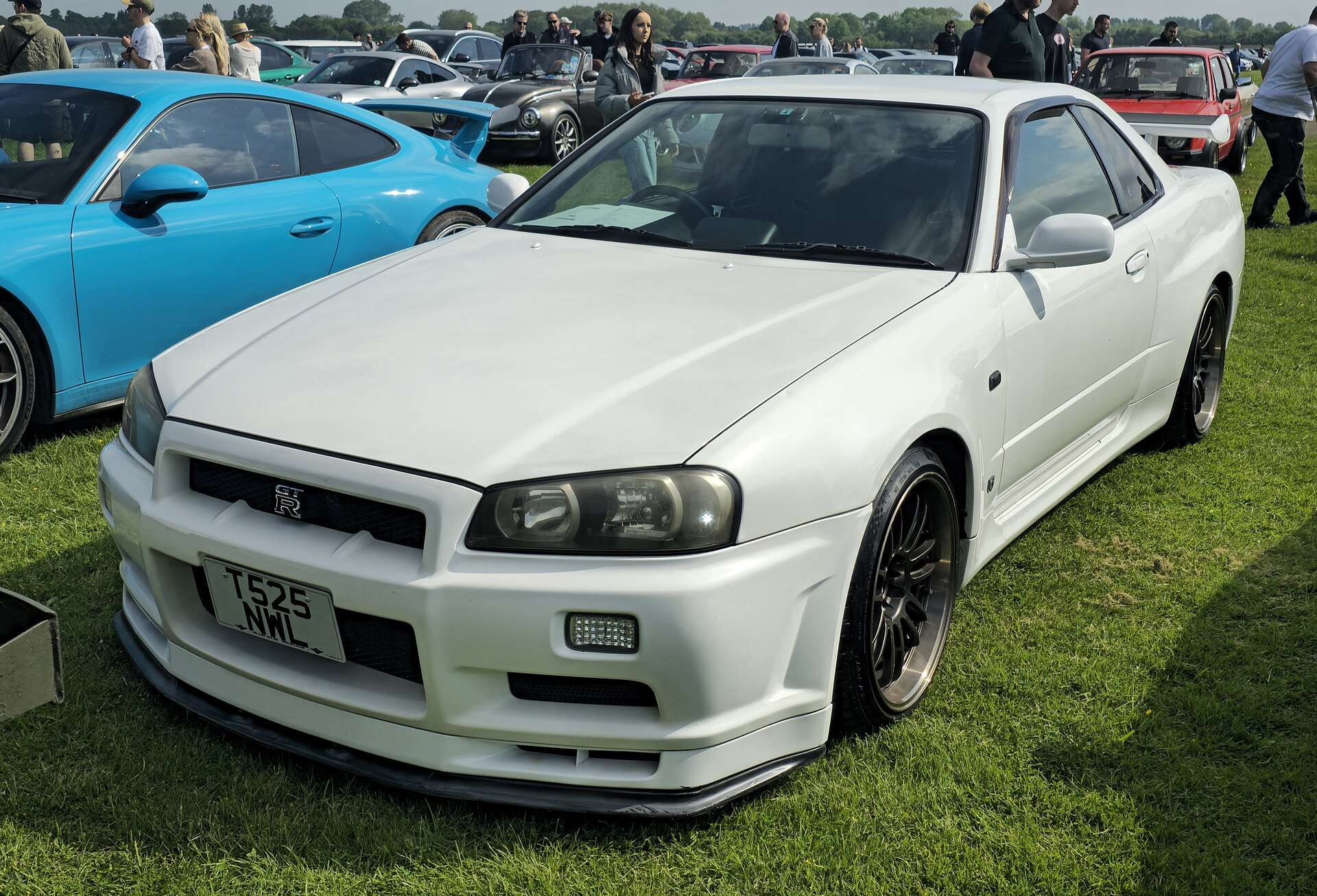
Featured photograph: Calreyn88 / Wikimedia Commons, CC BY-SA 4.0. More practical advice is in the buying guides hub.
Nissan Skyline R34 GT-R for sale on eBay UK

See more Nissan Skyline R34 GT-R cars on eBay UK
Love cars you don’t see every day?
Get forgotten cars, surprising motoring stories and the most interesting finds from Unusual Cars by email.
Free to join. No spam. Unsubscribe whenever you like. See our privacy policy.