

The Hyundai Kona N is a hot hatch in a compact crossover body: quick, conspicuous and far more focused than the ordinary Kona or an N Line. Its appeal is not simply extra ground clearance. You get a serious performance powertrain, adjustable chassis and enough everyday practicality to make an interesting alternative to familiar fast hatchbacks.
Buying one well means understanding the 2.0-litre turbo engine, eight-speed wet dual-clutch gearbox and front-wheel-drive chassis. It also means checking a specific UK transmission recall, reading the maintenance history properly and budgeting for N-specific tyres, brakes and suspension. Ordinary Kona running-cost tables can be badly misleading.
This guide covers the original OS-generation Kona N, sold in the UK from 2021. It does not cover the smaller-engined N Line, electric Kona or later ordinary Kona generations. An advertisement containing “N” is not sufficient identification.
Should you buy a used Hyundai Kona N?
Yes, if you want an entertaining compact performance car and like the Kona’s seating position and shape. Look for an unmodified car with a coherent service record, confirmed recall completion and a specialist inspection. Prioritise condition and history over a favourite paint colour or the smallest possible mileage.
It is less suitable if your priorities are a soft ride, low fuel bills or the maximum boot space for your budget. The N hardware remains expensive to replace even as used prices fall. Test it over your own type of road, with the suspension in its gentlest normal setting, before deciding that a performance SUV will automatically be a comfortable family car.
Our preferred buy is the example that leaves room in the budget for proper tyres and maintenance. A slightly higher-mileage car with recent consumables and detailed invoices can be a more sensible purchase than a low-mileage car with old tyres and missing services. An unresolved gearbox warning should stop negotiations until there is a diagnosis.
Know the car: Kona N versus N Line
| Feature | Kona N | Why it matters when buying |
|---|---|---|
| Engine | 2.0 T-GDi, 280PS and 392Nm | Smaller-engined N Line advertisements and parts are not equivalent. |
| Transmission | Eight-speed wet N DCT | Do not apply seven-speed dry-DCT or conventional automatic servicing advice. |
| Driven wheels | Front-wheel drive with electronically controlled limited-slip differential | Its SUV shape does not mean it has four-wheel drive. |
| Chassis | Electronically controlled dampers and N-specific braking package | Check modes, fault memory and correct replacement hardware. |
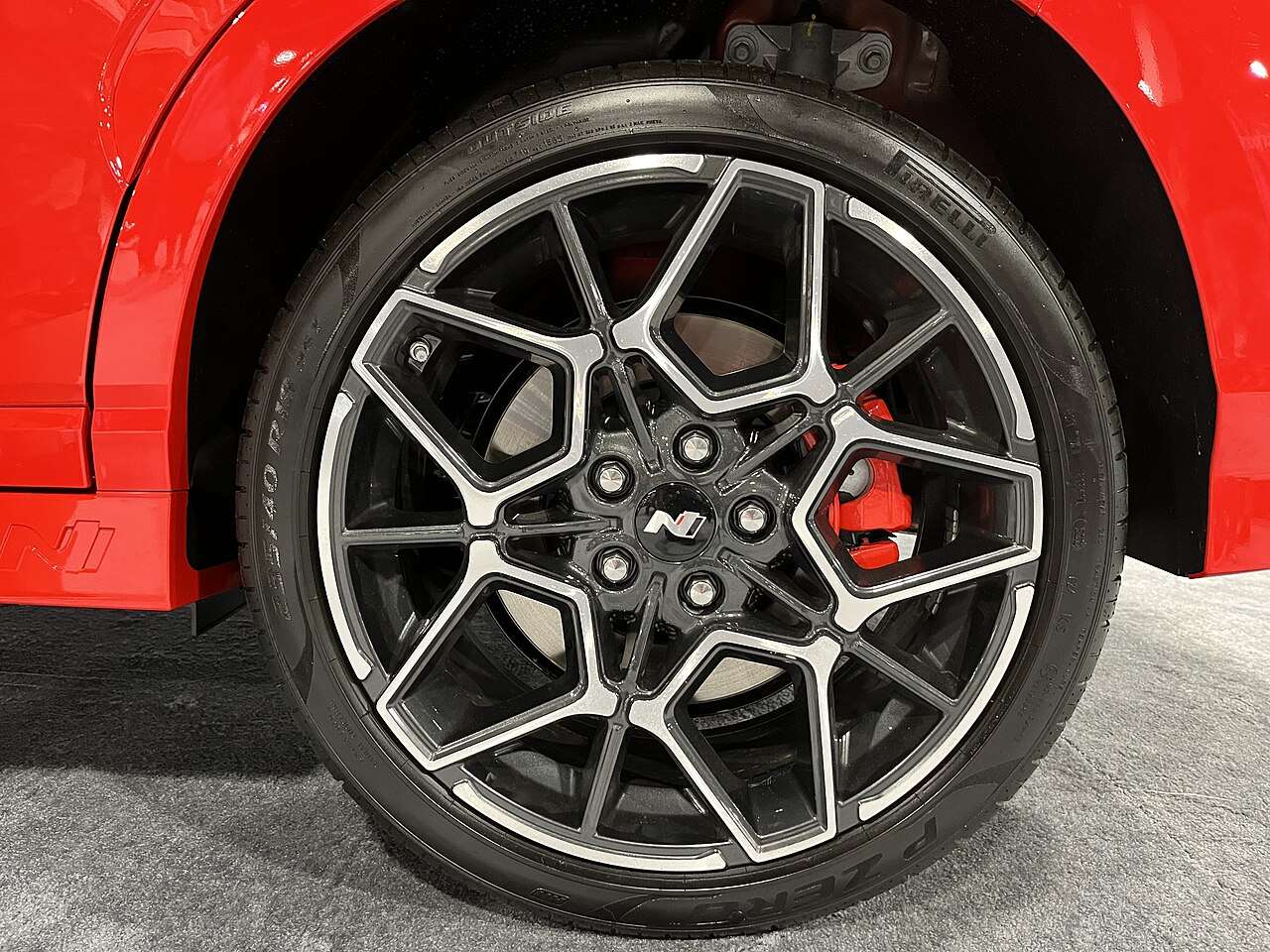
| Wheels and tyres | 19-inch wheels; original tyre specification 235/40 R19 | Tyre condition and wheel damage can change the first-year budget significantly. |
The manufacturer’s launch material also describes configurable steering, suspension and exhaust settings, plus steering-wheel N controls. Inspect these as functional equipment, not just decoration. The different modes let you separate the settings you enjoy from those that are too firm for everyday use.
Check the VIN, V5C, production information and insurance description. If an advert claims a manual gearbox or all-wheel drive, verify the actual car rather than assuming the unusual specification is genuine. Dealers can populate dropdowns incorrectly. The correct identity also matters when ordering discs, filters, transmission fluids and electrical parts.
Do not confuse temporary performance functions with a different permanent engine specification. Equally, a remapped car is not made safer or more valuable because the owner says it has “only a little more power”. Ask who changed it, what was altered and whether the insurer and warranty provider accepted the changes. Returning the visible intake to standard does not establish that the software is original.

UK used prices and how to judge value
The Cazoo Kona N results checked for this guide included a 2021 car with 34,441 miles at £21,460, a 2022 car with 48,160 miles at £21,903, a 2023 example with 30,881 miles at £23,395 and a 2023 car with 17,247 miles at £26,995. These are advertised prices from a changing sample, not achieved values or recommendations to buy those cars.
Build your shortlist around equivalent mileage, registration date, condition, history and selling channel. A remaining manufacturer warranty can matter, but establish its actual expiry and eligibility. “Hyundai warranty” in an advert is not a substitute for confirmation using the vehicle’s registration and VIN, especially where maintenance or modifications need checking.
Compare the cost after immediate work, not just the windscreen price. Add an inspection, overdue service, suitable tyres, brake replacement and any missing key. If the cheaper car needs all of these, it can quickly become the more expensive proposition. Ask the seller whether preparation includes actual replacement work or only an inspection.
A modest saving should not persuade you to accept an uncertain transmission, signs of major accident repair or repeated coolant loss. Conversely, a documented cosmetic repair or normal wear can be negotiable when inspection establishes that the mechanical car is sound. Get repair costs in writing before treating them as a bargaining figure.
Service history, warranty and previous use
Read the service book and invoices in date order. Check that mileage increases sensibly and that the work follows the correct UK schedule for the individual N model. Do not accept a generic Kona petrol schedule copied from a booking website. Ask a Hyundai retailer for the required operations by VIN and compare them with the evidence.
A service stamp alone does not establish which oil or plugs were used. Invoices should identify the workshop, mileage, lubricant approval, filters and any additional work. Ask whether brake fluid, ignition components and gearbox-related maintenance were due. A reset service reminder proves only that someone reset the reminder.
Hyundai’s five-year warranty proposition is attractive, but coverage depends on the applicable terms, registration date and maintenance history. Ask Hyundai to confirm the remaining cover and disclose modifications and intended usage. Wear items are a different matter from manufacturing defects. Do not assume a worn clutch pack, track-used brake discs or a damaged wheel will be covered.
For a car used on track, ask about maintenance before and after events, brake-fluid changes, tyre replacements and cooling checks. Track use is not automatic evidence of abuse, and low mileage does not establish gentle use. A candid owner with detailed records can be easier to assess than one who insists the car was never driven hard but cannot explain heavily worn consumables.
Obtain a finance, theft and insurance-loss history check and compare the public MOT record with the invoices. Investigate repeated tyre, suspension or brake advisories and any unexplained mileage discrepancy. An MOT tests roadworthiness at a moment in time; it does not validate the powertrain history or prove every electronic system functions.
Important UK DCT recall: R/2023/068
The government recall record for Hyundai Kona OS N lists R/2023/068, dated 10 April 2023, concerning a possible transmission malfunction that can result in loss of drive. The stated remedy is an update to the DCT transmission control unit software. The record says to contact Hyundai to check whether an individual vehicle is affected; recall work is not chargeable to the owner.
Before buying, give a Hyundai retailer the VIN and ask for written confirmation of any outstanding campaigns and completed work. The year attached to a government model entry is not proof that only cars registered in that year are relevant. Equally, an overseas recall discussion does not establish the UK campaign status of your car.
A completed recall is important, but it does not certify that the gearbox is currently healthy. Continue with a full road test and diagnostic inspection. If the car has lost drive, stored transmission faults or had major replacement work, ask for the repair record and explanation. A seller’s promise to “get the update done later” is not a reason to ignore present symptoms.
Engine checks: start cold and inspect after driving
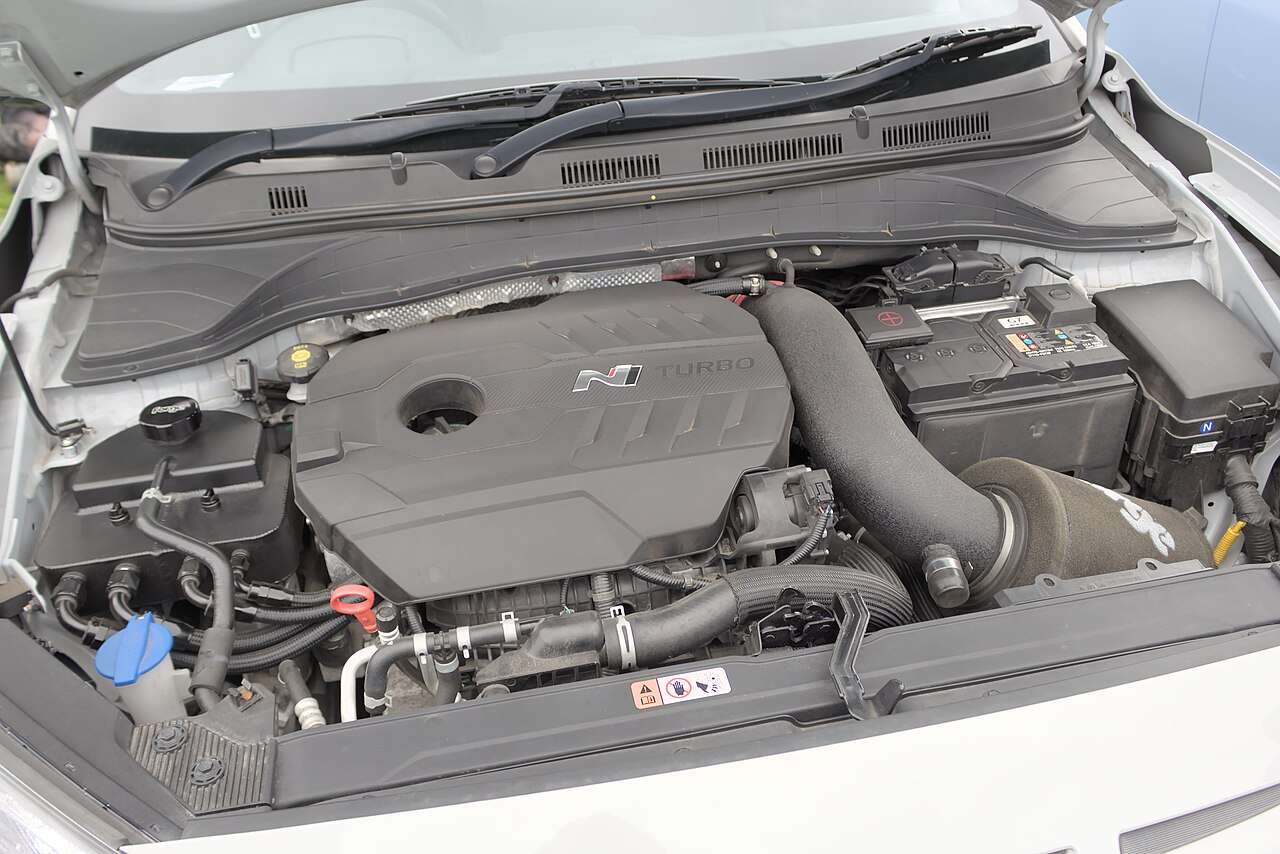
Arrange a genuinely cold start. Check whether the bonnet is warm when you arrive and ask if the seller has already run the car. Watch the warning lamps and listen as the engine settles. Persistent rattling, misfires, smoke or a warning message needs diagnosis; do not dismiss everything as the normal noise of a high-performance engine.
Inspect the oil level and condition according to the handbook. Ask about top-ups in measurable terms: quantity and distance, not “a little occasionally”. Look for oil staining around accessible joints and underneath the engine. A washed engine bay is not proof of a fault, but it means a lift inspection and a check after a meaningful road test become more valuable.
Check coolant level only when safe and cold. Look for staining, dampness, damaged hoses and evidence of repeated topping up. Ask about overheating and previous cooling-system repairs. A temperature display that looks normal during a short test is not sufficient evidence against a leak or intermittent problem.
Build engine load progressively once warm. It should pull cleanly without repeated hesitation, surging, unexpected power reduction or persistent smoke. If it misfires under boost, there are several possible causes, including ignition, fuel delivery and boost control. A seller who has replaced a guessed component has not necessarily resolved the underlying problem.
The 2.0 engine uses a timing chain rather than a scheduled timing belt. A generic “Kona timing-belt kit” may refer to a different engine or be a poor search match. Chain noise or timing-related faults warrant specialist investigation, not an automatic belt-service allowance. Ask for an itemised diagnosis if the car has had timing work.
Inspect the intake and exhaust for changes, disconnected wiring and obviously non-standard fittings. A freer-flowing intake can change noise without proving improved performance. Removed emissions equipment, unexplained warning-lamp behaviour or a seller who suggests clearing a code before the inspection should prompt caution. Establish whether the car remains compliant and insurable in its actual condition.
Love cars you don’t see every day?
Get forgotten cars, surprising motoring stories and the most interesting finds from Unusual Cars by email.
Free to join. No spam. Unsubscribe whenever you like. See our privacy policy.
Eight-speed wet DCT: what to test
The Kona N’s wet dual-clutch gearbox is a central part of its character. It should also be assessed across ordinary driving situations. Check reverse and drive engagement, gentle pull-away, stop-start traffic and a safe incline. Repeat the checks when warm. A fault that appears only after half an hour may be missed by a quick dealer demonstration.
Some of the car’s low-speed behaviour is configurable. Hyundai’s launch material describes a Creep Off setting, so establish the selected mode before interpreting a lack of automatic creep as a fault. That does not explain severe judder, persistent slipping, heavy impacts or warnings. Have a knowledgeable technician distinguish settings from symptoms.
Use normal automatic mode and the paddles during a safe road test. Look for consistent response and clean changes under light and moderate load. There is no need to demonstrate launch control repeatedly to assess a used car. Aggressive starts create risk and tell you less about everyday shift quality than a properly planned test route.
Ask for the exact transmission-fluid requirements and maintenance schedule for the VIN and usage. Do not substitute a seven-speed Hyundai/Kia DCT service or a generic DSG package. If previous work is claimed, the invoice should identify the transmission, fluids, operations and reason for the work. An adaptation reset and a mechanical repair are different things.
Read the fault memory before and after driving. Ask whether codes are current, historic or recently cleared and whether any relevant faults return. A clean scan after someone has just erased everything is less informative than an established history and a repeat test. Intermittent loss of drive needs proper investigation before purchase.
Front differential, steering and adaptive suspension
The electronically controlled limited-slip differential is part of what makes the front-wheel-drive Kona N effective. Check for warning messages and have the relevant control modules scanned. During normal cornering, the car should feel coherent and predictable, without repeated clunks, binding or abrupt unexplained changes in behaviour.
Tyre condition affects the driving impression dramatically. Compare exact tyre model, size, load and speed ratings and tread condition across each axle. Look for shoulder damage and uneven wear, then inspect inner sidewalls on a lift. Do not mistake the consequences of damaged or mismatched tyres for proof that every Kona N has poor steering.
Try the suspension settings over the same piece of road at sensible speeds. The difference should be understandable, but a firmer mode is not an excuse for knocking, damper leakage or a warning message. Check front and rear suspension components, top mounts, bushes and links. Obtain a quote for the actual electronically controlled parts if replacement is required.
Steering should self-centre naturally and the car should not need constant correction on a reasonably level road. Pulling, a crooked steering wheel or rapid tyre wear can result from alignment, worn components or previous impact damage. Diagnose before fitting another set of tyres. Ask for an alignment printout if recent work is part of the seller’s case for the car.
Brakes, wheels and evidence of hard use
Inspect the N-specific discs and pads for corrosion, scoring, uneven wear and heat damage. A lip on the disc needs measuring rather than guessing from a photograph. Check both faces where possible. A car left standing can have brake corrosion despite low mileage, while one used regularly may have better surfaces but less remaining thickness.
Brake smoothly at several safe speeds. Pronounced steering shake, repeated pedal pulsation or pulling warrants investigation. Do not accept an automatic diagnosis of “warped discs”; installation, deposits, wear and other components can produce similar sensations. The correct repair depends on what an inspection finds.
Examine the 19-inch wheels for cracks, previous welding and distortion, including inner barrels. Cosmetic kerbing is less concerning than a repaired structural crack or evidence of repeated impact. Check tyre dates as well as tread. If changing tyre type, seek advice appropriate to road or track use and the conditions in which you drive.
The car’s performance equipment does not make it immune to expensive wear. If it has aftermarket discs or pads, establish the exact compound, suitability for road use and replacement cost. Some specialist packages are explicitly intended for motorsport, with operating characteristics and warranty terms that make them a poor default recommendation for a road car.
Bodywork, interior and family-car checks
Inspect the low front trim, side skirts and rear bumper in daylight. Look for inconsistent paint, overspray, distorted mounting points and uneven gaps. Ask about windscreen replacements and any associated camera calibration. Repaired cosmetic damage can be acceptable when documented; unexplained structural evidence needs an independent assessment.
Lift the boot floor and check for water, disturbed seams and missing equipment. Feel the carpets and inspect the headlining and door seals for dampness. Test the tailgate, rear wiper and washer. A boot that smells damp is not simply a detailing issue until the source has been established.
Try the rear seats with your usual passengers and child seats. The Kona’s compact footprint is convenient, but its cabin and boot will not suit every family. Fit your buggy, dog crate or travel bags before buying. A litre figure cannot tell you whether a tall load fits beneath the sloping rear opening.
Test both keys, central locking, windows, mirrors, climate control, seat functions and all fitted cameras and parking sensors. Pair your own phone, make a call and check your preferred navigation method. Confirm which connected services remain available and whether any subscription or account transfer is needed.
Work through the N menus with the seller while stationary. Save a usable everyday configuration and check that the steering-wheel controls operate correctly. An infotainment restart may clear a temporary glitch, but recurring blank screens or unavailable features deserve a repair assessment. A highly equipped car should be priced with its equipment working.
Maintenance and UK parts costs
Prices below are references, not quotes. Hyundai advertises fixed-price servicing for cars outside their five-year warranty from £199 for Core and £299 for Major. Confirm Kona N eligibility, required additional operations and your registration-specific price. The published headline prices do not provide separate labour figures; we have not invented a breakdown.
| Job | Parts / market reference | Fitting and budgeting advice |
|---|---|---|
| Oil and filters | Compare Kona N service kits. Listings explicitly describing 2.0 2021–23 filter sets were around £28–£30 without oil. | Hyundai Core from £199 for eligible older cars. Confirm correct N oil specification and what is included. |
| Major routine service | Find correctly specified spark plugs. Check scheduled items rather than assuming every kit includes plugs. | Major headline from £299 for eligible cars; obtain a written N-specific quote and any additions. |
| Front discs and pads | Compare N-specific 360mm brake kits. A pair of advertised N discs was £159.95; a disc/Brembo-pad package £299.99. | Request the workshop’s labour, hardware and VAT separately. As a planning example only, £300 parts plus £120–£200 labour gives £420–£500; this is not a sourced fitted offer. |
| Alternator | Compare Kona N alternator listings. Overseas advertised genuine-number units were about £375–£380 before any unlisted import costs. | Confirm original part number, supplier and landed cost. No verified N-specific fitted price obtained; require charging-system diagnosis and an itemised quote. |
| Timing components | Check engine-specific timing-chain components only after diagnosis. | Chain-driven engine; no routine timing-belt replacement. Do not price a different Kona engine’s belt job. |
| DCT and differential | Correct fluids and procedures must be identified for the VIN. | Obtain a model-specific quote. A generic seven-speed DCT package is unsuitable evidence. |
| Safety campaign | R/2023/068 eligibility checked by Hyundai. | Recall work is free where applicable. This is separate from unrelated wear or repairs. |
Disclosure: eBay links are affiliate searches using campaign 5339238906. We may earn commission on qualifying purchases. Confirm fitment, original part numbers, quality, delivery, taxes and returns; search results include parts for other Konas.
When comparing workshops, ask whether the price includes diagnosis, consumables, VAT, software procedures and a service-record update. A labour allowance is not the same as a workshop’s booked time. If supplying parts yourself, agree responsibility for incorrect fitment and warranty before ordering.
Use the correct normal or severe-use schedule for the vehicle. If buying a car with repeated short journeys, track use or uncertain maintenance, discuss preventative work with a Hyundai N specialist. An extra oil change cannot retrospectively undo years of poor maintenance, but a coherent plan is better than waiting for a warning lamp.
Hidden ownership costs
Fuel: build a budget from your own annual mileage. For illustration, 8,000 miles at 30mpg and £1.50 per litre is about £1,818; at 25mpg it is roughly £2,182. Those are planning assumptions, not a claimed real-world result or current fuel-price quote. Urban use and enthusiastic driving can change the total materially.
Tyres: price a full set in the correct specification, including fitting and alignment where needed. A car discounted because its tyres are “nearly due” should be assessed using the replacement bill, not the seller’s estimate. Damaged wheels can add another cost that new tyres will not fix.
Insurance and tax: obtain a registration-specific insurance quote and check current VED using the government record. Disclose modifications and intended use. Do not copy an annual-tax figure from another listing, and remember that a used purchase price does not establish any original list-price tax treatment.
Warranty gaps: read exclusions, claim limits and labour-rate caps on any aftermarket policy. Ask whether diagnostics, electronics, clutches, dampers and pre-existing symptoms are covered. “Warranty included” is less meaningful than knowing which repair would actually be paid.
Small missing items: a second key, damaged trim, missing luggage fittings and failed parking sensors can accumulate. Get replacement prices before agreeing a deal. If a part is on back order, establish likely availability as well as its headline price.
Track preparation: if track days are part of your plans, budget separately for suitable consumables, inspection and insurance. Do not treat an expensive track brake package as a necessary upgrade for ordinary road ownership. Start by maintaining the standard car properly and following the applicable warranty and usage terms.
Living with the Kona N: choices that change ownership
Set up an everyday mode before judging the ride
The configurable chassis is useful because steering weight, suspension firmness and exhaust character do not need to be treated as one inseparable setting. During a viewing, ask the seller to show you the available combinations while stationary. Start the road test with the gentlest suspension setting, then compare a firmer setting on the same road. That gives you a fair impression of comfort rather than judging the car from an unfamiliar previous owner’s preset.
If changing settings produces warning messages or an obvious fault, record it for the inspection. A mode that feels subtly different is not automatically broken, and a loud exhaust does not prove a performance function is working. Test the features independently and let diagnostics support any concern.
Winter use: tyres matter more than the SUV silhouette
The Kona N drives its front wheels. Its traction settings and electronically controlled differential cannot create the behaviour of four driven wheels. If you regularly encounter cold, wet or snowy roads, discuss suitable tyres with a knowledgeable supplier. Check wheel clearance, approved sizes, load and speed requirements before buying a second set.
Ask whether an advertised winter wheel set actually clears the N brakes and has the required sensors and hardware. An ordinary Kona wheel’s diameter alone does not establish clearance. Used wheels also need checking for cracks, damage and correct fitment. Price the complete working set, including fitting and any necessary sensor setup.
Road car or occasional track car?
Start with the condition and specification of the existing brakes, tyres and fluids. A road-focused buyer usually needs sound standard equipment and suitable consumables, not the most aggressive catalogue upgrade. Motorsport pads may involve different temperature requirements, noise and road-use suitability. Ask the supplier to explain those compromises rather than assuming a higher price makes a better daily driver.
For occasional track use, get written advice about preparation and aftercare from a Hyundai N specialist. Establish warranty terms, insurance and inspection requirements beforehand. Keep track-day expenditure separate from the ordinary road-maintenance budget: extra tyre and brake wear should not make you postpone an essential road-car service.
How to assess a modified example
Make a list of every change, including software, intake, exhaust, wheels, suspension and brake compounds. Compare it with invoices, original components and the insurer’s description. An owner who says the ECU has been returned to standard should be able to explain who did it and what evidence is available. Standard-looking hardware does not settle the software question.
Have the inspecting workshop comment on fitment, calibration and any warning faults, then price the cost of returning the car to the specification you actually want. If those costs erase the discount, a standard example is easier to justify. Buy modifications because they suit a defined use and are properly documented, not because an advert adds up their original retail prices.
For any candidate, ask the specialist to separate immediate repairs, overdue maintenance and likely next-year consumables. That turns a long inspection report into a usable budget and avoids paying twice when related work can sensibly be combined.
Viewing and test-drive checklist
- Confirm full Kona N identity, VIN, history, ownership and finance status.
- Check Hyundai campaign completion, including the DCT recall, and the actual warranty position.
- Inspect cold fluids, warning lamps, leaks, tyres, wheels and accident evidence before driving.
- Test all cabin equipment and N settings while stationary.
- Drive urban roads, a safe incline and a rougher surface; test gearbox behaviour cold and warm.
- Assess progressive acceleration and braking safely without repeated launch-control demonstrations.
- Inspect again after the drive and arrange a lift inspection and pre/post-drive diagnostic scan.
- Price required work in writing and keep a maintenance reserve after purchase.
When to buy, negotiate or walk away
Buy a standard, correctly maintained car that passes a knowledgeable inspection and suits your family’s space and comfort needs. Recent quality consumables and complete paperwork are worth paying for.
Negotiate over diagnosed wear, cosmetic damage or an overdue routine item where the repair cost and the rest of the car are clear. Put agreed preparation in writing and ask for invoices at handover.
Walk away from unresolved loss of drive, persistent warnings, unexplained coolant consumption, identity discrepancies, finance problems or refusal of independent inspection. A rare colour is not a reason to accept an unknown mechanical bill.
Hyundai Kona N FAQs
Is the Kona N four-wheel drive?
No. The original Kona N is front-wheel drive with an electronically controlled limited-slip differential. Do not confuse its crossover shape or traction settings with an all-wheel-drive system.
Is the Kona N the same as an N Line?
No. The full N has a different performance powertrain and chassis package. Verify the 2.0 engine, eight-speed N DCT and vehicle identity before buying or ordering parts.
What is the important gearbox recall?
UK recall R/2023/068 concerns a potential transmission malfunction and loss of drive. The published remedy is a transmission-control software update. Hyundai must confirm applicability and completion for the individual VIN.
Does it need a timing belt?
The 2.0 engine uses a timing chain. A chain-related symptom needs diagnosis; an ordinary Kona timing-belt price should not be included as routine Kona N maintenance.
Is a low-mileage car always the best buy?
No. Ageing tyres, corroded brakes, long service gaps and repeated short trips can outweigh a low odometer reading. Compare condition, evidence and the first-year total cost.
Sources and photograph credits
- Hyundai UK newsroom: All-new Kona N — original powertrain, chassis and equipment information; check individual UK specification.
- DVSA Kona OS N recall record — R/2023/068 and the published remedy.
- Hyundai fixed-price servicing — eligibility and headline Core/Major prices.
- Hyundai UK warranty terms — confirm the terms applicable to the car and its usage with Hyundai.
- Cazoo Kona N listings — asking-price examples, not completed-sale values.
Inspection advice is our editorial guidance, not a claim that every Kona N develops each problem. Parts and fitted examples must be checked against the actual car.
Featured photo: Calreyn88, Wikimedia Commons, CC BY-SA 4.0; resized. Inline photographs are credited beneath each image.
Hyundai Kona N for sale on eBay UK

See more Hyundai Kona N cars on eBay UK
Love cars you don’t see every day?
Get forgotten cars, surprising motoring stories and the most interesting finds from Unusual Cars by email.
Free to join. No spam. Unsubscribe whenever you like. See our privacy policy.


