
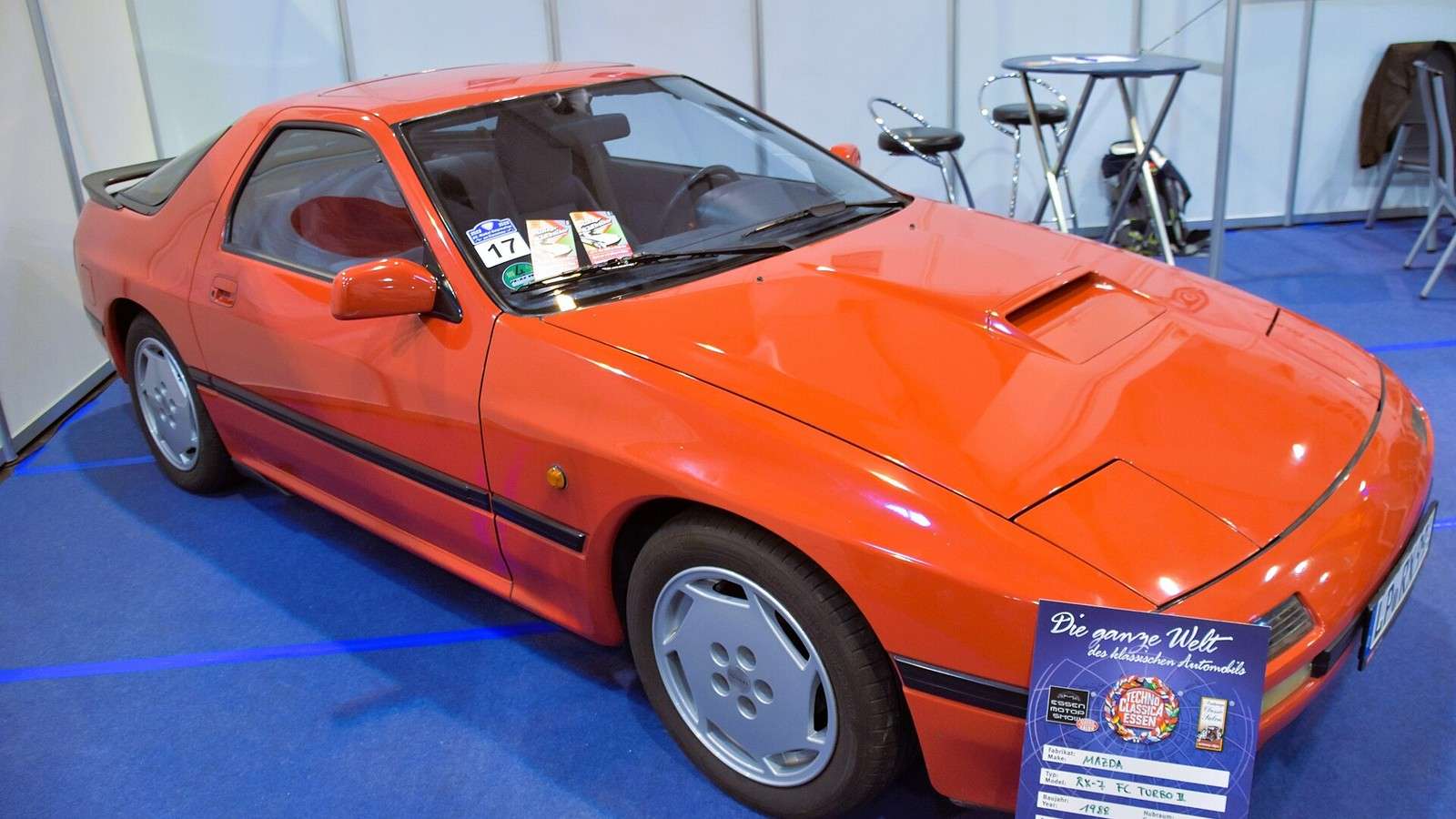
The second-generation Mazda RX-7 FC blended a turbocharged rotary engine with a more mature grand-touring body, yet retained the balance and technical imagination that made the RX-7 unlike any piston-engined rival.
Here are ten things you probably didn’t know about the Mazda RX-7 FC.
1. Mazda called it the ‘New Adult Sport’
Launched in October 1985, the FC was deliberately more refined and substantial than the original RX-7. Mazda wanted a sports car that could cover long distances comfortably without abandoning the front-mid-engine, rear-wheel-drive layout.
2. The turbo used twin-scroll technology
Mazda’s 13B rotary was paired with a twin-scroll turbocharger that directed exhaust gas through different passages according to engine speed. The arrangement improved response and helped give the small-displacement rotary much stronger mid-range performance.
3. It gained independent rear suspension
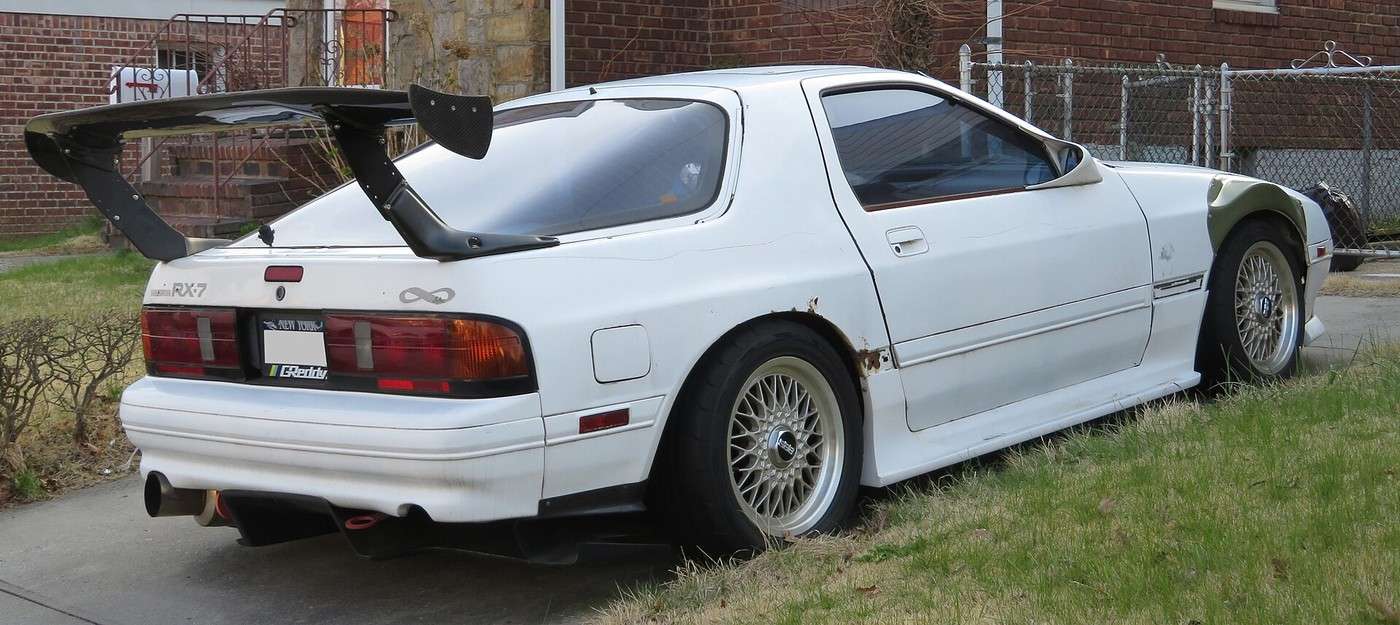
Unlike the first-generation car’s live rear axle, the FC used independent rear suspension. Mazda also engineered toe-control behaviour into the rear geometry, helping stability and turn-in without relying on electronic intervention.
4. Its styling invited Porsche comparisons
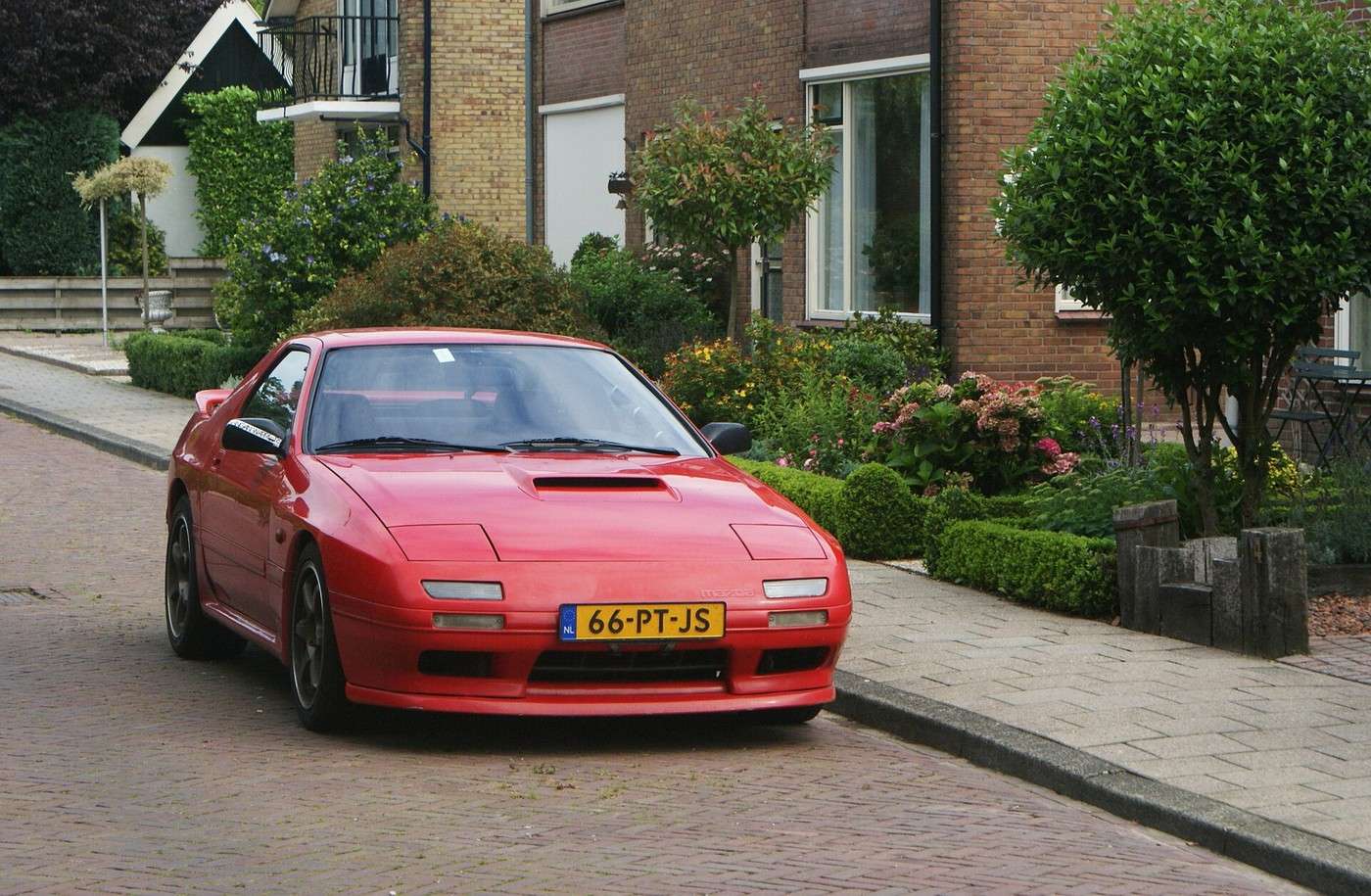
The broader proportions, pop-up headlamps and glassy hatchback frequently prompted comparisons with the Porsche 944. Mazda nevertheless retained rotary-specific packaging and its own chassis philosophy; the FC was not a copy beneath the surface.
Join the Unusual Cars Club free
Get forgotten cars, surprising motoring stories and the most interesting finds from Unusual Cars by email.
Free to join. No spam. Unsubscribe whenever you like. See our Privacy Policy.
5. The convertible was engineered with a clever wind blocker
Mazda added an FC convertible in 1988, creating one of the very few production rotary roadsters. Its rigid panel behind the seats could act as a wind blocker, an early attempt to make roof-down high-speed driving calmer.
6. Series 4 and Series 5 cars differ
The 1989 update brought revised styling, engine management and higher outputs in many markets. Enthusiasts call early cars Series 4 and facelift cars Series 5, but exact power and equipment still vary by country.
7. The RX-7 became a giant of American endurance racing
Mazda celebrated the RX-7’s 100th IMSA victory during the FC era. The achievement covered several generations and classes, but it made the rotary coupé one of the most successful model names in the championship’s history.
8. A rotary’s capacity figure can be misleading
The 13B’s two rotors give a nominal displacement of 1,308cc, yet its combustion cycle and performance do not compare directly with a 1.3-litre piston engine. Tax and racing authorities have long applied equivalency factors for that reason.
9. Oil consumption is part of the design
Rotary engines deliberately meter small amounts of oil into the housings to lubricate apex seals. Owners must monitor the level, warm the engine properly and preserve cooling and ignition health rather than treating any oil use as automatic evidence of failure.
10. Unmodified Turbo IIs are becoming scarce
The FC’s strong gearbox, rear-drive chassis and tunable engine encouraged engine swaps, drift builds and large-turbo conversions. A complete car with its original rotary, interior and period wheels is now far less common than production numbers suggest.
Why it matters
The FC matters because it proves a rotary sports car could mature without becoming ordinary. It combined genuine technical sophistication, racing success and daily usability in a shape that remains unmistakably 1980s.
Enjoyed this one?
Join the Unusual Cars Club free for more forgotten performance cars, surprising motoring stories and new 10 Things articles.
Free to join. No spam. Unsubscribe whenever you like.



