The A70 Toyota Supra was the generation that finally broke away from the Celica, gaining turbocharged six-cylinder power, double-wishbone suspension and technology worthy of a standalone flagship.
Here are ten things you probably didn’t know about the Toyota Supra A70.
1. It was the first Supra no longer called a Celica
Earlier Supras grew from long-nose Celica derivatives. The 1986 A70 became its own model, allowing Toyota to create a larger rear-wheel-drive grand tourer while the regular Celica moved to front-wheel drive.
2. Toyota launched it in Japan with 230PS
The original Japanese 3.0 GT Turbo used the 7M-GTE twin-cam straight-six to produce 230PS. Export specifications varied, but the turbocharged 3.0-litre became the engine most strongly associated with the Mk3 Supra.
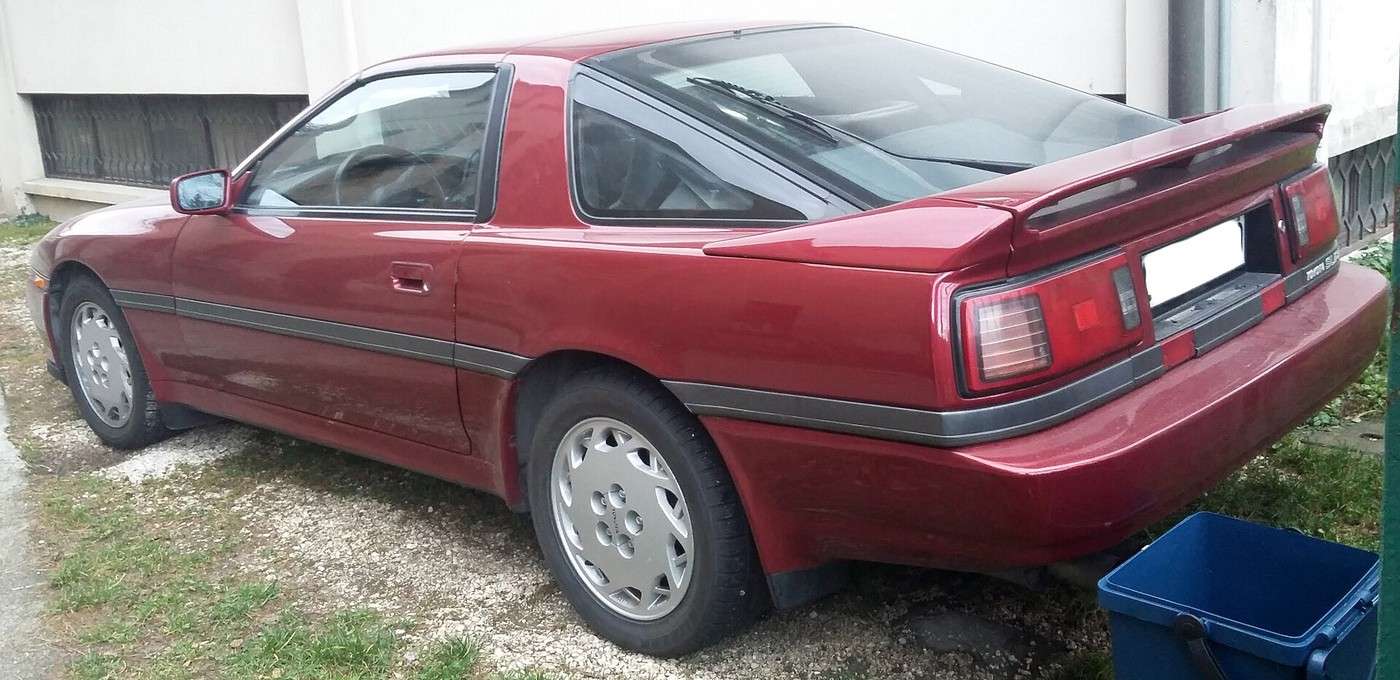
3. Every corner used double wishbones
Toyota fitted independent double-wishbone suspension front and rear, a sophisticated layout for a large 1980s coupé. The design aimed to combine high-speed stability with the ride expected from a luxury grand tourer.
4. TEMS could alter the damping
Toyota Electronic Modulated Suspension offered electronically controlled damper settings. The driver could select a firmer mode, while the system could also react to driving conditions—technology that sounded futuristic in a mainstream Japanese coupé.
Join the Unusual Cars Club free
Get forgotten cars, surprising motoring stories and the most interesting finds from Unusual Cars by email.
Free to join. No spam. Unsubscribe whenever you like. See our Privacy Policy.
5. The roof panel could be removed
Sport-roof versions used a lift-out centre panel to provide open-air driving while retaining fixed side rails and rear bodywork. Correct storage, seals and drainage matter now because water leaks and body flex can expose neglected cars.
6. Japan later received the 1JZ twin-turbo
Late home-market A70s could use the 2.5-litre 1JZ-GTE, giving the outgoing body a new-generation twin-turbo engine. European and British buyers generally know the car through the older 7M, so imported 2.5 Twin Turbos form a distinct subgroup.
7. The Turbo A was built for Group A racing
Toyota produced 500 limited-edition 3.0GT Turbo A cars for homologation. A larger turbo, revised intake and dark exterior details supported Toyota’s touring-car programme, making it one of the rarest factory A70 variants.
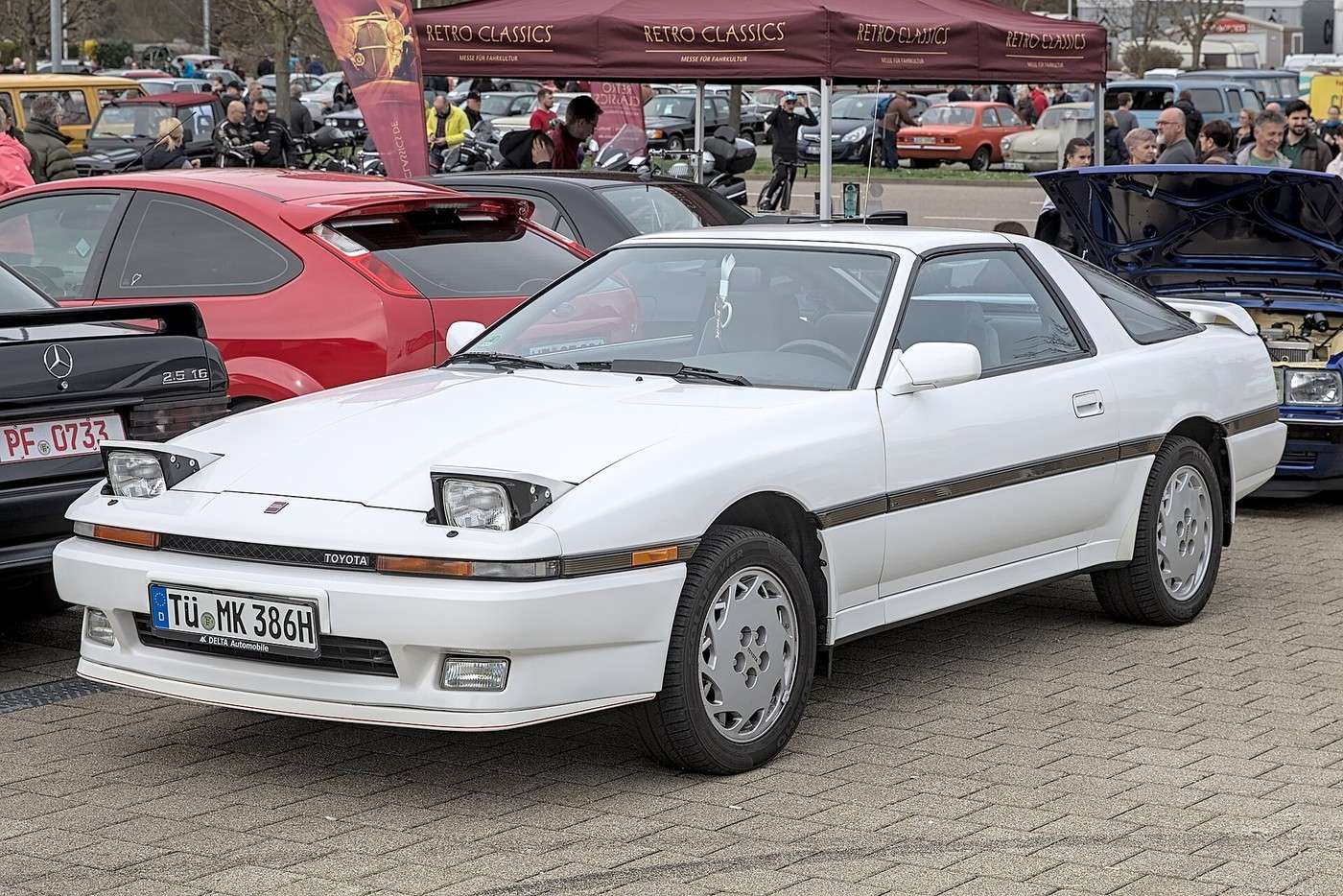
8. Its active front spoiler moved automatically
On suitably equipped Japanese cars, an aerodynamic front spoiler deployed above about 90km/h and retracted when speed fell. It was an unusually theatrical feature years before active aerodynamics became normal on expensive sports cars.
9. The head-gasket reputation has a technical basis
Early factory tightening specifications for the 7M head bolts proved marginal, contributing to gasket failures when engines overheated or were neglected. A correctly repaired engine with proper surface preparation and verified fastener torque can be dependable.
10. It was a heavier, more luxurious Supra by design
The A70 was not intended to imitate a lightweight AE86. Its seats, equipment, long-distance refinement and substantial structure made it a fast GT, which explains both its motorway ability and its greater weight than the Celica-derived cars.
Why it matters
The A70 matters because it established the Supra as an independent technological flagship. Its blend of straight-six power, touring comfort and advanced chassis hardware laid the groundwork for the A80 legend.
Enjoyed this one?
Join the Unusual Cars Club free for more forgotten performance cars, surprising motoring stories and new 10 Things articles.
Free to join. No spam. Unsubscribe whenever you like.
Explore every 10 Things article in the Unusual Cars hub →