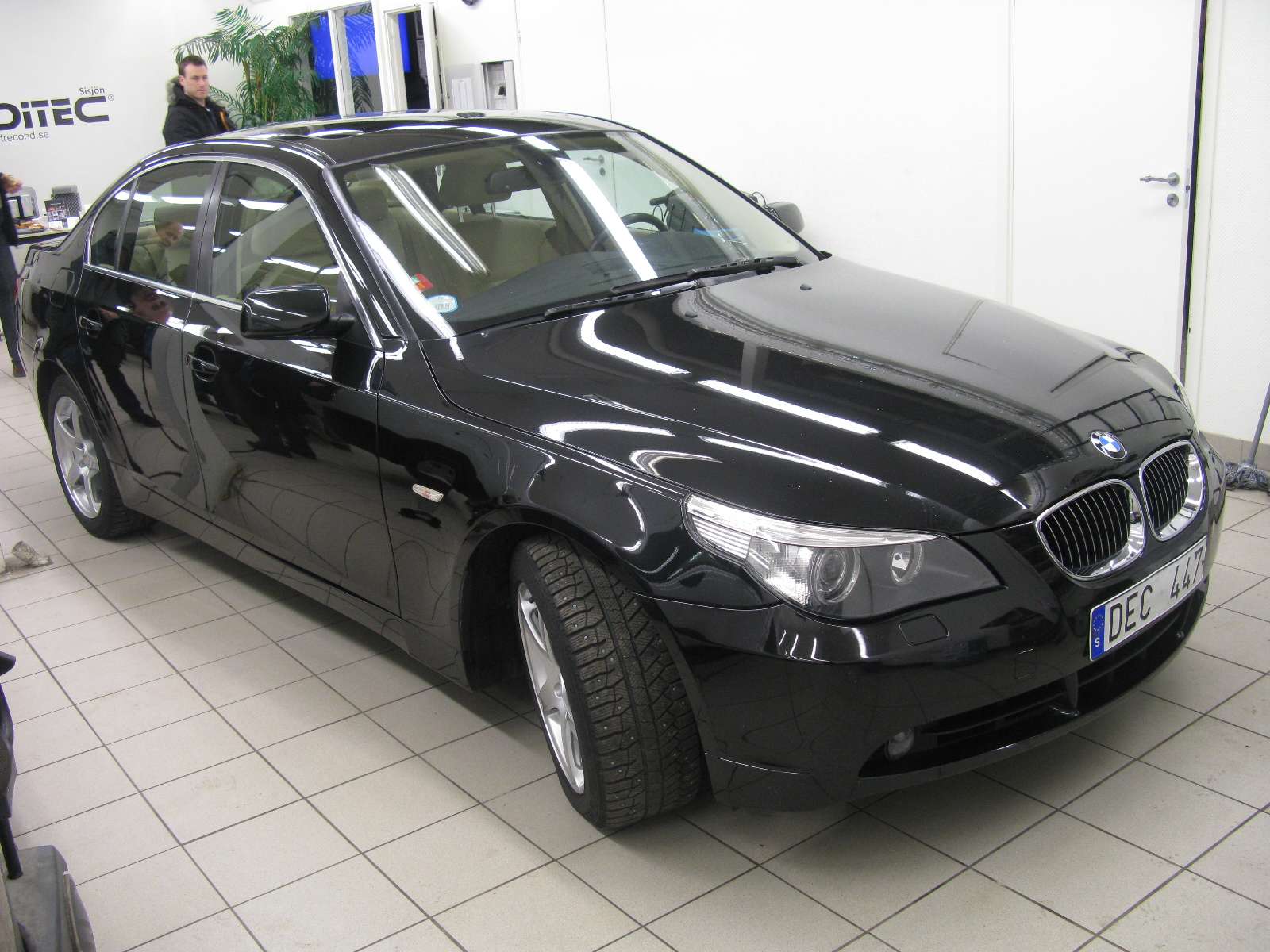
Buying Guides / BMW 530d and 535d E60/E61 · UK buying advice
The E60 530d and 535d remain compelling ways to buy a six-cylinder BMW: strong performance, a distinctive cabin and useful Touring practicality. Buy a sound M57 installation, a healthy transmission and a dry, fully functioning car. The badge, wheel size and claimed remap output are secondary.
This guide covers the E60 saloon and E61 Touring 530d/535d generation, rather than the later F10/F11 or the E60 M5. The 530d has a single-turbo installation; the 535d adds two-stage turbocharging and automatic transmission. Engine outputs and equipment changed over production, so obtain build information instead of ordering parts from a registration year alone.
Affiliate disclosure: eBay links may earn us commission from qualifying purchases at no additional cost to you. Search results are for comparison. Confirm the engine, gearbox, chassis, fitted brakes and original part number before ordering.
The buying verdict: which one makes sense?
For most buyers, the best-documented 530d is the sensible starting point. It delivers the six-cylinder character without choosing the more complex turbo arrangement merely for a larger number on the boot. A 535d is worth seeking when its performance is a priority and you can verify the condition of the complete engine, boost-control and transmission systems.
Choose the Touring because you need its luggage access and versatility, then inspect the equipment that makes it useful. Rear ride height, opening glass, tailgate wiring, drainage and load-area condition deserve more than a quick look. A saloon is not automatically trouble-free, but it removes some Touring-specific questions.
Prioritise a cold inspection, a long enough warm drive, a lift assessment and BMW-aware diagnostics. A generic engine-code check alone leaves the transmission, chassis and body systems largely unanswered. Do not let freshly refurbished wheels or a large infotainment screen distract from leaks, worn suspension or missing maintenance history.
E60, E61, M57 and LCI: keep the identities separate
The RAC’s period-generation review places the original 530d saloon in the 2003 launch range, the Touring in 2004 and the 535d in autumn 2004. It records a substantial facelift at the start of 2007. These dates identify the broad model story, not the equipment or maintenance requirements of every registered example.
For a purchase, record the build month, engine variant, gearbox and optional chassis systems. A late registration can describe an earlier-built car, and replacement lamps or bumpers can make a pre-facelift look later. The identity data and installed hardware should agree before you compare parts.
| Choice | What to establish |
|---|---|
| 530d | Exact M57 variant and output, manual or automatic installation, original emissions hardware and any modifications. |
| 535d | Correct twin-turbo system, transmission history, boost-control condition and standard versus remapped calibration. |
| E60 saloon | Boot, water ingress, structural condition and all fitted electronics. |
| E61 Touring | Rear self-levelling equipment, glass/tailgate operation, wiring, drains and luggage-area condition. |
| Pre-facelift or LCI | Actual build and equipment changes. Compare like-for-like cars rather than judging only the front lamps. |
| SE or M Sport | Fitted suspension, wheel sizes and options. A body kit does not authenticate a factory specification. |
Do not import the later F10/F11’s N57 engine advice as though it describes this M57 generation. Equally, the strong reputation of the M57 does not make every surviving installation healthy. Intake condition, coolant temperature, boost hardware, leaks and supporting electronics still need evidence-based inspection.
Original options can significantly change ownership. Identify Active Steering, Dynamic Drive, adaptive lighting, navigation/audio systems, panoramic roof and powered-tailgate equipment where fitted. A long option list adds things to test. It is not inherently better value when several of those systems are already faulty.
UK prices: compare the total car, not the cheapest badge
The UK 530d advertisements checked during shortlisting included Euro 4 examples at £1,195, £5,495 and £7,499. That broad page also contains later generations, so neither its stock total nor every displayed price describes an E60. These are asking prices, not completed sales or a valuation for a particular car.
Build a shortlist using generation, engine, gearbox, body, mileage and service evidence. A cheap example with unresolved gearbox behaviour, damp luggage compartments and several worn tyres can cost more to own than a better car bought at a higher price. Use written estimates for confirmed defects instead of treating each warning as a low-cost sensor.
Ask which recent repairs were preventive maintenance and which followed a failure. An invoice for diagnostics does not prove the repair was completed. A parts receipt does not prove installation. Where work involved dismantling the intake or transmission, look for the workshop, scope, mileage and follow-up evidence.
Keep initial maintenance and a repair contingency separate from the purchase money. There is no universal figure that makes every old executive diesel safe to buy. Price the actual inspected car, including tyres, suspension, cooling, transmission and any equipment you intend to retain. If one substantial repair would make ownership impossible, choose a different example or rethink the purchase.
M57 engine checks: begin with a genuinely cold car
Ask the seller not to start the engine before you arrive. Observe cranking speed, idle, smoke and persistent noises. A car that starts reluctantly, misfires or produces abnormal smoke needs diagnosis before purchase. Do not accept the explanation that every diesel behaves like that, or assume that a warmer demonstration proves the cold problem is trivial.
Read the oil-service invoices for mileage and lubricant specification. Inspect for leaks above and below, including areas hidden by covers and undertrays. Oil around the intake or accessory equipment needs its source identified. A freshly washed engine bay should be followed by a warm drive and a second inspection rather than treated as proof of dryness.
Swirl flaps and intake condition
RBM Hampshire’s M57 intake discussion identifies swirl-flap hardware and leakage concerns on E60/E61 applications. It is a specialist’s service description, not a measured probability that a particular engine will fail. Use it to frame an inspection: what manifold is fitted, what condition is it in and what work has actually been completed?
Request invoices and part numbers for any previous manifold work. A seller saying the swirl flaps were done does not explain whether the manifold was replaced, repaired or modified. The workshop should assess a functioning, correctly configured solution and any implications of past alterations. This guide does not treat removal of engine or emissions equipment as a universal maintenance recommendation.
Ask the specialist to examine intake operation, seals, contamination and associated wiring where symptoms warrant it. An intake-related code can have several causes. Replacing a whole assembly without establishing the fault may waste money; ignoring a confirmed mechanical defect because the car still drives is equally unhelpful.
Thermostats, warm-up and coolant loss
Assess operating temperature over a proper drive using suitable diagnostic information when available. A diesel that remains too cool deserves investigation of the actual cooling arrangement, rather than replacing parts based on a forum shopping list. Correct operating conditions also matter when assessing emissions and regeneration behaviour.
Inspect the cold reservoir level, hoses, radiator area and accessible joints for staining or residue. Investigate a history of topping up, overheating, inconsistent heating or repeated coolant work. Pressure testing and a careful inspection are more useful than guessing that all losses come from a water pump.
For repair quotations, specify the diagnosed part, access labour, seals, coolant and testing. The 530d and 535d installations should be quoted against their actual build. A component that looks inexpensive online can be part of a much larger job once access and associated deterioration are considered.
Turbocharging, vacuum control and boost leaks
Warm the engine before testing acceleration. Ask the inspector to reproduce any hesitation, limp mode, unusual whistle or smoke and compare relevant measured values. Split hoses, vacuum/control faults, sensors and turbo hardware can cause overlapping symptoms. A fault code containing boost does not prove that a complete turbocharger is required.
The 535d’s two-stage system deserves a technician familiar with its operation. Establish whether a previous turbo repair included investigation of the root cause and the complete associated system. New hardware without correction of oil supply, contamination or control problems can leave the owner facing repeat work.
Remapped examples require a written specification and supporting history. Ask whether torque-management or emissions functions were altered, which workshop calibrated it and whether insurance covers the changes. A strong acceleration run is not a substitute for mechanical condition, and claimed output is not a maintenance record.
Glow plugs, charging and auxiliary drive
Cold-start problems should be investigated as a system: battery, charging, starter behaviour, glow equipment, fuelling and mechanical condition as appropriate. A glow fault does not always mean only the plugs need replacing. Inspect wiring and control hardware, particularly if there is evidence of oil contamination or previous repairs around the intake.
Listen to the auxiliary drive with different electrical and climate loads, and have belt, tensioner and pulley condition assessed. An oscillating or noisy accessory drive deserves attention before a long journey. Do not confuse the auxiliary belt with a timing belt: this engine family uses chains for timing.
When comparing M57 alternators or 535d glow-plug and controller parts, match output, connectors and original numbers. A cheap part ordered by the boot badge can delay a repair if the installation differs.
DPF, EGR and how the car has been used
Identify the emissions equipment fitted to the individual build and verify that it remains correctly configured. Do not assume every early or late car shares the same hardware. Ask about warning messages, limp mode, smoke and any cleaning or replacement work, then compare the explanation with invoices and diagnostic evidence.
Repeated forced regenerations are a reason to investigate the underlying cause, not proof of a completed repair. The specialist should consider the relevant operating conditions and system faults. Clearing a warning for sale gives much less reassurance than a diagnosed repair followed by normal driving.
Consider your intended use. A large diesel bought for short local trips may be a poor fit even if the purchase price is attractive. A history of longer journeys is useful context, but it does not prove that the DPF, EGR, thermostats or sensors are healthy today.
Removed hardware and coded-out warnings should not be accepted as a harmless performance upgrade. Establish the roadworthiness, insurance and emissions implications with appropriate professional advice. For city charging schemes, check the actual registration against the official checker instead of relying on a seller’s Euro description.
Automatic, manual and driveline
Identify the transmission before requesting a service quote. A 535d’s automatic installation and a manual 530d have different inspection priorities. A generic BMW gearbox oil invoice is incomplete evidence unless it records the unit, fluid, filter/pan scope and mileage.
For an automatic, check Drive and Reverse engagement with the footbrake applied. Assess gentle take-up, light-throttle shifts, a hill and progressive acceleration when warm. Watch for delayed engagement, flaring, repeated shudder or harsh changes. Repeat parking manoeuvres hot, because a short cold drive can miss temperature-dependent behaviour.
Have symptoms distinguished from worn mounts, driveline joints and engine running faults. A gearbox service is maintenance, not a guaranteed cure for internal wear or control problems. If history is unknown, obtain a specialist assessment and a method appropriate to the actual unit rather than authorising an indiscriminate flush.
For a manual 530d, assess clutch bite, slip under appropriate load, engagement and gear selection. Listen for unusual flywheel or release-system noises. A quoted clutch job should identify whether a dual-mass flywheel, release components and associated seals are included or conditional on inspection.
Inspect the propshaft, flexible coupling, support and differential areas for wear or leaks as appropriate. Note vibration under load versus at a constant road speed. A motorway-speed vibration can involve tyres or wheels as well as the driveline, so describe the circumstances instead of prescribing one repair.
Love cars you don’t see every day?
Get forgotten cars, surprising motoring stories and the most interesting finds from Unusual Cars by email.
Free to join. No spam. Unsubscribe whenever you like. See our privacy policy.
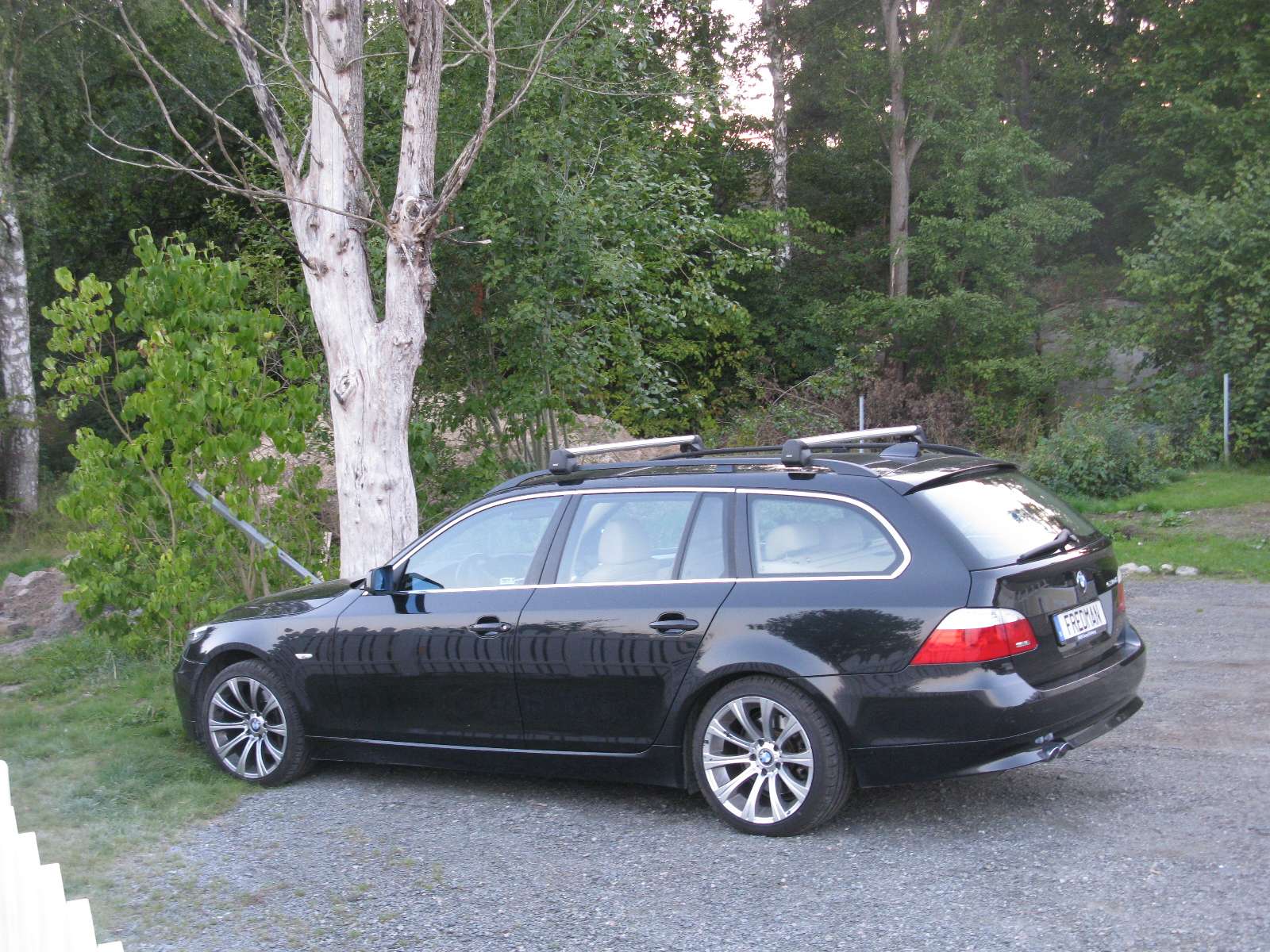
E61 Touring: rear suspension, glass, wiring and water
The Touring should be inspected after standing, before anyone has raised or moved it. Look at rear ride height on level ground and ask whether it sinks overnight or needs frequent correction. A car levelled just before you arrive can conceal useful evidence. The specialist should identify leaks, control issues or compressor problems rather than guessing from stance alone.
Rear self-levelling is part of the Touring purchase assessment. A new compressor receipt is not proof that leaking air components were repaired. Ask what diagnosis preceded replacement and whether the car subsequently maintained height. Establish whether the original system remains or a conversion has been fitted, and assess modifications, insurance and warning-light behaviour accordingly.
Test the tailgate and separately opening rear glass, including their releases, locks, wiper and demisting. Operate them repeatedly rather than accepting one successful demonstration. Inspect accessible wiring and gaiters around moving areas for damage or makeshift repairs. Several apparently unrelated rear electrical faults can require investigation of shared supply or wiring paths.
Where powered opening is fitted, check smooth operation and secure latching. Inspect the hinges, seals, load cover, luggage floor and folding-seat arrangement. A Touring used for heavy loads can have damage hidden beneath mats or trim. Check the actual load-space usefulness with the seats in the positions you need, not just the brochure capacity.
Inspect accessible boot-floor compartments and surrounding trim for water, corrosion, residue or a musty smell. Dampness and electrical faults should be investigated together. A dry upper carpet is not proof that the lower areas have stayed dry. Ask for evidence of the cause and repair if a previous leak is disclosed.
For panoramic-roof cars, test operation according to the handbook and inspect the headlining and pillars for staining. Drainage concerns deserve a competent inspection without destructive dismantling at a viewing. Do not authorise high-pressure shortcuts or assume every leak comes from the same blocked drain. Establish the actual source and any damage already caused.
Suspension, steering, brakes and body condition
A sound E60 should feel stable and controlled. Listen for knocks, assess tracking and check for shimmy under braking or at a particular speed. Large wheels and M Sport suspension can change comfort, but should not excuse wandering or an unsettled chassis. Use a lift inspection to identify worn arms, bushes and joints.
Ask the inspector to distinguish confirmed wear from parts suggested only because of age. A complete front-arm kit may seem economical, but correct specification, fitting, seized fixings and alignment remain part of the total. Replacing tyres without correcting underlying geometry or suspension wear can simply repeat the expense.
Check whether Active Steering or Dynamic Drive is fitted. These are additional systems to inspect, not features to assume from an M Sport badge. Investigate warnings, leaks, unusual assistance or inconsistent behaviour with a specialist familiar with the equipment. A seller saying a warning can be coded away is leaving the underlying condition unanswered.
Inspect discs, pads, caliper operation, hoses and pipes, and test braking safely for pulling, vibration or grinding. The parking brake should operate correctly. Select parts by the actual brake package and dimensions; a wheel diameter or registration number alone may not distinguish all applications.
Inspect tyre inner edges, age, brand and load/speed ratings. Check the specified arrangement and whether any run-flat or conventional-tyre change has been made properly. Examine wheels for cracks, buckling and questionable repairs. A recent balancing receipt does not prove that a bent wheel or worn suspension has been resolved.
Check sills, lifting points, floor and mounting areas for damage, corrosion and poor repairs. Compare panel gaps, paint reflections, lamps and structural details. Vehicle-history checks and MOT records are useful evidence, but cannot replace an underside and body assessment. Repeated advisories should direct questions and be matched to repair invoices.
iDrive, lights, climate and comfort equipment
Work through the iDrive controller, display, audio sources, navigation, phone connection and all speakers. A replaced screen or aftermarket interface should be tested for retained original functions. Old maps and limited connectivity are different from an intermittent head unit; decide whether the system meets your needs before buying.
Test climate control for heating and strong cold output, all seat functions, windows, locks, mirrors, parking sensors, fitted cameras and both keys. Adaptive lighting, head-up display and other options need their own demonstration. Do not assume an expensive option is healthy because the dashboard has no message during a brief idle.
Inspect signs of electrical modification: loose add-on wiring, poorly mounted controllers and repeated battery-disconnection explanations. Test battery and charging health if there are intermittent complaints. Low voltage can create confusing symptoms, but faults that remain with a healthy supply need separate diagnosis.
Check paperwork for battery replacement and any required vehicle-specific procedures. A seller’s claim that a new battery solved everything should be supported by normal operation and diagnostic findings. Ask the specialist to preserve the initial scan before clearing faults or performing updates.
Maintenance and sourced UK costs
The MINI & BMW Specialist’s 535d menu provides the following examples with parts, labour and VAT included. It is a model-family menu, not a VIN-specific E60 quote; the page also contains some broader template wording. Confirm the E60/E61 engine, brakes and service scope before relying on a price.
| Job | Published fitted example | Scope and limits |
|---|---|---|
| Oil and filter | £220 | Bronze service, specified oil/filter. Confirm oil quantity and approval. |
| Oil, filter and air filter | £250 | Silver menu total. |
| Gold service and vehicle check | £349.99 | Adds cabin filter and inspection to the stated service items. |
| Diesel Platinum and vehicle check | £450 | Includes the listed fuel-filter work. Not proof that every drivetrain fluid is included. |
| Front discs, pads and sensor | £888.96 | Menu example; match the actual brake package. |
| Rear discs, pads and sensor | £600 | Additional caliper or pipe repairs are a separate question. |
| Brake-fluid replacement | £100 | Complete fluid service as described by the workshop. |
| Diagnostic check | £80 | Not an unlimited allowance for every intermittent fault. |
| Major inspection | £145 | Menu describes a more extensive inspection and diagnostic report; agree purchase-inspection suitability in advance. |
The workshop does not publish a separate parts/labour split for those combined jobs. Do not subtract an unrelated online parts price to invent a labour figure. Intake work, turbo repairs, cooling diagnosis, rear self-levelling and automatic-transmission work require a written scope for the individual car.
Parts-only comparisons and what they leave out
During shortlisting, E60/E61 530d service-kit searches showed examples around £63–£103 with differing contents, as well as more expensive oil/filter packages. These prices do not establish the cost of a complete fitted service. The result set also includes other engines and generations, so verify contents, oil approval, quantity and part numbers.
Useful comparisons include 530d thermostat parts, E61 rear air-suspension components, 535d brake parts and automatic gearbox service kits. Ask the fitting workshop to approve compatibility and explain its position on customer-supplied parts before ordering.
A clutch or flywheel quote should identify all included components and inspection-dependent extras. A turbo quote should state single versus twin-turbo scope and investigation of the root cause. A rear-suspension quote should distinguish a leaking air component from a compressor or control issue. These distinctions are more useful than a broad internet average.
Include diagnosis, access, fasteners, seals, fluids, alignment where relevant, VAT and testing in the fitted total. Establish whether warranty covers the part only or the complete installed repair. A low-cost used electronic unit may need coding and may have its own age-related faults, so compare more than its purchase price.
What maintenance history should actually show
Use the correct vehicle schedule and recorded work to create a baseline. Review engine oil, air and fuel filters, brake fluid, coolant-system condition, auxiliary drive and relevant transmission or differential servicing. A service indicator reset does not prove the work was performed, and a generic full-service stamp does not establish every fluid change.
Keep paper invoices even if the car has digital or onboard records. Match dates and mileages with MOT history and ownership. Investigate long gaps and unexplained inconsistencies without assuming every missing receipt proves neglect. The purpose is to establish what can be relied on and which maintenance must now be budgeted.
Typical service parts and eBay searches
Use this table to compare parts for the actual vehicle. Prices on eBay change; check current listings, exact compatibility, kit contents, seller support and delivery. Parts-only prices exclude diagnosis, fitting and associated workshop work. We may earn commission from qualifying purchases through these links, at no additional cost to you.
| Maintenance item | Useful buying checks | Vehicle-specific eBay search |
|---|---|---|
| Oil, air, fuel and cabin filters | Confirm the M57 variant, approved oil and kit contents; 530d and 535d searches can return later-generation parts. | E60/E61 diesel service kits — eBay |
| Alternator | Match output, connector, mounting and pulley after a charging-system diagnosis. Check exchange surcharge and warranty. | M57 alternators — eBay |
| Starter motor | Confirm engine/transmission fitment and check battery, cables and starting control before ordering. | M57 starter motors — eBay |
| Glow plugs and controller | Diagnose plugs, controller and wiring together; confirm the actual engine application and whether removal needs specialist care. | M57 glow-system parts — eBay |
| Thermostat and water pump | Identify the warm-up or coolant-loss cause and confirm the fitted cooling arrangement, seals and coolant. | M57 cooling-system parts — eBay |
| Auxiliary belt, tensioner and pulleys | Match the installed belt routing and pulley specification. This is separate from the timing chains. | M57 auxiliary-drive parts — eBay |
| Brake discs, pads and sensor | Identify the actual brake package and dimensions; include wear sensors and any additional fitting work. | E60/E61 brake parts — eBay |
| Automatic gearbox service kit | Confirm the gearbox code, approved fluid and pan/filter contents. A kit is not a cure for an undiagnosed shift fault. | E60/E61 gearbox service parts — eBay |
| Clutch and dual-mass flywheel — manual 530d only | Match the actual manual gearbox and engine. Compare release components, flywheel scope and fitting labour. | Manual 530d clutch parts — eBay |
Hidden ownership costs
Multiple suspension jobs: an old executive car can need arms, tyres and alignment together. Price them as a complete proposition rather than treating each as a small separate defect. A fresh MOT does not certify that all wear has been eliminated.
Touring equipment: glass releases, wiring, air suspension, tailgate operation and leak repairs can consume money while the engine continues to run well. A car bought for its practicality is poor value if the access systems do not work or luggage compartments are damp.
Optional technology: Active Steering, Dynamic Drive, adaptive lights and sophisticated audio need specific diagnosis and parts. Confirm availability, coding and lead time. An obsolete or used module is not automatically a straightforward plug-in repair.
Fuel: use your actual duty cycle. For illustration, 8,000 miles at 38mpg consumes about 957 litres; at an assumed £1.50 per litre that is roughly £1,436. Those are budgeting assumptions, not a measured economy result or current pump-price claim. Short trips and driving style can materially change the outcome.
Tax, insurance and city charges: check the registration against current official records and obtain an exact insurance quote. Declare tuning, wheel/suspension changes and imports. Do not assume that a cheap purchase has cheap annual tax or qualifies for a city emissions exemption.
Diagnostic time and downtime: a scan is the start of some investigations, not the end. Agree initial diagnostic scope and a spending limit with the garage. Ask whether a fault makes the car unsafe to drive and whether transport or alternative travel will be needed while parts are sourced.
Deferred servicing: buying a car whose owner has postponed maintenance transfers that backlog to you. Add up the immediate baseline, confirmed repairs and contingency before negotiating. A seller’s recent cosmetic spend does not compensate for an automatic-transmission symptom or unresolved cooling loss.
A practical E60/E61 inspection plan
- Before travelling: obtain identity details, engine/gearbox specification, service evidence, disclosed faults and agreement to a cold inspection and independent assessment.
- Arrival: observe ride height, inspect the body in daylight and compare the car with the documents. Ask whether it was started or raised before you arrived.
- Cold start: watch warning checks, listen for persistent noises and assess starting, idle and smoke. Inspect fluids safely and note visible residue.
- Touring access: test rear glass, tailgate, wiper, demisting, load cover and seats. Inspect accessible boot-floor areas for dampness or repairs.
- Cabin equipment: test iDrive, audio, climate, seats, mirrors, windows, locks, lights and both keys. Record intermittent faults.
- Road drive: assess progressive acceleration, operating temperature, transmission behaviour, tracking, suspension and safe braking. Repeat manoeuvres when warm.
- Lift inspection: examine underbody condition, suspension, tyres, pipes, driveline and leaks. Identify optional systems and modifications.
- Diagnostics: read relevant BMW modules, preserve findings and distinguish confirmed defects from further investigation.
- Final decision: obtain fitted repair estimates and compare total ownership cost. Uncertain identity, unsafe repairs or refusal of reasonable inspection are reasons to leave.
A useful report separates maintenance due, diagnosed repairs and uncertainties. A swirl-flap comment without identifying the fitted manifold is incomplete. A rear-height complaint without a leak/control assessment is not a compressor diagnosis. Ask for evidence that supports the proposed repair rather than a catalogue of every problem the model could have.
Take another person or specialist where possible so that one can observe while the other operates equipment. Allow enough time to repeat a function that behaves inconsistently. Avoid distracting the driver with complex menu tests on the road; complete static equipment checks safely before or after the drive.
Questions to ask before paying a deposit
Why is the car being sold? Does it use oil or coolant? Has it shown gearbox, boost, emissions or suspension warnings? What intake work has been done? Who last serviced the automatic transmission? Does the Touring settle overnight or ever admit water? Which modifications are declared to the insurer? Ask for invoices supporting the important answers.
For stored cars, ask how long they stood, how they were recommissioned and whether they have been driven meaningfully since. Fresh oil and a battery are not a complete recommissioning programme. Check tyres, braking, fluids, seals and equipment even if the displayed mileage is low.
Frequently asked questions
530d or 535d?
Choose condition and history first. The 530d is the sensible starting point for many owners; the 535d adds performance and turbo-system complexity. A neglected 535d is not a bargain simply because its purchase price is close to a good 530d.
Does this guide cover the N57?
No. Its scope is the M57-powered E60/E61 530d/535d generation. The later F10/F11 guide addresses a different generation. Verify the actual installation if an engine replacement or modification is disclosed.
Should I budget for a timing-belt kit?
The timing drive uses chains. Inspect the separate auxiliary drive and investigate persistent engine noises properly. Do not transfer belt-service advice from an unrelated diesel.
Is an E61 that sinks overnight just a cheap air-bag repair?
It needs diagnosis. Air components, pipework, valves, sensors, control and compressor condition should be assessed as appropriate. A seller’s parts-price guess is not a fitted repair estimate.
Does a service stamp prove the gearbox was serviced?
No. Look for an itemised transmission invoice identifying the unit, fluid and filter/pan scope. A reset service indicator and a generic engine service leave that question unanswered.
Can a remapped car be a good buy?
Potentially, with a documented specification, sound installation, proper inspection and appropriate insurance. Increased output and an impressive test drive do not establish durability or legal emissions configuration.
Sources and research method
Model history and period driving context: RAC E60-generation review. Its old replacement-parts examples are not used as current M57 costs. Intake inspection context: RBM Hampshire. UK fitted-cost examples: MINI & BMW Specialist 535d menu. Market context: AutoTrader 530d advertisements. Menu prices and advertised stock do not guarantee an individual car’s condition or repair bill.
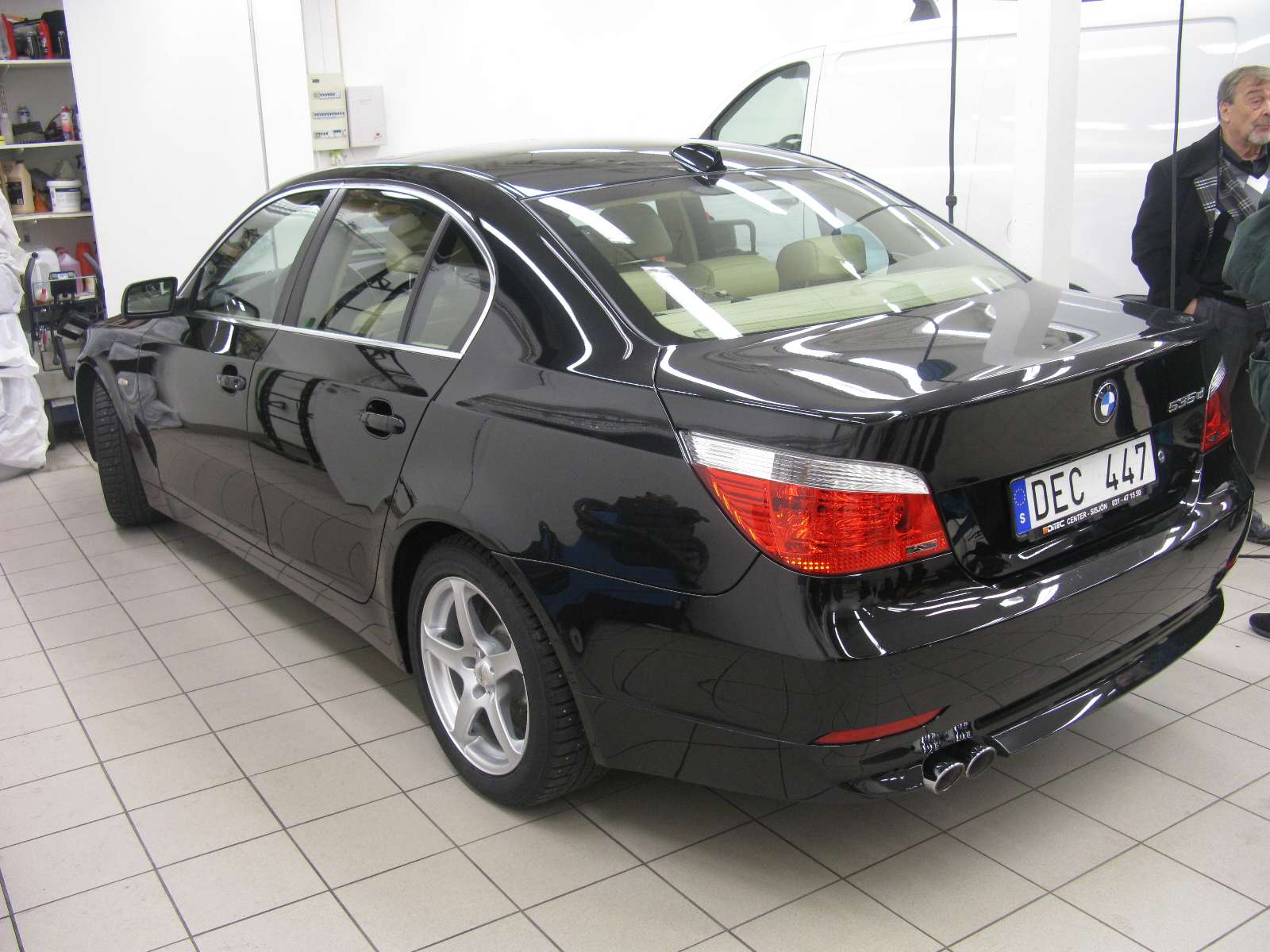
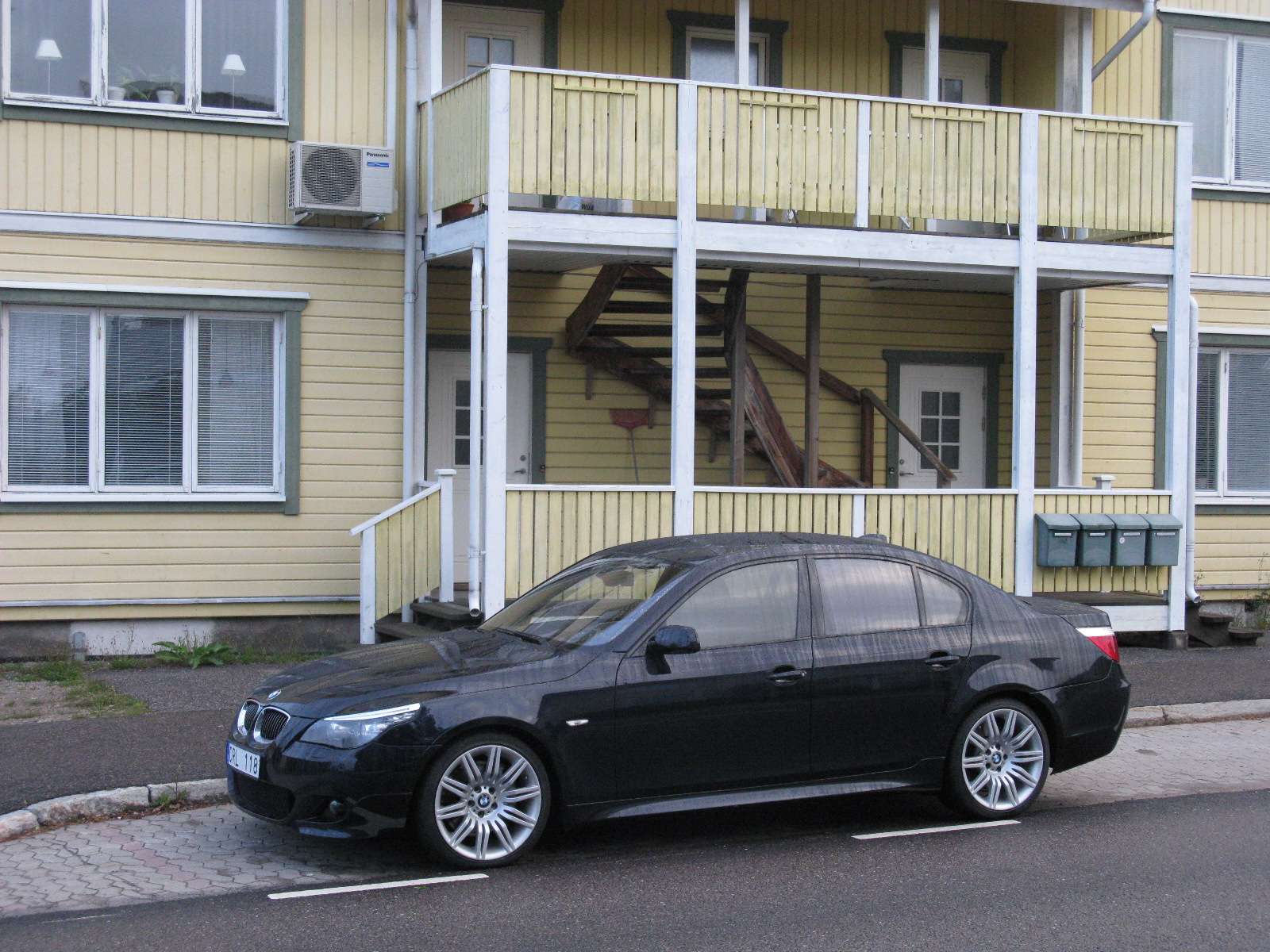
Featured and inline photographs: nakhon100 / Wikimedia Commons, CC BY 2.0, resized for web. Featured image source: BMW 535d E60. Captions link each additional source. The photographed cars illustrate the model, not the specific advertised price examples.
BMW 530d & 535d E60/E61 for sale on eBay UK

See more BMW 530d & 535d E60/E61 cars on eBay UK
Love cars you don’t see every day?
Get forgotten cars, surprising motoring stories and the most interesting finds from Unusual Cars by email.
Free to join. No spam. Unsubscribe whenever you like. See our privacy policy.