
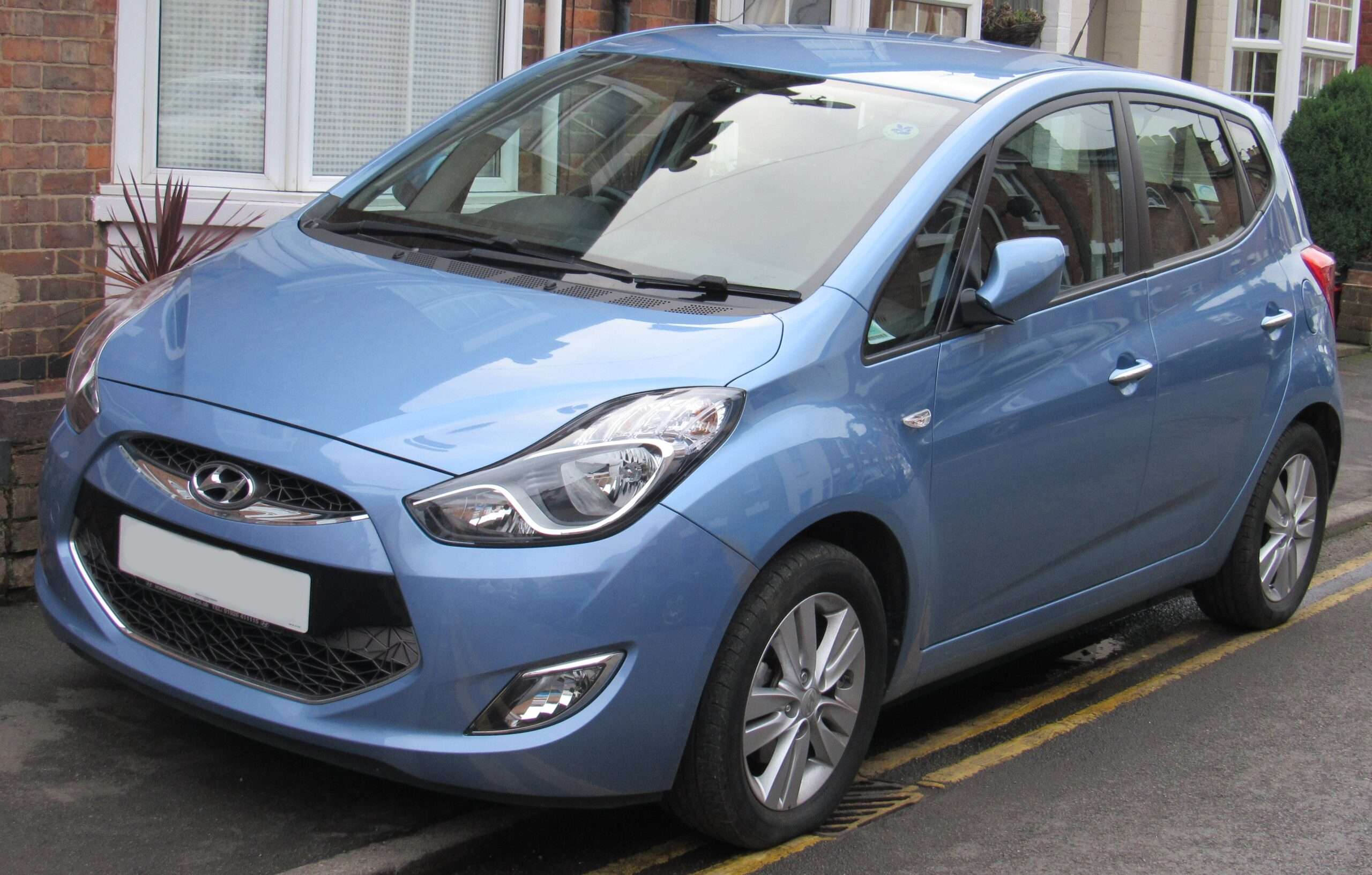
An ix20 is the sort of car many owners intend to keep for years. A Hyundai-capable scanner can earn a place alongside the service folder by preserving warnings that otherwise vanish between visits. You can identify which system raised a lamp, save what it remembers and show a fitter what changed after the last job. That gives you something useful to do before ordering parts.
Tyre-pressure monitoring is a good test of a scanner’s value. A pressure gauge answers whether a tyre needs air today. A compatible Hyundai reader can ask the receiver which transmitters it recognises. A tyre fitter’s handheld trigger tool adds a third piece of evidence by checking the wheel itself. Knowing which question each tool answers can spare you the labour of removing a sound tyre to replace the wrong sensor.
Identify the system before buying anything
This guide covers JC-generation ix20s fitted with direct tyre-pressure monitoring. Check your handbook and build specification. The presence of a valve stem on a wheel tells you little about the electronics inside it. A replacement wheel can fit the hub perfectly while carrying a sensor that the car cannot use. Start by checking all four cold pressures against the figure on your car’s label for the load you carry. Look for damage or an obvious loss of air.

Amazon affiliate link. As an Amazon Associate, Unusual Cars earns from qualifying purchases.
Watch the first minute, not just the final light
Hyundai’s ix20 handbook distinguishes a low-pressure indication from a malfunction indication that flashes for about a minute before staying on. An owner who first looks down a few minutes into the journey can miss this clue. The handbook also describes a system fault and genuine underinflation occurring together. Finding one explanation is therefore no reason to skip the physical pressure checks.
A generic engine scan has no obligation to interrogate the tyre-pressure receiver. Ask a Hyundai-capable tool for the receiver’s fault descriptions and, where offered, the registered transmitter identities and their latest readings. An old value can outlive the radio transmission that produced it. Record whether the display tells you how recent each reading is.
Like our guides and unusual cars?
Get forgotten finds, useful motoring content and the most interesting car stuff from us by email.
Free to join. No spam. Unsubscribe whenever you like. See our privacy policy.
Three checks before paying to remove a tyre
| Owner’s question | What to read or compare | How it changes the next step |
|---|---|---|
| Is a tyre actually losing air? | Measure cold pressures against the door label and record repeated readings. | A falling gauge reading calls for a physical leak check even if a sensor also has a fault. |
| Can each wheel transmit? | Ask the fitter to trigger each sensor at the wheel and record its identity. | One silent wheel narrows the search. A part number still needs checking against the vehicle. |
| Does the car recognise the responding transmitter? | Compare the physical IDs with the receiver’s registered IDs where supported. | A working transmitter absent from the receiver list points towards compatibility or registration. |
Why an ID is more useful than a corner name
Suppose the display identifies a rear corner but the tyre shop rotated the wheels at the last visit. The label on a scan is the position the system associates with an identity. The physical wheel may have moved. Ask the fitter to write the four radio IDs beside the four current wheel positions. Now compare that sheet with the receiver report. This takes less guesswork than deciding which tyre to remove from a dashboard diagram.
Another useful distinction is fresh versus last-known data. If a pressure shown on the scanner disagrees with a trustworthy gauge, check the units and whether the display indicates a recent transmission. The value might belong to an earlier journey. A gauge reading at the valve and a freshly triggered reading from the same wheel give a much fairer comparison.
Worked example — a warning after a wheel change
Suppose all four tyres measure correctly but the malfunction sequence starts after a replacement wheel goes on. Save the report before anyone clears it. A tyre specialist can use a trigger tool at each wheel to identify the physical transmitter and compare the result with the car’s registered IDs. Wheel position labels can be misleading after rotation. Matching the ID is more persuasive than guessing the corner from an old report.
Three responding wheels and one silent wheel give the fitter a specific tyre to investigate. A wheel that responds to the trigger tool but carries an unexpected ID raises a different question about registration and compatibility. If the trigger tool hears every sensor and the receiver hears none, four replacement sensors would be a poor first bet. Ask about receiver power, communication and compatible sensor specification.
When the pressure really is falling
If one tyre repeatedly loses pressure on a reliable gauge, have the tyre, valve and rim checked for leaks. A diagnostic reader cannot locate a puncture. If the warning began after fitting a second set of wheels, take the old wheel details and the invoice to the fitter. Ask them to record the before-and-after IDs and confirm that the car receives fresh readings after the work.
What to check before buying a scanner
Ask for JC direct-TPMS controller coverage by UK year. Reading fault memory, displaying registered IDs, waking a sensor through the tyre and programming a replacement are different jobs. Establish which one you need before ordering a tool.
Amazon affiliate link. As an Amazon Associate, Unusual Cars earns from qualifying purchases.
Ask the supplier to confirm the functions against your UK model year and VIN. The Amazon link opens search results for the iCarsoft JP V3.0. Individual listings and software versions can differ.
Hyundai ix20 owner’s manual, tyre-pressure monitoring system · More Hyundai scanner guides
Like our guides and unusual cars?
Get forgotten finds, useful motoring content and the most interesting car stuff from us by email.
Free to join. No spam. Unsubscribe whenever you like. See our privacy policy.
Featured photograph of the Hyundai ix20 by Vauxford, CC BY-SA 4.0. Original photograph.
