10 THINGS YOU PROBABLY DIDN’T KNOW
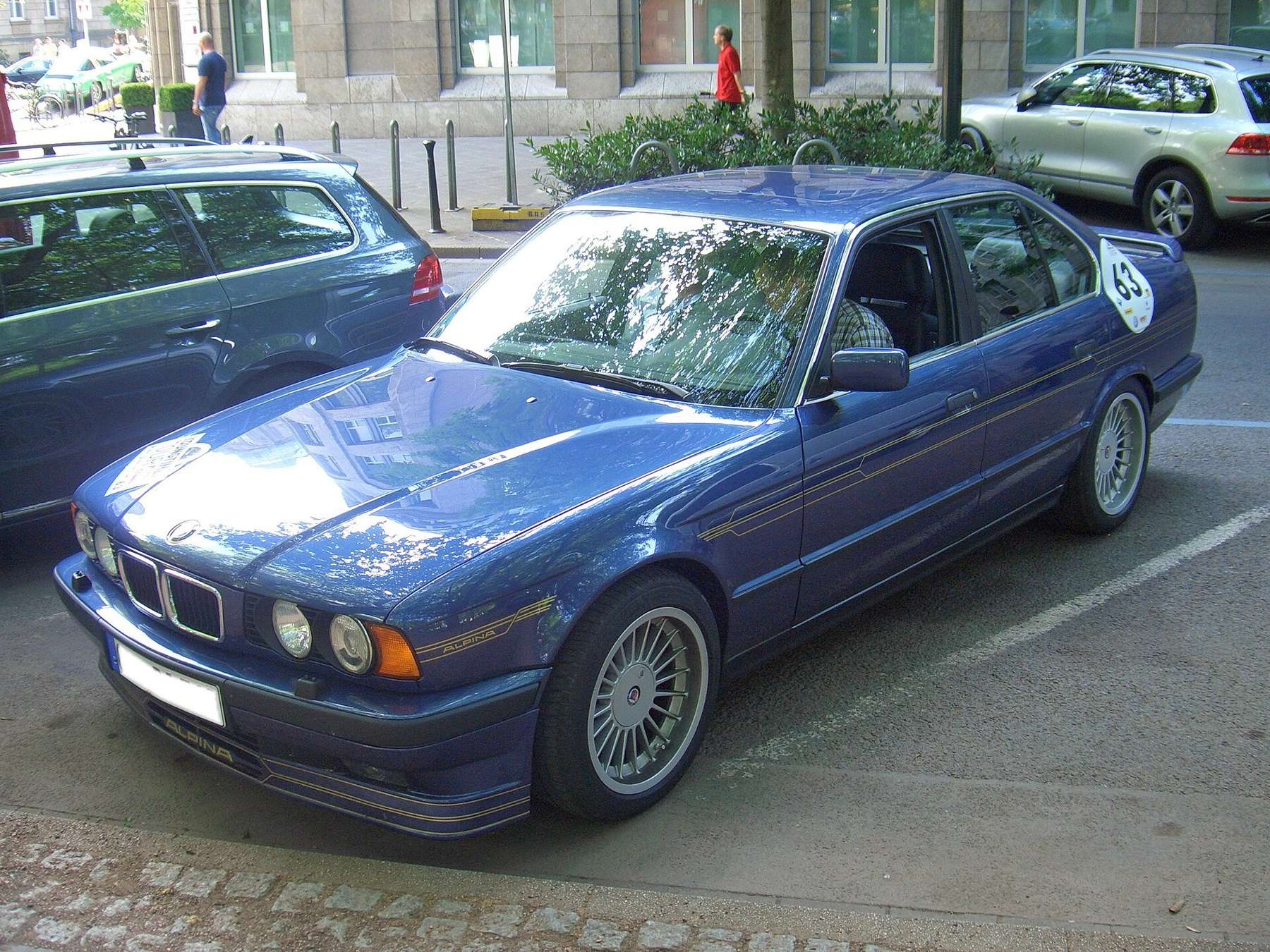
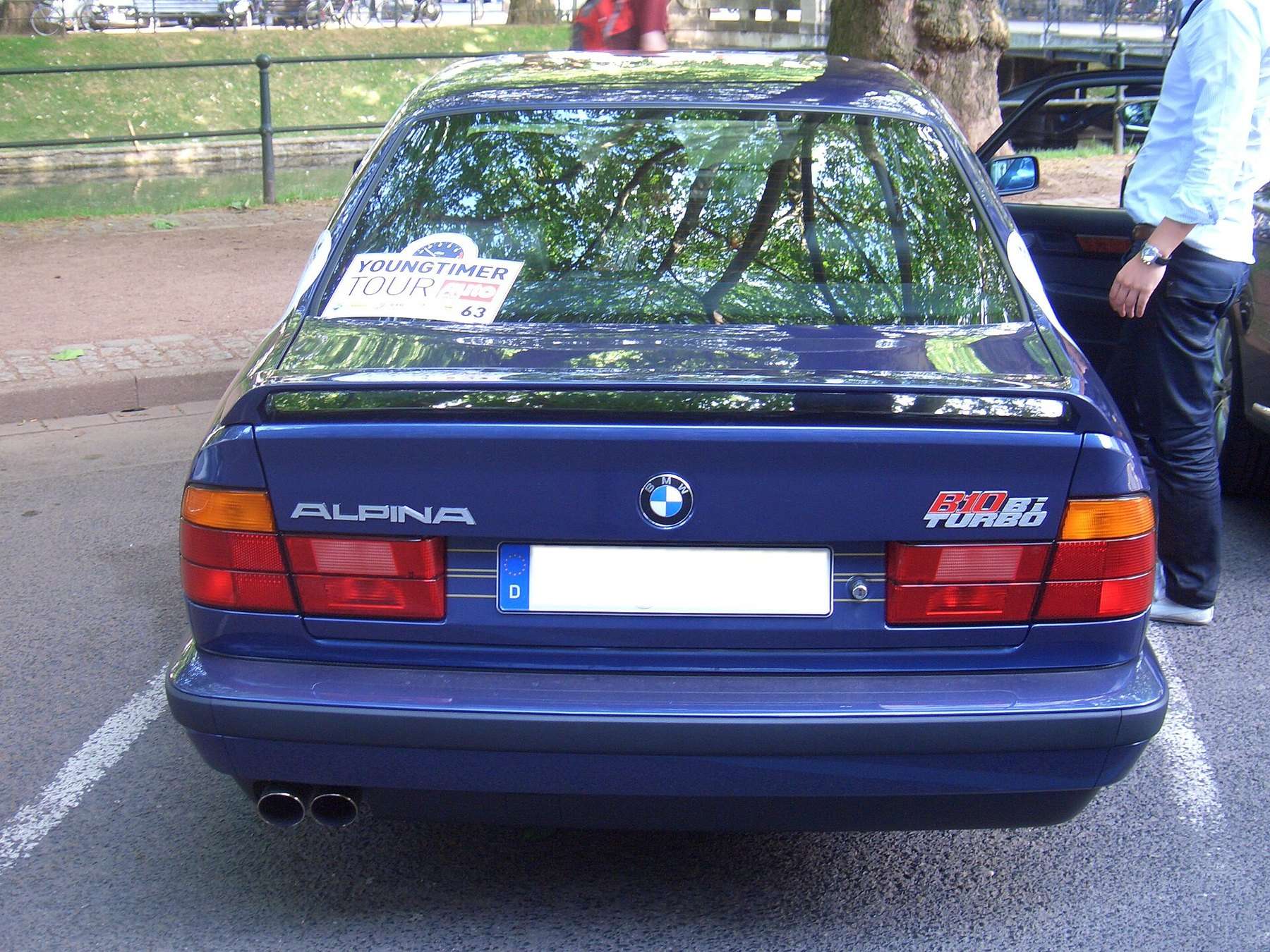
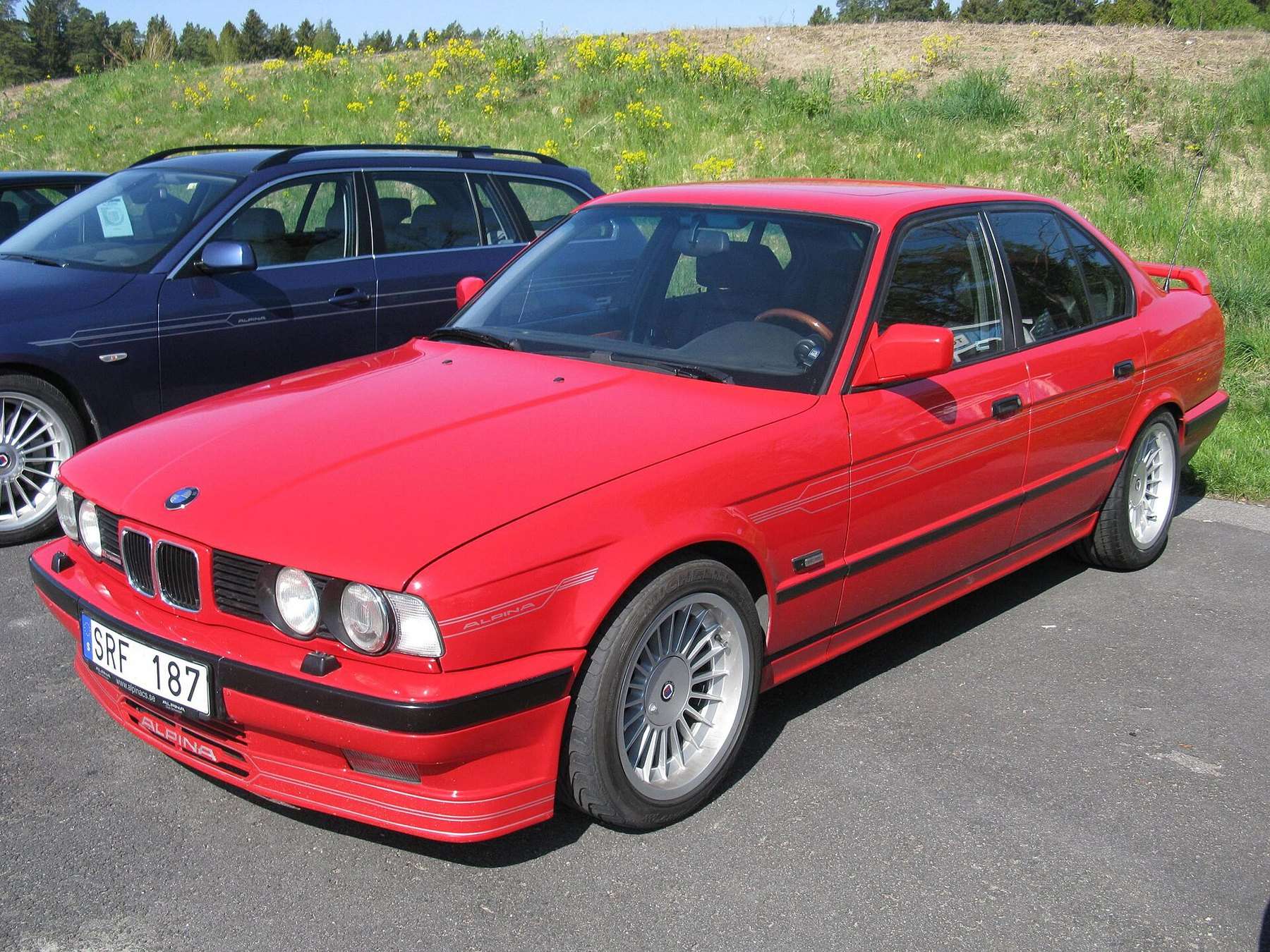
The Alpina B10 Bi-Turbo looked like a tastefully modified BMW 535i, but almost every important mechanical component had been reworked at Buchloe. At its 1989 launch it was among the fastest four-door cars in the world and one of the defining super-saloons of its era.
1. Alpina started with a new BMW 535i—not an M5
Each car began as an E34 535i supplied by BMW. At Buchloe, the drivetrain was removed and extensively rebuilt. The finished machine carried an Alpina manufacturer identity and its own production plaque; it was not simply a dealer conversion or a tuning kit fitted to a used BMW.
2. Development took two years
Alpina invested heavily in making a twin-turbo installation that behaved like a refined road-car engine rather than a peaky conversion. Cooling, fuelling, exhaust, pistons, cylinder head, driveline and aerodynamics were developed together. Contemporary accounts place the programme cost in the millions of dollars.
3. The 3.5-litre straight-six was rebuilt internally
Alpina stripped BMW’s M30 engine and fitted forged Mahle pistons, revised combustion chambers, a different camshaft and strengthened components. The nominal capacity was 3,430cc. The aim was to withstand sustained boost and autobahn speeds while retaining the smoothness expected from an expensive executive saloon.
4. Two small Garrett turbos were chosen for response
Instead of one large turbocharger, Alpina used two water-cooled Garrett T25 units feeding through an intercooler. The arrangement reduced lag and created a wide spread of torque. Maximum output was 360PS with 520Nm—huge numbers for a production saloon launched in 1989.
Love cars you don’t see every day?
Get forgotten cars, surprising motoring stories and the most interesting finds from Unusual Cars by email.
Free to join. No spam. Unsubscribe whenever you like. See our Privacy Policy.
5. The driver could adjust the boost
A rotary control allowed boost pressure to be reduced from the maximum setting, useful in poor conditions or when less performance was wanted. The feature made the engine’s potential unusually visible to the driver and reinforced that this was a carefully engineered turbo car, not merely a luxury 5 Series.
6. Its instruments monitored more than speed and fuel
Alpina added digital readouts for engine-oil temperature, differential-oil temperature, boost pressure and engine-oil pressure. That information helped an owner warm and cool the complex drivetrain properly. It also gave the otherwise restrained E34 cabin a distinctly technical character.
7. It could exceed 180mph
Alpina quoted a maximum speed around 290km/h, roughly 180mph, and did not impose BMW’s familiar 155mph electronic limit. Performance placed it beyond the contemporary E34 M5 and into supercar territory while retaining four doors, a usable boot and long-distance comfort.
8. The gearbox and rear axle were bespoke parts of the package
A strengthened Getrag five-speed manual, heavy-duty clutch and specially chosen limited-slip differential ratios handled the torque. Alpina also revised suspension, brakes, tyres and aerodynamics. Focusing only on the engine misses why the B10 could deploy its performance so convincingly.
9. Just 507 were built
Production ran from 1989 until 1994. Alpina completed 507 cars, making the Bi-Turbo rare but successful by the company’s standards. It became Alpina’s best-selling single model up to that point despite costing dramatically more than a normal 535i and substantially more than an M5.
10. BMW’s old M30 engine ended the story
The B10 Bi-Turbo could not simply move to the next BMW engine without a fresh development programme. When supply of the M30 ended, Alpina reserved the final engines for the last cars and closed production. The model therefore became the spectacular final chapter of BMW’s long-lived big six.
Join the Unusual Cars Club
Get more forgotten performance cars, surprising motoring stories and new 10 Things articles by email.
Free to join. No spam. Unsubscribe whenever you like. See our Privacy Policy.
Explore more 10 Things articles
Discover more cult cars, performance legends and motoring surprises in the Unusual Cars 10 Things hub.
Sources and further reading
Featured image: Photograph by Detectandpreserve, CC BY-SA 3.0, via Wikimedia Commons; locally hosted.