
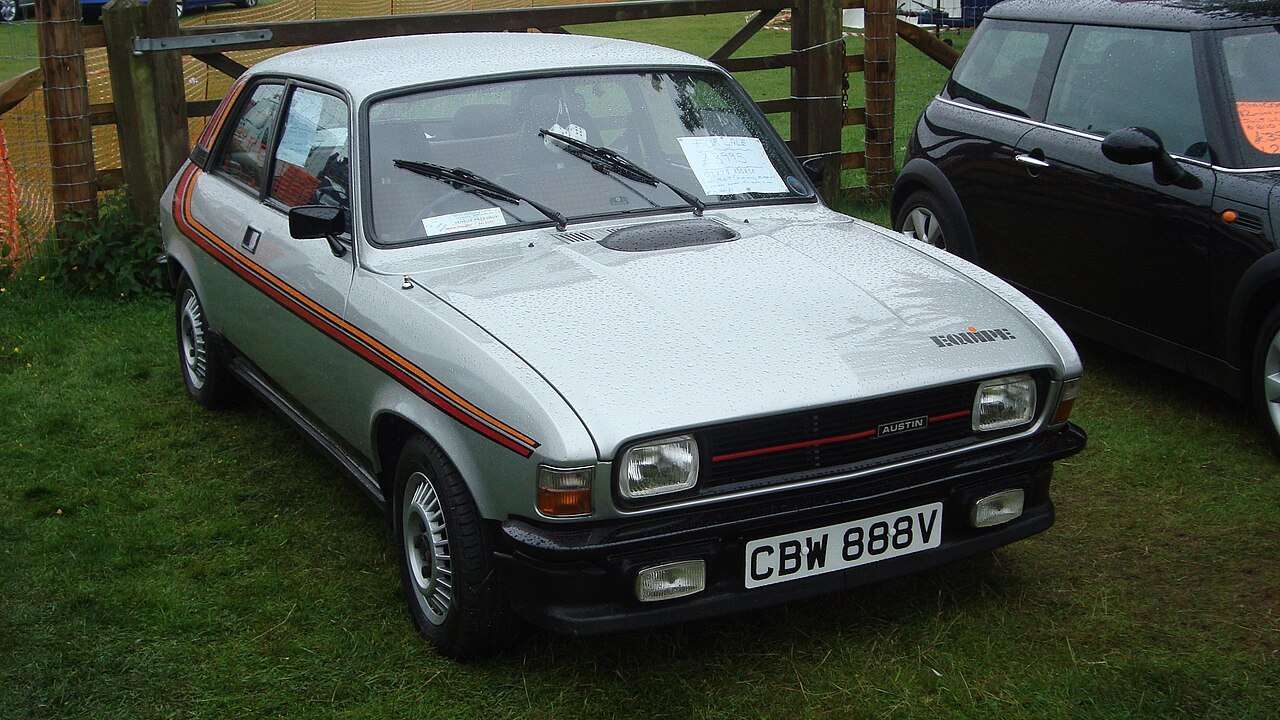
The Allegro most people remember wore subdued colours and went about its business quietly. The 1979 Equipe came in silver with loud stripes, proper alloy wheels and twin carburettors. British Leyland wanted you to notice it.
1. It was a late flourish for the Series 2
The Equipe appeared in 1979, shortly before the Series 3 arrived. That timing explains the car better than any attempt to cast it as a permanent rival to a Golf GTI. It was a special edition intended to put an existing range back in the spotlight.
2. The engine came out of the Maxi family
The 1,748cc E-Series four-cylinder came from the same engine family as the bigger-engined Maxi. In the Equipe, twin SU carburettors made it a more interesting proposition than the small A-Series Allegros most people remember.

3. It came as a two-door saloon
The Allegro’s rounded tail looks like it should lift as one piece. On the Equipe, as on the regular saloon, there was a separate boot lid. What looks like a plausible first-generation hot hatch is technically a two-door saloon.
4. The loud stripes were part of the package
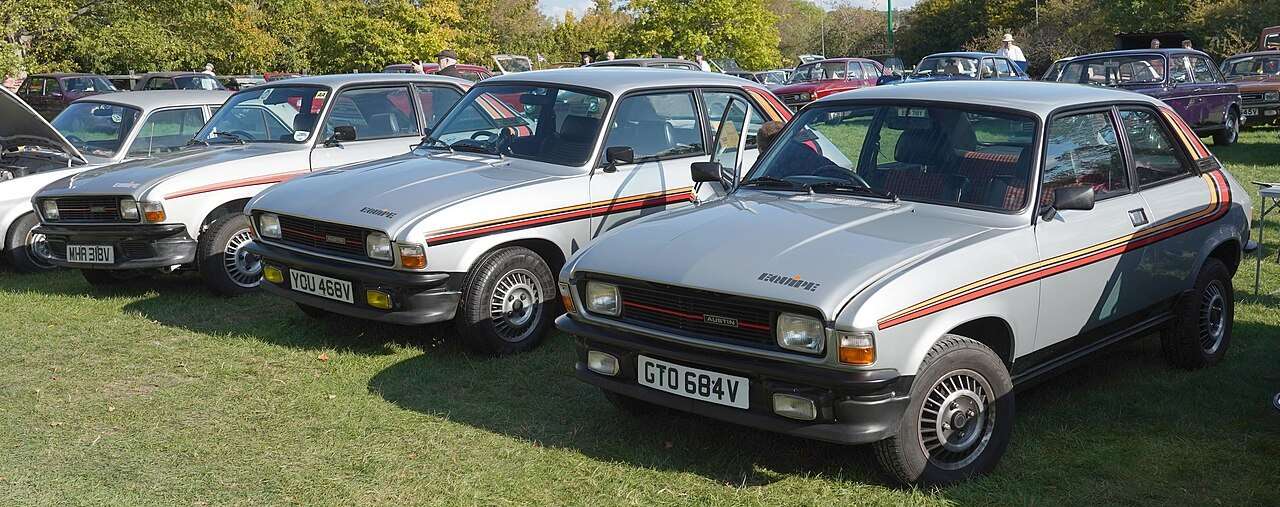
Silver paint, red-and-orange graphics and GKN alloy wheels did most of the talking. The stripe bends along the flanks gave an otherwise very rounded body a sharp visual edge. You could spot one from a long way away.
Love cars you don’t see every day?
Get forgotten cars, surprising motoring stories and the most interesting finds from Unusual Cars by email.
Free to join. No spam. Unsubscribe whenever you like. See our Privacy Policy.
5. The famous wheel is a poor way to spot an Equipe
The early Allegro’s squared-off Quartic wheel became a punchline. By the time the Equipe arrived, it came with a round steering wheel. Its actual period details are much more interesting than the stock jokes.
6. It floated on Hydragas
Hydragas used fluid and pressurised gas to do work normally handled by metal springs. The Equipe kept that characteristically British piece of engineering underneath its much sportier-looking exterior.
7. The transmission gave it a fifth gear
The 1750 came with a five-speed manual, a worthwhile selling point for a small British saloon in 1979. That top ratio mattered more to owners on a long run than the stripes ever did.
8. The trim continued inside
The exterior package was backed up by distinctive checked upholstery. That made the Equipe a special edition you could identify from the driver’s seat as readily as from across the forecourt.
9. Its origin was a mass-market replacement
The original Allegro replaced the Austin and Morris 1100/1300 family in 1973. Under the spectacle of the Equipe was a transverse-engined, front-wheel-drive saloon intended for one of the most important parts of the British car market.
10. It is best understood in period
Motor Sport’s Bill Boddy drove the Equipe alongside the Mini 1100 Special in 1979. He described the Austin as capable of 100 mph and cited a £4,360 price. British Leyland intended to build 2,700, according to the report.
Explore more 10 Things articles
Browse the Unusual Cars 10 Things hub.
Sources and further reading
Featured image: Silver Austin Allegro Equipe at a British classic car show. Photo by Kieran White from Manchester, England via Wikimedia Commons (CC BY 2.0, resized).
Join the Unusual Cars Club
Get more forgotten performance cars, surprising motoring stories and new 10 Things articles by email.
Free to join. No spam. Unsubscribe whenever you like. See our Privacy Policy.

