The Peugeot 106 Rallye stripped a small hatchback back to the ingredients that mattered: low weight, a responsive engine, close gearing and an agile chassis. This guide explains its history, specifications, identifying features and the checks that matter when buying one today.
Why Peugeot created the 106 Rallye
The 106 arrived in 1991 as Peugeot’s compact entry model. Peugeot’s official history records the sporting XSI in 1992 and the Rallye in 1993, followed later by the 120hp S16. The Rallye connected an affordable road car with Peugeot’s active one-make and Group N rally programmes.
Its appeal was subtraction. Electric windows and mirrors, front fog lamps and other comfort equipment were omitted. A simplified cabin, red carpet and seatbelts, squared wheelarch extensions, white steel wheels and model graphics made the Rallye distinctive without disguising its economy-car origins.
Series 1 and Series 2
Series 1 Rallye
The original and most recognisable version: early body styling, 1.3-litre TU2J2 engine, close-ratio gearbox, low weight and a particularly raw character.
Series 2 Rallye
Based on the facelifted 106 and generally associated in the UK with a larger 1.6-litre eight-valve engine. It retained the stripped-back Rallye idea but is a distinct model, not an updated S1.
How to identify a genuine example
- Check that the VIN on the shell matches the V5C and any historic documents.
- Confirm the original engine type and whether a replacement or conversion has been recorded.
- Look for consistent Rallye trim: steel wheels, seats, red carpet and belts, arch extensions and correct-era graphics.
- Do not treat fresh decals as proof. Many ordinary 106 shells have acquired Rallye-style parts.
- Investigate competition history, accident repair and replacement shells carefully.
Common problems and buying checks
Body and corrosion
Inspect the sills, floor, inner and outer rear arches, boot floor, suspension mounting areas and seams around the engine bay. Lift carpets where possible and look underneath; paint can conceal repairs. Check panel gaps and the quality of any respray.
Rear axle
A worn rear beam is a familiar concern on small Peugeots of this era. Rear wheels leaning inward, uneven tyre wear, creaks or poor ride deserve investigation. A properly rebuilt beam is preferable to a cosmetic fix.
Engine, cooling and gearbox
Start the engine cold, watch for smoke and listen for persistent mechanical noise. Check oil and coolant condition, fan operation, hoses and evidence of overheating. Ask for dated timing-belt records. Test every gear under load and assess the clutch, driveshafts and synchromesh.
Modifications and missing parts
Many cars were lowered, tuned, rallied or fitted with later engines. Good work can improve a usable car, but originality commands interest and model-specific interior parts are difficult to replace. Require invoices and understand exactly what has changed.
What is one like to drive?
The S1’s performance is created as much by low mass and gearing as by its power figure. Steering response, visibility and compact dimensions make it engaging at sensible speeds. A healthy car should feel alert and coherent rather than merely harsh; poor suspension, unsuitable tyres or extreme lowering can erase the delicacy owners value.
The 2025 car originally featured here
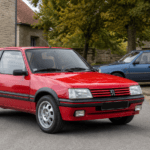
This URL originally covered a red S1 Rallye advertised in 2025 with approximately 97,000 miles, a repaint, replacement decals, lowered suspension and an aftermarket exhaust. The seller said the original springs and exhaust were included and described extensive servicing during their ownership.
That expired advert remains a useful case study, but it is not evidence of current availability, condition or value. It illustrates why buyers should separate presentation from provenance: confirm the quality of paintwork, establish why it was refinished, inspect the shell and examine receipts for mechanical work.
Frequently asked questions
When was the Peugeot 106 Rallye launched?
Peugeot’s heritage material dates the Rallye to 1993.
Is every 106 Rallye a 1.3?
No. The original S1 is associated with the 1.3-litre engine, while later S2 Rallyes in markets including the UK used a 1.6-litre engine.
Is a modified Rallye worth buying?
It can be, if the shell, identity and workmanship are sound and the price reflects the changes. Original parts, invoices and reversible modifications add confidence.
Research note: launch dates, the wider 106 sporting range, production context and S1 equipment were checked against official Peugeot/Stellantis heritage material. Details of the historic advertised car originated with its seller and are not a current condition report.