

The BMW Z1 was less a conventional sports car than a rolling laboratory for BMW Technik. Its disappearing doors made the headlines, but the removable body panels, unusual rear suspension and corrosion-resistant structure were at least as important.
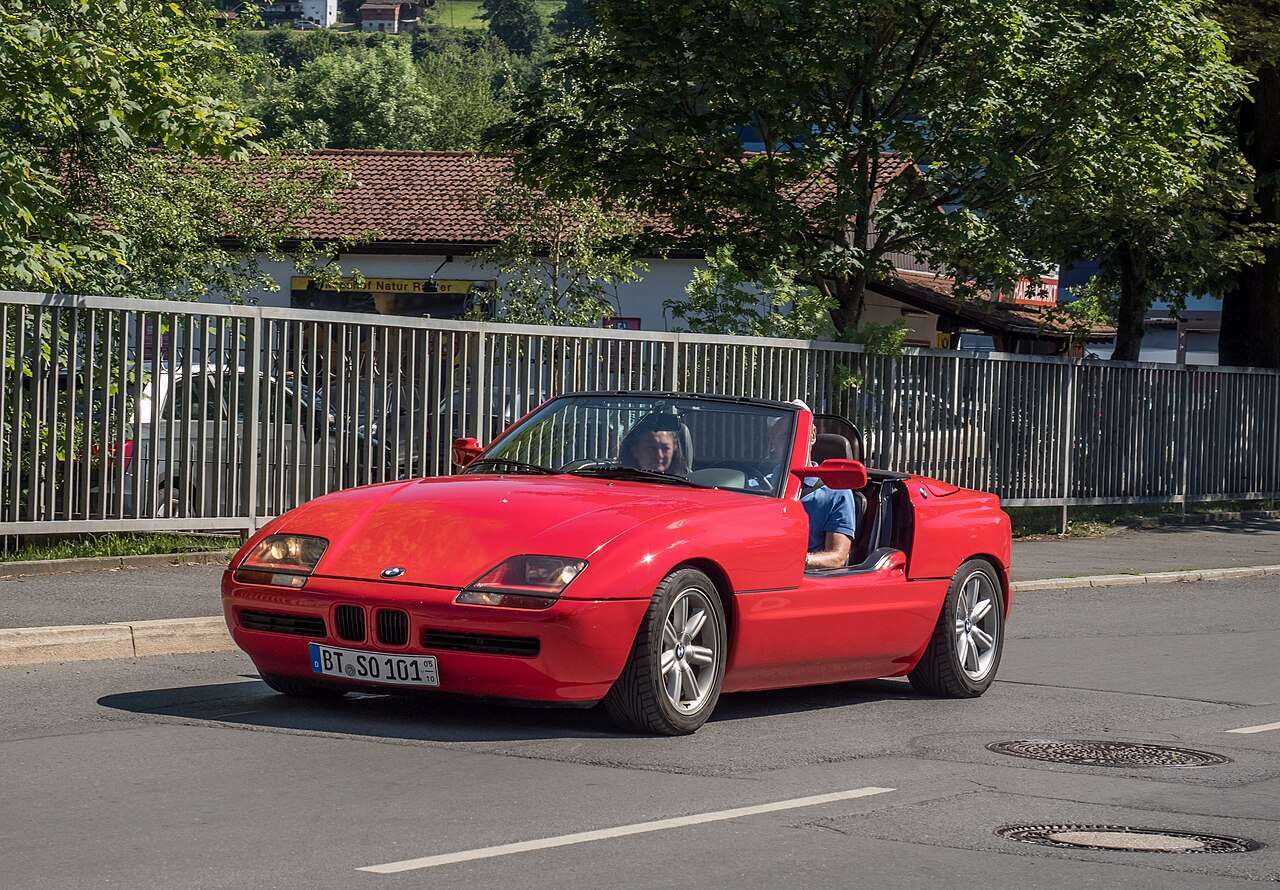
1. It came from BMW Technik
BMW established its independent Technik division in 1985 to explore ideas beyond normal production programmes. The Z1 became its first and most visible result, moving from concept to a limited-series road car with remarkable speed.
2. The Z stood for Zukunft
Zukunft is German for “future”. The badge suited a car intended to test new construction, styling and chassis ideas rather than simply replace an existing BMW roadster.
3. Its doors really disappear into the sills
Electric motors lower the doors vertically into the deep side structures. The Z1 can physically be driven with them down, where local law permits, creating an unusually open cockpit without removing a panel.
4. The high sills were structural
The doors could vanish because the galvanised steel monocoque used deep, strong side sections. They contributed to crash protection and stiffness, while the unusual door itself was not relied upon as the main side-impact structure.
Love cars you don’t see every day?
Get forgotten cars, surprising motoring stories and the most interesting finds from Unusual Cars by email.
Free to join. No spam. Unsubscribe whenever you like. See our Privacy Policy.
5. Its thermoplastic panels were removable
The painted exterior panels were moulded from plastic and bolted to the underlying structure. BMW demonstrated that the car could theoretically be driven with many panels removed, although changing a full set was never the quick colour-swap sometimes claimed.
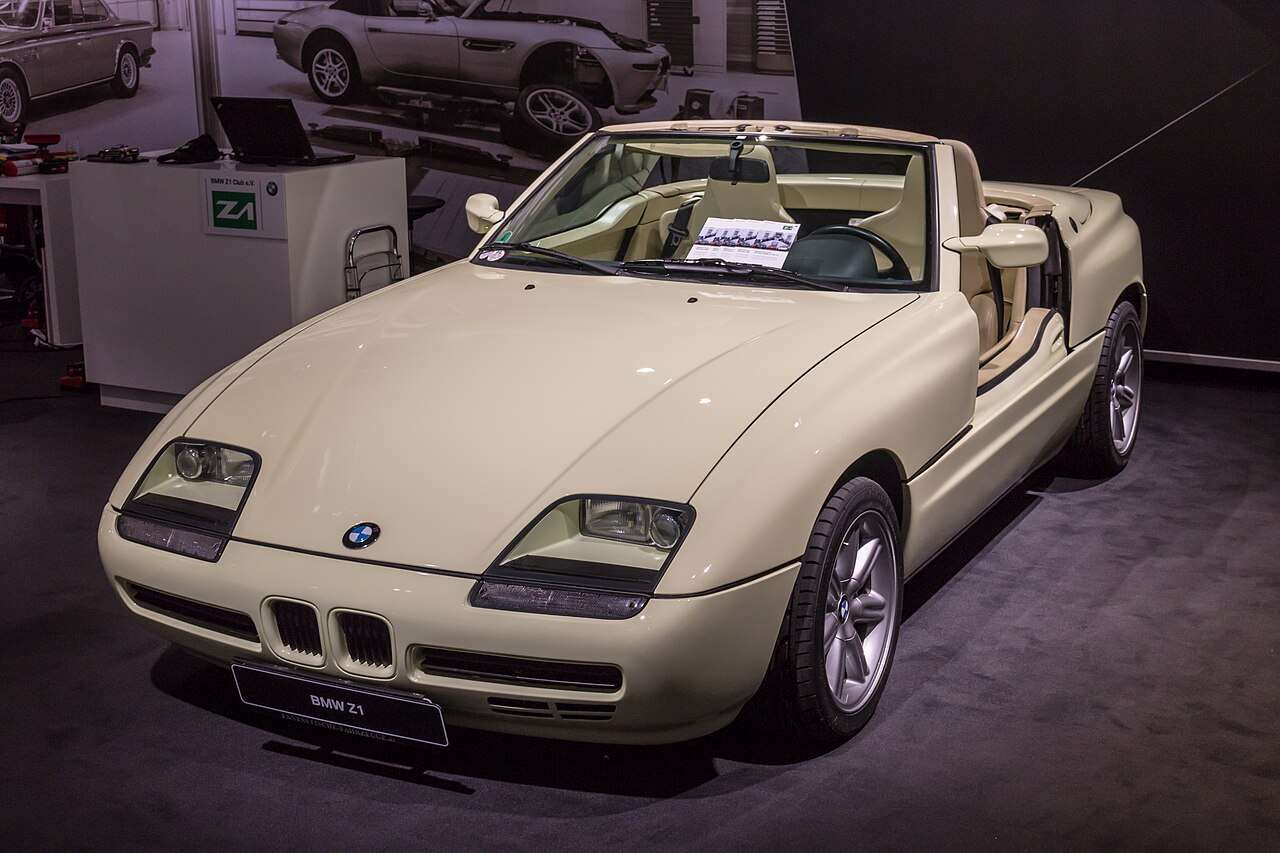
6. The engine was familiar E30 hardware
BMW used the 2.5-litre M20B25 straight-six and five-speed manual gearbox familiar from the E30 325i. With about 170hp, the Z1 was brisk rather than supercar-fast, but the proven drivetrain kept the experimental car usable.
7. Its rear suspension previewed later BMWs
The multi-link “Z-axle” helped control toe and camber as the suspension moved. The concept influenced the rear suspension of the E36 3 Series, giving the small-production Z1 an engineering legacy far beyond its own sales.
8. The aerodynamics included a shaped underside
BMW paid unusual attention to airflow beneath the car. The floor, exhaust and rear body treatment worked together to manage air cleanly, another example of the Z1 functioning as a technology demonstrator.

9. Every production Z1 was left-hand drive
BMW did not engineer a right-hand-drive version. That limited its official appeal in Britain, but UK enthusiasts imported cars and learned to live with the layout.
10. BMW stopped after exactly 8,000
Production ran from 1988 to 1991 and totalled 8,000 cars. The deliberately limited run, unusual colours and low survival attrition have helped make correct, unmodified examples highly collectable.
Love cars you don’t see every day?
Get forgotten cars, surprising motoring stories and the most interesting finds from Unusual Cars by email.
Free to join. No spam. Unsubscribe whenever you like. See our Privacy Policy.
Sources and further reading
- Unusual Cars: BMW Z1 history
- BMW Group Classic model and production archives.