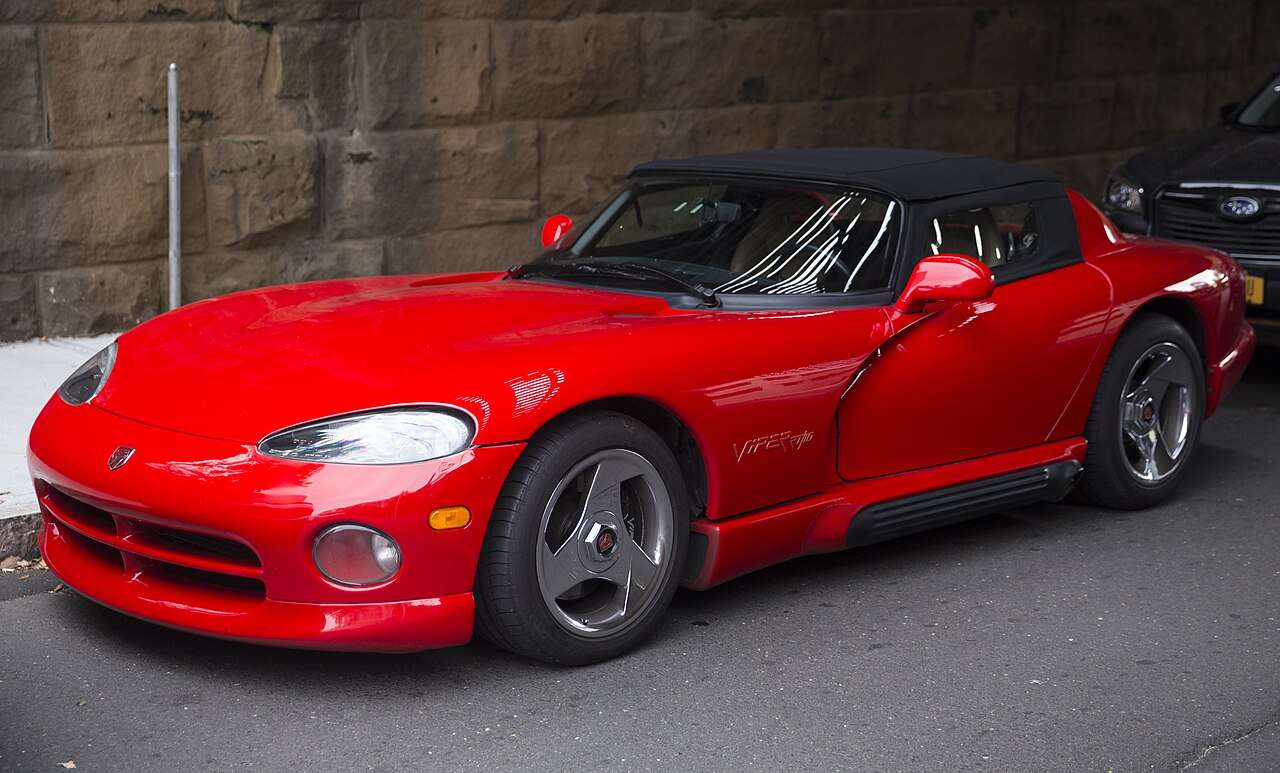
The Dodge Viper UK buying guide begins with an important distinction: many of the cars officially sold here wore Chrysler badges. Beneath the badge, however, this was the same spectacular American V10 sports car—long bonnet, side-exit exhausts on early roadsters and almost no interest in making life easy for its driver.
Britain received the Viper in several small waves. The earliest cars arrived in the 1990s as left-hand-drive Chrysler Vipers, while the later 8.3-litre model returned through the Dodge network as the SRT-10. Private imports added Dodge-badged examples from other generations. That mixed history makes provenance especially important when buying one in the UK.
Why is it called a Chrysler Viper in Britain?
The first official UK cars were marketed through Chrysler’s British operation, so they were sold as Chrysler Vipers. American-market and privately imported cars retained Dodge badges. In enthusiast circles both names are used, and advertisements may list the same basic model under either manufacturer.
There was another naming complication when the third-generation car reached Europe. The Viper name was not straightforward to use in every market, so UK material often referred to the car simply as the Dodge SRT-10. Buyers should search for Chrysler Viper, Dodge Viper and Dodge SRT-10 when checking the market and parts catalogues.
Chrysler Viper UK history
The first small group of UK Vipers landed in 1993. Contemporary reporting described red, left-hand-drive RT/10 roadsters priced at about £55,000, with fewer than 70 early cars expected. The wider official launch followed in the mid-1990s. These cars were still uncompromising: a rudimentary fabric roof, removable side curtains, heavy controls and huge performance from an 8.0-litre V10.
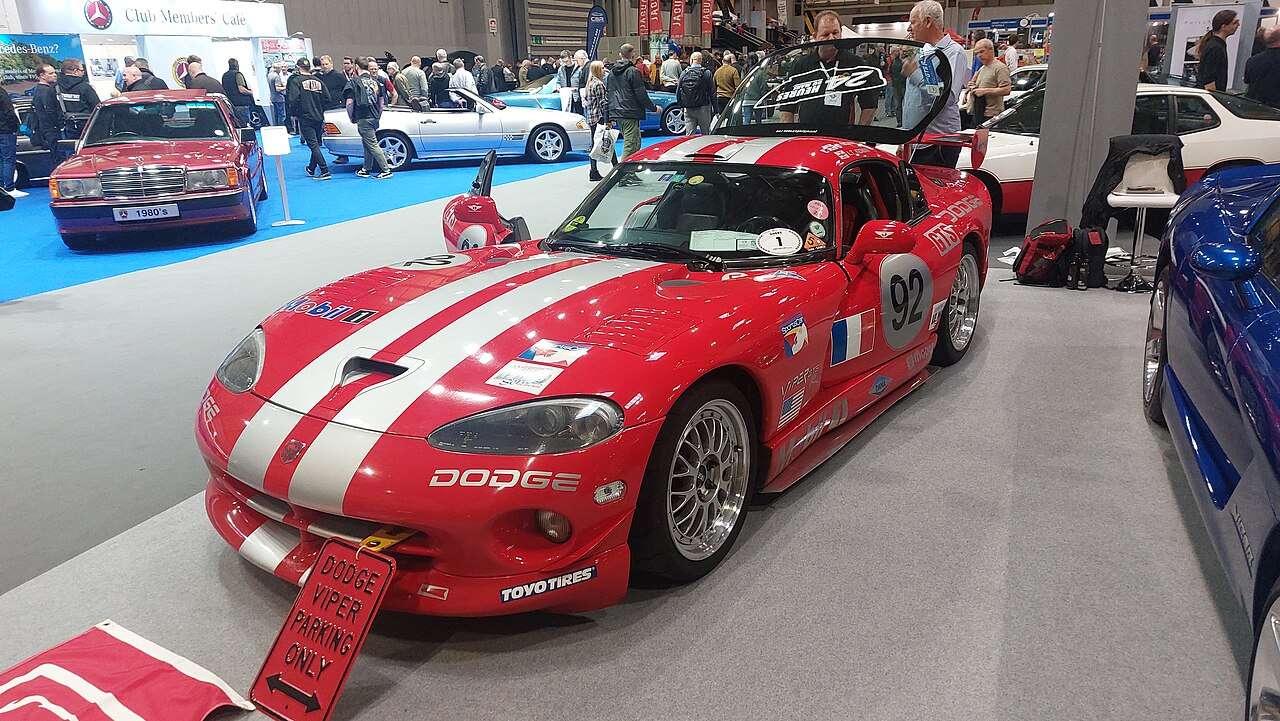
The closed-roof GTS joined the UK range in 1997. It looked more civilised but remained a serious machine, combining the famous double-bubble roof with a stronger version of the V10 and a more practical cabin. Official RT/10 imports ended in the late 1990s and the GTS was phased out in Britain around the beginning of 2001.
Dodge SRT-10 Viper in the UK
The Viper returned to the official European range for 2005 and 2006 in third-generation ZB form. In Britain it was commonly marketed as the Dodge SRT-10. The engine had grown to 8.3 litres and produced about 500bhp, still driving the rear wheels through a six-speed manual gearbox. Roadster and coupé versions were built, although UK numbers were tiny and all were left-hand drive.
Fourth- and fifth-generation Vipers seen in Britain are generally private imports. They can be superb cars, but specification, emissions documentation, lighting conversions, insurance and parts supply require more homework than on an official UK-delivered example.
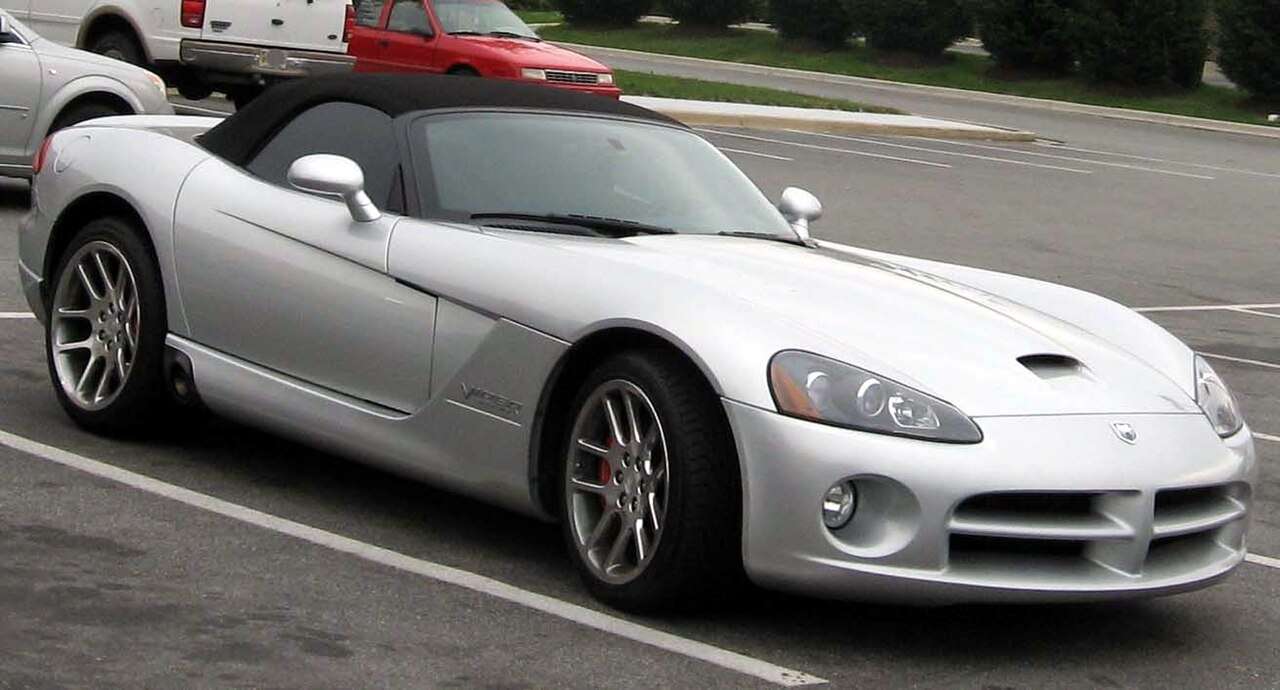
Viper generations and specifications
| UK model | Engine | Approximate output | UK status |
|---|---|---|---|
| Chrysler Viper RT/10 (SR I) | 8.0-litre V10 | 400bhp, 630Nm | Official UK sale, LHD |
| Chrysler Viper GTS (SR II) | 8.0-litre V10 | About 450bhp | Official UK sale, LHD |
| Dodge SRT-10 (ZB I) | 8.3-litre V10 | About 500bhp | Official European/UK sale, LHD |
| Later 8.4-litre Vipers | 8.4-litre V10 | 600bhp or more | Mainly private imports |
Exact figures vary by model year and market, so the VIN and build specification matter more than an advert’s headline number. Every traditional Viper uses a front-mounted V10, rear-wheel drive and a manual gearbox. There was no right-hand-drive factory version.

What is a Viper like to drive?
An early Viper feels more like a road-legal racing special than a conventional grand tourer. The steering is weighty, the bonnet seems endless and the torque arrives immediately. Heat from the exhaust and transmission is part of the experience. There are few electronic safeguards, so wet roads, cold tyres and abrupt throttle inputs deserve respect.
The GTS and later SRT-10 are more usable, but none is a carefree everyday sports car. Their appeal is the sense of occasion: a vast naturally aspirated engine, a mechanical gearbox and performance that still feels dramatic decades later.
Dodge Viper common problems
Head gaskets, oil use and engine condition
Early cars can suffer composite head-gasket failure. Look for coolant loss, oil contamination, overheating and evidence that the later gasket type has been fitted. Some early engines also developed excessive oil consumption through piston-ring problems. A compression or leak-down test is worthwhile on a car without a convincing history.
Crank damper and power-steering hardware
The crankshaft damper bolt must be correctly tightened and secure. Power-steering pump brackets and pulleys are also known weak points, especially on cars that have been tracked or modified. Listen for belt noise and inspect the mounting hardware rather than assuming a fresh belt is the whole cure.
Cooling, hoses and age-related deterioration
Even low-mileage Vipers are now old enough for hoses, seals, bushes and engine mounts to deteriorate. Check that the cooling fans operate, the radiator is clear and the car holds temperature in traffic. Inspect for fluid leaks after a long test drive, not only when the engine is cold.
Clutch, gearbox and differential
The six-speed manual is strong, but clutches suffer if the car has been launched hard or driven badly in traffic. Check for slip under load, clutch judder, difficult selection and differential noise. A high biting point with no invoices should be priced as a future repair.
Bodywork and accident repairs
Composite panels do not rust like steel, but they are expensive to repair correctly and can conceal accident damage. Uneven shut lines, mismatched paint, cracked mounting points and overspray deserve investigation. Inspect the chassis and suspension pick-up points from underneath. The Viper’s power and limited driver aids mean crash history is more important than cosmetic mileage.
Roof, windows and interior parts
Early RT/10 weather equipment is basic and model-specific pieces are costly. Check the removable roof, side curtains, seals and storage bags are present. Test every switch and look for heat-damaged trim around the sills. GTS door mechanisms and window regulators should work smoothly.
Tyres and brakes
Old tyres can look perfect while being dangerously hard. Check the date codes and insist on a matched set of quality tyres in the correct sizes. Cars that have stood for long periods may have seized calipers, warped discs or stale brake fluid.
UK-specific checks before buying
Confirm whether the car was officially supplied or privately imported. Match the VIN to factory records, check the V5C model and engine capacity, and verify that UK lighting and rear fog-lamp conversions are tidy. Imported cars may need specialist insurance or an agreed-value policy.
A complete history is more valuable than a tiny odometer reading. Many cars cover little annual mileage, so servicing can be missed. Look for regular fluid changes, cooling-system work, age-related rubber replacement and invoices from a Viper specialist. Also check that recalls and factory campaigns relevant to the VIN have been completed.
Dodge Viper buying checklist
- Decode the VIN and confirm the exact generation, year and original market.
- Check cold-start oil pressure, smoke, coolant condition and operating temperature.
- Inspect early cars for documented head-gasket replacement.
- Examine the crank damper, power-steering bracket and belt drive.
- Test the clutch, gearbox and differential under load.
- Inspect chassis points and panel alignment for accident repairs.
- Check tyre age as well as tread depth.
- Make sure RT/10 roof, side curtains and storage pieces are present.
- Verify all import, registration and lighting paperwork.
- Arrange a pre-purchase inspection by a recognised Viper specialist.
Parts, servicing and running costs
Routine servicing is conceptually simple, but the engine’s capacity means large quantities of fluids and some model-specific parts must come from the United States or specialist European suppliers. Fuel economy is predictably poor, tyres are expensive and body or trim parts can dominate restoration costs.
For that reason, the cheapest Viper is rarely the best buy. A well-documented car with recent tyres, a sound cooling system and known specialist support can cost far less overall than an apparently inexpensive project.
Verdict
The Viper belongs on a UK rare-car hub because it was not merely an American fantasy seen in magazines: small numbers were officially offered here as Chrysler Vipers and later Dodge SRT-10s. It is demanding, impractical and expensive to correct, but also one of the most distinctive performance cars ever sold in Britain. Buy on history and condition, commission a specialist inspection and treat the car’s huge torque with respect.
Research cross-checked against period and buyer-guide material from Auto Express, RAC, Autocar, PistonHeads, Road & Track and Dodge.