UNUSUAL CARS MODEL GUIDE
The Ferrari 308 GTB and GTS were two-seat, mid-engined V8 sports cars built from 1975 to 1985. Their Pininfarina shape established the template for a decade of Ferrari road cars, while the range progressed from carburettors through Bosch injection to the four-valve Quattrovalvole engine.
Quick answer: the 308 is a usable classic Ferrari when bought on condition, not colour or mileage. Confirm whether it is a glassfibre GTB, steel carburettor car, injected GTBi/GTSi or Quattrovalvole; then inspect its tubular structure, timing-belt history, cooling, fuel system, electrics and originality with a marque specialist.
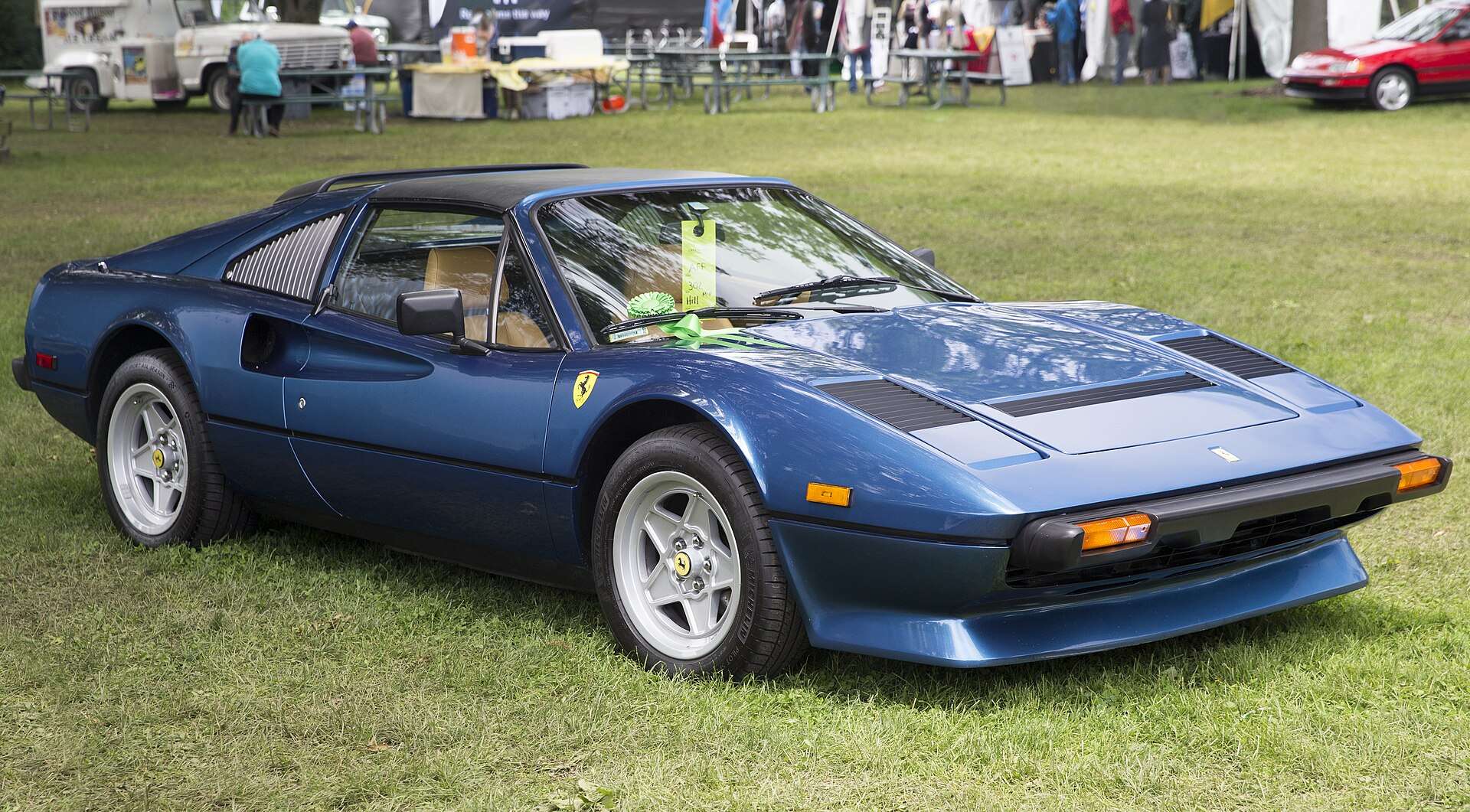
Featured image: blue 1985 Ferrari 308 GTS Quattrovalvole. Photograph by Mr.choppers, CC BY-SA 4.0, via Wikimedia Commons; locally hosted.
From the Dino 246 to Ferrari’s V8 era
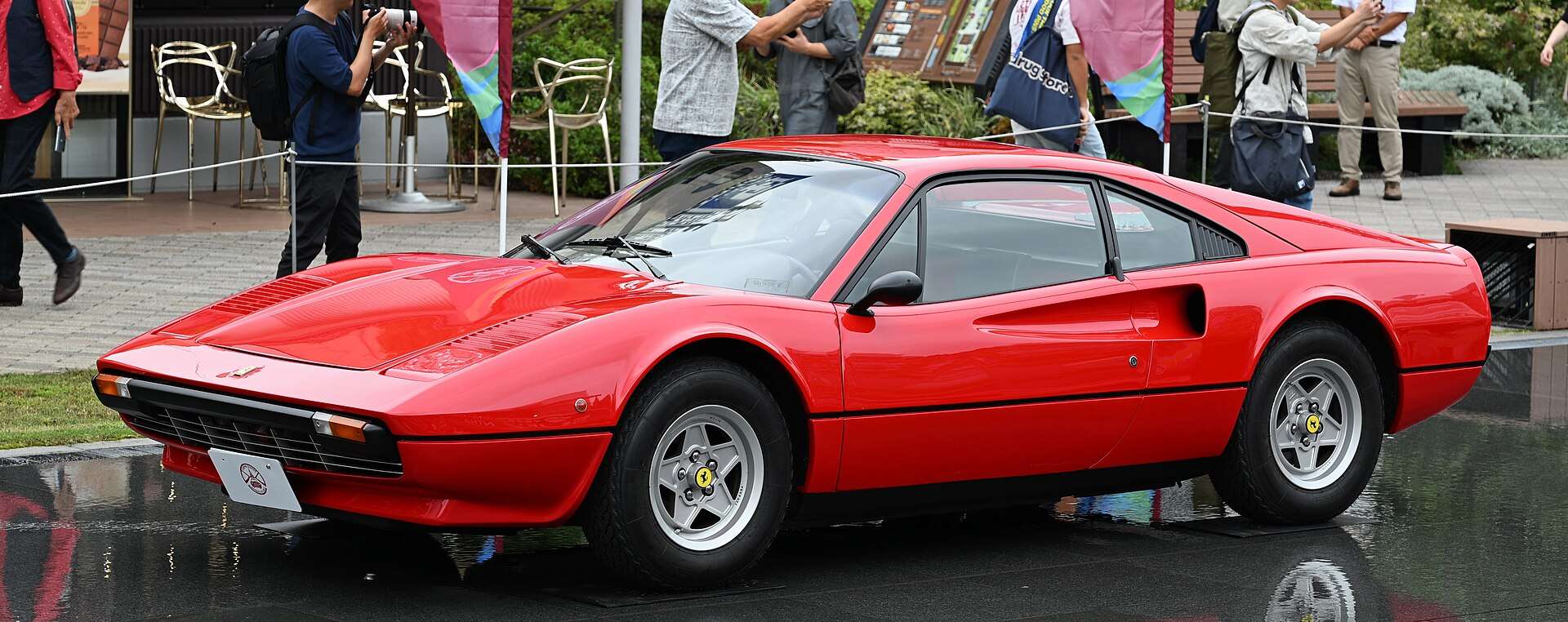
The 308 GTB appeared at the 1975 Paris Motor Show as the replacement for the Bertone-bodied Dino 308 GT4. Leonardo Fioravanti’s design for Pininfarina returned to a low two-seat berlinetta profile, with a transverse 90-degree V8 mounted behind the cabin and a five-speed transaxle beneath it.
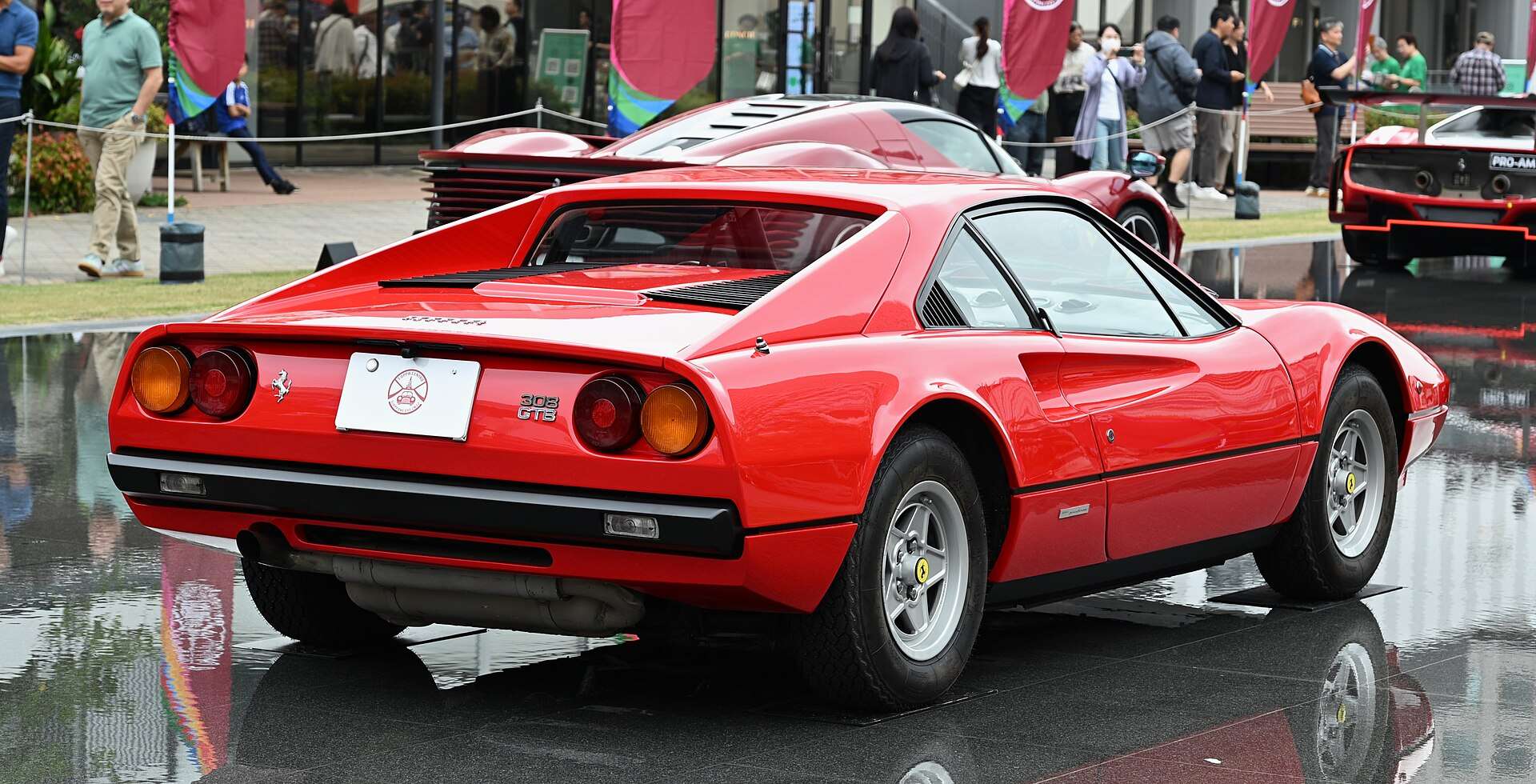
Early GTBs used glassfibre body panels, usually called vetroresina, over a tubular steel frame. Ferrari changed to mainly steel panels during 1976, retaining aluminium for some closures. The open-roof 308 GTS followed in 1977 with a removable black roof panel and became the best-known version through Magnum, P.I., but the fixed-roof GTB is the stiffer and rarer body style.
Carburettor, injected and Quattrovalvole versions
| Version | Years | Fuel system | European factory output |
|---|---|---|---|
| 308 GTB/GTS | 1975–1980 | Four Weber carburettors | 255hp |
| 308 GTBi/GTSi | 1980–1982 | Bosch K-Jetronic injection | 214hp |
| 308 GTB/GTS Quattrovalvole | 1982–1985 | Bosch K-Jetronic, four valves per cylinder | 240hp |
Market specification matters. Emissions equipment, compression ratios and quoted power differed, particularly in North America. The injected two-valve cars are smoother and easier to start than a poorly set-up carburettor model, but lost performance. Quattrovalvole cylinder heads restored much of it without giving up injection’s civility.
Love cars you don’t see every day?
Get forgotten cars, surprising motoring stories and the most interesting finds from Unusual Cars by email.
Free to join. No spam. Unsubscribe whenever you like. See our privacy policy.
Engine and service history
The 2,927cc quad-cam V8 is strong when maintained correctly. Proof of regular timing-belt and tensioner work is essential; the belt interval should be judged by time as well as mileage. A cold start should produce prompt oil pressure without persistent smoke, misfire or mechanical clatter. Check compression, valve clearances, ignition, fuel lines, carburettor balance on early cars and Bosch injection function on later ones.
Cooling systems suffer when cars sit. Inspect the radiator, hoses, water pump, expansion tank and fans, then keep the car idling long enough to prove stable temperature. Look for oil and coolant leaks around cam seals, distributors and the water-pump area. A specialist pre-purchase inspection is cheaper than diagnosing a neglected V8 after purchase.

Body, chassis and accident repairs
The outer panels do not tell the whole story. Examine the tubular frame, sills, door bottoms, wheelarches, floors, suspension pick-up points, windscreen surrounds and the area beneath the battery. Glassfibre cars avoid steel-panel corrosion but can conceal poor repairs, cracks or incorrect panel profiles. Steel cars can rust from seams and cavities even when the visible paint looks excellent.
Panel gaps were never modern-supercar perfect, but doors, bonnet and engine cover should sit consistently. Measure the chassis, check paint depth and look beneath carpets and undertrays for collision repairs. Original glassfibre panels, dry-sump equipment on European GTBs and correct wheels, instruments and trim materially affect identity and value.

Steering, suspension and brakes
The unassisted steering is heavy only at parking speed and should become precise on the move. Vague response, tramlining or uneven tyre wear points to tired bushes, ball joints, dampers, steering-rack wear or poor alignment. Check wheel bearings and the condition and age of all tyres, not merely tread depth.
Brakes should pull the car up straight without vibration or a long pedal. Inspect calipers, hoses, discs and the handbrake. The dog-leg five-speed gearbox needs sympathetic use when cold; worn second-gear synchromesh, clutch judder, oil leaks and noise from driveshafts or differential deserve specialist diagnosis.

Which Ferrari 308 should you choose?
Vetroresina GTBs are prized for rarity and lightness, while steel carburettor cars deliver the most theatrical induction sound. The GTBi and GTSi are often the most affordable but need to be judged on their gentler performance. A Quattrovalvole combines injection with stronger output and is the easiest all-round specification for many owners.
Whichever version you prefer, a complete history, correct identity and evidence of regular use matter more than a low odometer reading. Cars with missing books, improvised wiring, aged tyres or years of deferred service can consume restoration money rapidly.

Sources and further reading
- Ferrari: 308 GTB factory history and specifications
- Ferrari: development of the 308 family
- evo: Ferrari 308 history and buying guide
- Hagerty UK: Ferrari 308 buyer’s guide
Continue the Ferrari story
Explore the complete Ferrari hub. Continue with the Ferrari Mondial and Ferrari 400, 400i and 412.
Frequently asked questions
What is the difference between the Ferrari 308 GTB and GTS?
The GTB is a fixed-roof berlinetta, while the GTS has a removable targa-style roof panel. The GTB is structurally stiffer and was produced in smaller numbers.
What does Quattrovalvole mean?
Quattrovalvole means four valves per cylinder. Ferrari introduced the 308 Quattrovalvole in 1982 to recover performance lost when fuel injection replaced carburettors.
Were early Ferrari 308s made from fibreglass?
Yes. Early 308 GTBs used glassfibre body panels over a tubular steel frame before Ferrari changed to mainly steel panels during 1976.
How often do Ferrari 308 timing belts need changing?
Use the current advice of the specialist maintaining the car and judge the belts by age as well as mileage. Documentary proof of recent belts and tensioners is essential.
What should be checked before buying a Ferrari 308?
Verify the exact version and identity, then inspect the tubular frame, body, timing-belt history, engine, cooling and fuel systems, gearbox, suspension, brakes, electrics and originality.