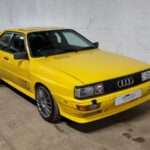
The original Audi quattro changed the direction of both Audi and the performance-car world. Unveiled at the Geneva motor show in March 1980, it joined a turbocharged five-cylinder engine to permanent four-wheel drive in a production coupé. The rally programme made the idea famous, but the road car—now commonly called the Ur-quattro—remained in production until 1991 and evolved continuously.

Enjoyed this guide? Read our 10 Things You Probably Didn’t Know About the Audi Ur-quattro for more surprising background.
How the quattro idea began
Audi’s official history traces the project to winter testing in Sweden in 1976–77. Engineers noticed the exceptional traction of the Volkswagen Iltis military vehicle and began exploring how a compact, lightweight four-wheel-drive system could work in a powerful road car. The result was not merely a rally special: Audi designed a driveline capable of permanent use without the weight and bulk associated with conventional off-road systems.
The production quattro used the Audi Coupé’s basic form but gained boxed wheelarches, a different floor and the mechanical package that defined it. Its name was written in lower case; “Ur-quattro” is a later enthusiast term, using the German prefix for “original”, which helps distinguish this first model from the quattro system and later quattro-badged Audis.

Five-cylinder turbo performance
The launch car’s 2.1-litre, ten-valve turbocharged inline-five produced 200PS. That number mattered in 1980, but the delivery and sound mattered just as much. Turbo lag, a long-legged feel and the off-beat five-cylinder note gave the road car a character unlike a contemporary rear-drive coupé.
Development brought different engine codes, revised electronics, suspension and interior changes. The 1989 model-year 20V version used a 2.2-litre 20-valve engine producing 220PS, smoother response and a higher performance ceiling. That late RR-model quattro is mechanically and visually distinct from early cars, although both belong to the same long-lived line.
Centre differential evolution
Early cars allowed the driver to lock the centre and rear differentials manually. Audi later replaced the manually lockable centre unit with a Torsen differential, introduced during the 1980s, giving automatic torque distribution while retaining permanent four-wheel drive. This is an important dividing line when identifying and comparing cars.
Love cars you don’t see every day?
Get forgotten cars, surprising motoring stories and the most interesting finds from Unusual Cars by email.
Free to join. No spam. Unsubscribe whenever you like. See our privacy policy.
Road car and rally car are not the same thing
The road quattro enabled Audi’s rally programme, but the Group 4 and later Group B competition cars were increasingly specialised. The short-wheelbase Sport quattro, and especially the S1 E2, should not be confused with an ordinary production quattro. They share a technical and visual family, not an identical specification.
For the competition story, see the separate Audi quattro Group B guide. The road car deserves its own history because it remained usable, comparatively subtle and continuously developed for more than a decade.
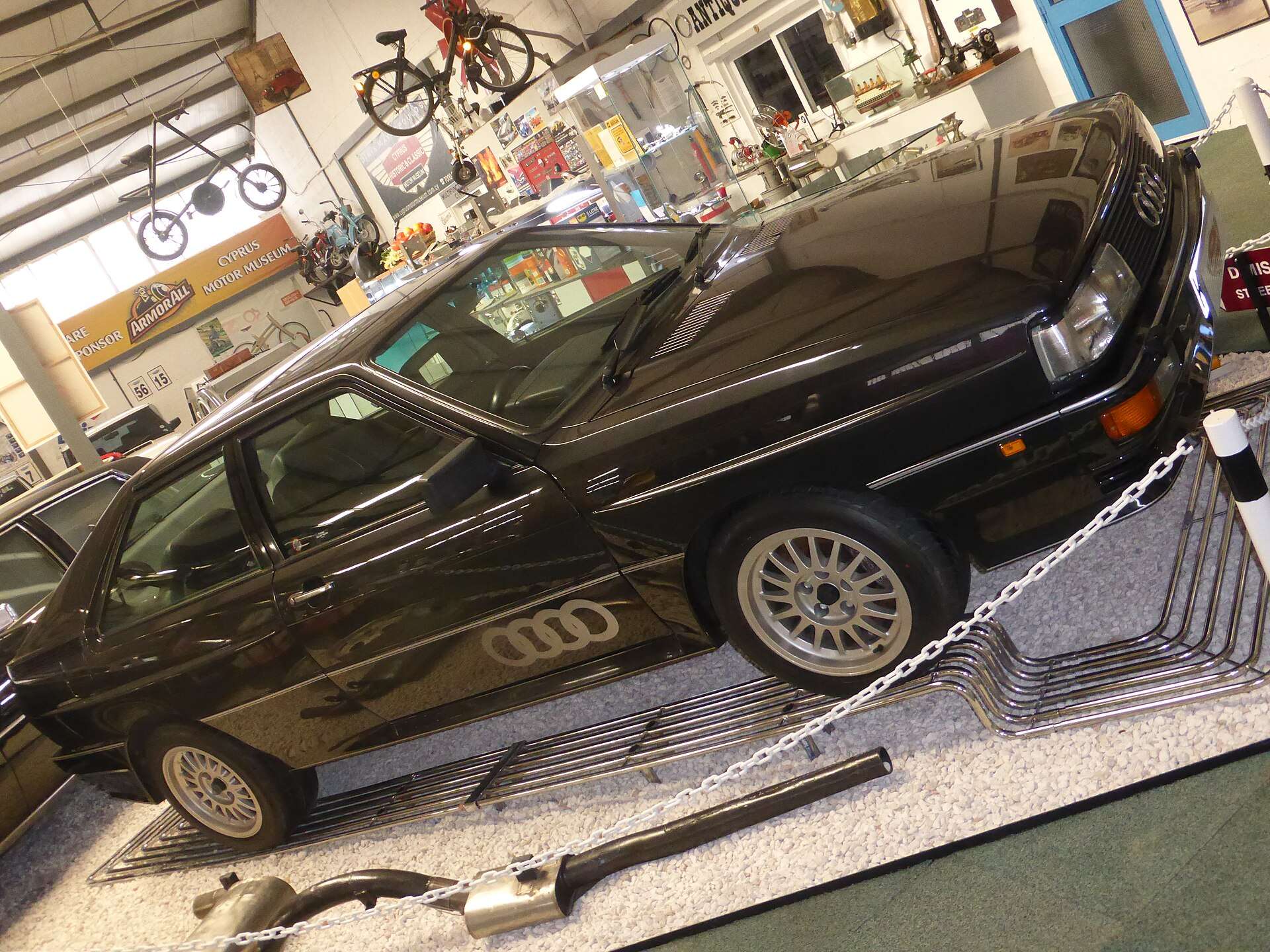
How the shape evolved
Early cars have four separate headlamps and period interior details. Later updates brought single-piece lamps, revised bumpers, instruments and trim, while the final 20V cars gained their own mechanical and equipment identity. The basic silhouette survived because it had become inseparable from the quattro name.
Originality is therefore not one fixed appearance. A correct early WR car, a mid-production MB and a late RR 20V should look and feel different. Restoration is strongest when it respects the car’s build date rather than turning every example into a visual copy of the most famous rally version.
Why it matters
The quattro demonstrated that four-wheel drive could enhance a high-performance road car rather than merely help an off-roader. Its rally success accelerated acceptance, but the production car’s longevity proved the concept was usable. Audi then extended quattro across saloons, estates and later S and RS models.

Frequently asked questions
What does Ur-quattro mean?
It is an enthusiast name for the original 1980–1991 Audi quattro coupé. “Ur” means original or primordial in German.
When was the Audi quattro launched?
It was presented at the Geneva motor show in March 1980 and remained in production until 1991.
How much power did it have?
The launch 10-valve car produced 200PS. The late 20V RR version produced 220PS.
Is an Ur-quattro the same as a Sport quattro?
No. The Sport quattro was a much shorter, more specialised homologation model derived for Group B competition.
Did every quattro use the same four-wheel-drive system?
No. Early cars used driver-lockable centre and rear differentials; later cars adopted a Torsen centre differential and other running changes.
Research sources
- Audi MediaCenter: 40 years of quattro
- Audi MediaCenter: history of the original quattro
- Wikimedia Commons licence pages linked beneath each photograph.
Specifications differ by year and market. Confirm any car through chassis, engine code, build date and original documentation.
Continue the Audi story
Browse the Rare & Performance Audi hub for more model histories, engineering stories and connected guides.