The Audi Ur-quattro did far more than add four driven wheels to a fast coupé. It changed rallying, reshaped Audi’s image and helped make all-wheel drive desirable in ordinary performance cars. Here are ten details that explain why the original quattro still matters.
1. “Ur-quattro” was never its original showroom name
Audi called the car simply quattro, with a lower-case q. Enthusiasts later added the German prefix “Ur”, meaning original or primordial, to distinguish the 1980 coupé from the growing family of quattro-equipped Audis.
2. A military off-roader helped inspire it
During winter testing in Scandinavia, engineers noticed that the modestly powered Volkswagen Iltis could out-climb much faster cars on snow because of its four-wheel-drive system. Chassis engineer Jörg Bensinger saw the potential for a light, permanent system in a road-going performance car and championed the idea inside Audi.

3. Its 1980 Geneva debut was a genuine turning point
The production quattro appeared at the Geneva Motor Show in March 1980. Until then, four-wheel drive was associated mainly with rugged utility vehicles. Audi presented it in a sleek turbocharged coupé, making traction technology part of the performance-car conversation.
4. A hollow shaft was the packaging breakthrough
The clever transmission used a hollow output shaft so drive could be sent forwards to the front differential while also travelling rearwards. It avoided the heavy, bulky transfer-case arrangement familiar from off-roaders and made permanent all-wheel drive practical in Audi’s longitudinal passenger-car layout.
Love cars you don’t see every day?
Get forgotten cars, surprising motoring stories and the most interesting finds from Unusual Cars by email.
Free to join. No spam. Unsubscribe whenever you like. See our Privacy Policy.
5. The five-cylinder soundtrack came with serious pace
Early cars used a turbocharged 2.1-litre five-cylinder engine producing about 200 PS. That was enough for 0–62 mph in roughly seven seconds and a top speed above 135 mph—formidable figures for a four-seat coupé at the beginning of the 1980s.
6. Michèle Mouton made world rally history in one
Driving an Audi quattro, Michèle Mouton won the 1981 Rallye Sanremo, becoming the first woman to win a round of the World Rally Championship. She followed it with three more WRC victories in 1982 and finished runner-up in the drivers’ championship.

7. The road car was not simply a tame Group B monster
The competition quattros evolved rapidly with specialised bodies, lighter materials and ever more powerful engines. The production coupé shared the core philosophy and provided the homologation foundation, but a late Group B S1 was a radically developed racing machine rather than a road quattro with decals.
8. The Sport quattro was shorter as well as faster
For Group B homologation Audi created the 1984 Sport quattro, removing 320 mm from the wheelbase and using a 306 PS 20-valve five-cylinder engine in the road version. Its mixed steel, aluminium, Kevlar and fibreglass body and tiny production run made it one of the era’s most valuable homologation specials.
9. The original evolved continuously
Over its long life the quattro gained revised suspension, dashboards and engines, including a 2.2-litre unit and, finally, a 20-valve version. The manually lockable differentials also gave way to a torque-sensing Torsen centre differential, making the system more automatic and road-friendly.
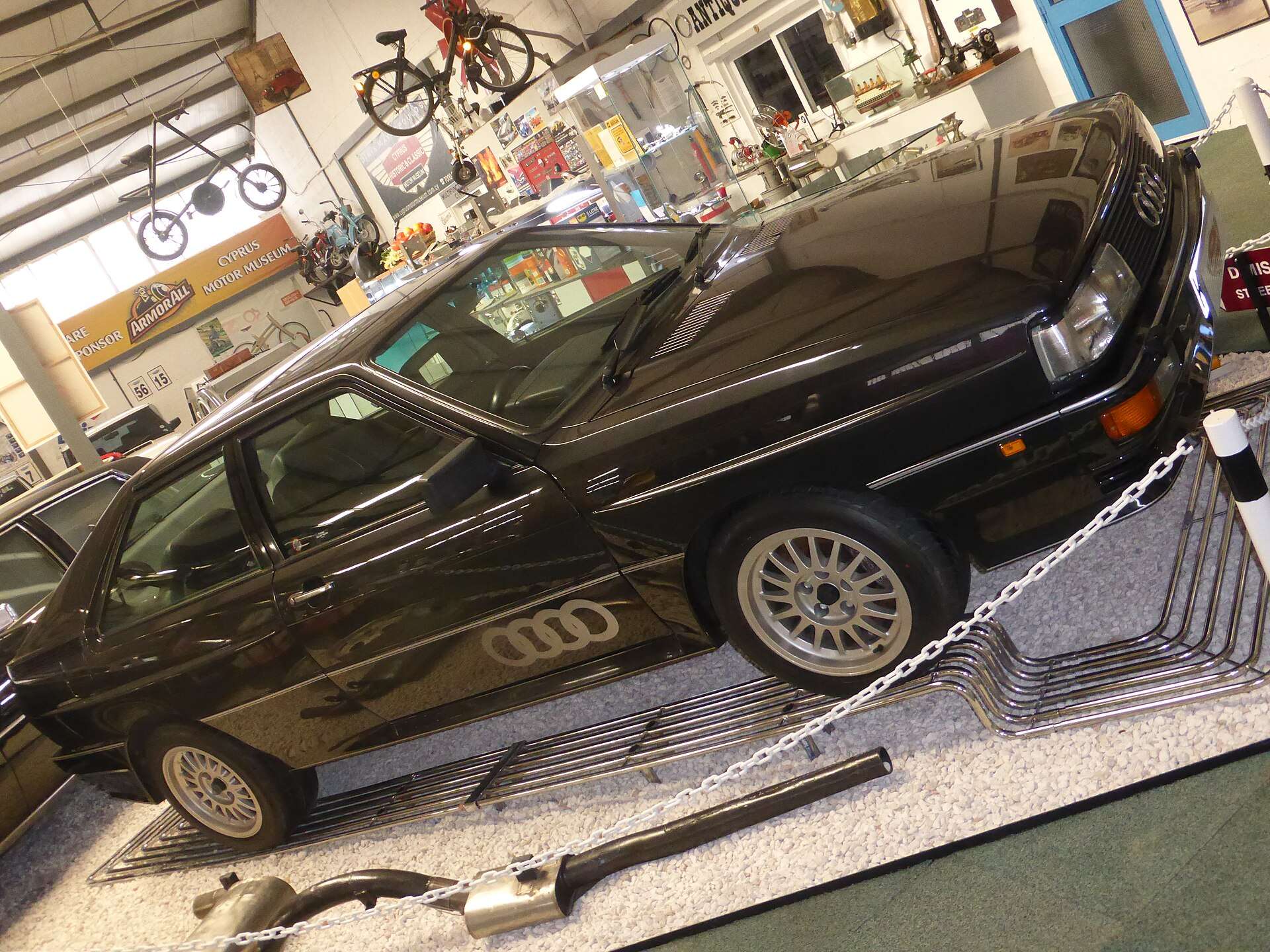
10. It remained in production for more than a decade
The original quattro survived from 1980 until 1991, with commonly quoted production of 11,452 cars. That longevity is remarkable for a specialised, expensive coupé—and it shows how completely the car outgrew its original role as a rally homologation tool.
Read more: Our detailed Audi Ur-quattro guide covers the model in greater depth. You can also browse the full 10 Things collection.
Love cars you don’t see every day?
Get forgotten cars, surprising motoring stories and the most interesting finds from Unusual Cars by email.
Free to join. No spam. Unsubscribe whenever you like. See our Privacy Policy.