MG Metro 6R4 guide
The history, engineering and enduring appeal of Austin Rover’s spectacular Group B rally car—plus what separates a genuine 6R4 from a replica or Metro-based tribute.
What is the MG Metro 6R4?
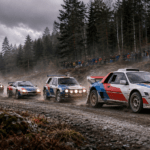
The 6R4 was Austin Rover’s answer to the extreme Group B era of international rallying. Although its body deliberately echoed the small Metro hatchback, underneath it was a compact competition car with a tubular structure, a mid-mounted V6 and four-wheel drive. It was conceived for rally stages rather than adapted from an ordinary road car.
Development involved Williams Grand Prix Engineering. The British Motor Museum records that the project was revealed in February 1984, scored its first rally win on the Gwynedd Rally in March 1985 and appeared in full homologation form in May that year. The FIA database records homologation number 277, dated 2 November 1985, for a 2,991cc, six-cylinder, four-wheel-drive Group B car.
What does 6R4 mean?
6
Six-cylinder engine.
R
Rally.
4
Four-wheel drive.
The shorthand neatly describes the car, though “rear engine” can be misleading in modern conversation: the V6 is mounted behind the occupants but ahead of the rear axle area, so the car is commonly described as mid-engined.
Development and competition story
| Period | What happened | Why it matters |
|---|---|---|
| 1981–84 | The rear-drive prototype programme evolved into a four-wheel-drive Group B design. | It became a bespoke competition project, not simply a modified road Metro. |
| February 1984 | The 6R4 project was publicly revealed. | The distinctive wide-arched silhouette became familiar before homologation. |
| March 1985 | A 6R4 won the Gwynedd Rally. | An important development milestone. |
| November 1985 | FIA Group B homologation took effect; Tony Pond finished third on the Lombard RAC Rally. | A remarkable result on its World Championship debut. |
| 1986 | Group B was brought to an end. | The 6R4 lost the time needed for full development at international level. |
Engine, transmission and four-wheel drive
The purpose-built V64V engine is central to the 6R4’s character. It is a naturally aspirated, four-cam, 24-valve V6 rather than the turbocharged arrangement used by several rivals. Power went through a five-speed gearbox and a Ferguson Formula four-wheel-drive system. Museum information describes a viscous-coupling epicyclic centre differential and a nominal 35:65 front-to-rear torque split.
Exact outputs depend on the car, period and later development. The British Motor Museum describes the production Clubman version at about 250bhp and the full Group B competition specification at around 410bhp. Modified historic rally cars can differ considerably, so specification should be established from the individual car rather than assumed from a badge or advert.
Clubman and International specification
| Clubman | International / works-style | |
|---|---|---|
| Original purpose | Customer and national-level competition car produced to meet homologation requirements. | Top-level Group B rally competition. |
| Typical quoted power | Approximately 250bhp. | Approximately 410bhp, depending on development specification. |
| Today | Many have been upgraded, rebuilt or reconfigured. | Works provenance and period specification materially affect significance. |
How to identify a genuine Metro 6R4
A convincing appearance is not proof. Genuine cars require a joined-up identity trail: chassis and component numbers, factory or dealer documentation, competition records, photographs, invoices and credible ownership history. Compare every claim with recognised registers and specialists. Historic competition paperwork can describe eligibility for an event without, by itself, proving the complete identity claimed by a seller.
Identity
Check chassis markings, plates and documents together. Investigate discrepancies before discussing value.
History
Build a continuous timeline from period supply through competition, storage, restoration and current ownership.
Specification
Record the engine, transmission, four-wheel-drive system, suspension, brakes, body and safety equipment actually fitted.
Genuine 6R4, replica or tribute?
A genuine 6R4 is fundamentally different from a road-going Metro fitted with a body kit or from a scratch-built silhouette car. Replicas and tributes can be exciting vehicles in their own right, but they must be described accurately. Construction method, donor identity, engine position, driven wheels, registration status and safety engineering are more useful than superficial resemblance.
Ask who built the car, when it was completed, which donor or chassis identity it uses, whether the seller has build photographs and invoices, and what inspection or approval route applies. A turbocharged front-engined or rear-wheel-drive Metro conversion is not made into a genuine 6R4 by styling alone.
Inspection checklist before buying
Structure and body
Look for accident repairs, fatigue, corrosion, stressed mounting points, panel fit and evidence of hurried restoration.
Engine and cooling
Confirm engine identity and build record. Check cold starting, oil pressure, leaks, fuel system, cooling performance and service history.
Transmission
Assess the gearbox, differentials, driveshafts and four-wheel-drive system. Noise or vibration can signal costly specialist work.
Running gear
Inspect hubs, dampers, suspension joints, steering and brakes, including the age and availability of competition components.
Safety equipment
Check seats, harnesses, extinguishers, fuel cell and roll-cage documentation against the intended road or motorsport use.
Expert support
Arrange an independent inspection by someone who knows 6R4s; a general classic-car check is not enough.
Road use, rallying and ownership
Some 6R4s and replicas are road registered, but registration does not confirm originality or make a competition car convenient on the road. Clarify the recorded vehicle identity, modifications, insurance terms and intended use. For historic rallying, consult the organiser and current regulations before purchase; eligibility can depend on period specification and documentation.
Ownership requires a realistic maintenance budget and access to specialist knowledge. Ageing competition components, short service intervals and low-volume parts can make apparently minor faults expensive. A pre-purchase inspection and a written first-year maintenance plan are sensible parts of the buying price.
The replica previously featured on Unusual Cars
This page originally highlighted an expired classified listing for a dramatic Metro 6R4-style replica. The seller described it as an early-1990s build using original-style drawings, with a turbocharged 2.5-litre V6 and rear-wheel drive. Those were historic advert claims and have not been independently verified. The specification also makes clear that it was a tribute rather than a genuine four-wheel-drive V64V 6R4.


Frequently asked questions
Is the MG Metro 6R4 related to a normal Metro?
Visually, yes; mechanically, only superficially. The rally car is a purpose-built mid-engined, four-wheel-drive competition machine.
Was the Metro 6R4 turbocharged?
The original V64V Group B design was naturally aspirated. Some replicas and later modified cars use different engines or forced induction.
How many Clubman cars were made?
The British Motor Museum states that 200 Clubman cars were produced for sale to the public as part of the homologation programme.
Why was its World Rally career short?
Homologation arrived late in 1985 and Group B ended after the 1986 season, leaving little time to develop the car fully at World Championship level.
Research sources: British Motor Museum Metro Online and vehicle collection records; FIA Historic Database homologation record. Technical and competition-car details can change through rebuilds, so use this guide as a starting point and verify an individual vehicle with an appropriate specialist.