
The original Volkswagen Golf did far more than replace the Beetle. It reset the formula for the everyday family car, spawned one of the most famous performance badges in motoring history and remained in production, in one form or another, for 35 years. Here are ten facts that show why the Volkswagen Golf Mk1 matters so much.

1. It replaced the Beetle by doing almost everything differently
By the early 1970s, Volkswagen needed a successor to the air-cooled Beetle. The Golf, known internally as the Type 17, arrived with a water-cooled engine mounted transversely at the front, front-wheel drive and a practical rear hatch. That was a complete change of philosophy from the rear-engined, rear-wheel-drive Beetle.
Series production began in Wolfsburg on 29 March 1974 and the new car reached German showrooms that May. It was not the first front-wheel-drive Volkswagen—the K70, Passat and Scirocco had already moved the company in that direction—but it was the car that made the new formula a mass-market success.
2. It was smaller and lighter than you might remember
The first Golf was only about 3.7 metres long and weighed roughly 165kg less than the Beetle it replaced. Yet its upright body, folding rear seat and large tailgate made better use of the available space.
Early buyers could choose a 1.1-litre engine with 50PS or a 1.5-litre unit with 70PS. Those figures sound modest today, but the light body meant the Golf felt usefully lively while remaining economical and easy to place on narrow roads.

3. Giorgetto Giugiaro gave it the shape—but Volkswagen supplied an important idea
Volkswagen commissioned Giorgetto Giugiaro and Italdesign to style the Golf. Its straight lines, crisp edges and generous glass area were a dramatic break from the Beetle’s curves. Giugiaro later described it as one of the most important designs of his career.
The Golf’s thick, distinctive C-pillar became a visual signature carried through later generations. Volkswagen’s brief also required the practical tailgate, helping turn Giugiaro’s neat two-box shape into a genuinely useful family hatchback.
4. Volkswagen built the millionth Golf after only 31 months
Any fear that customers would reject the Beetle’s radically different replacement disappeared quickly. The one-millionth Golf left the production line in October 1976, just 31 months after series production began.
That pace is even more impressive when you remember that the Golf name had no decades of heritage behind it. The car became a familiar sight almost immediately and helped establish the front-wheel-drive hatchback as the default European family-car layout.
Love cars you don’t see every day?
Get forgotten cars, surprising motoring stories and the most interesting finds from Unusual Cars by email.
Free to join. No spam. Unsubscribe whenever you like. See our Privacy Policy.
5. The GTI began as an unofficial after-hours project
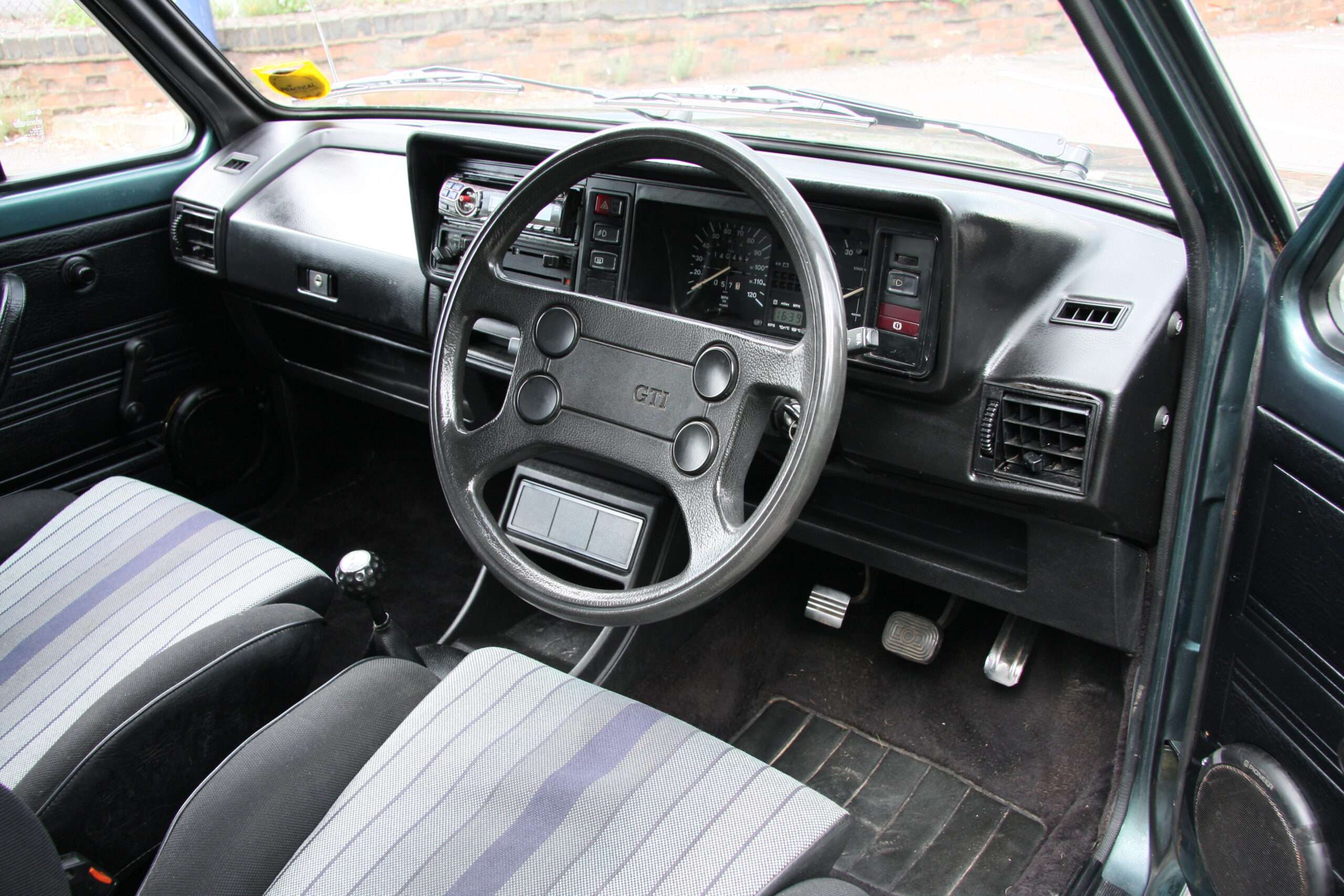
The Golf GTI was not originally the result of a grand boardroom plan. In 1974, a small group of Volkswagen staff began developing a sporty Golf without an official mandate. Their prototype used fuel injection, a firmer chassis and extra performance while keeping the ordinary Golf’s practical body.
Volkswagen’s management approved the project in March 1975. The production GTI arrived in June 1976 with 110PS, a red-edged grille and tartan-trimmed seats. What looked like a niche experiment became the benchmark for the hot hatch.

6. The diesel arrived in the same year as the GTI
Performance tends to dominate Golf history, but Volkswagen launched a diesel Golf in 1976 too. At the time, diesel engines were associated mainly with larger, slower vehicles. Putting one into a light compact hatchback helped make diesel power acceptable to ordinary family-car buyers.
The idea developed further with the turbocharged Golf GTD in 1982. Long before diesel hatchbacks became commonplace, the Mk1 range was already showing that economy and useful performance could coexist.
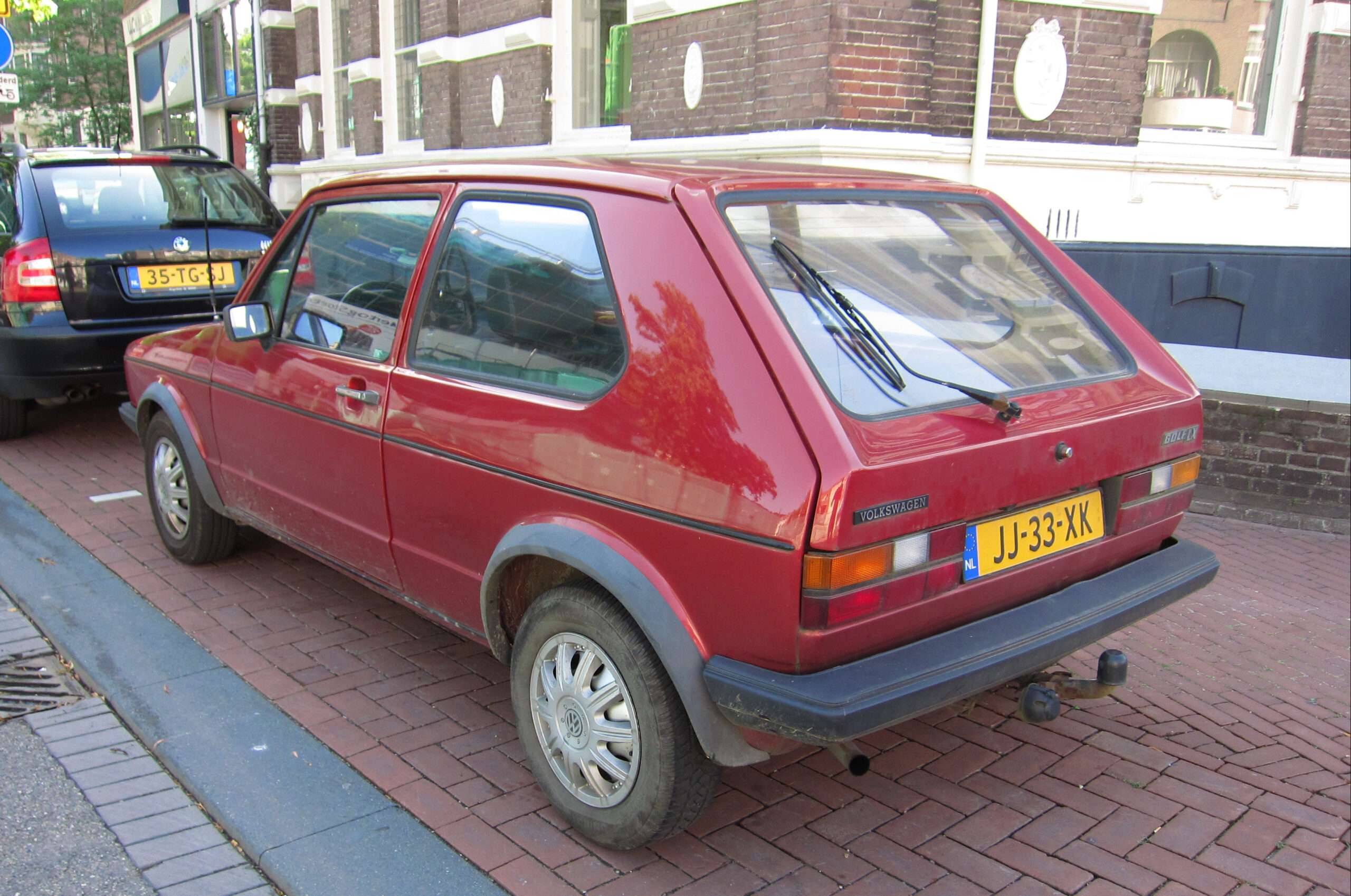
7. Americans knew it as the Rabbit—and some were built in Pennsylvania
In North America the Mk1 Golf was sold as the Volkswagen Rabbit. Production began at Volkswagen’s Westmoreland factory in Pennsylvania in April 1978, making it one of the earliest modern foreign-brand cars assembled in the United States.
The supply chain was international: engines and gearboxes came from Germany, rear axles and radiators from Mexico, and many other parts came from American suppliers. By 1979 the plant was capable of building around 1,000 vehicles a day.
8. The Cabriolet’s roll-over bar inspired a memorable nickname
The first Golf Cabriolet made its public debut in February 1979 and entered production at Karmann that June. Its fixed roll-over hoop, designed to add protection and stiffness, led Germans to nickname the car the Erdbeerkörbchen—the “little strawberry basket”.
Karmann continued producing the Mk1-based Cabriolet until 1993, long after the ordinary Mk1 hatchback had disappeared from European showrooms. A total of 388,522 were built, surpassing the Beetle Cabriolet and making it the most successful convertible of its era.

9. The Mk1 shape survived in production until 2009
European hatchback production gave way to the Golf Mk2 in 1983, but that was not the end of the original design. Volkswagen South Africa continued developing and building it as the Citi Golf.
The final Citi Golf left the line in 2009. That gives the basic Mk1 design a remarkable 35-year production span from the first Wolfsburg cars of 1974—an unusually long life for a mass-market hatchback.
10. The first Golf became an entire family of cars
The Golf was far more than a three- or five-door hatchback. The Mk1 platform produced the Jetta saloon, the Karmann-built Cabriolet and the Caddy pickup and van. Even the Scirocco coupé shared the same basic technical foundation and actually reached the market shortly before the Golf in 1974.
By the end of the Mk1’s main production run in 1983, Volkswagen had built around 6.9 million examples including derivatives. The Golf had not merely replaced the Beetle; it had become the foundation of a new Volkswagen range.
Love cars you don’t see every day?
Get forgotten cars, surprising motoring stories and the most interesting finds from Unusual Cars by email.
Free to join. No spam. Unsubscribe whenever you like. See our Privacy Policy.
A small car with an enormous legacy
The Mk1 Golf succeeded because it was easy to understand: compact outside, roomy inside, economical to run and enjoyable to drive. Then Volkswagen kept finding new things for it to do. From the GTI and GTD to the Cabriolet, Rabbit and Citi Golf, its influence reached far beyond the original family hatchback.
If you enjoy unexpected Volkswagen finds, take a look at this 2.0 16-valve Mk1 Golf Caddy and this 1989 Mk1 Golf GTI Cabriolet. You can also browse more rare and forgotten cars.