

The Ford Escort Mexico was never simply an Escort with stripes. The Mk1 was born from one of Ford’s greatest rally achievements and built at the Advanced Vehicle Operations plant as an attainable, durable performance car. Its Mk2 successor kept the Mexico name but changed the recipe: a squarer body, Pinto overhead-cam power and a shorter, rarer production life.
This guide explains where both generations came from, what separates them mechanically, and why enthusiasts feel such a strong connection to each of them.
| Model | Mk1 Mexico | Mk2 RS Mexico |
|---|---|---|
| Built | 1970–1974/early 1975 | 1975–1978 |
| Engine | 1,599cc Kent crossflow OHV | 1,593cc Pinto OHC |
| Quoted output | 86bhp | approximately 95–98bhp |
| Character | Light, rev-happy, competition-bred | Torquier, more mature, distinctly 1970s |
| Production | roughly 9,800–10,350; sources differ | approximately 2,500 |
Why was it called the Escort Mexico?
The name came from the 1970 London to Mexico World Cup Rally, a marathon covering roughly 25,700 kilometres. Ninety-six cars started and only 23 reached Mexico City. Ford Escorts finished first, third, fifth, sixth and eighth, with Hannu Mikkola and Gunnar Palm winning in FEV 1H.
Ford understood that the victory could become more than a competition result. A road car carrying the Mexico name would connect ordinary drivers with the Escort’s emerging rally legend. Assembly began in November 1970 at Ford’s new Advanced Vehicle Operations facility at South Ockendon, usually known simply as Aveley.

The Mk1 Mexico: the clever middle ground
The first Mexico sat between the regular Escort 1300GT and Ford’s more specialised Twin Cam and RS1600. It used the strengthened Type 49 bodyshell associated with the faster competition-minded Escorts, but avoided the expensive Cosworth-developed BDA engine. Instead, Ford installed the proven 1,599cc Kent crossflow with a Weber carburettor.
That decision was central to the car’s success. The crossflow was simple, affordable and well understood by garages and club competitors. In standard form it produced a quoted 86bhp at 5,500rpm and 92lb ft at 4,000rpm. Contemporary figures put top speed near 99mph and 0–60mph at about 10.7 seconds. Those numbers look modest now, but they were combined with little weight, rear-wheel drive, direct steering and an eager engine.
The Mexico was consequently enjoyable without being temperamental. It could commute during the week, compete at weekends and accept a vast range of period tuning parts. It was not a softened replica of the rally winner; it was a carefully judged road Escort that shared the toughness and attitude of Ford’s competition programme.

How many Mk1 Mexicos were made?
There is no single uncontested total. Ford heritage material has quoted 9,847, while other respected sources use 10,352. Differences can arise from how production dates, export cars and records are counted. The honest conclusion is that around ten thousand Mk1 Mexicos were built, making it the most numerous AVO Rally Sport Escort while still being very scarce today.
Love cars you don’t see every day?
Get forgotten cars, surprising motoring stories and the most interesting finds from Unusual Cars by email.
Free to join. No spam. Unsubscribe whenever you like.
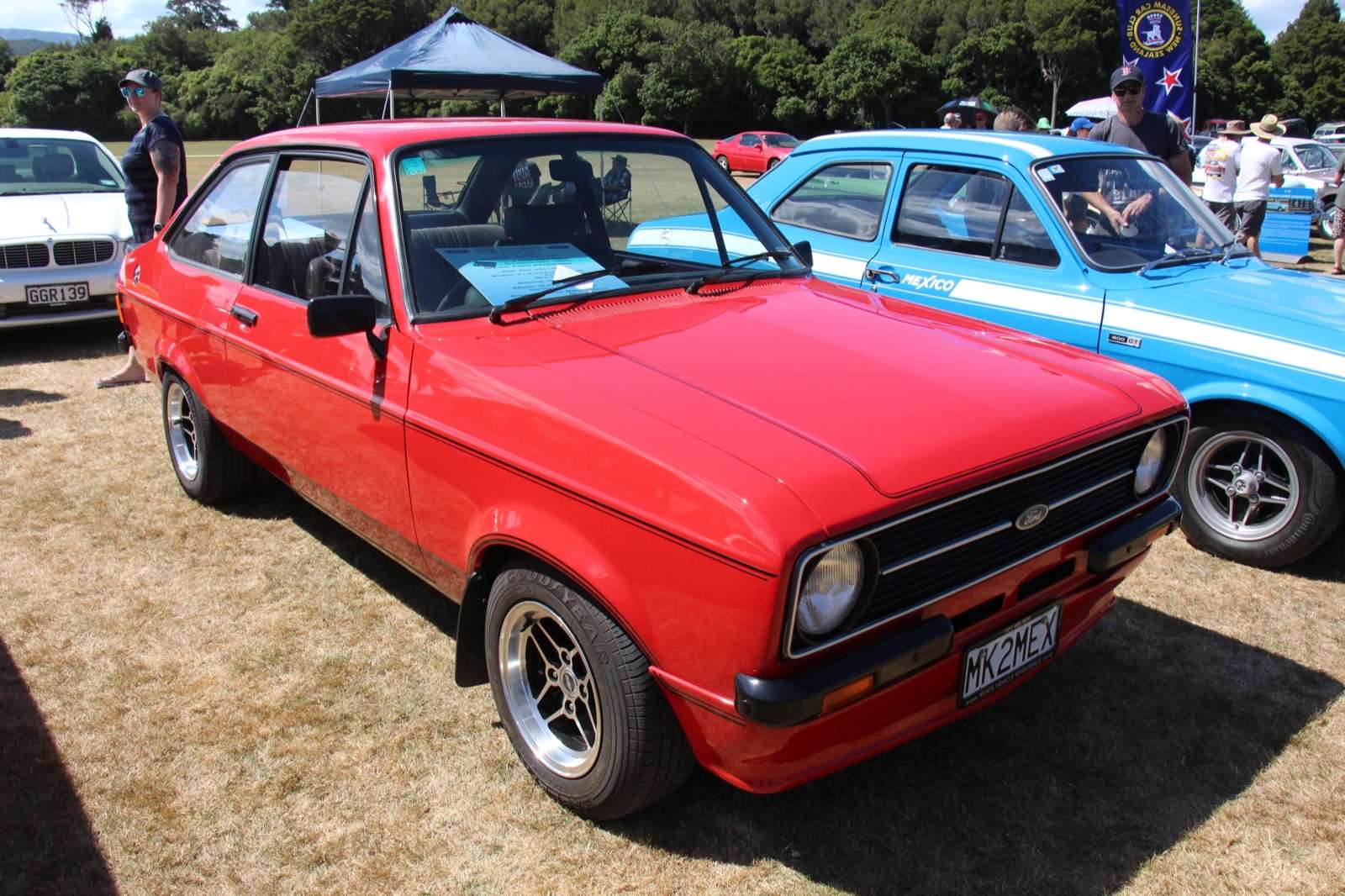
The Mk2 Mexico was not merely a new body
When the Mk2 Escort arrived for 1975, the Mexico name returned as the RS Mexico. It is easy to assume that Ford simply transferred the old specification into the squarer new shell. It did not. The Mk2 used Ford’s 1.6-litre Pinto overhead-cam engine rather than the Mk1’s Kent crossflow.
The Pinto was physically larger and offered a different delivery, with stronger mid-range torque and a more mature feel. Period figures vary slightly by market and measurement, but approximately 95–98bhp is a sensible standard estimate. The four-speed gearbox and rear-wheel-drive layout remained, while the Mk2 shell brought a more modern cabin and a calmer road-car character.
Why is the Mk2 Mexico rarer?
The Mk2’s production life was shorter and its place in the range was squeezed by other fast Escorts, most notably the RS2000. Approximately 2,500 examples are generally cited, a fraction of Mk1 output. Survival is lower still after decades of competition use, corrosion, modification and ordinary attrition.
That rarity has not always produced the same fame as the Mk1. The original has the cleaner link to the World Cup Rally and the celebrated AVO story, while the Mk2 shares a showroom era with the more powerful RS2000. Yet the RS Mexico has its own appeal: it combines the classic Mk2 shape with a specification that is more unusual than many superficially similar sporting Escorts.

Mk1 versus Mk2: the differences that matter
Engine character
The Mk1’s crossflow is lighter, simpler and keen to rev. It is closely associated with club motorsport and period Escort tuning. The Mk2’s Pinto is an overhead-cam unit with a broader torque delivery. A drive in one immediately feels different from the other even before the change in body and cabin is considered.
Shape and atmosphere
The Mk1 has the celebrated “coke-bottle” waist and dog-bone grille of the earliest Escort. The Mk2 is more rectilinear and has a larger glass area, a more contemporary dashboard and the visual identity familiar from late-1970s rallying. Preference is often generational: some remember the Mk1 as the hero, others grew up with the Mk2 filling rally stages and club paddocks.
Identity and badging
The Mk1 is generally known simply as the Escort Mexico. The later car is properly the RS Mexico, though both names are commonly used. Badges, stripes and spoilers are easily reproduced, so an attractive replica can look convincing. That does not diminish a well-built tribute, but it makes documented identity important when discussing an original car.
Competition credibility
The Mexico was useful because Ford designed it as a platform rather than a decorative special edition. The Mk1 was homologated by the FIA as Escort Mexico number 5455 in Group 1, with a recorded capacity of 1,601cc and rear-wheel drive. Its strong shell, predictable chassis and accessible mechanicals made it a natural choice for rallying, racing and autocross.
That history also explains why standard survivors are difficult to find. Many cars were upgraded with larger engines, arches, competition interiors or alternative running gear. Others donated shells and components to race projects. The same adaptability that made the Mexico popular when new has made originality rare decades later.
What each Mexico feels like today
A good Mk1 feels compact and alert. Its performance is carried by response, gearing and low mass rather than outright power. There is little insulation between driver and machinery, and the car communicates at road speeds that modern performance cars barely notice.
The Mk2 feels more substantial and slightly more grown-up. The Pinto’s extra mid-range suits relaxed road use, while the chassis retains the balance and adjustability expected of a rear-wheel-drive Escort. Neither needs modern acceleration to entertain. Their appeal lies in clarity: modest dimensions, simple controls and a sense that every input changes the car’s attitude.
Why the Ford Escort Mexico still matters
The Mexico helped establish a template Ford would revisit repeatedly: take a mass-market car, add carefully chosen performance hardware, connect it to motorsport and keep it attainable. Later XR, RS and ST models used different technology, but the philosophy is recognisable.
The Mk1 is the more famous and historically important version. The Mk2 is the rarer, less understood sequel. Treating them as identical misses the point. Together they show how the sporting Escort evolved from an AVO-built crossflow special into an overhead-cam RS model for a new decade.
Ford Escort Mexico FAQ
Did a Mexico win the 1970 London–Mexico Rally?
No. The winning Escort was the rally car FEV 1H, driven by Hannu Mikkola and Gunnar Palm. The road-going Mexico was created afterwards to celebrate Ford’s result.
What engine did the Mk1 Escort Mexico use?
A 1,599cc Ford Kent crossflow OHV engine, normally quoted at 86bhp in standard road form.
What engine did the Mk2 Escort Mexico use?
A 1,593cc Ford Pinto overhead-cam engine, generally quoted at approximately 95–98bhp.
Was every Mexico built at AVO?
The Mk1 was an Advanced Vehicle Operations product assembled at Ford’s specialist Aveley facility. AVO closed as Mk1 production ended; the Mk2 RS Mexico belongs to the later Rallye Sport era and should not be described as an AVO-built car.
Which Ford Escort Mexico is rarer?
The Mk2 RS Mexico. Approximately 2,500 are generally cited, compared with around ten thousand Mk1 cars.
Continue the Ford story
Browse the Rare & Performance Fords hub, discover the touring-car story of the Lotus Cortina, or move into the front-wheel-drive era with the Escort RS1600i.
Research note: The rally history, AVO timeline and model specifications were checked against Ford heritage material, the AVO Owners Club, the FIA Historic Database and contemporary reference data. Published Mk1 production totals differ, so both credible figures are acknowledged rather than presented as a false certainty.