The Audi A2 was a small car built with the engineering ambition of a flagship. Launched in 2000, it combined an aluminium space-frame body, unusually low weight, exceptional aerodynamics and a tall, compact shape that made better use of road space than many conventional hatchbacks. It sold below Audi’s expectations, but its efficiency and construction now make it one of the brand’s most forward-looking modern classics.
Audi presented the Al2 concept in 1997 and showed the production A2 at Frankfurt in 1999. Sales began in 2000. The shape divided opinion, but it was driven by clear engineering priorities: a low drag coefficient, useful interior height and minimum mass rather than conventional small-car proportions.
Why Audi built the A2 in aluminium
The A2 used the Audi Space Frame principle previously associated with the much larger A8. Structural aluminium castings, extrusions and panels created a stiff, corrosion-resistant body at lower weight than an equivalent steel shell. Audi describes it as the first modern compact car with an all-aluminium body.
That decision made the A2 expensive to engineer and repair, but it was fundamental to its efficiency. Most versions weighed well under a tonne, helping modest petrol and diesel engines produce useful performance with low fuel consumption.
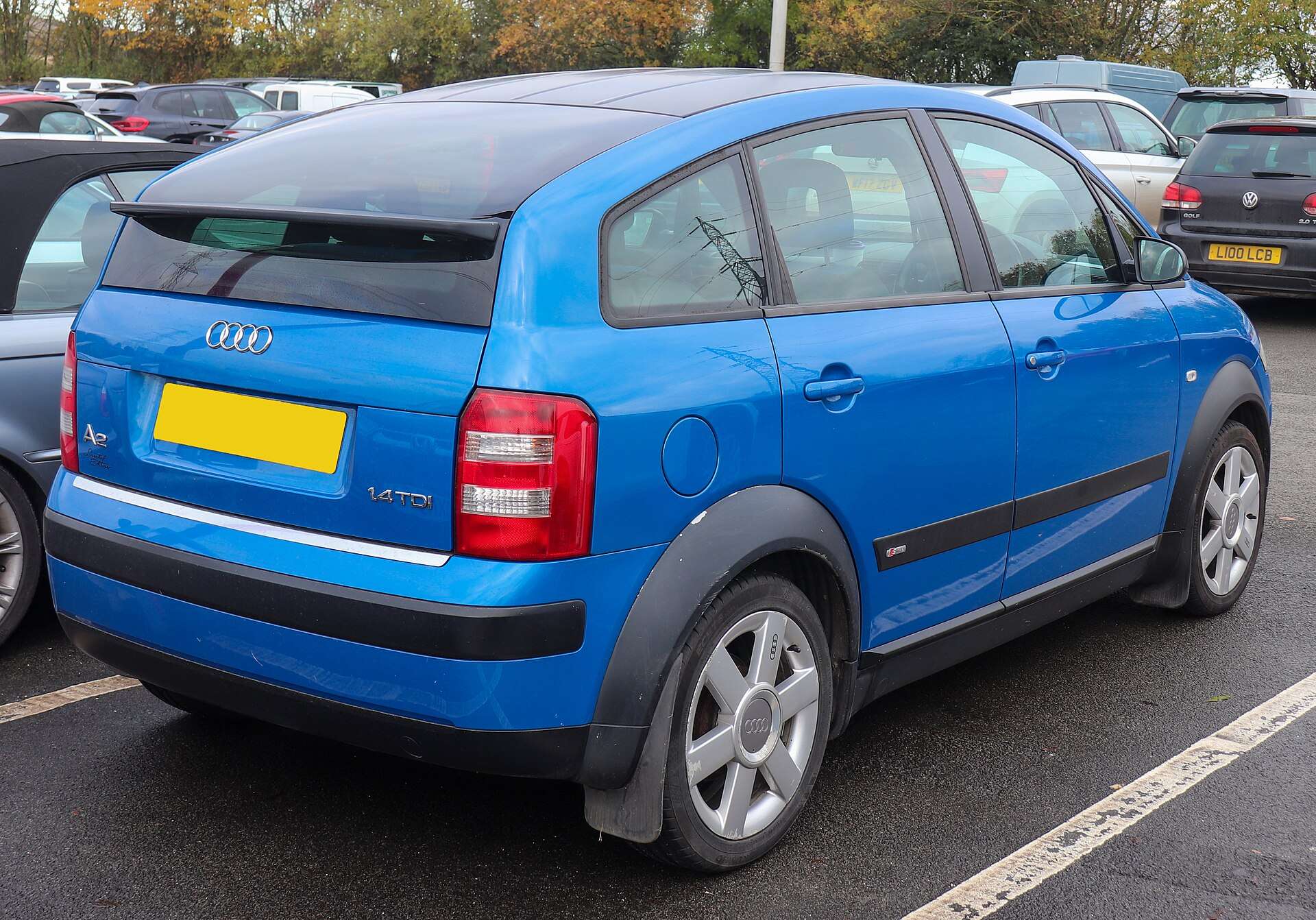
A shape designed by airflow and space
The high roof, short bonnet and abrupt rear panel gave the A2 a distinctive silhouette. Its tapered body and carefully controlled airflow produced a drag coefficient as low as 0.25 in the most efficient 1.2 TDI. The rear spoiler divides the back window, a detail that became one of the model’s visual signatures.
The front service flap allowed routine fluids to be checked without lifting the bonnet, reinforcing the idea that the A2 was engineered as a complete system rather than a conventional hatchback dressed as a premium product.
Petrol and diesel engines
Audi offered five principal engine variants during the model’s life. Familiar 1.4-litre petrol and TDI units formed the centre of the range, while the 1.6 FSI introduced direct petrol injection and produced 110PS. The 1.4 TDI was available in more than one output, depending on model year.
The engines were modest beside Audi’s S and RS cars, but that was intentional. The A2’s performance came from keeping mass and aerodynamic drag low rather than adding capacity or power.

A clever and flexible interior
The A2’s short exterior concealed a remarkably useful cabin. Rear passengers sat low between structural elements while the raised roof preserved headroom. The rear seats could be folded, tipped forward or removed, turning the car into a compact load carrier.
Materials and switchgear were recognisably Audi, supporting the company’s attempt to bring premium construction into a smaller class. The design avoided simply shrinking an A4: visibility, packaging and access were developed around the A2’s own tall proportions.

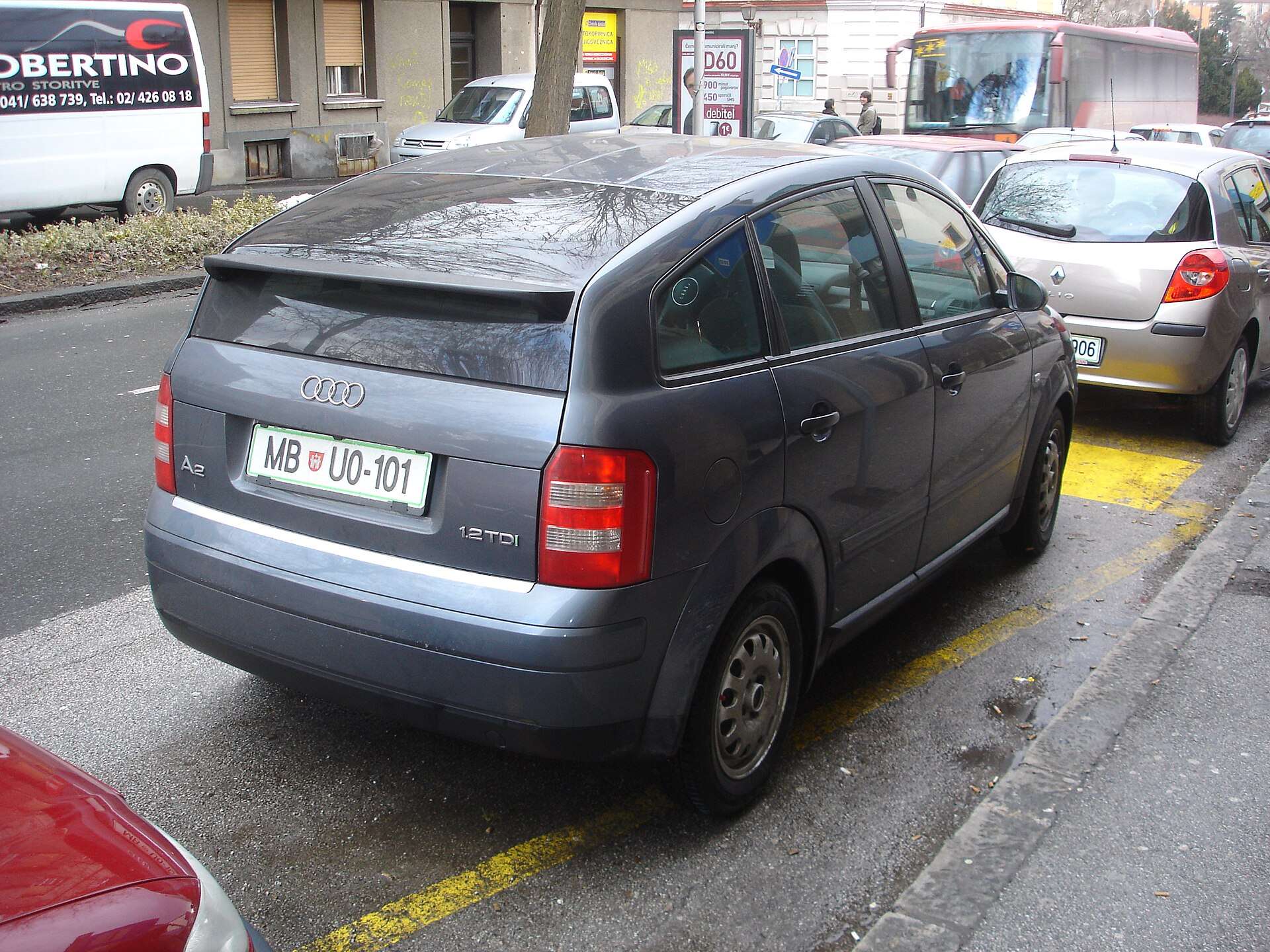
The A2 1.2 TDI three-litre car
The most technically extreme A2 was the 61PS 1.2 TDI. Audi calls it the world’s first four-door “three-litre car”, a German classification for vehicles capable of using around three litres of fuel per 100km. It combined further weight reduction, exceptionally low drag, narrow tyres and an automated manual transmission.
Aluminium suspension components, lightweight wheels and model-specific body details made it much more than a normal A2 with a smaller engine. Its complexity and market-specific equipment also mean a 1.2 TDI should be identified and understood as a distinct derivative.
Love cars you don’t see every day?
Get forgotten cars, surprising motoring stories and the most interesting finds from Unusual Cars by email.
Free to join. No spam. Unsubscribe whenever you like. See our privacy policy.
colour.storm and later A2s
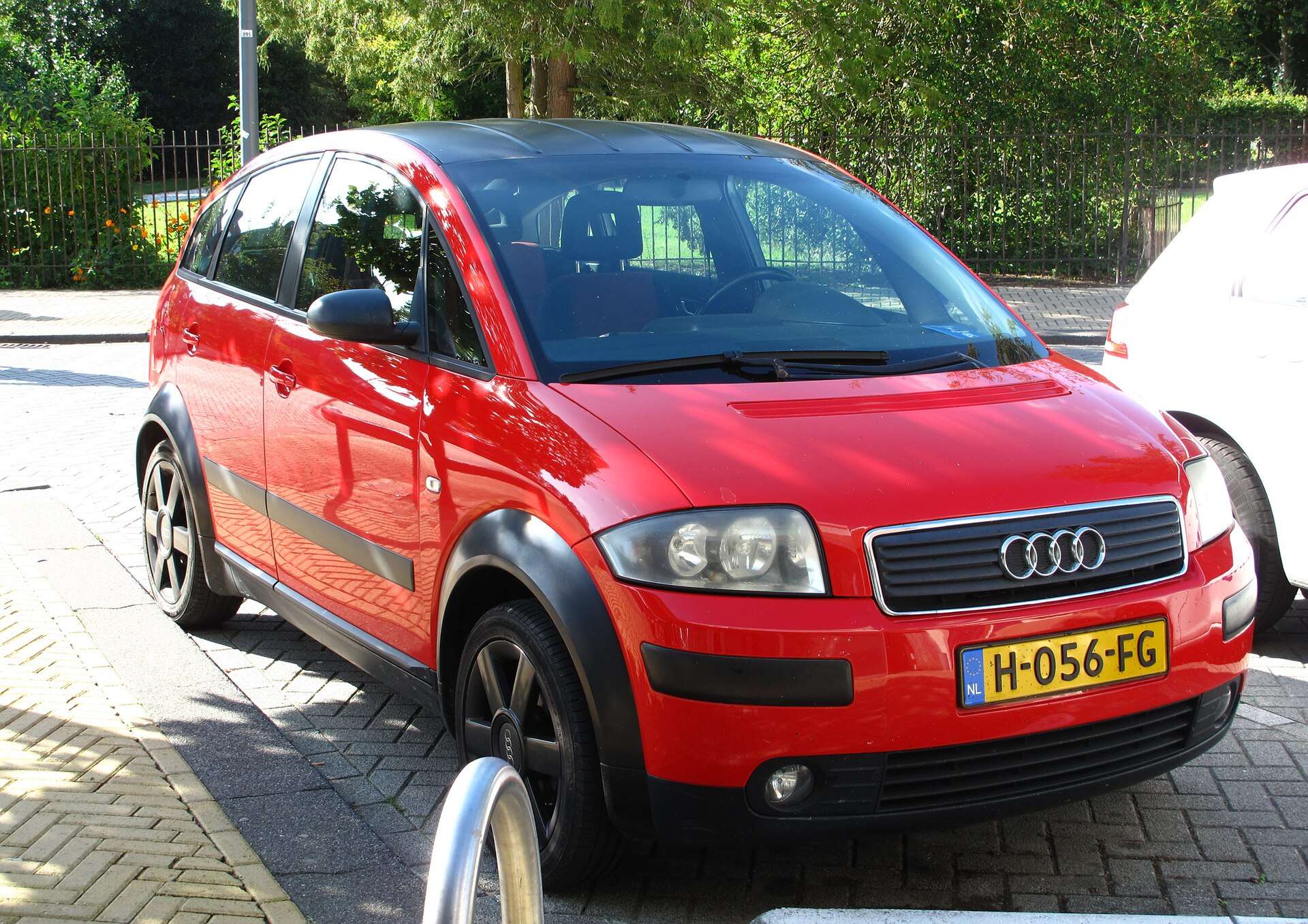
The colour.storm edition arrived in 2003 with brighter paint and contrasting exterior details, answering criticism that the A2 looked too restrained. It did not change the underlying engineering, but it gave the car a stronger visual personality and has become one of the easiest versions to recognise.
Why production ended—and why the A2 matters now
The aluminium construction made the A2 expensive to produce, and its unconventional appearance was difficult to explain in a market that often judged a small car primarily by price. Audi ended production in 2005 after 176,377 examples.
Its commercial result does not diminish the achievement. The A2 anticipated modern priorities: lightweight construction, aerodynamic efficiency, a small road footprint and flexible interior space. It pursued those aims without becoming slow, crude or disposable, which is why it looks more relevant with age.
Frequently asked questions
Is the Audi A2 body made from aluminium?
Yes. The A2 uses an aluminium space-frame structure with aluminium body panels, making it the first modern compact production car built this way according to Audi.
How many Audi A2s were built?
Audi states that 176,377 examples were produced before manufacturing ended in 2005.
What is the Audi A2 1.2 TDI?
It is a highly specialised 61PS diesel designed to use about three litres of fuel per 100km. It combines lower weight, a 0.25 drag coefficient, narrow tyres and an automated manual gearbox.
What does the A2 service flap do?
The panel between the headlights provides access to routine fluid checks and filling points. The bonnet can still be removed for workshop access, but owners were not expected to lift it for normal checks.
Why was the Audi A2 discontinued?
Its expensive aluminium construction and unconventional market position contributed to sales below Audi’s expectations. Production ended after roughly five years.
Research sources
- Audi Tradition: Leading light—the Audi A2 launched 25 years ago
- Audi Tradition: anniversaries in 2025
- Wikimedia Commons creator and licence records linked beneath each photograph.
Specifications and equipment varied by year and market. Confirm an individual car from its VIN, engine code and original documents.
Continue the Audi story
Browse the Rare & Performance Audi hub, or explore the radically different Audi Ur-quattro and Audi 5000, 100 and 200.