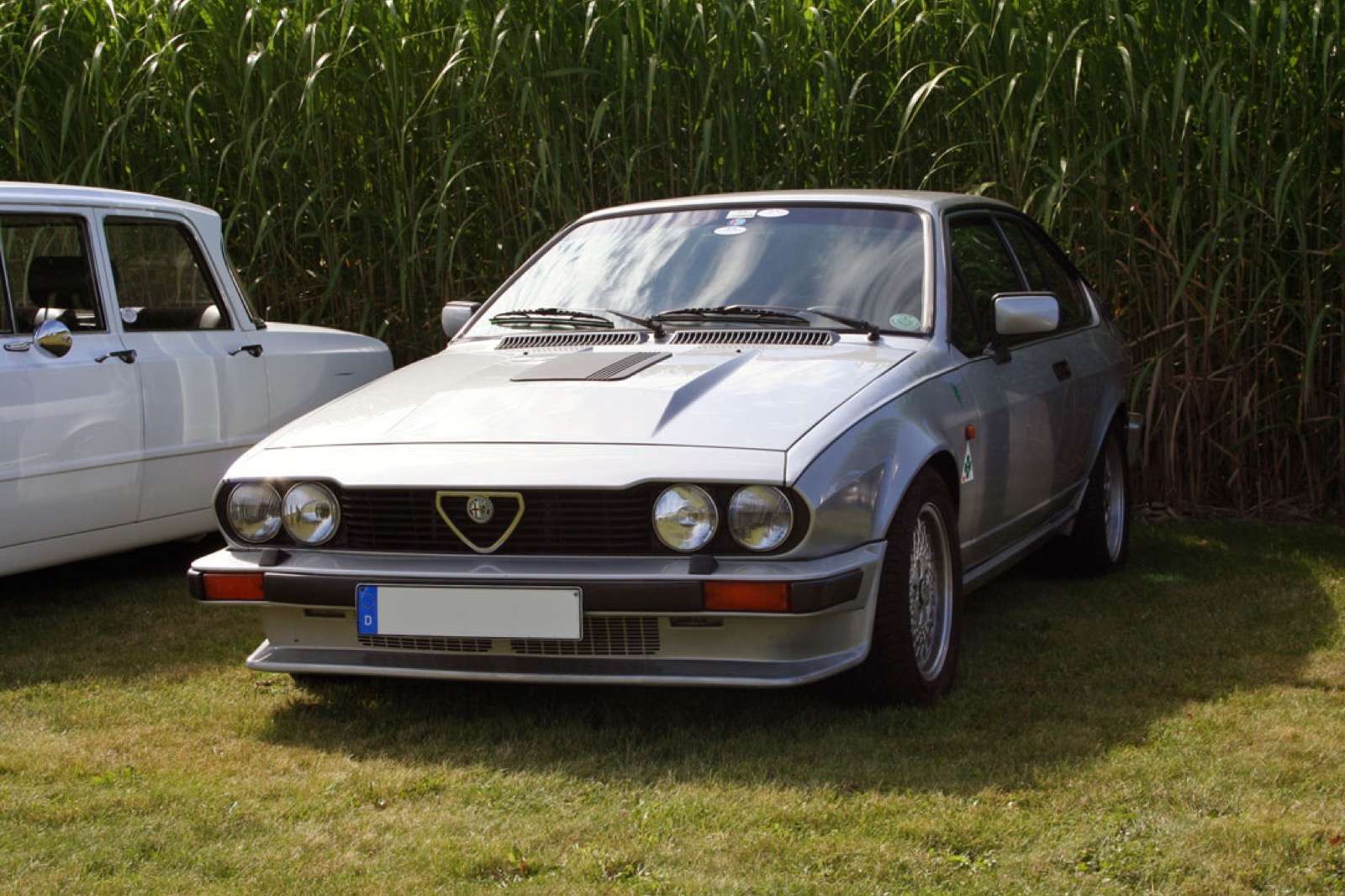
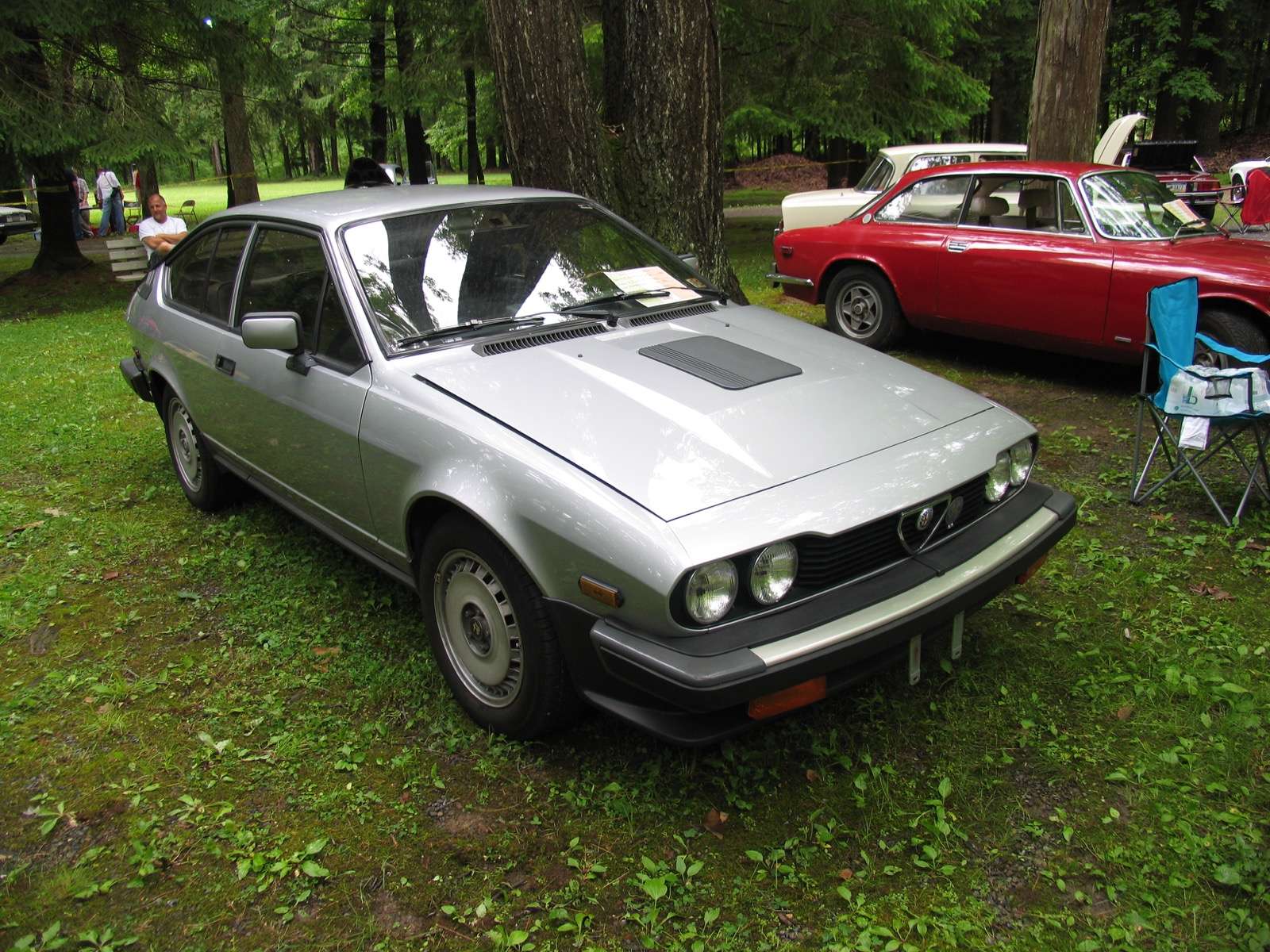
The Alfa Romeo GTV6 combined Giorgetto Giugiaro’s practical hatchback coupé with the Busso V6 and a rear-mounted gearbox. The result sounded exotic, handled with unusual balance and won far more races than many remember.

1. The coupé shape predated the V6
The Alfetta GT arrived in 1974; the GTV6 followed for 1980. Its raised bonnet cleared the taller V6 and became its easiest visual identifier.
2. The gearbox and clutch sat at the rear
Alfa combined them with the differential in a transaxle. Moving mass rearwards improved balance and traction, though it required a long shift linkage.
3. It used a De Dion rear axle
The design kept the rear wheels accurately located while reducing unsprung mass. Inboard rear brakes further reduced wheel-end weight but made servicing less convenient.
4. The 2.5 Busso made about 160PS
The all-alloy 60-degree V6 used Bosch injection and a camshaft for each bank. Market and emissions rules changed output, but its smoothness and sound were universal attractions.
Love cars you don’t see every day?
Get forgotten cars, surprising motoring stories and the most interesting finds from Unusual Cars by email.
Free to join. No spam. Unsubscribe whenever you like. See our Privacy Policy.

5. It was genuinely practical
Four seats and a large glass hatch made the GTV6 more useful than its exotic mechanical layout suggested.
6. It won four consecutive European touring-car classes
Autodelta-developed Group A cars took their class in the European Touring Car Championship from 1982 through 1985.
7. It also succeeded in rallying
The GTV6 achieved notable tarmac-rally results, including a class victory on the 1986 Tour de Corse.
8. South Africa built a 3.0 homologation special
The locally developed GTV6 3.0 used six carburettors and aggressive details to satisfy competition requirements. It is distinct from later aftermarket conversions.
9. Smooth driving suits it better than force
The long linkage and transaxle synchros reward measured shifts, while communicative steering and progressive balance favour flowing inputs.
10. Rust is now more decisive than performance
Sills, arches, suspension points and the tailgate area can corrode. A structurally sound, documented car is far more valuable than a shiny example hiding poor repairs.
Love cars you don’t see every day?
Get forgotten cars, surprising motoring stories and the most interesting finds from Unusual Cars by email.
Free to join. No spam. Unsubscribe whenever you like. See our Privacy Policy.
Sources
- Alfa Romeo and Stellantis Heritage competition archives.
- Unusual Cars GTV6 guide